Korean Food in Our Sticky Love: Every Korean Food & Drink

Have you ever watched Netflix’s Our Sticky Love and thought, “Wait, what are they eating?” There are actually so many Korean foods, Korean drinks, and snacks throughout the Our Sticky Love, Netflix drama. From yeot, sansam-ju, makgeolli, and gangnaengi to yulmu-cha, Hanwoo, yukhoe, bossam, haesintang, and even a traditional Korean birthday table!
Some of these foods are incredibly familiar to Koreans, but if you’re watching the drama from outside Korea, there are probably quite a few things you’ve never seen before. So, as a Korean, I wanted to go through the Korean food in Our Sticky Love episode by episode. I’m not just going to tell you, “This is what this food is.” I also want to tell you how Koreans actually eat it, whether people still eat it often these days, and what little pieces of Korean food culture you can see in the scenes.
There are also quite a few old-fashioned foods in this drama that younger Koreans might not even know very well, or foods that used to be common but are now hard to find. So, as someone who grew up in Korea, there were quite a few nostalgic foods that made me go, “Oh, that!” So, let’s take a look at the Our Sticky Love Korean food, episode by episode.
Yummy Korean Food in Our Sticky Love
Episode 1
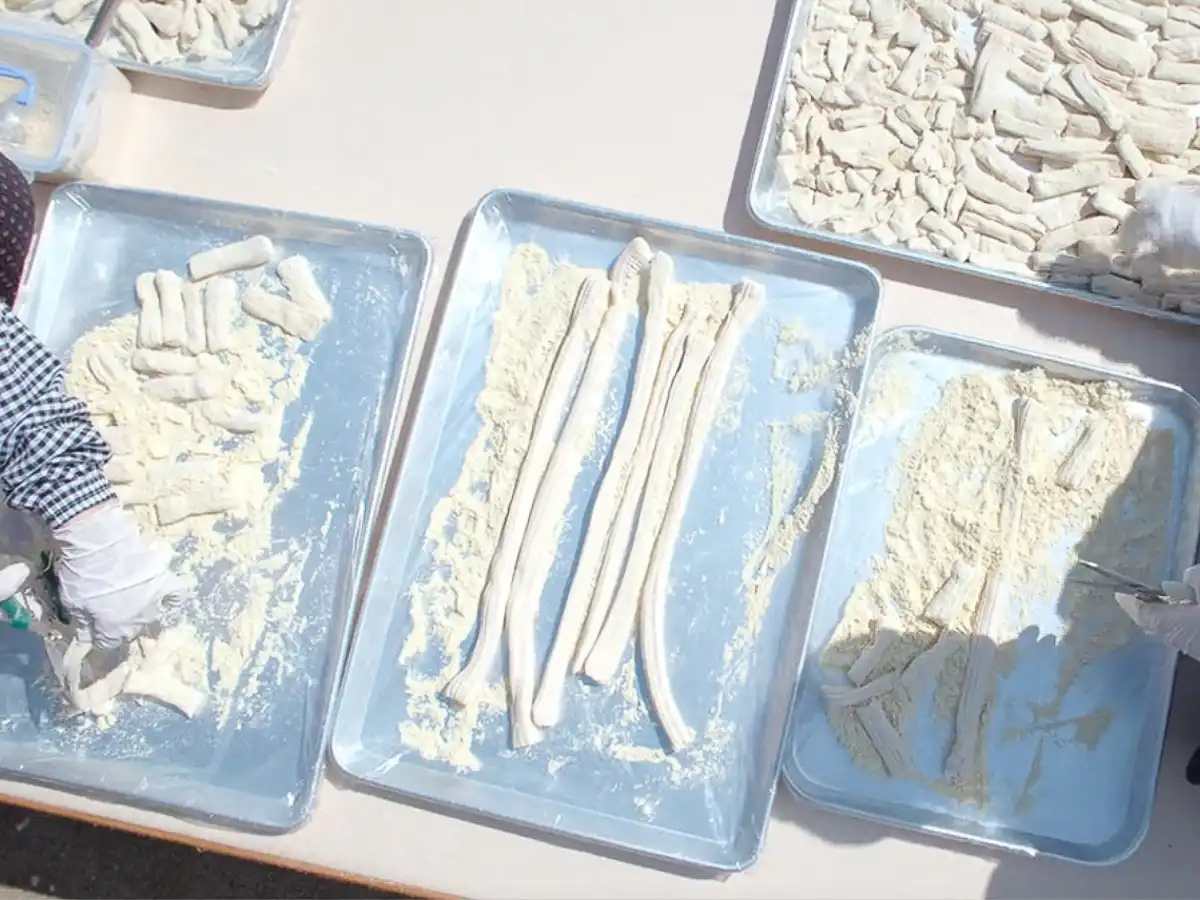
Yeot 엿
This snack is called yeot. Yeot is a traditional Korean candy, or you could think of it as something like caramel, made by fermenting grains such as rice, corn, or sweet potatoes with malted barley until they become sticky. People from my parents’ generation used to eat it a lot, and I sometimes ate it when I was very young too, but these days, I feel like it’s very hard to find.
Korean Food Culture
Actually, the original Korean title of this drama is 이런 사랑 LIKE 엿, which is a play on the word yeot. So I think that’s why yeot is shown symbolically in the drama. 엿같다 is an old-fashioned(?) Korean expression used when something is extremely unpleasant or completely messed up. People don’t really use it these days. It’s a word that people from my parents’ generation used when they were young.
Episode 2
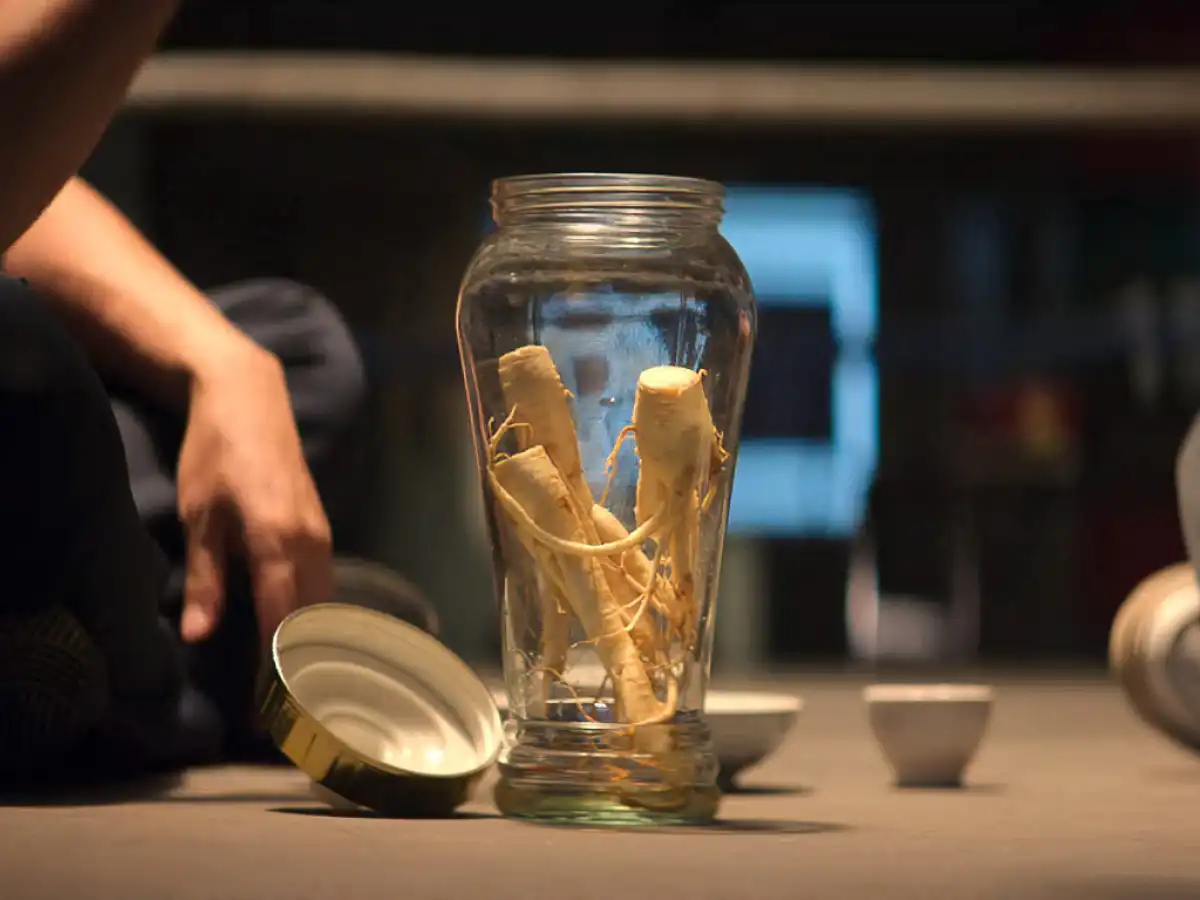
Sansam-ju: Wild Ginseng Liquor 산삼주
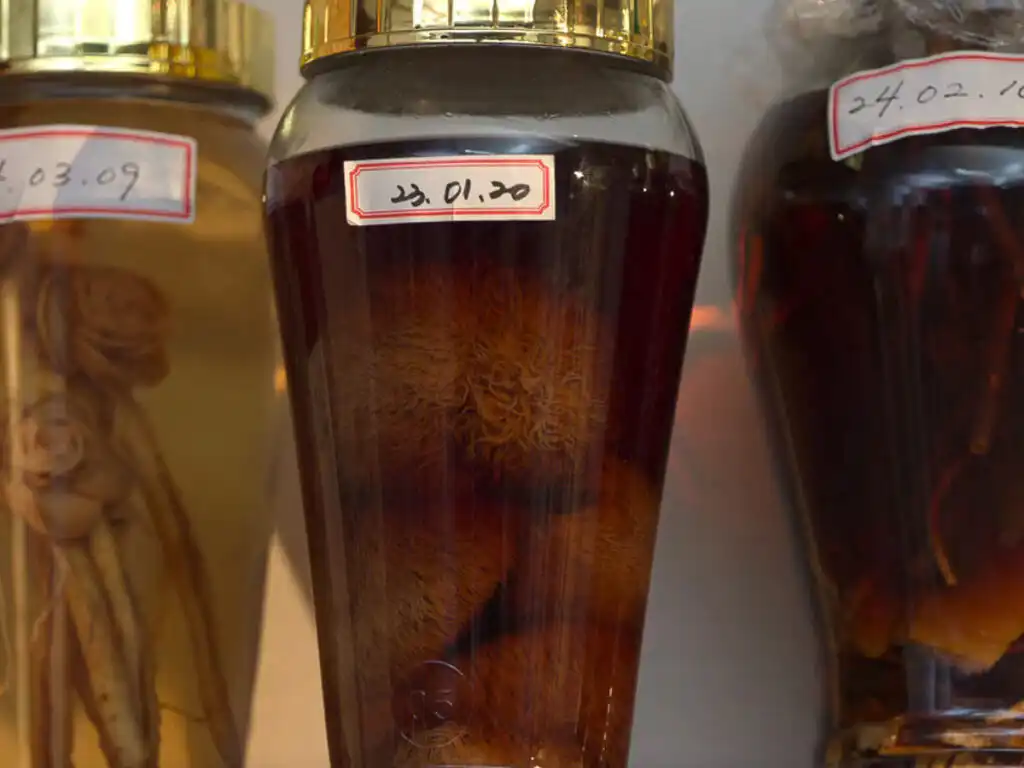
The long root inside is called sansam, or wild ginseng. Sansam is a perennial plant in the Araliaceae family that grows wild deep in the mountains. It looks similar to cultivated ginseng, but it is considered an extremely precious medicinal herb in Korea because it is believed to be very, very rich in nutrients. Older generations in Korea used to put it into strong soju and let it age for several years, then drink it almost like a medicinal liquor.
Korean Food Culture
My grandmother once made sansam-ju and gave it to me as a gift. So if you ever receive something like this in Korea, you can consider it a very precious gift.
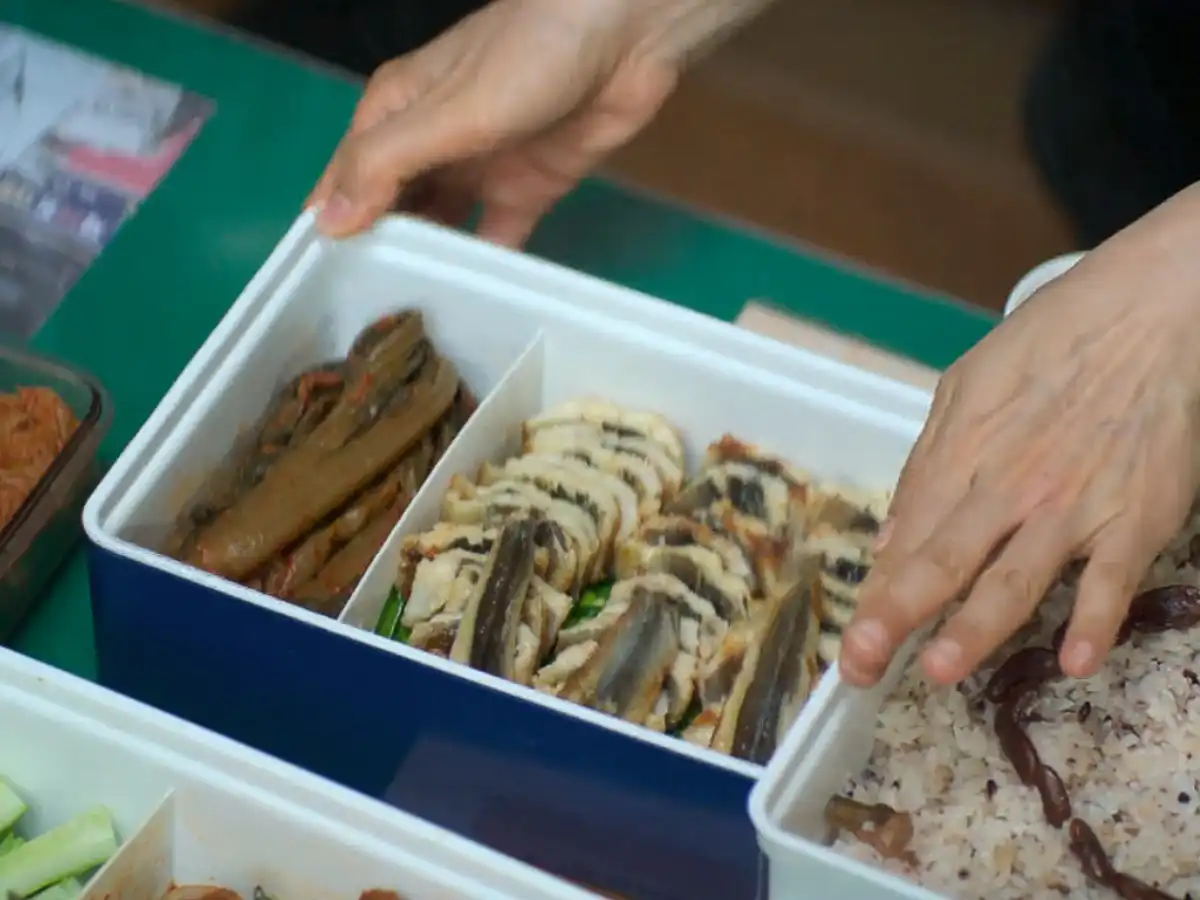
Eel 장어
Just like in Japan, Koreans often eat eel when they want something nourishing and restorative.
Episode 3
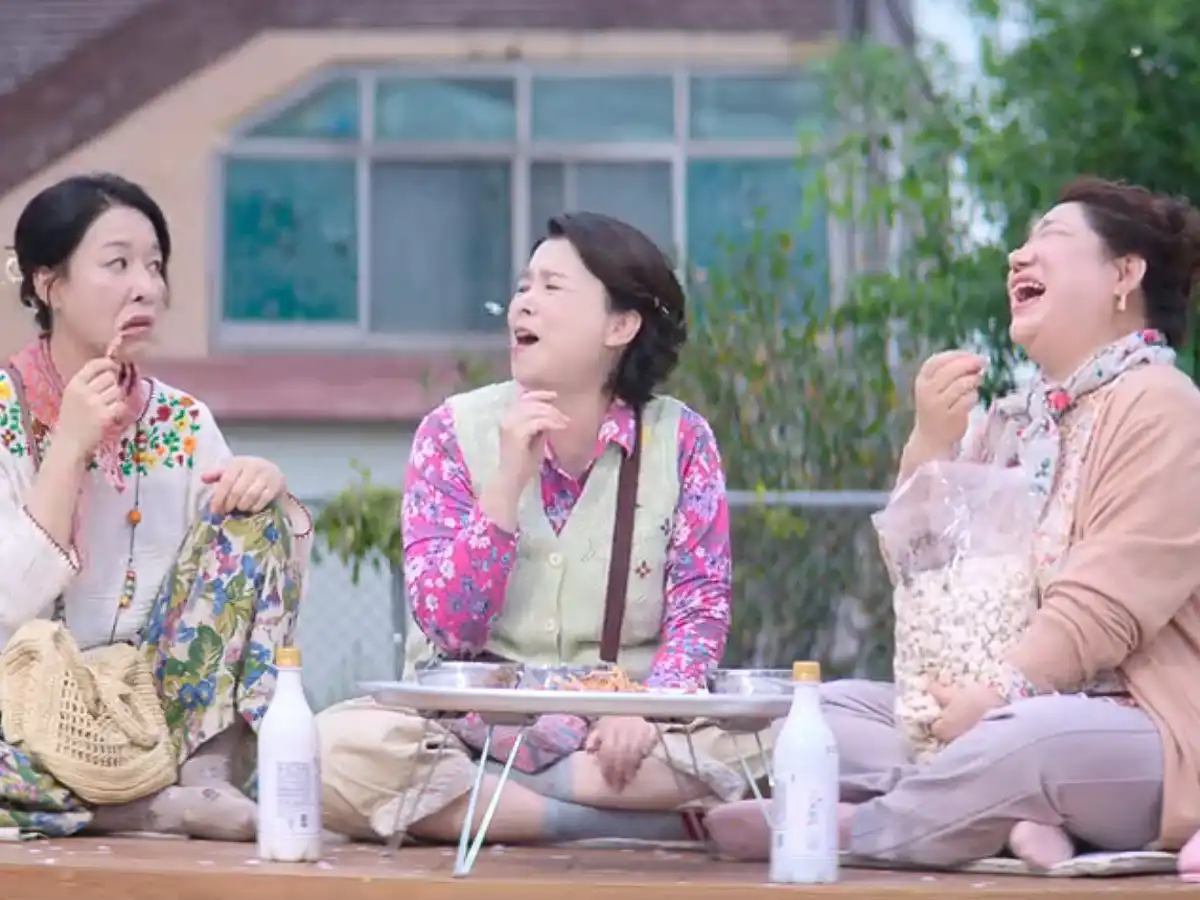
Gangnaengi and Makgeolli 강냉이 & 막걸리
The alcohol the neighborhood ladies are sitting around drinking is makgeolli, Korea’s rice wine, and the snack the woman on the right is eating is gangnaengi, made by puffing corn.
My Story
Whenever I go to a Korean hof(pocha), or Korean beer bar, I love eating this so much that I keep asking for refills. You might like it too. Oh, and the refills are free. (Not a secret.)
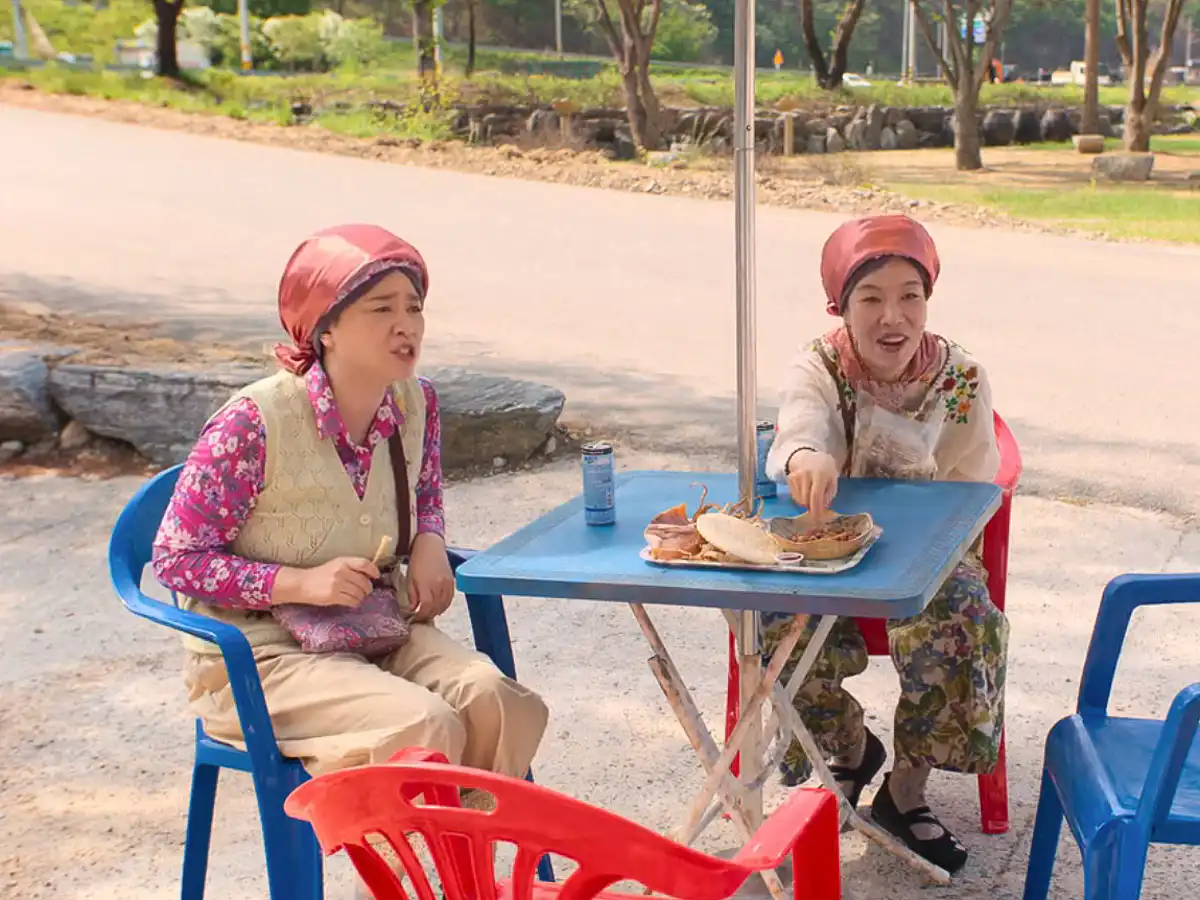
Dried Squid and Peanuts 마른 오징어 & 땅콩
These are snacks that Koreans often eat when drinking beer. When Koreans drink beer, we often eat dry drinking snacks, such as dried seafood like meoktae, dried squid, and jwipo, as well as nuts such as peanuts and cashews.
Yulmu-cha 율무차
In ‘Our Sticky Love’ Netflix drama, what young Tae-ha is drinking is yulmu-cha, or Job’s tears tea. It’s made by roasting Job’s tears, grinding them into a powder, and mixing the powder with sugar and water. It’s really nutty and delicious. Korean supermarkets sell yulmu-cha in sticks or powder form, and I highly recommend buying some to take home with you when you leave Korea. I’m going to buy some at the supermarket tomorrow now that I’m thinking about it.
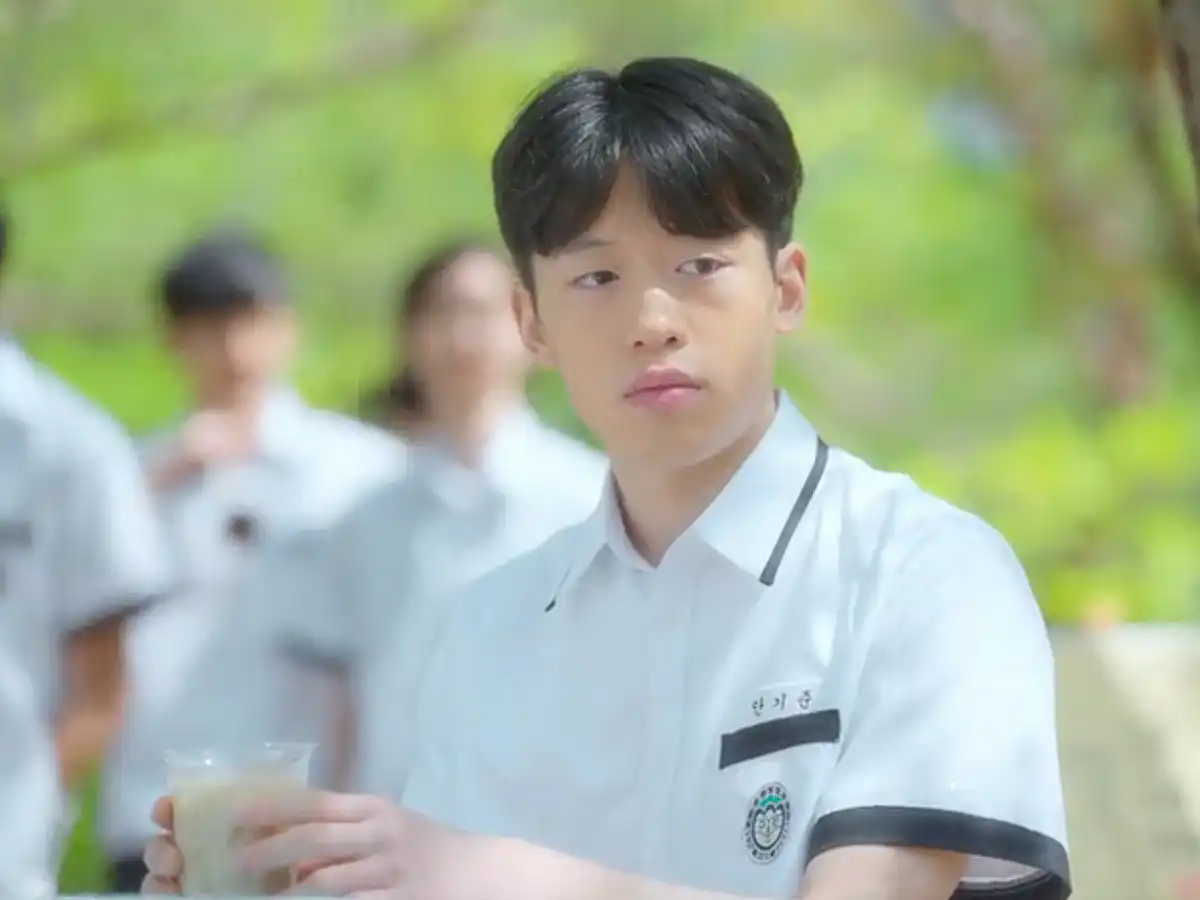
My Story
When I was young, I used to get it from vending machines all the time, but these days, it’s hard to find. It was my favorite tea when I was a little kid.
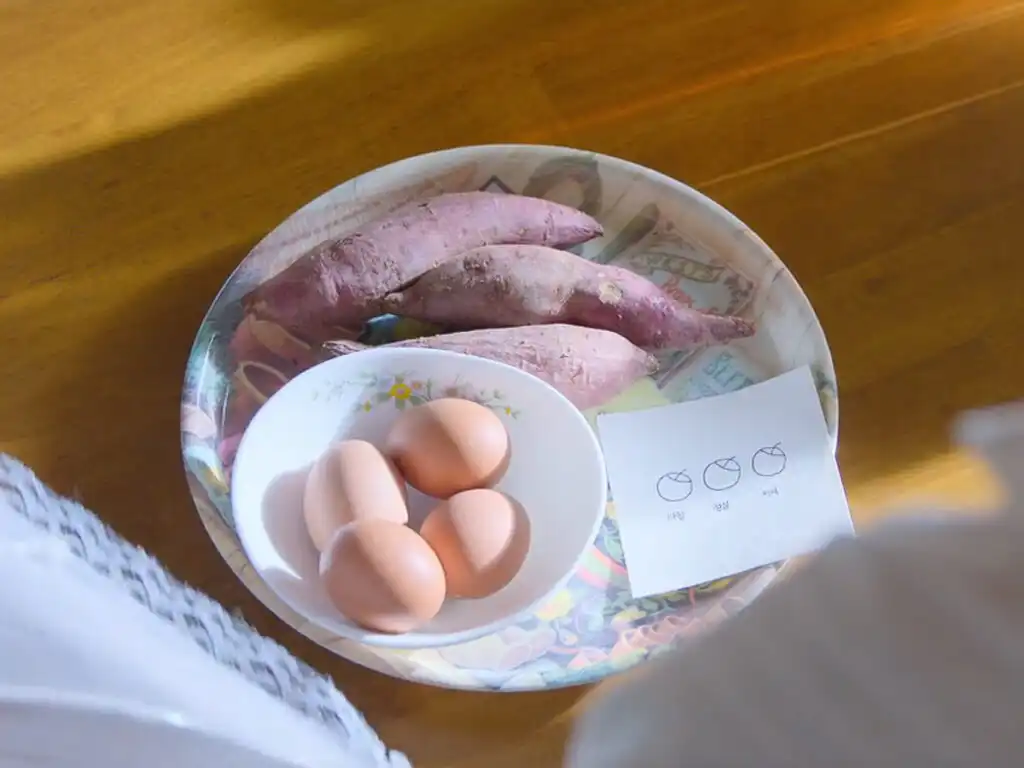
Boiled Sweet Potatoes and Boiled Eggs 찐고구마 & 찐달걀
Older Koreans often eat these as snacks, while younger Koreans eat them as a meal when they’re dieting.
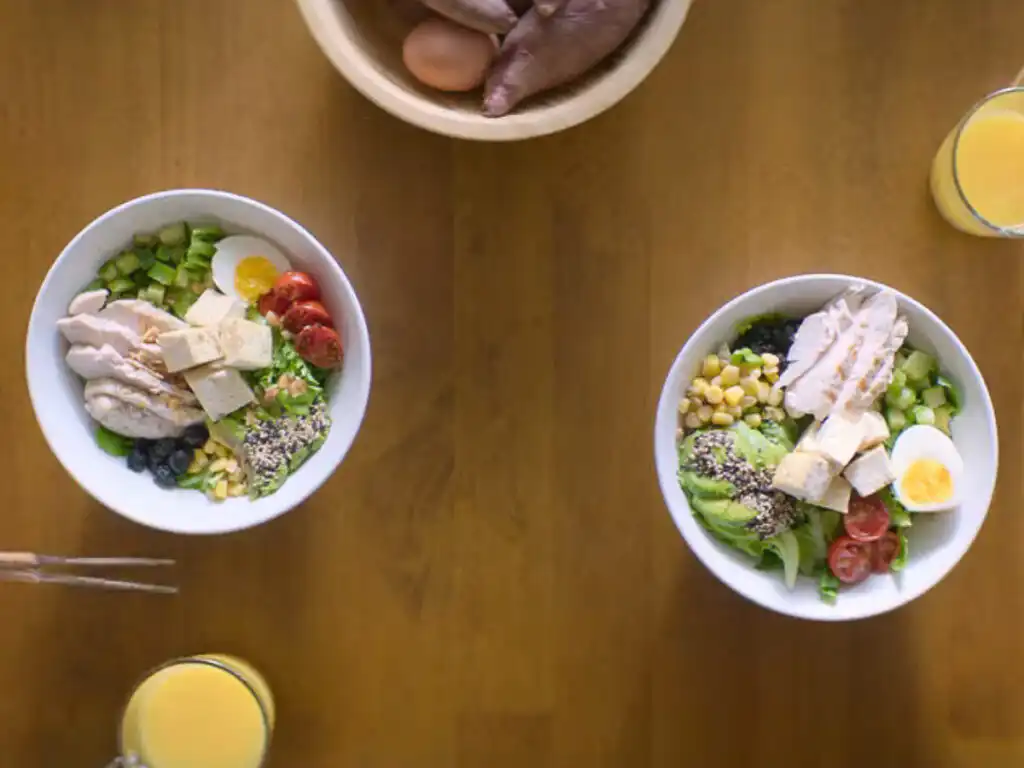
Korean-Style Salad 한국 스타일 샐러드
The salad made with tofu, boiled eggs, avocado, cherry tomatoes, and chicken breast is a typical style of salad that you see Korean people eating.
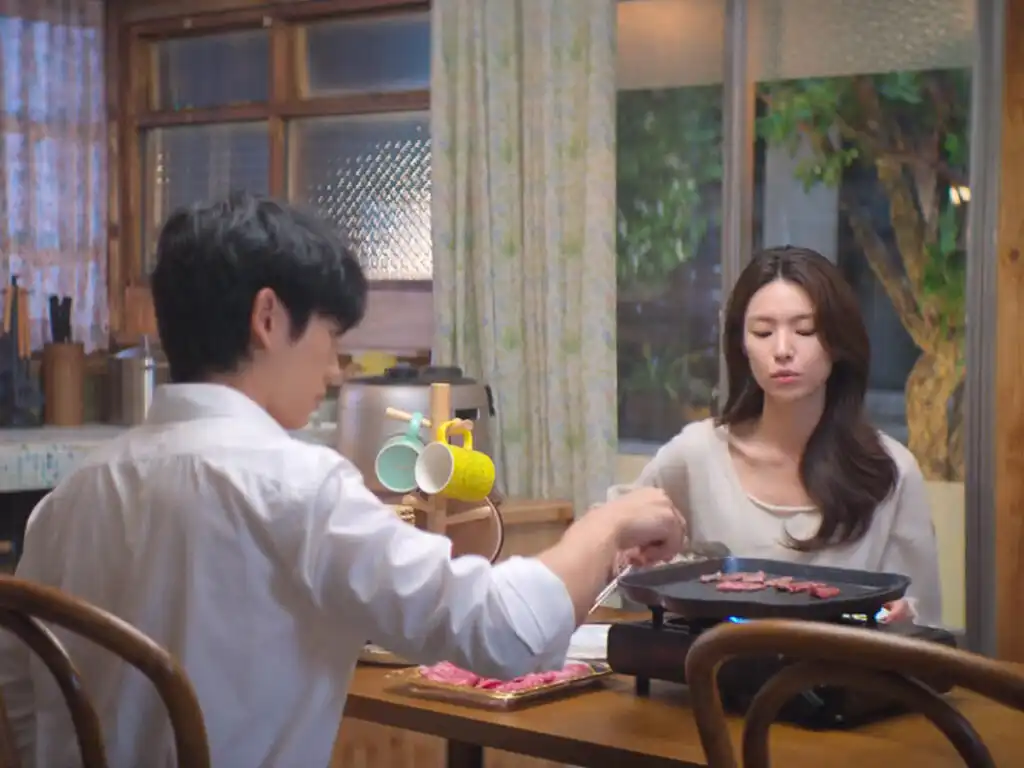
Hanwoo Korean BBQ 한우
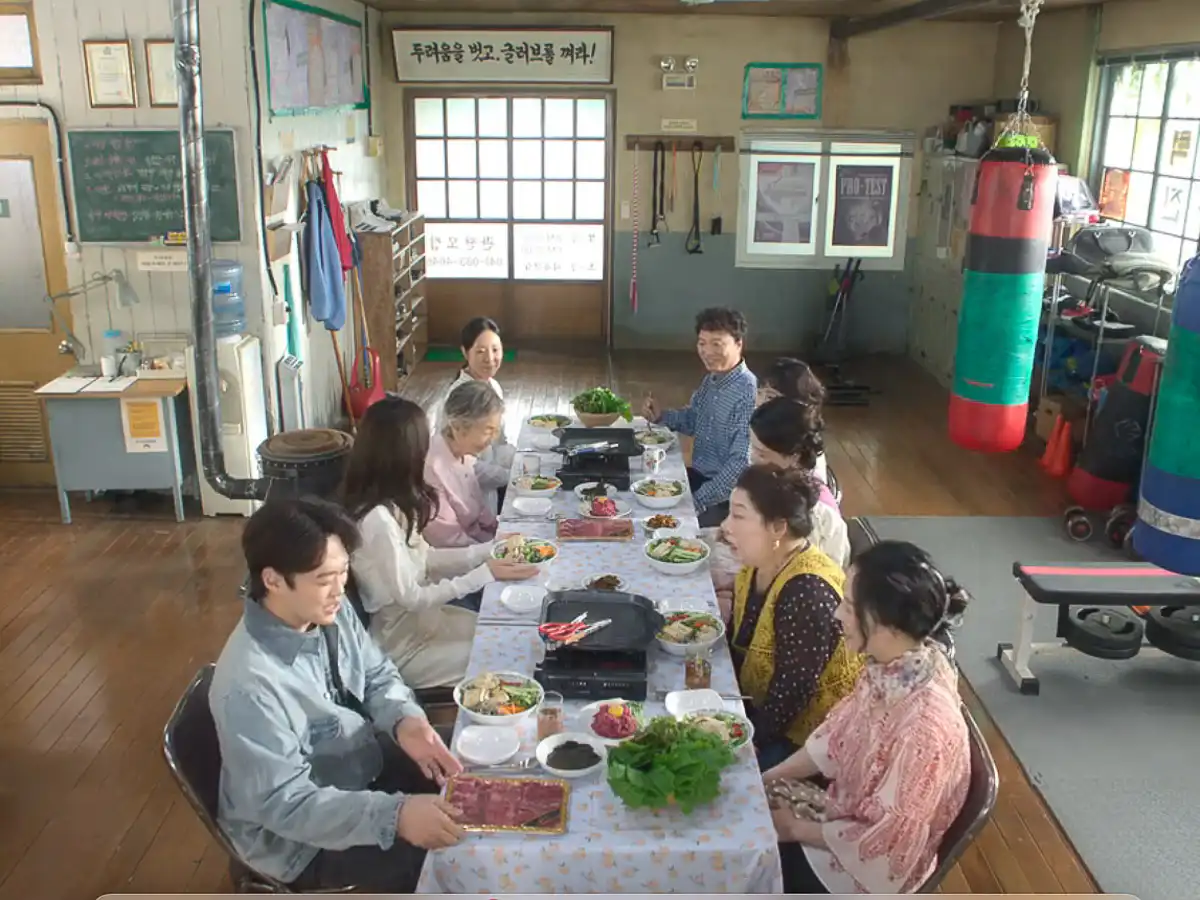
Usually, people eat pork belly when they have Korean BBQ, but on special occasions, Koreans may grill expensive Hanwoo Korean beef BBQ on a tabletop grill like in the drama ‘Our Sticky Love’
Episode 4
Kkul-tteok 꿀떡
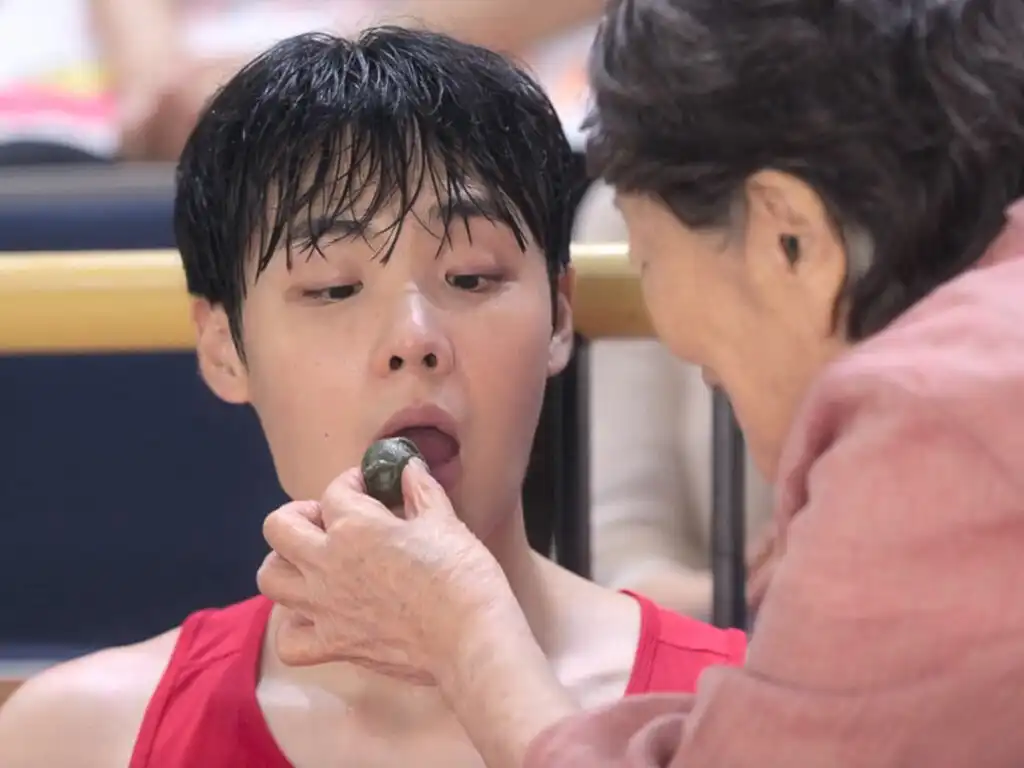
In the Netflix K-drama ‘Our Sticky Love’, the green rice cake that the grandmother puts into her grandchild’s mouth is ssuk kkul-tteok, a type of kkul-tteok made with mugwort. Inside, there is melted sugar and sesame seeds, so it is sweet and nutty. This is one of those traditional Korean snacks in Our Sticky Love that feels especially nostalgic if you grew up in Korea.
Episode 5
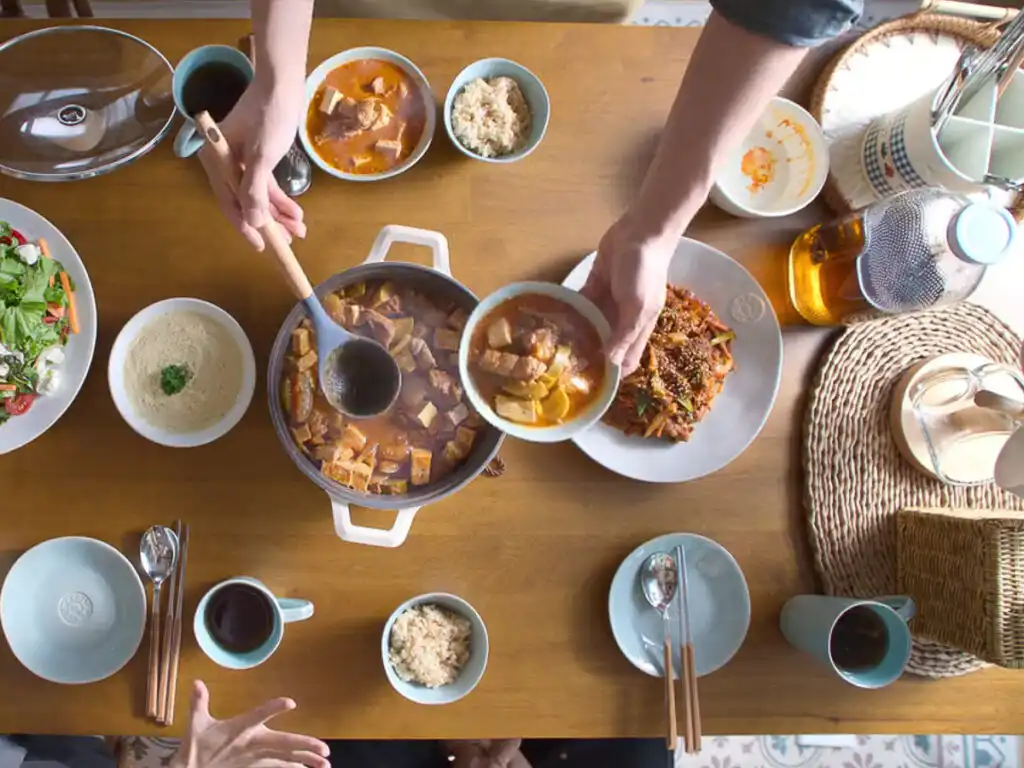
Gochujang-jjigae 고추장찌개
The gochujang-jjigae contains pork. It is spicy and warming, and the fat from the pork melts into the stew, making it incredibly savory and delicious. Koreans like eating it as a hangover food.
Jeyuk-bokkeum 제육볶음
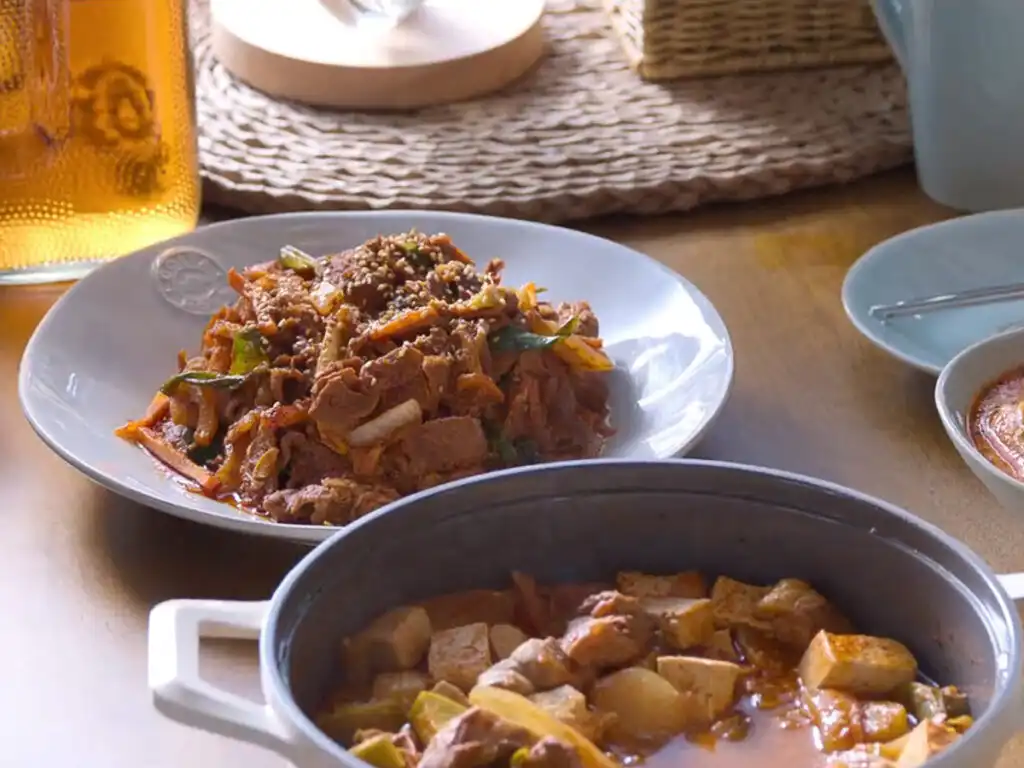
Jeyuk-bokkeum may be a Korean dish you’re already familiar with. It is thinly sliced pork stir-fried in a spicy and slightly sweet sauce made with gochujang or gochugaru.
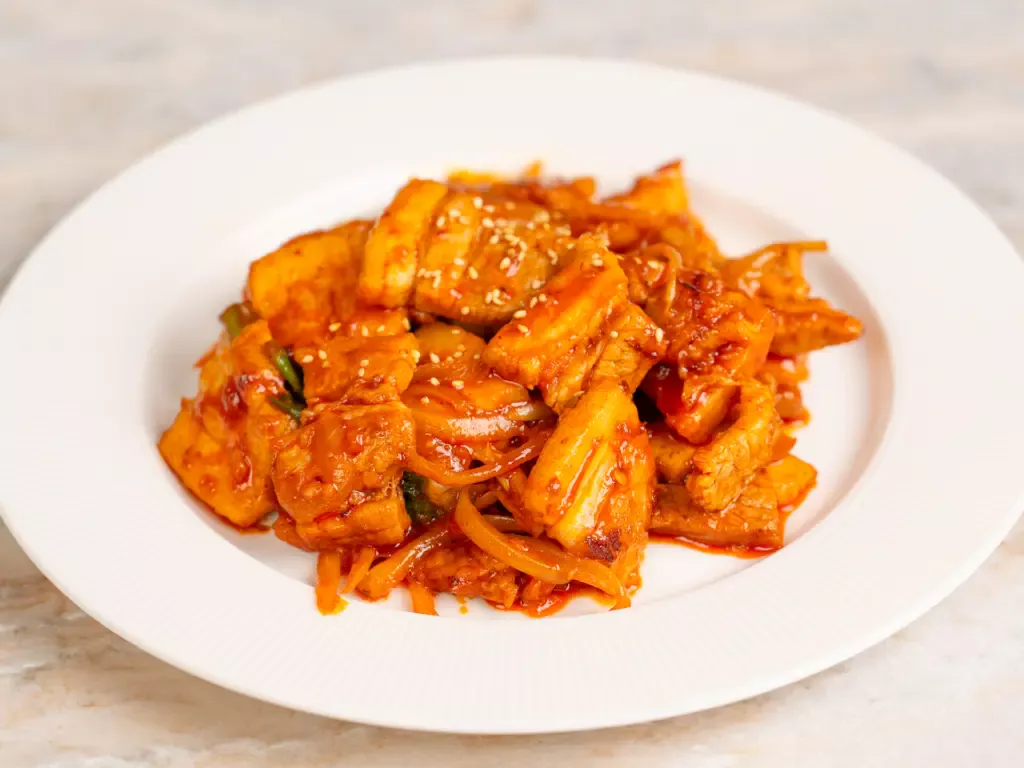
Best Korean Spicy Pork Stir Fry (Jeyuk Bokkeum) – Seoul Restaurant Style In 15 Minutes
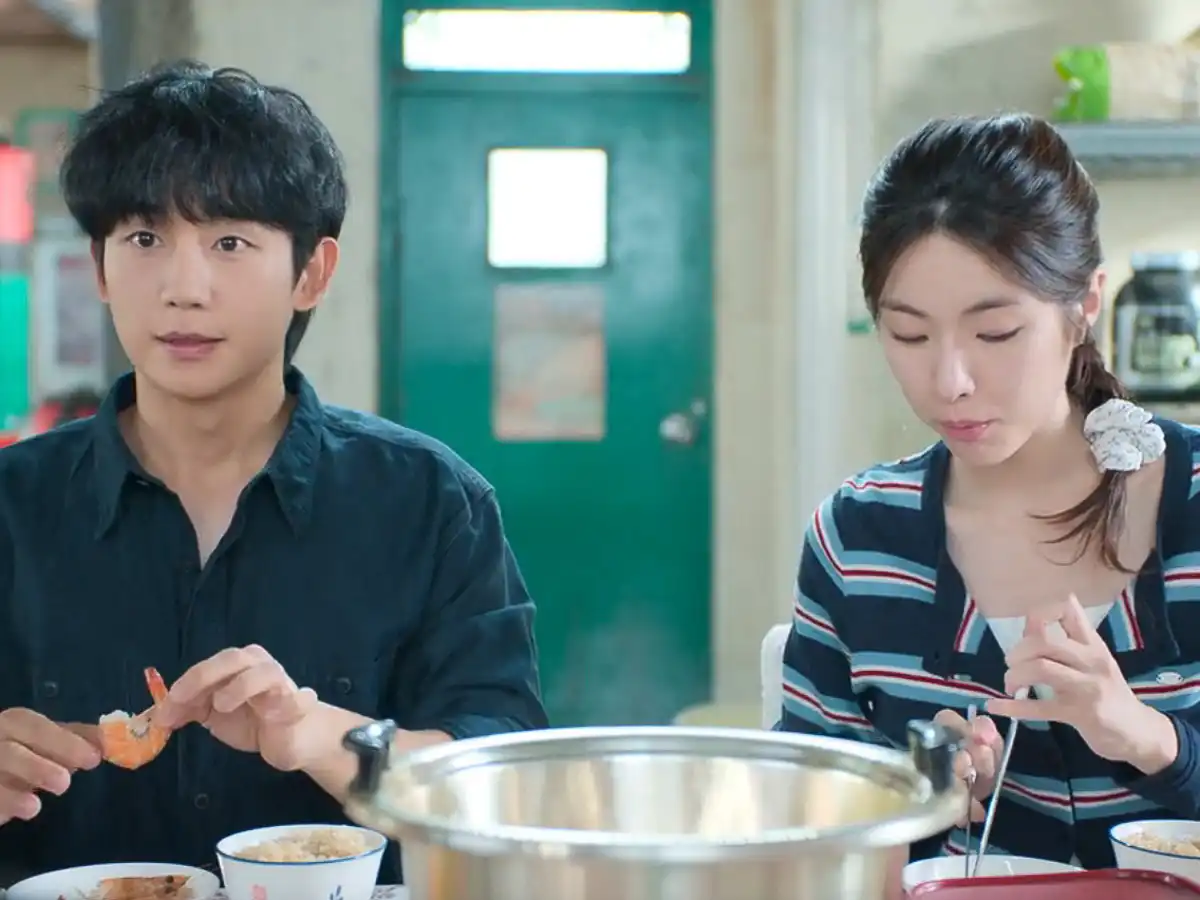
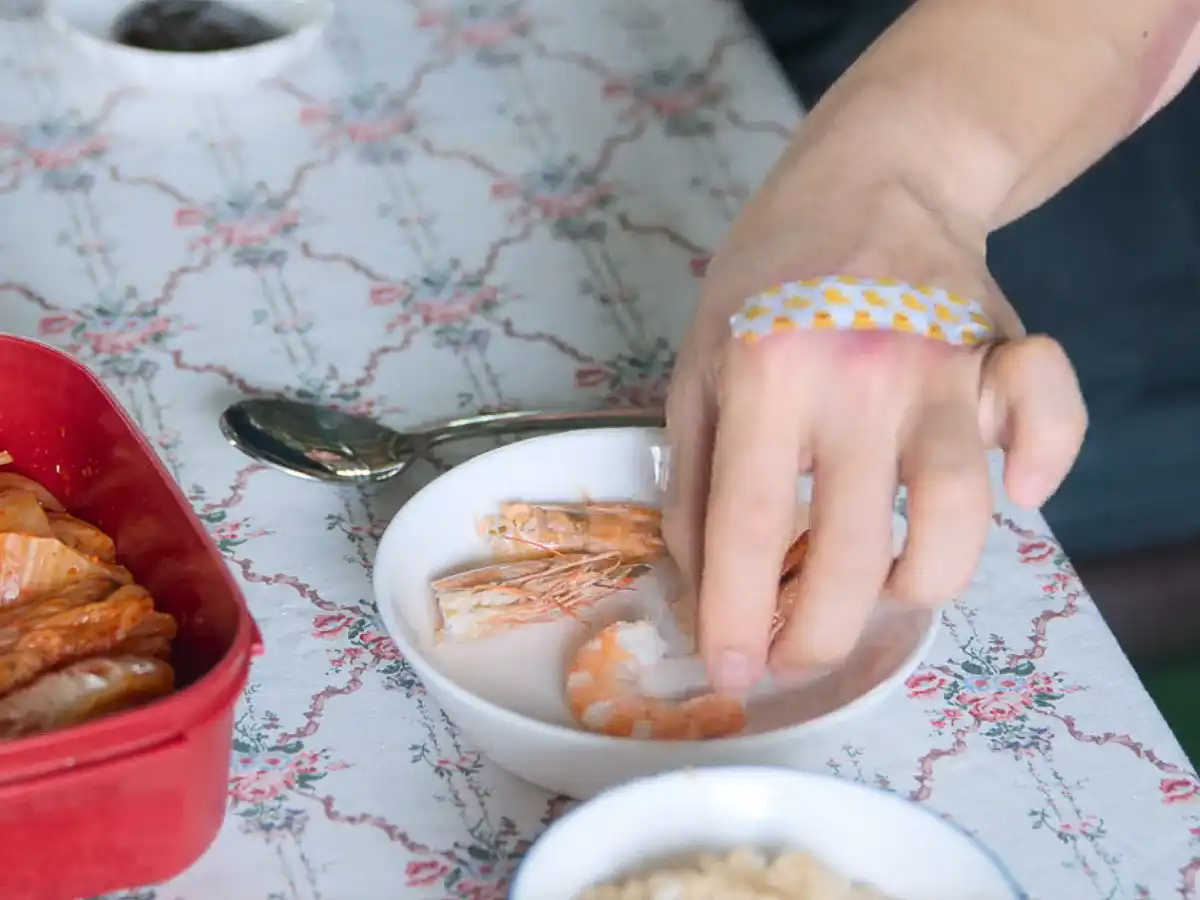
Salt-Grilled Prawns 소금 대하구이
To make salt-grilled prawns, you spread coarse salt across a wide pan and place large prawns on top with their shells still on. The salt gets absorbed into the prawns as they cook, making them savory and delicious. We eat them a lot in the fall.
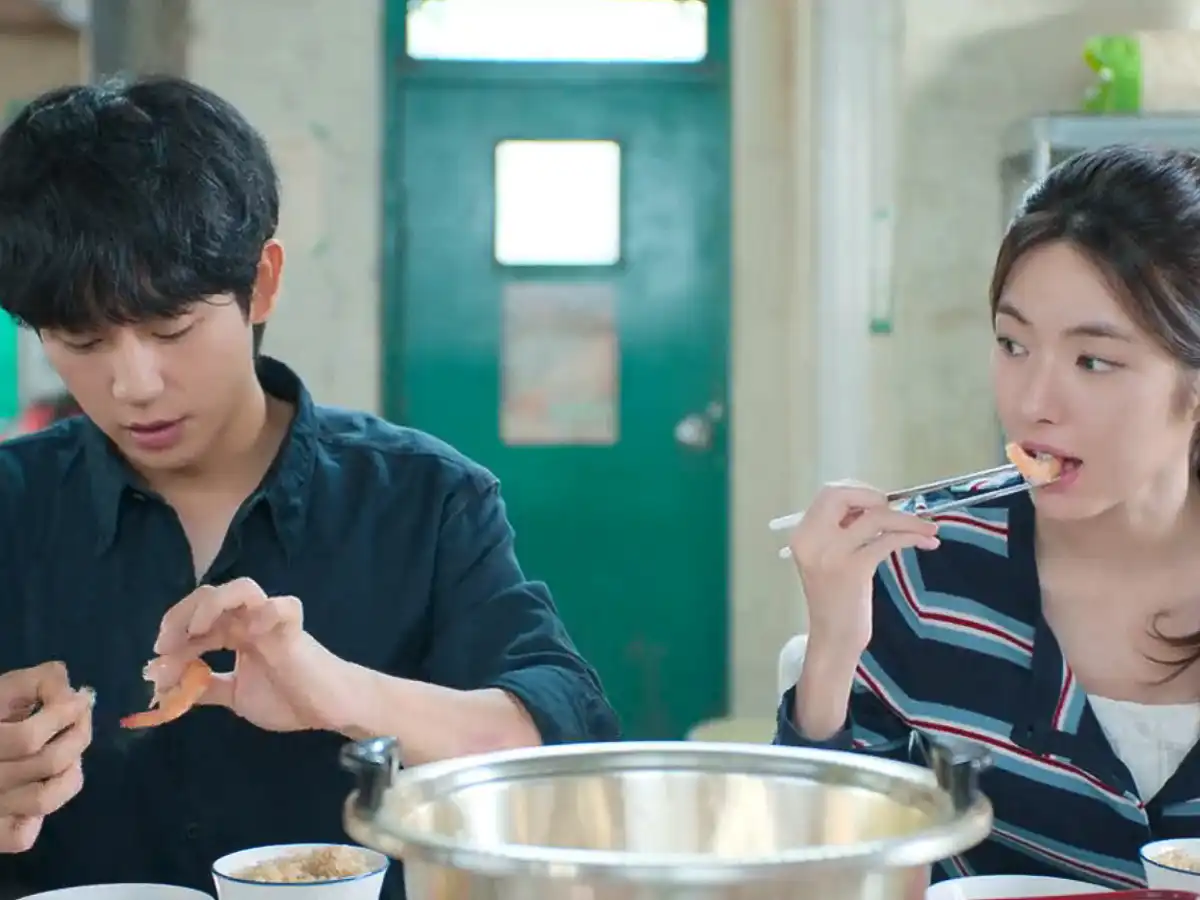
Korean Food Culture
As you see Taeha peeled the shrimp for Eunsae, in Korea, it’s common for a boyfriend or husband to peel the shrimp shells for his girlfriend or wife, just like in the drama. You can eat the prawns as they are, but I, along with many Koreans, usually dip them in cho-gochujang, a sweet and spicy Korean dipping sauce.
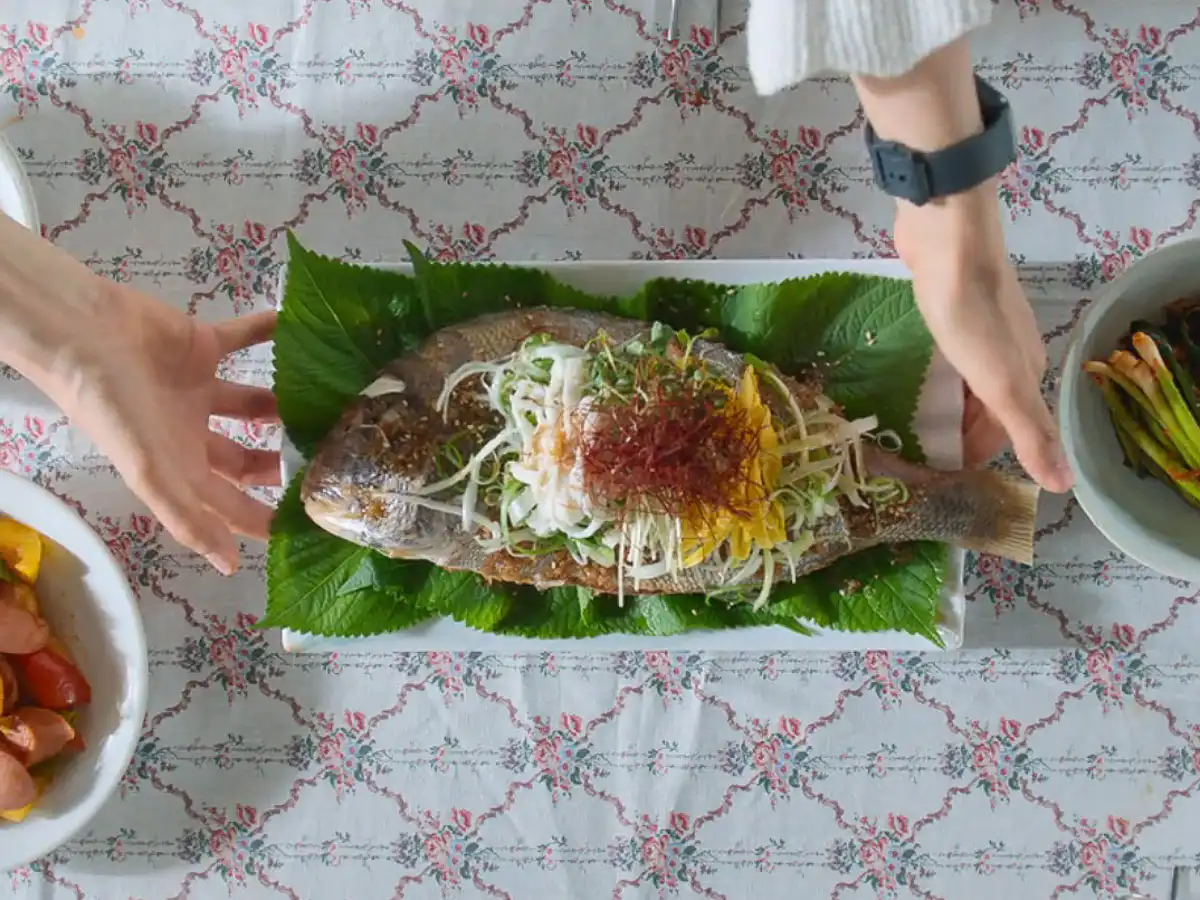
Jogi-jjim 조기찜
In the Netflix K-drama ‘Our Sticky Love’, that fish looks fancy, right? Actually, this is not something Koreans eat very often these days, but it is a special dish served at upscale hanjeongsik restaurants. The jogi, or yellow croaker, is steamed and then beautifully plated with thin strips of egg garnish on top.
Episode 6
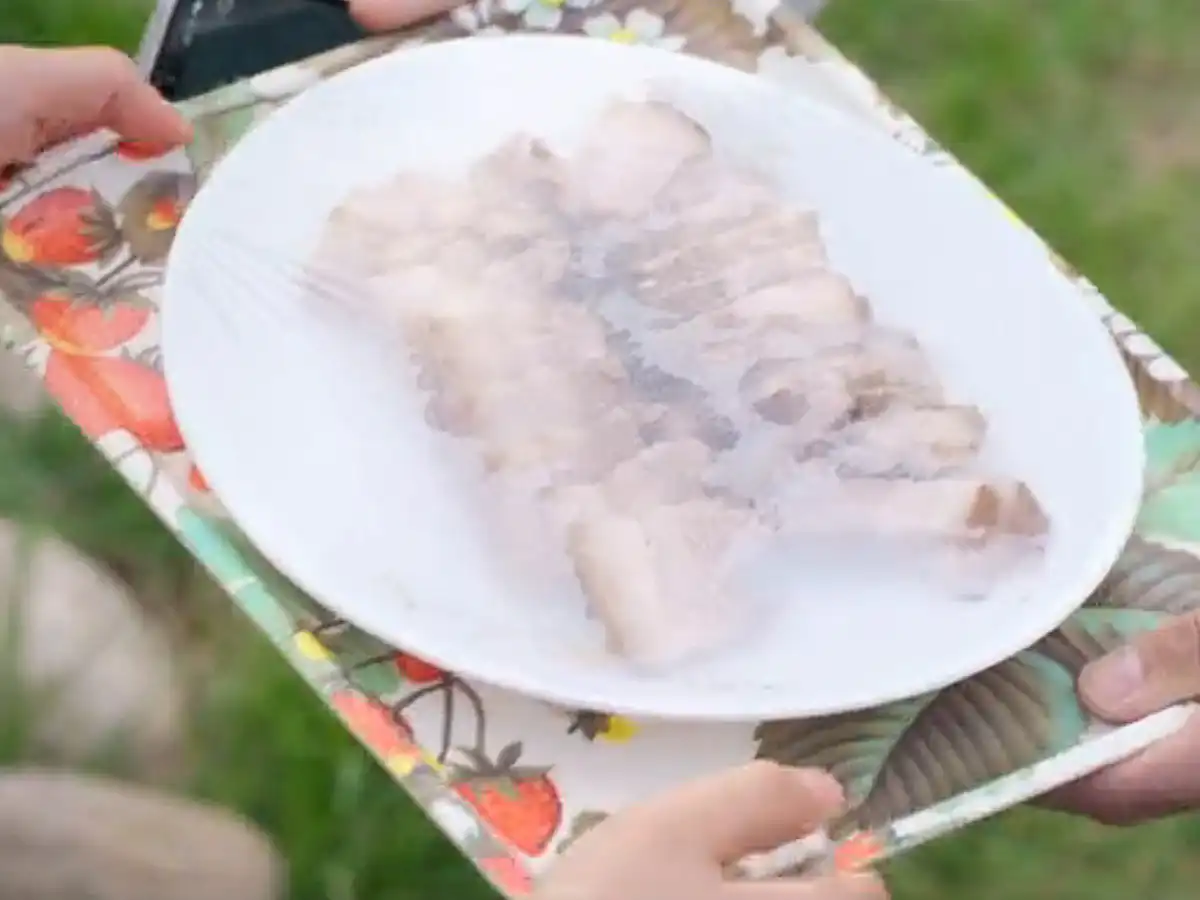
Suyuk 수육
Suyuk is pork belly or pork shoulder that is cooked in water. When you wrap it in napa cabbage, kimchi, dried radish greens, or other ingredients, it is called bossam. I’ll put my mom’s bossam recipe below. It’s juicy and doesn’t have that porky smell, so save it and definitely try making it. I recommend eating it with soju or makgeolli. If you’re looking up Korean food in Our Sticky Love, this is definitely one you should try making at home.
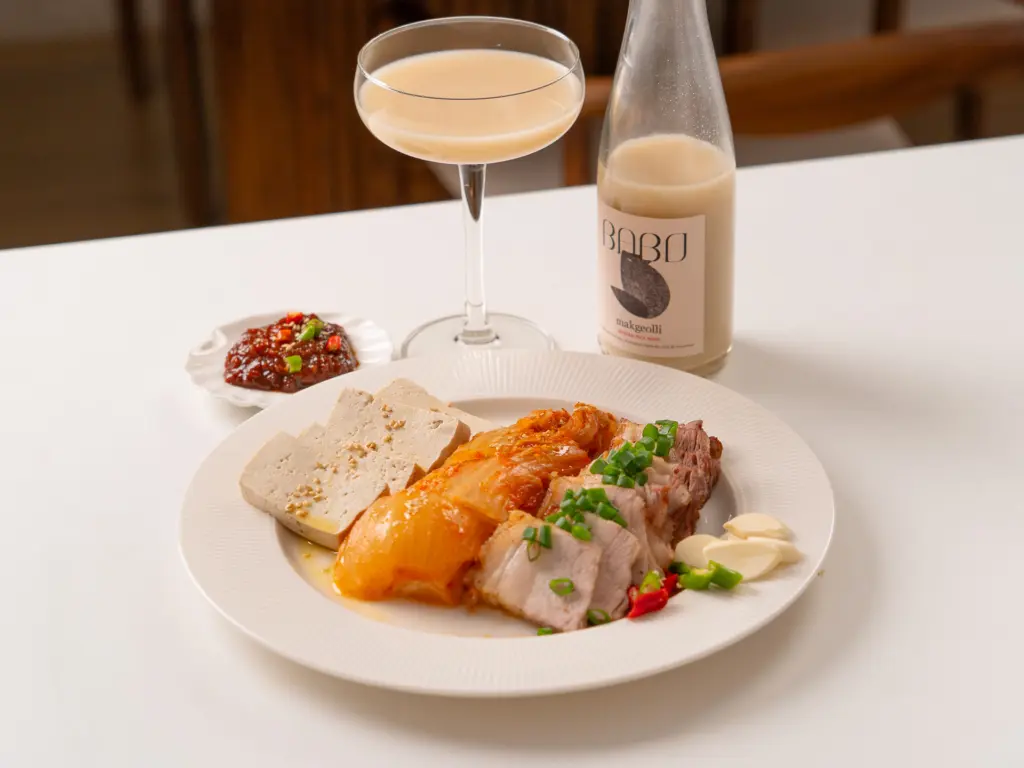
Samhap: Bossam Dubu Kimchi Trio
Episode 8
Yukhoe 육회
When you go to a Hanwoo(Korean beef) Korean BBQ restaurant, you may see raw beef served with an egg yolk on top like this. You can think of it as Korean-style tartare. Koreans call it yukhoe. You mix very fresh beef with the rich egg yolk, sweet Korean pear, and a soy sauce-based seasoning made with nutty sesame oil. If you’re exploring Korean food in Our Sticky Love, yukhoe is definitely one of the dishes I’d put on your list to try in Korea.
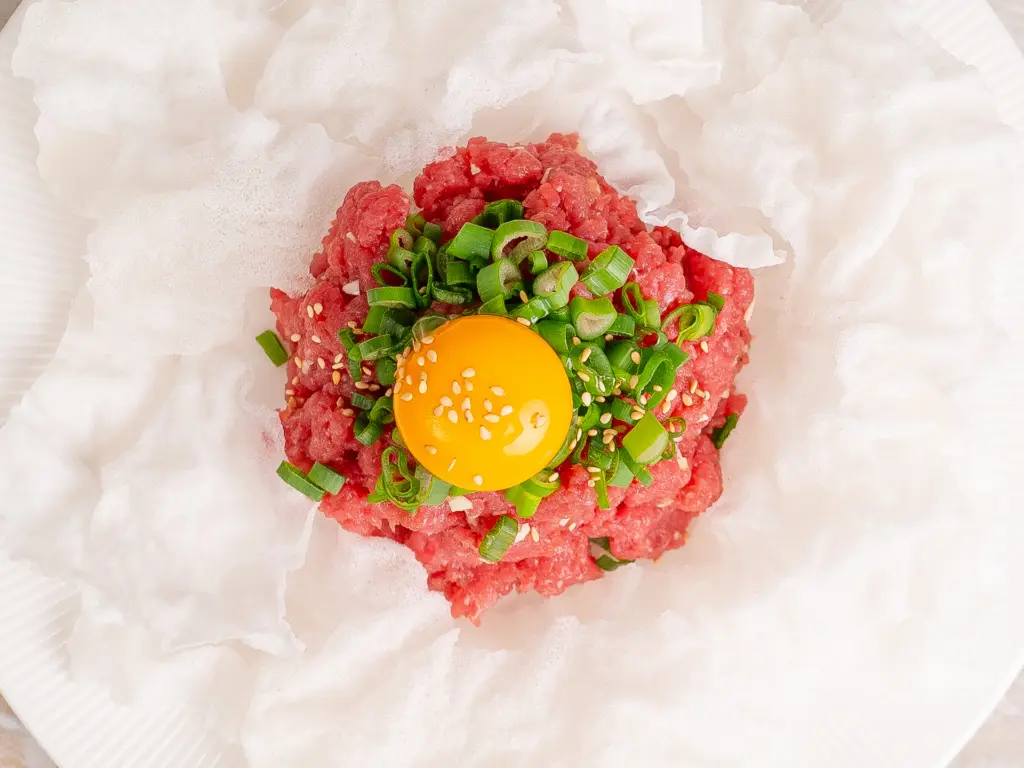
Yukhoe with Rice Paper Chips – Korean Beef Tartare
Episode 9
Ogolgye Baeksuk: Black Chicken Soup 오골계 백숙
Ogolgye is a chicken that is black on the outside and even has black bones. Koreans don’t eat it very often these days, but our ancestors considered ogolgye baeksuk a very precious restorative food.
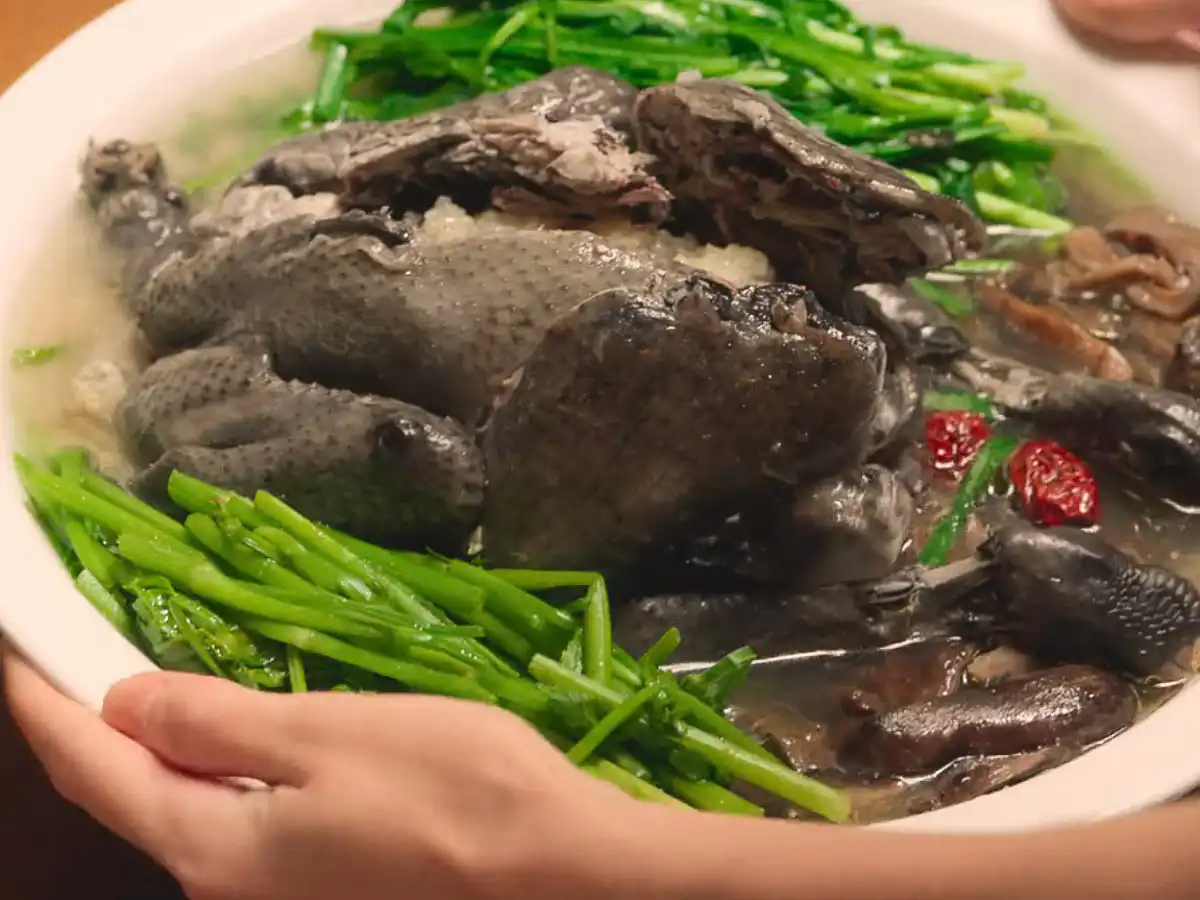
Why She Gives Tae-ha the Chicken Leg?
The scene in ‘Our Sticky Love’, where Eun-se saves the chicken leg for Tae-ha is a fun part of the drama that shows Korean food culture.
Koreans love chicken legs because they are tender and full of juicy meat. So there is a culture of giving the best part first to someone you love or care about. Mothers give them to their children, and boyfriends give them to their girlfriends.
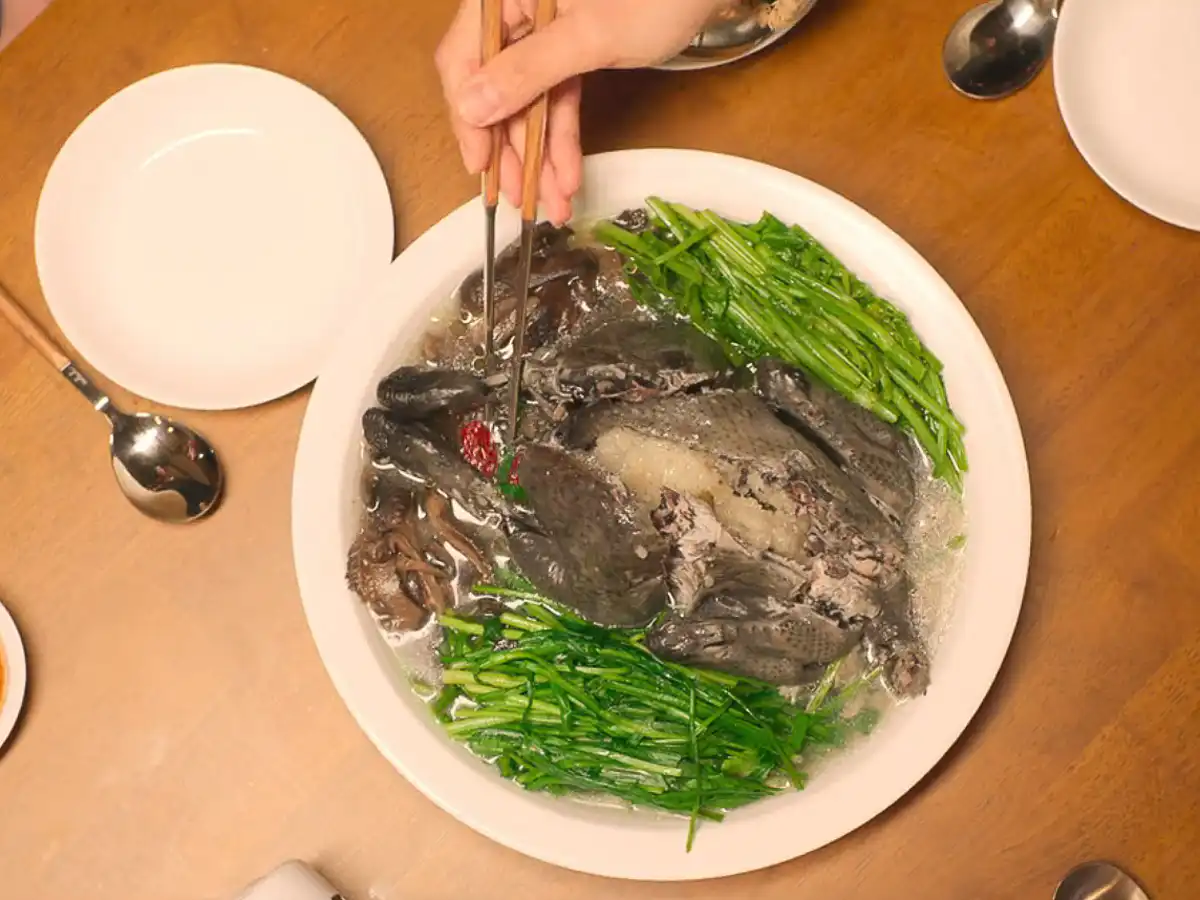
🚨 And if you ever go out for Korean fried chicken with a Korean friend and eat both chicken legs yourself, your friend might get angry. I’m not joking. I’m serious. So be careful, haha. (It’s really not a joke.)
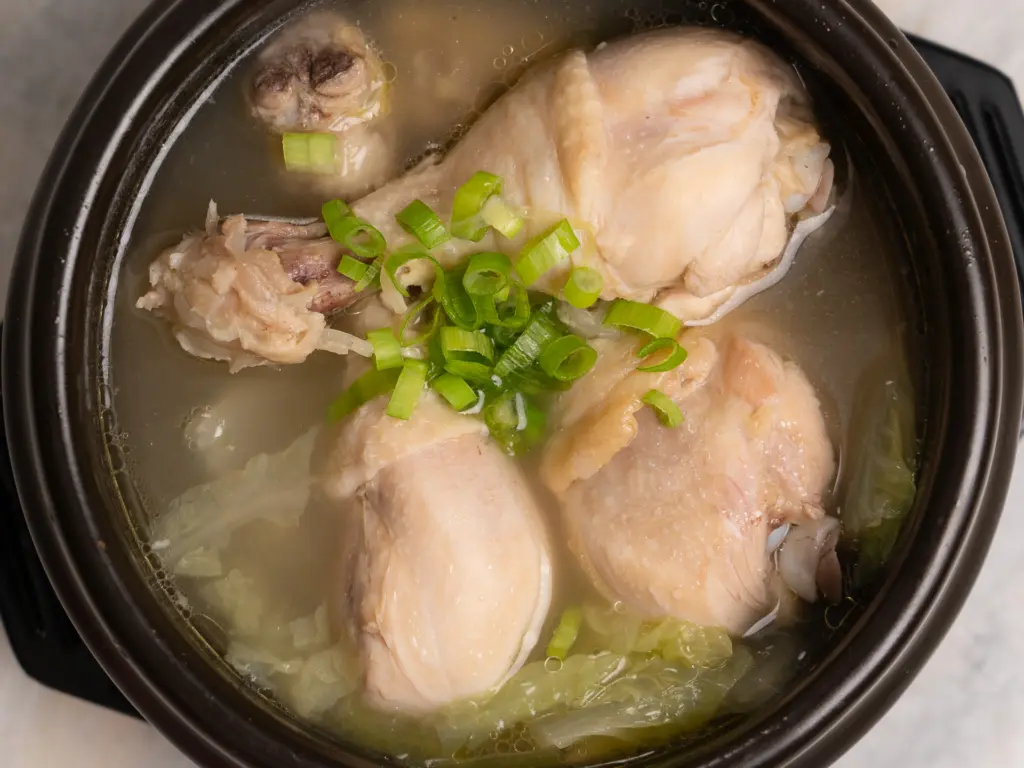
30-Minute Dak Gomtang: Easy Korean Chicken Soup
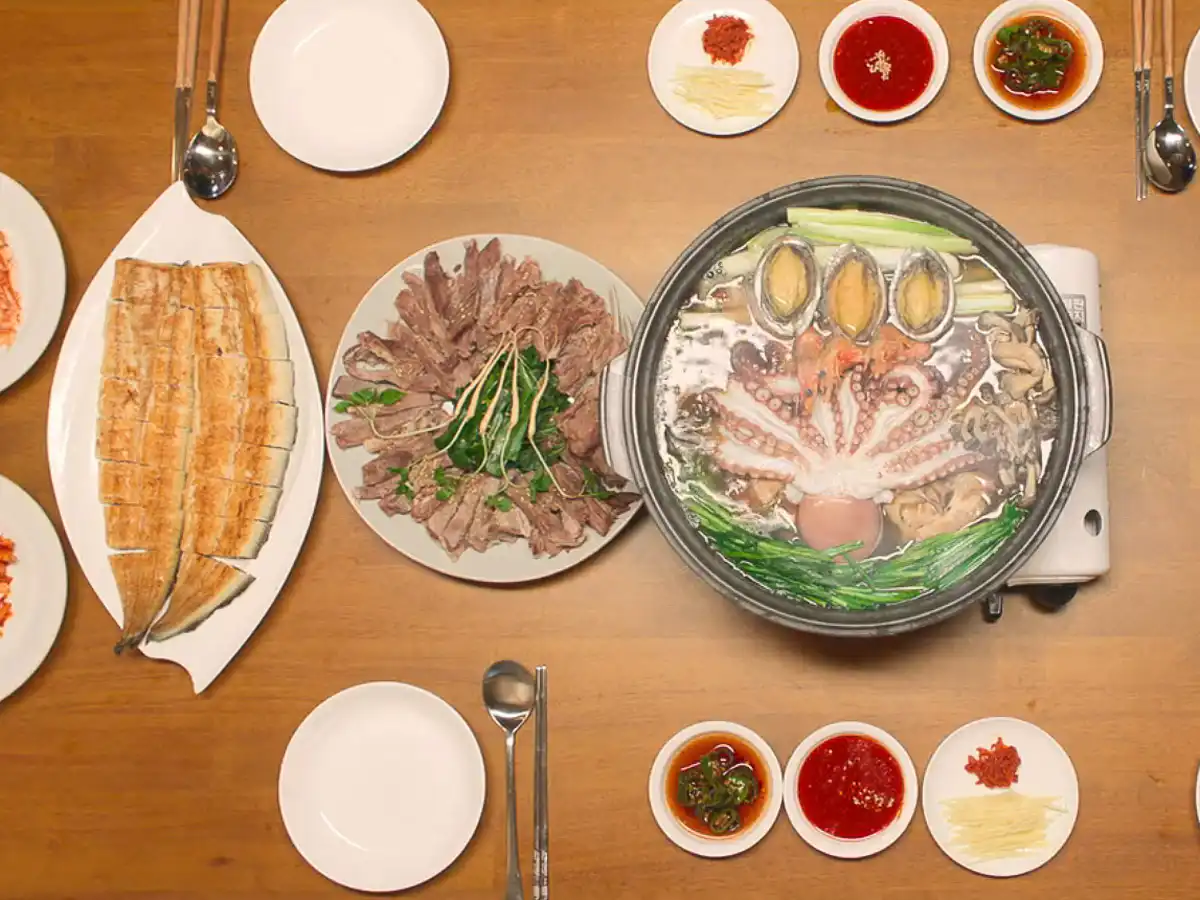
Haesintang 해신탕
That dish with octopus and abalone is haesintang, a Korean summer dish traditionally eaten during Boknal. Korea has 3 Boknal days during the summer. They are days when Koreans eat nutritious foods to replenish their energy during the hot summer, including foods such as samgyetang.
Episode 10
Canned Coffee 캔커피
In ‘Our Sticky Love’, Taeha is holding a canned coffee. Korean-style cafés are famous all over the world now, but when I was young, Korea didn’t really have much of a café culture. Back then, people would make Maxim instant coffee mix at home or drink canned coffee like the one shown here.

In winter, canned coffee was sometimes sold warm, but usually, people would get it cold from vending machines and drink it. Even now, I sometimes buy one when I feel nostalgic. If you come to Korea, I recommend trying one too.
Episode 11
A Traditional Korean Birthday Table 전통 생일상
These days, Koreans don’t usually eat a traditional Korean birthday meal on their birthdays. People just eat whatever they want. But the tradition of having miyeok-guk(seaweed soup), or Korean seaweed soup, on your birthday is still something everyone keeps. Usually, Koreans might go to an upscale Japanese restaurant, an Italian restaurant, or a steakhouse for their birthday.
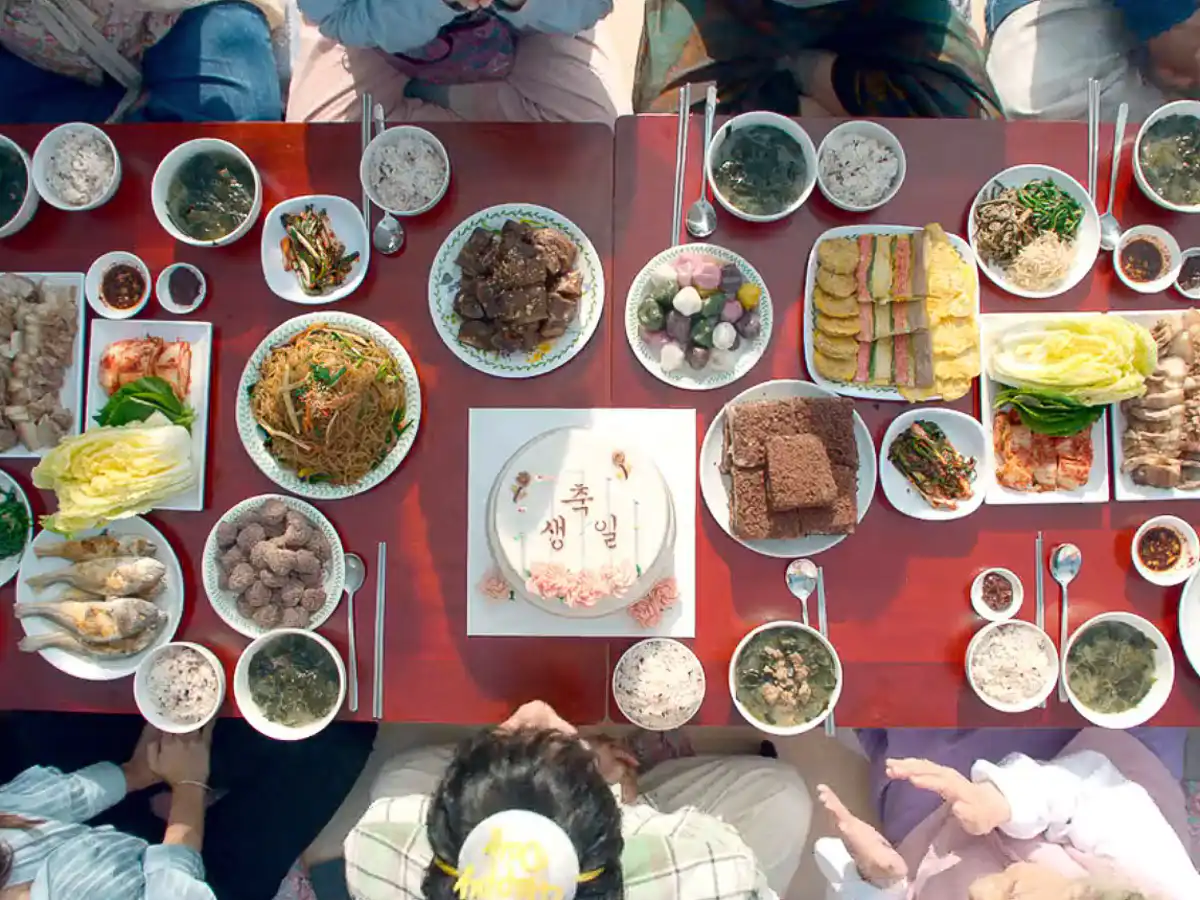
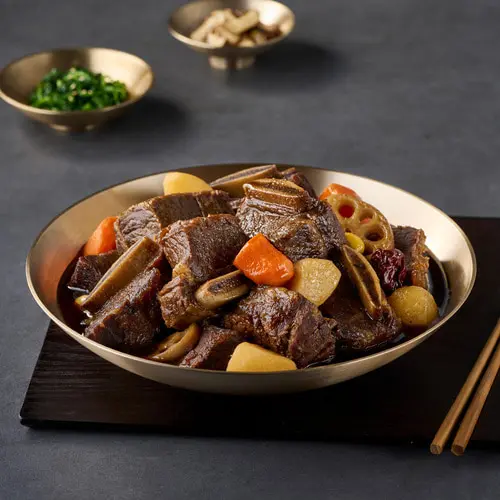
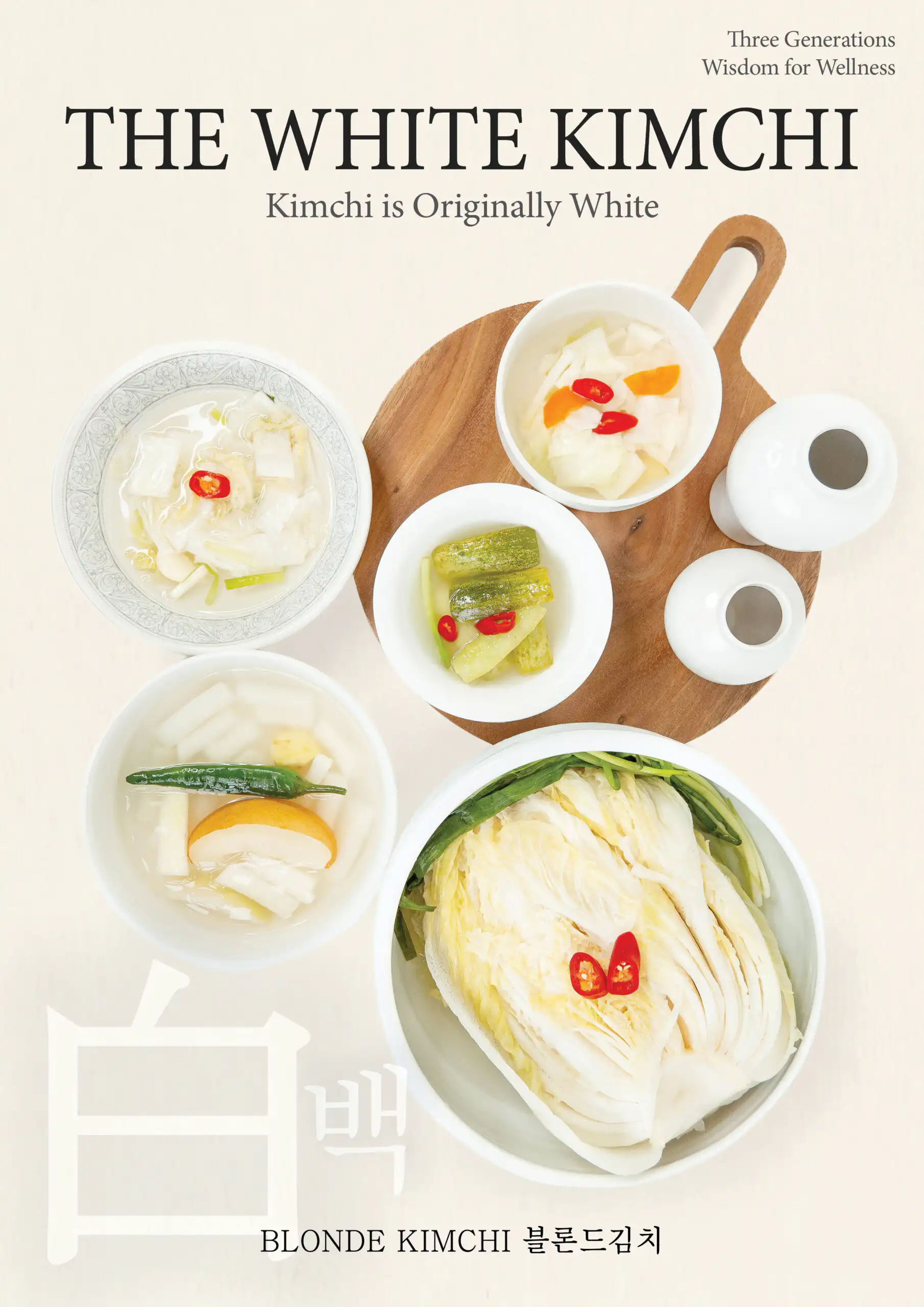
Anyway, the traditional Korean birthday table shown in Our Sticky Love includes beef miyeok-guk and rice. Japchae and galbi-jjim are served as the main dishes. Many older Koreans still have birthday tables like this. For the rest, people usually prepare whatever they like, but this particular table has kkul-tteok, japchae, cake, galbi-jjim, modeum jeon, bossam, siru-tteok, acorn jelly salad, grilled fish (jogi), green onion kimchi, napa cabbage kimchi, and various namul side dishes.
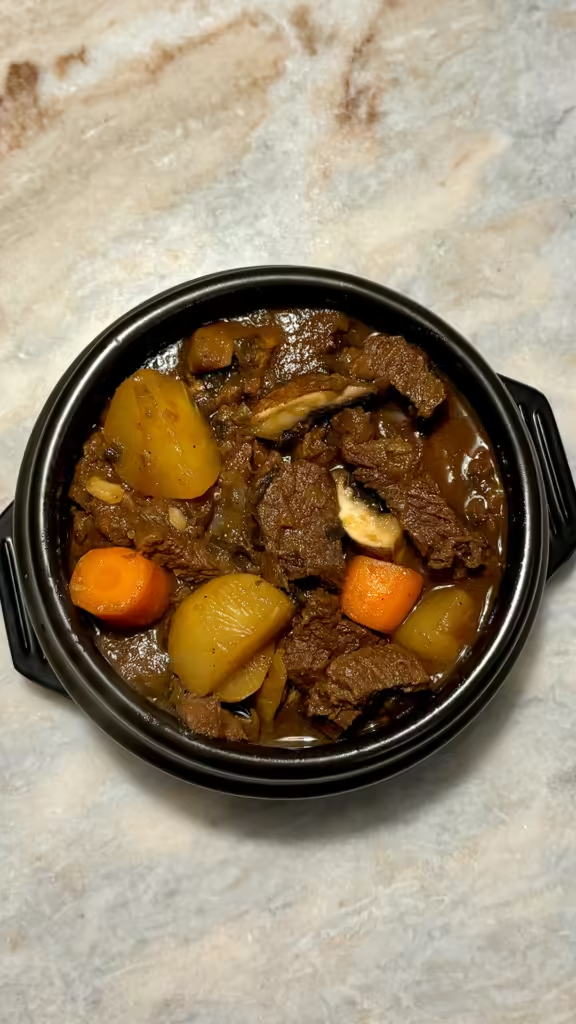
Boneless Galbijjim (Korean Braised Short Ribs)
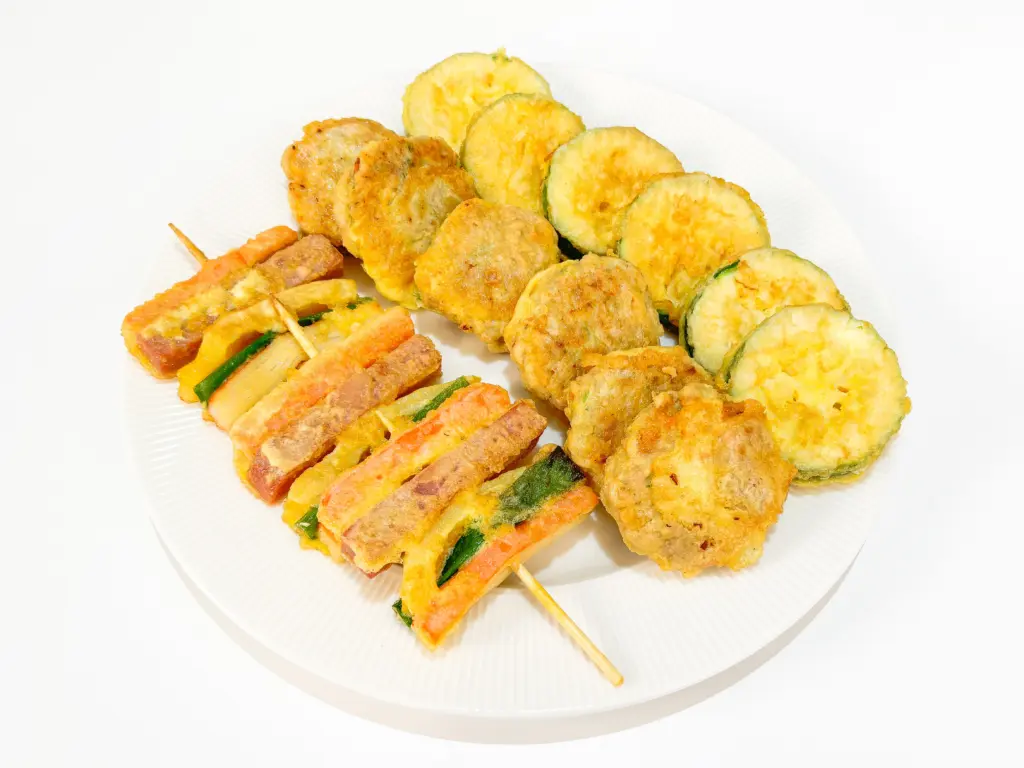
Savory Korean Pancake Set: Modeum Jeon for Lunar new year
One interesting thing is that the cake is not a Western-style sponge cake filled with cream, but a Korean tteok cake. Usually, red bean paste is used instead of cream inside. It’s not really my thing. But if you like rice cakes, I recommend trying it.
Episode 12
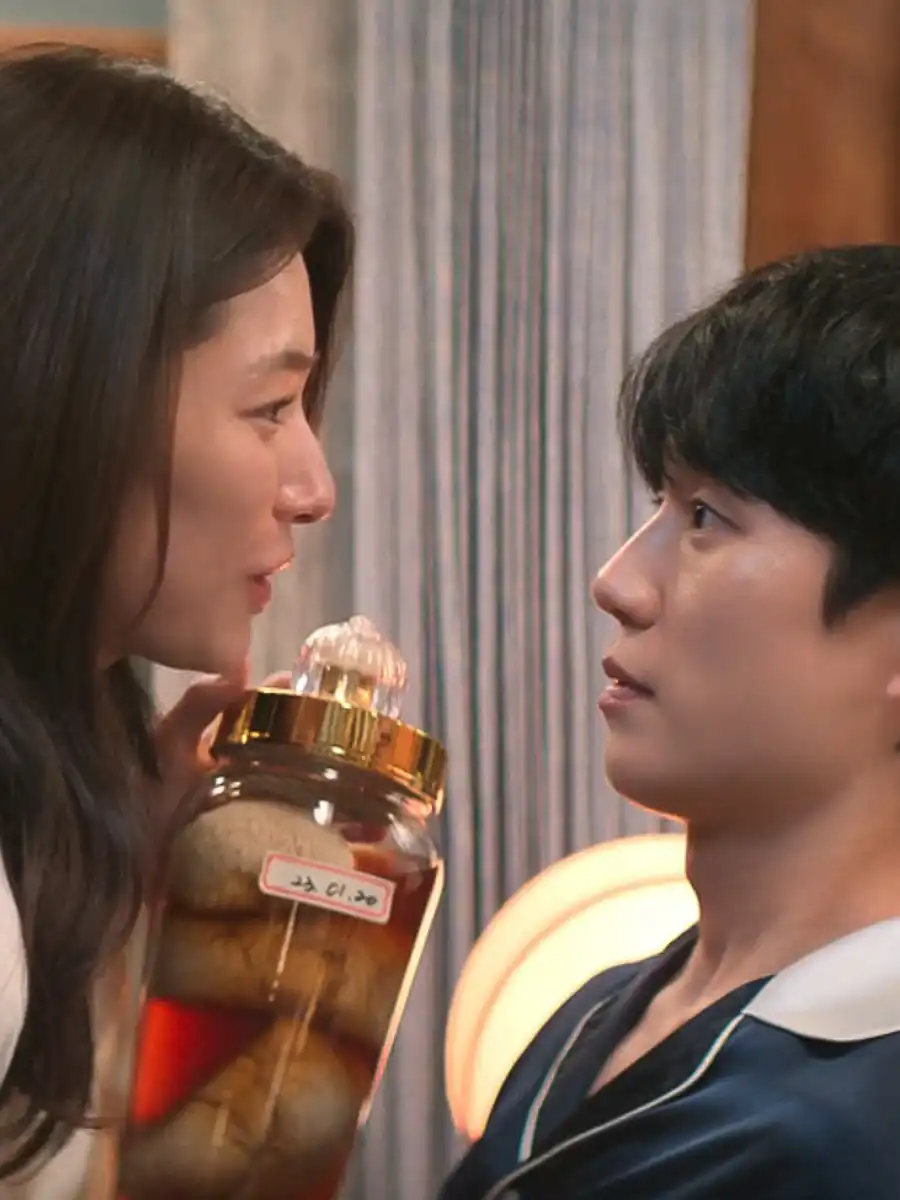
Damgeum-ju: Korean Infused Liquor 담금주
The bottle Eun-se is holding is called damgeum-ju. Usually, ingredients such as wild ginseng or mushrooms are put into soju and aged for several years, then drunk almost like a medicinal liquor. Rather than being enjoyed simply as alcohol, older people drink it more like a restorative medicine. This is another example of how Our Sticky Love mixes food, drinks, and older Korean traditions into its story.
Final Thoughts on Korean Food in Our Sticky Love
One of the things I love about Our Sticky Love is that the food isn’t just there to make the scenes look Korean. A lot of the dishes show everyday Korean life, older Korean food culture, the way Koreans express affection through food, and the foods people traditionally ate for comfort or nourishment. So if you’re watching Our Sticky Love and spot a Korean dish you don’t recognize, I hope this guide helps you understand not only what it is, but also why Koreans eat it and what it can mean culturally.