Best Korean Cabbage Side Dish Recipe – Doenjang Baechu Namul

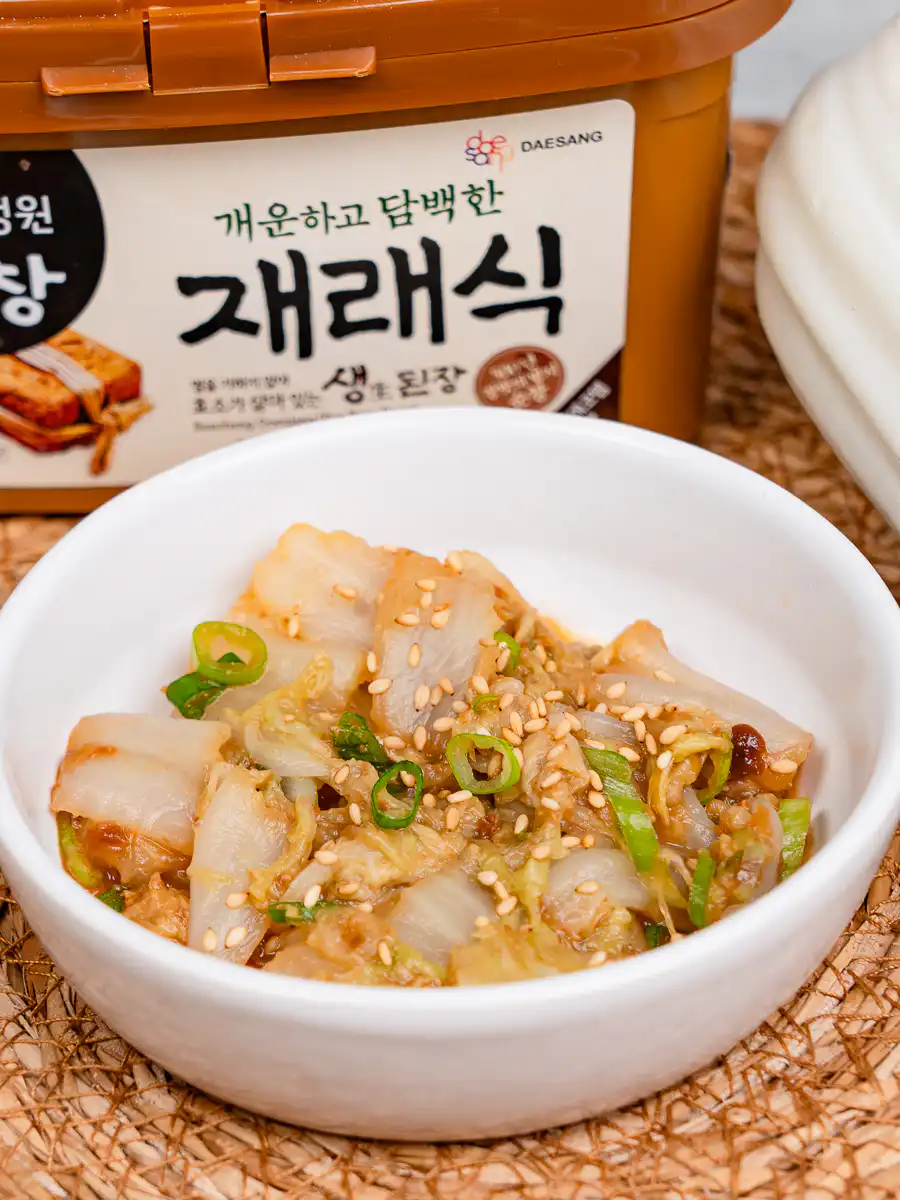
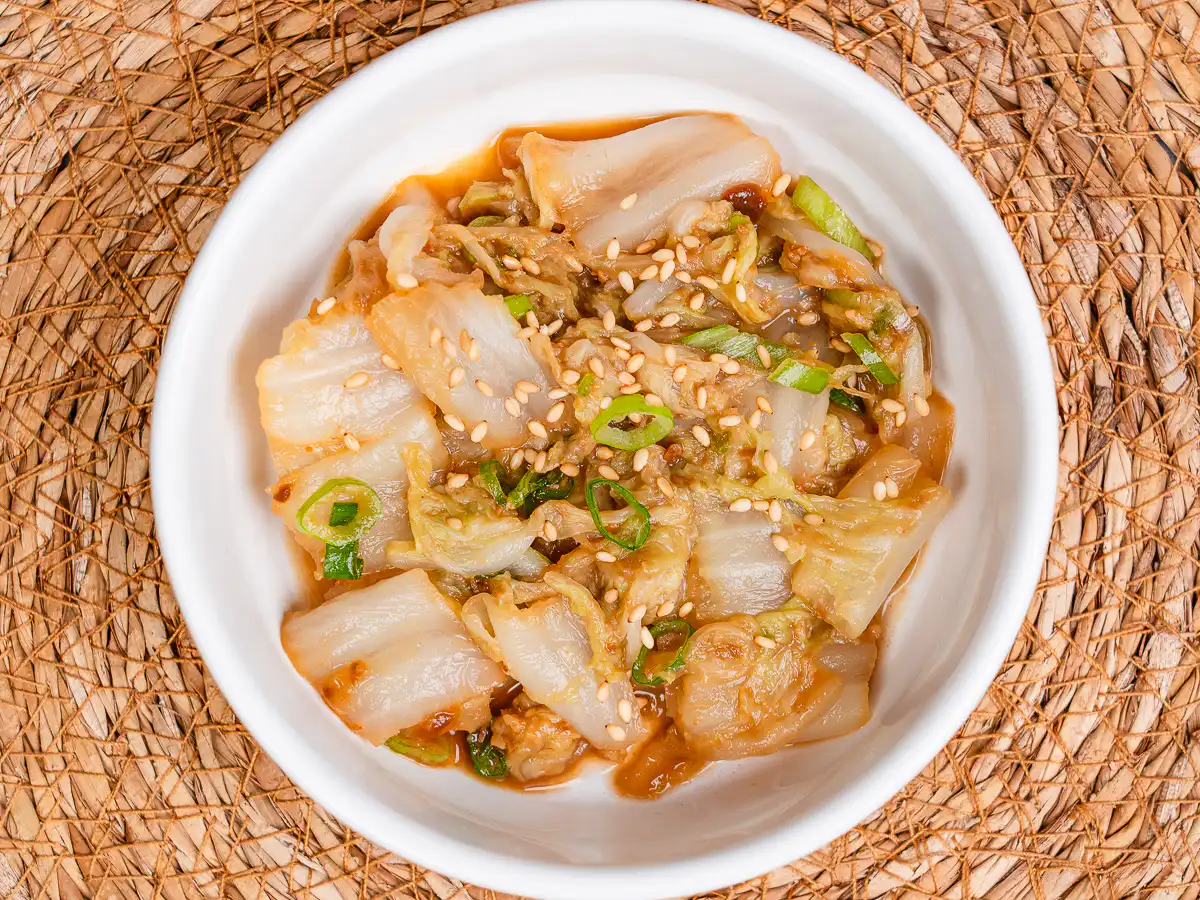
This Korean cabbage side dish is one of the most comforting banchan you can make at home. Simple, healthy, and deeply savory, this is real Korean home cooking, the kind Korean moms have been making for generations.
Most cabbage recipes you’ll find online skip the most important ingredient: Doenjang (된장), Korean fermented soybean paste. This recipe doesn’t. And there’s another reason doenjang matters beyond flavor, it’s genuinely good for your skin. More on that below. If you’ve been searching for a true Korean cabbage banchan, not a fusion salad, you’re in the right place.
What Is Korean Cabbage Side Dish (Baechu Namul)?
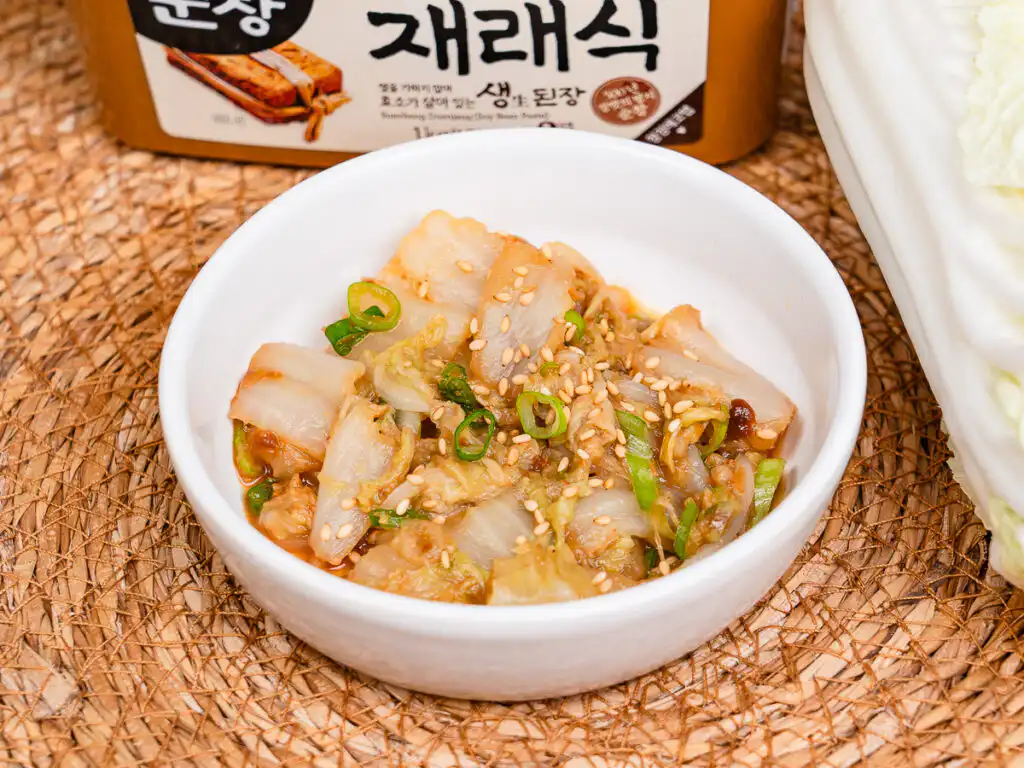
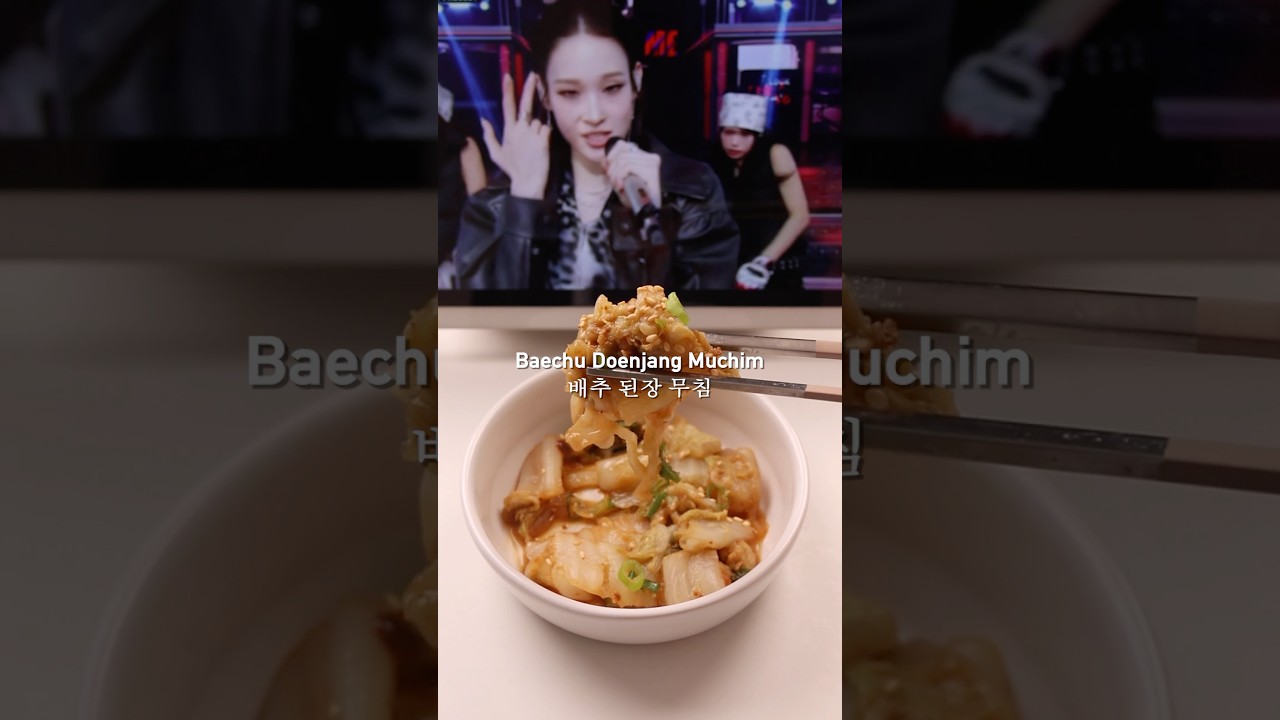
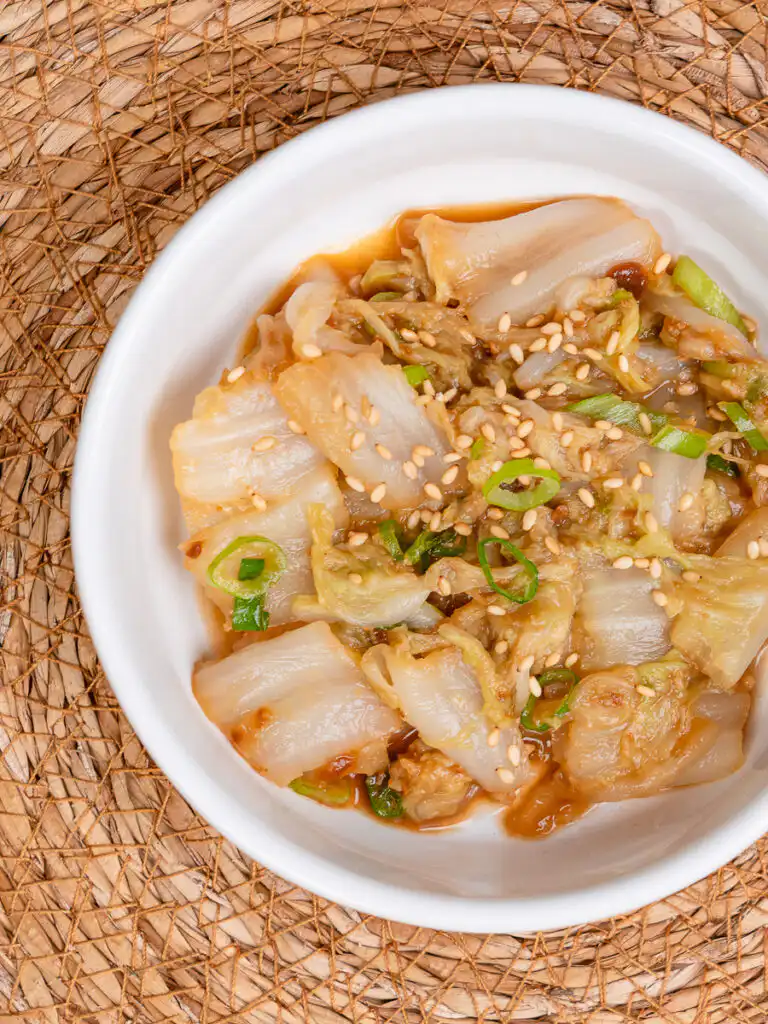
Baechu namul (배추나물) is a traditional Korean cabbage side dish made by blanching napa cabbage and seasoning it with doenjang(Korean soybean paste), garlic, sesame oil, and maesil-cheong (plum syrup). In Korean, “baechu (배추)” means napa cabbage, and “namul (나물)” refers to seasoned vegetable side dishes, a broad category of banchan that forms the backbone of Korean home cooking.
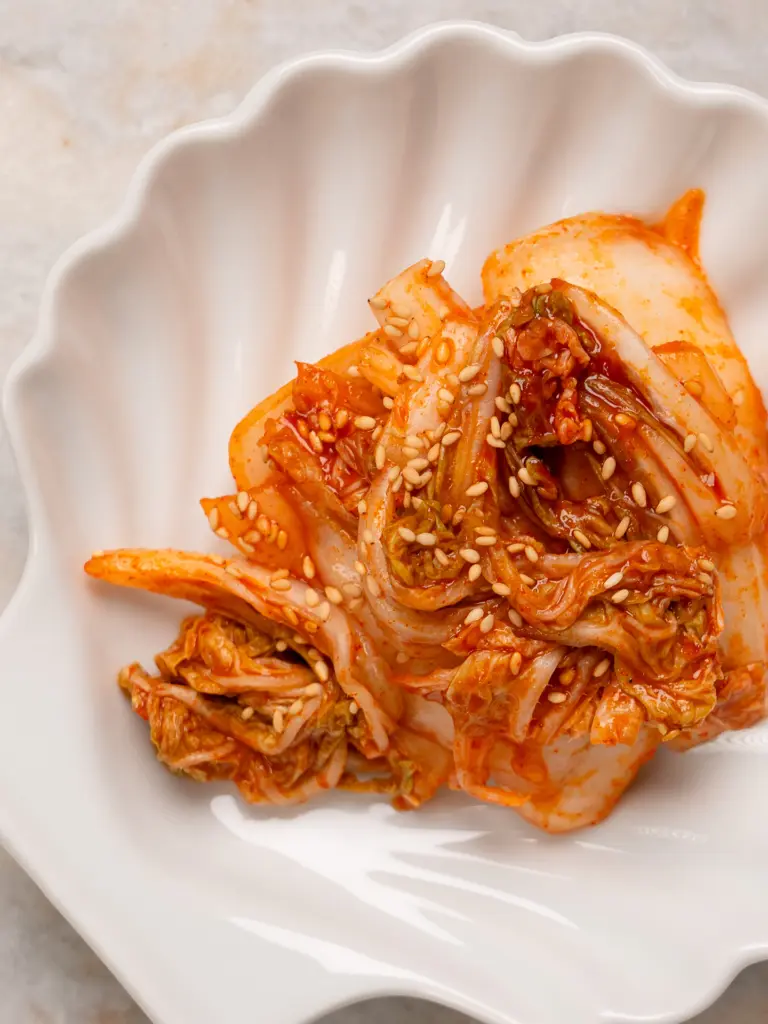
Unlike kimchi, baechu namul is mild, savory, and ready in under 15 minutes. No fermentation needed. No special equipment. Just wholesome ingredients and one simple technique. It’s the kind of dish that doesn’t look extraordinary but one bite in, you understand exactly why it’s been on Korean tables for centuries.
Why This Recipe Beats Every Other Korean Cabbage Recipe Online
Most Korean cabbage side dish recipes online fall into one of two traps:
- The Fusion Salad Problem: Many top-ranking recipes use regular green cabbage with a sesame vinegar dressing. It’s closer to a Japanese-style salad than a real Korean banchan. Tasty, yes. But it’s not what Koreans actually eat at home.
- The Hard-to-Find Ingredients Problem: Some authentic recipes call for putbaechu or eolgari cabbage, varieties that are nearly impossible to find outside of Korean grocery stores.
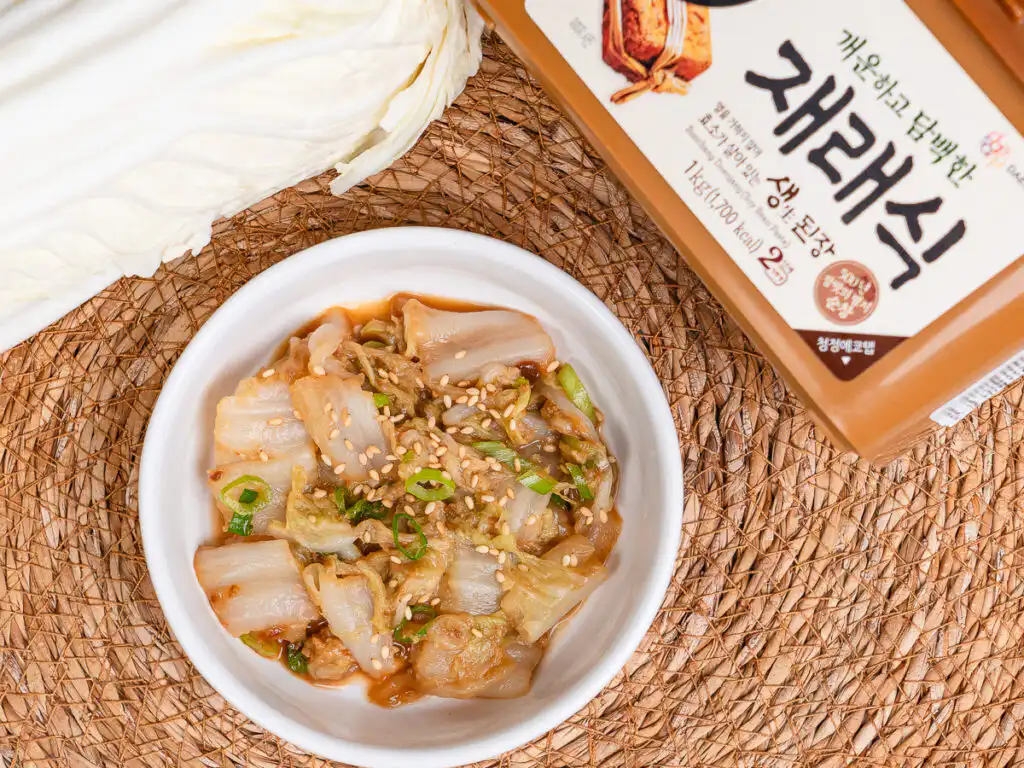
This recipe uses napa cabbage (배추), available at almost any supermarket worldwide, and seasons it the way Korean home cooks actually do it: with doenjang, maesil-cheong, fresh garlic, and sesame oil.
The result is a Korean cabbage banchan that is:
- ✅ Authentically Korean in flavor
- ✅ Made with ingredients you can actually find
- ✅ Ready in 15 minutes
- ✅ Naturally vegan and gluten-adaptable
- ✅ Good for your skin (more on this in Section 6)
Ingredients You’ll Need
For the Cabbage
For the Doenjang Sauce
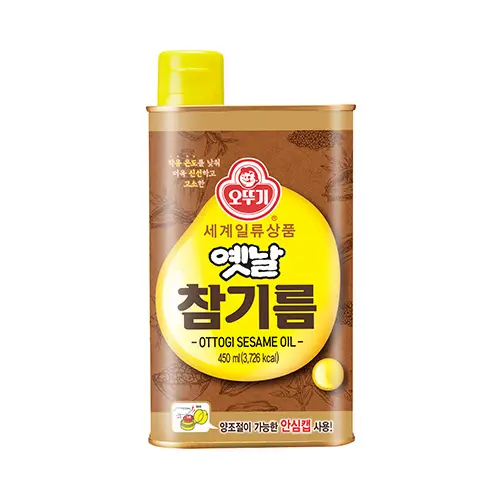
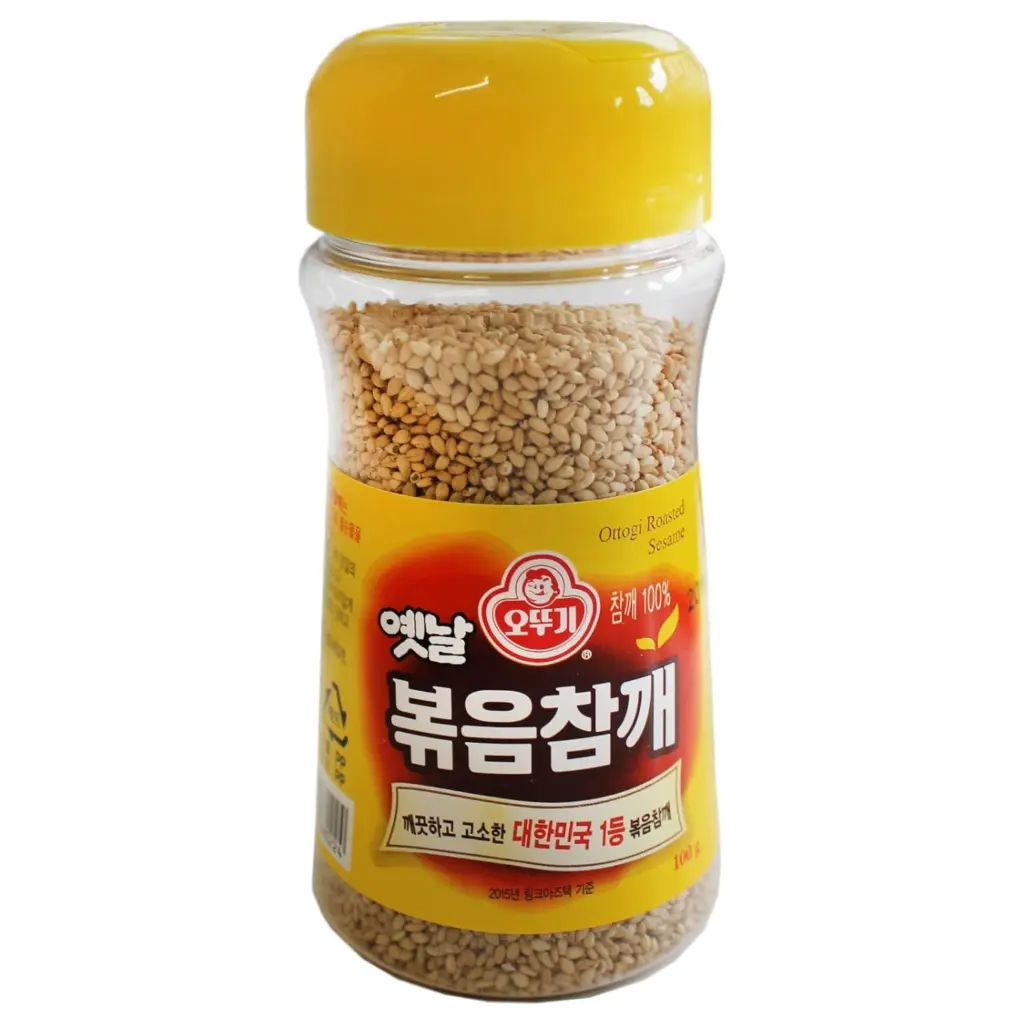
📝 Key Ingredient Notes
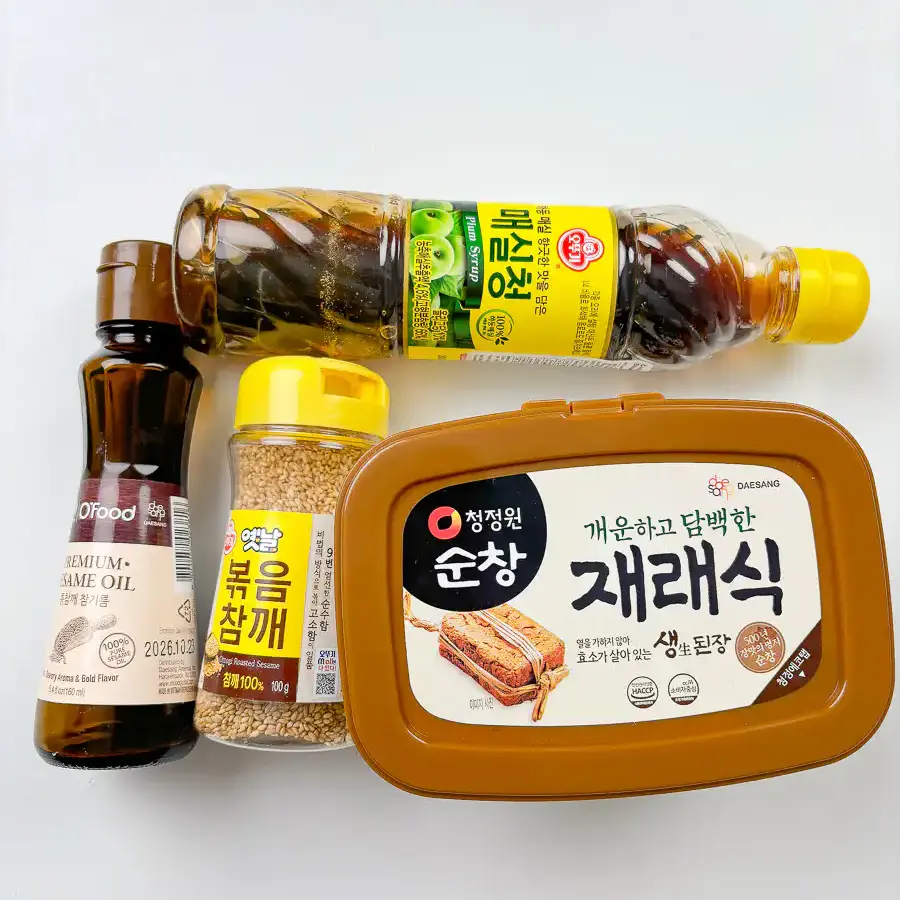
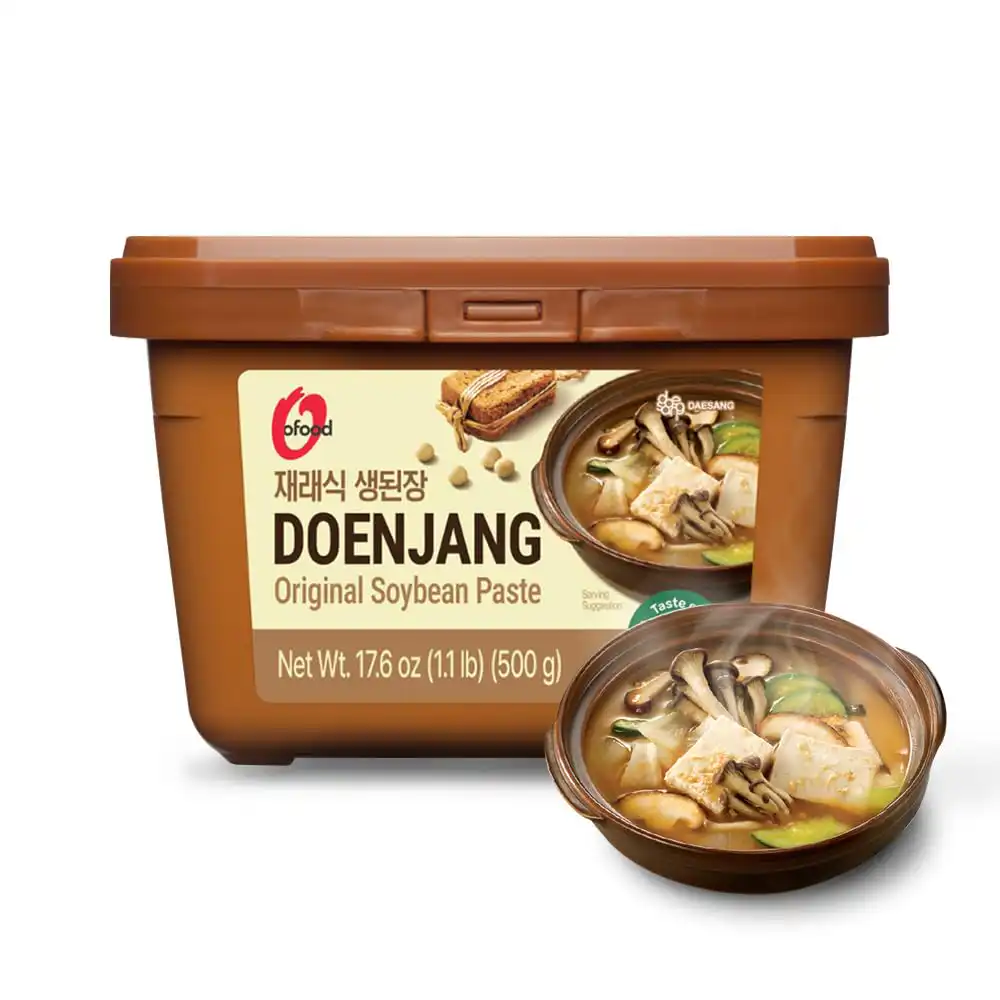
Doenjang: This is the heart of the recipe. It’s a fermented soybean paste with a bold, complex, slightly pungent flavor , deeper and more intense than Japanese miso.
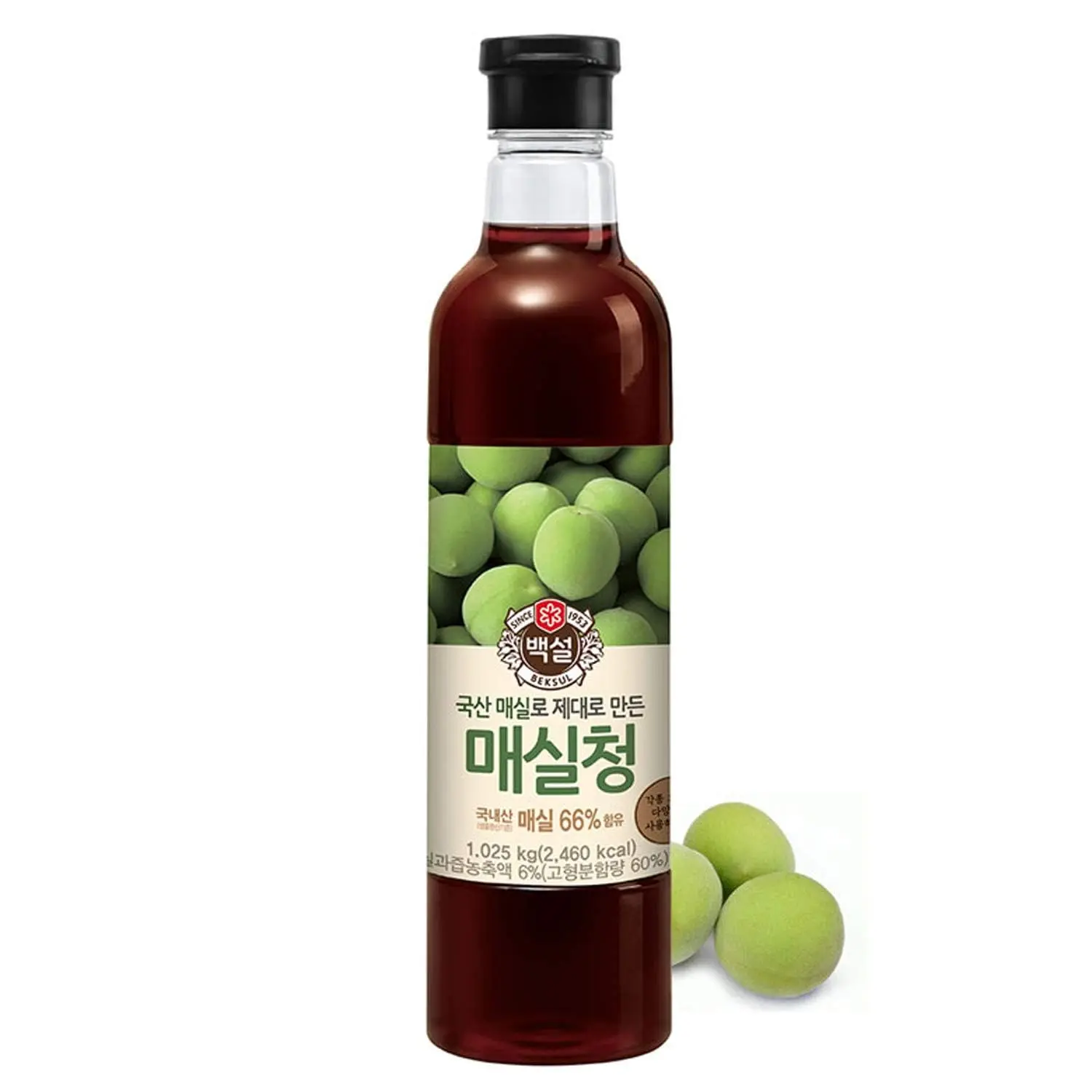
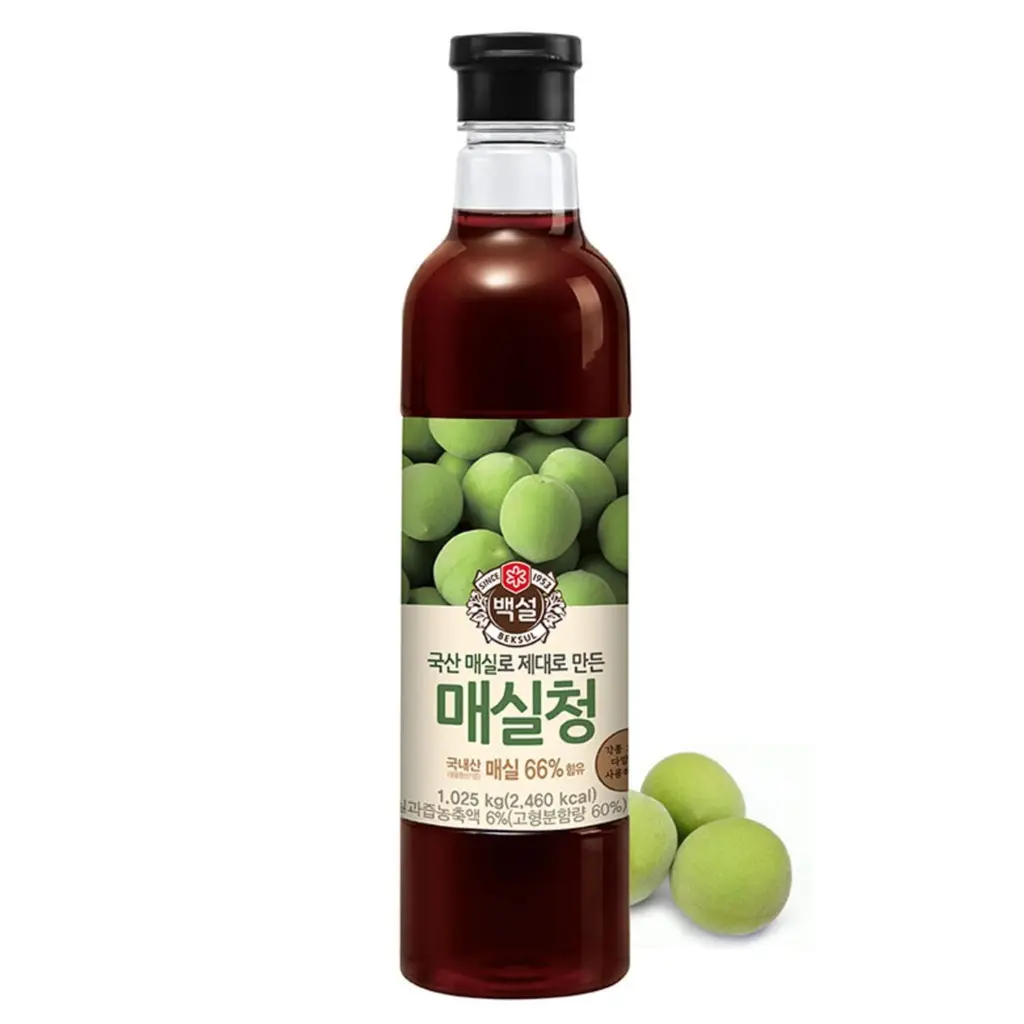
Maesil-cheong: Korean green plum syrup. It adds gentle, fruity sweetness and depth. It’s not just a substitute for sugar, it’s better than sugar for this recipe. Can’t find it? Use 1 tsp honey or ½ tsp sugar as a substitute, but maesil-cheong is worth seeking out.
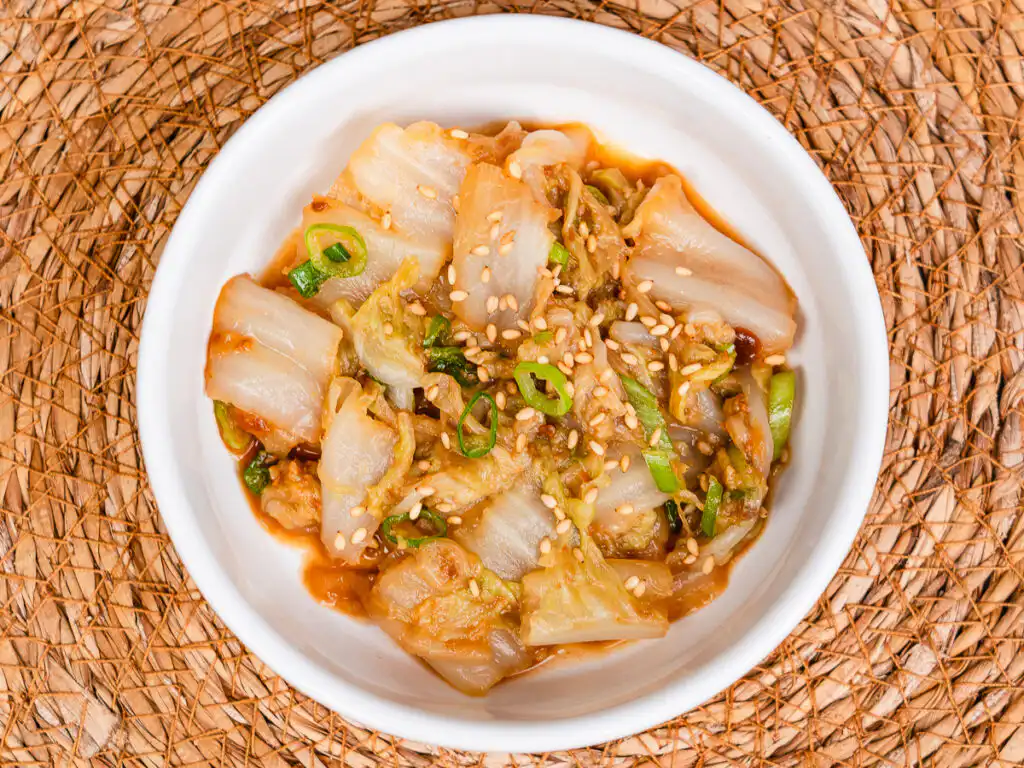
How to Make Korean Cabbage Side Dish – Step by Step
Step 1: Cut the Cabbage
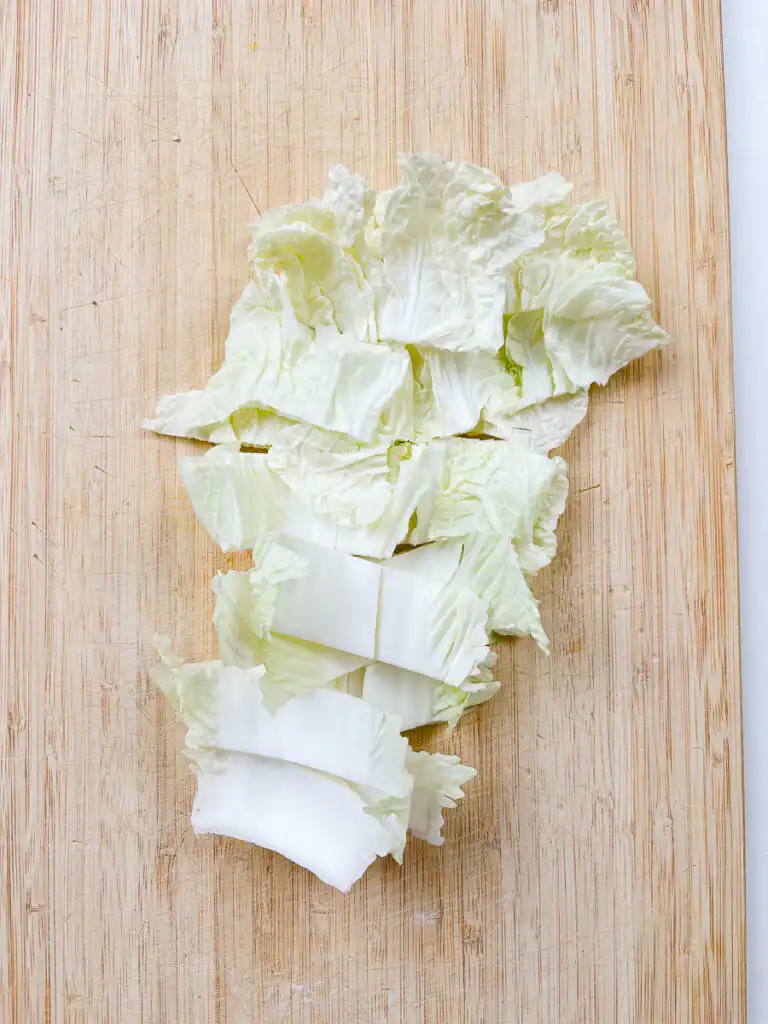
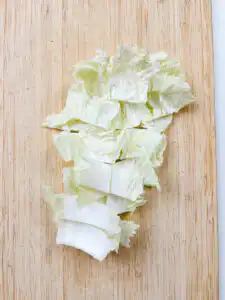
Cut the napa cabbage into roughly 2cm pieces. No need to be precise, this is a rustic, homestyle dish.
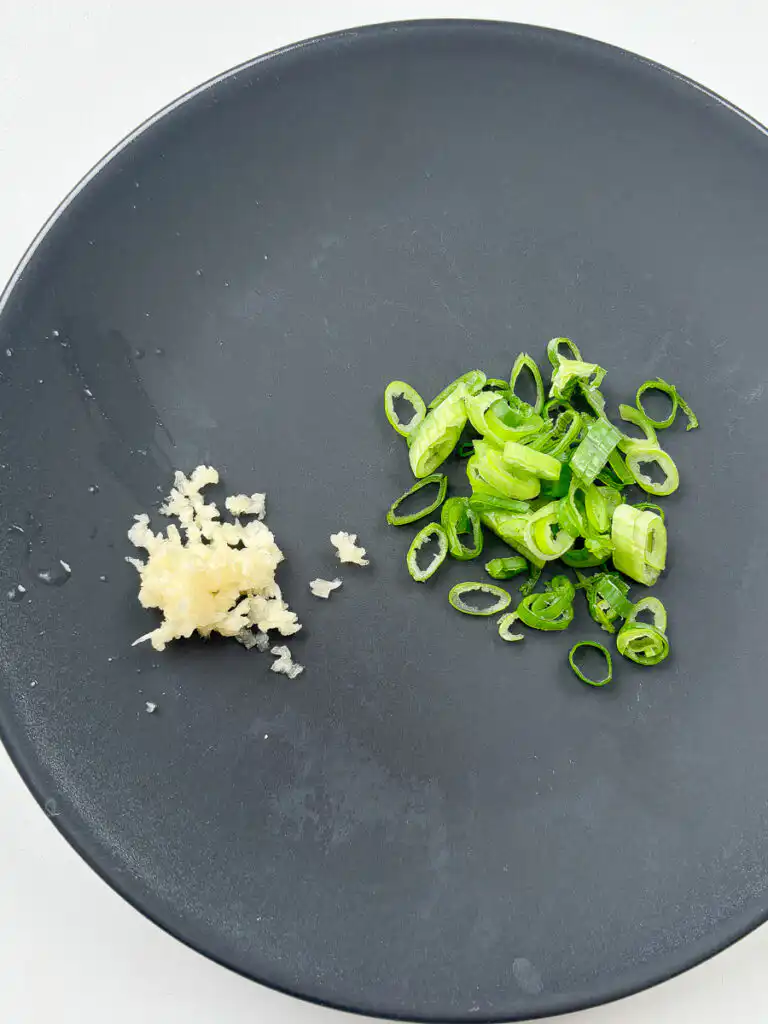
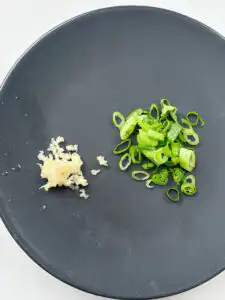
And Chop green onion and mince the garlic.
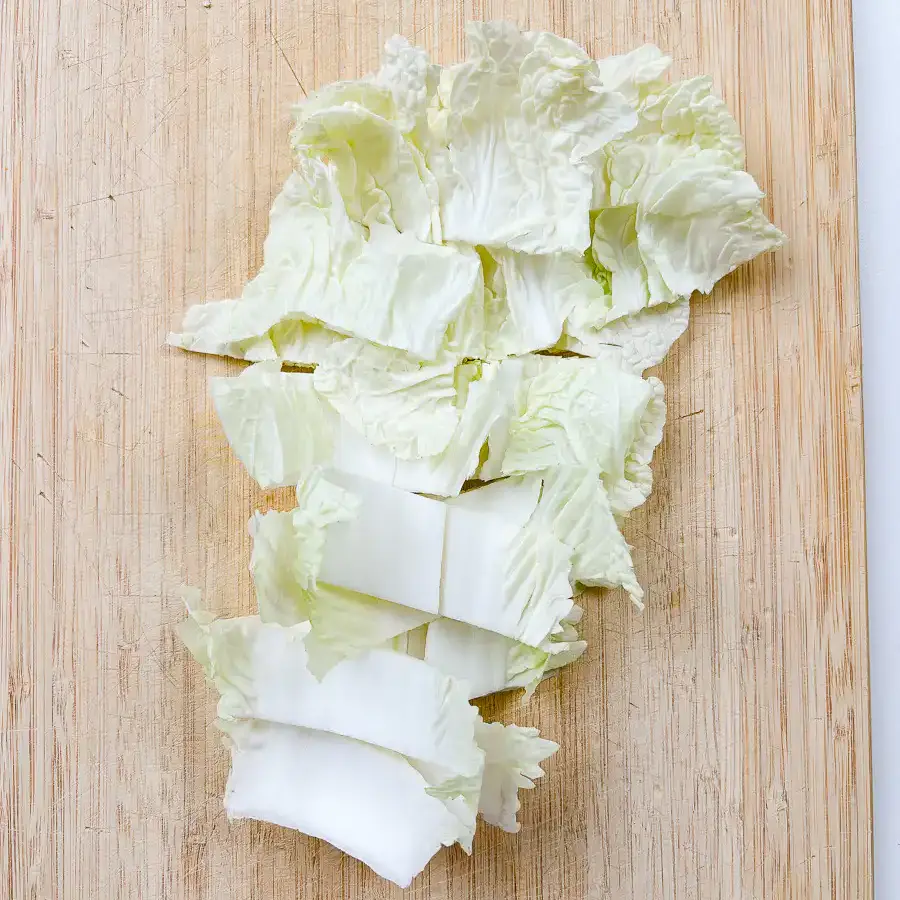
Step 2: Blanch the Cabbage
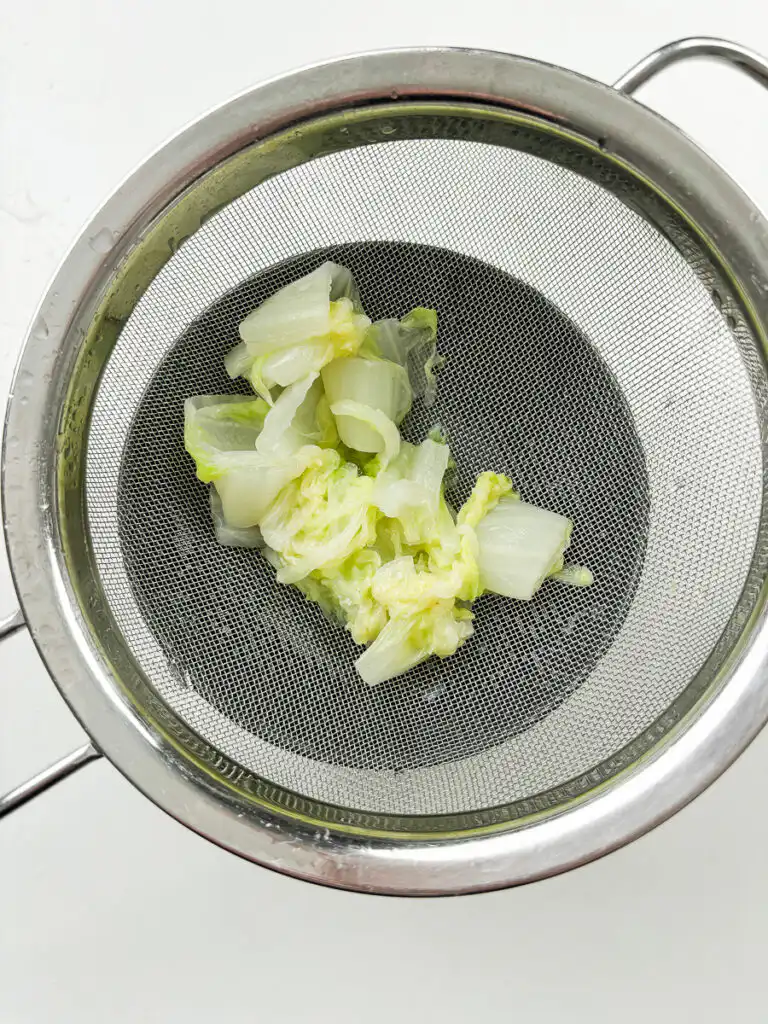
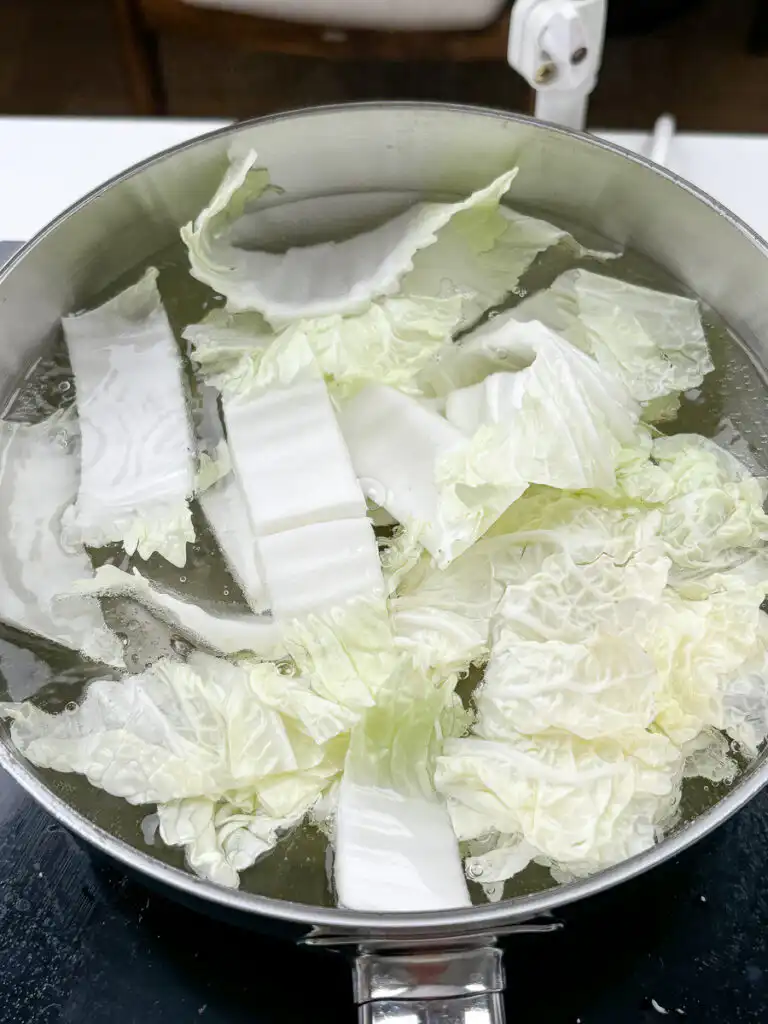
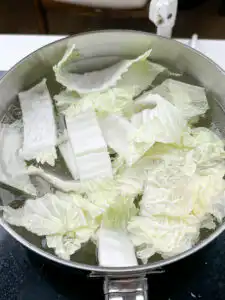
Bring 1L of water to a boil and add 1 tsp of salt. Add the cabbage and blanch for about 3 minutes, until the leaves are soft and bend easily without snapping.
💡 Don’t overcook. You want tender cabbage with a little residual bite, not mushy.
Step 3: Rinse and Squeeze
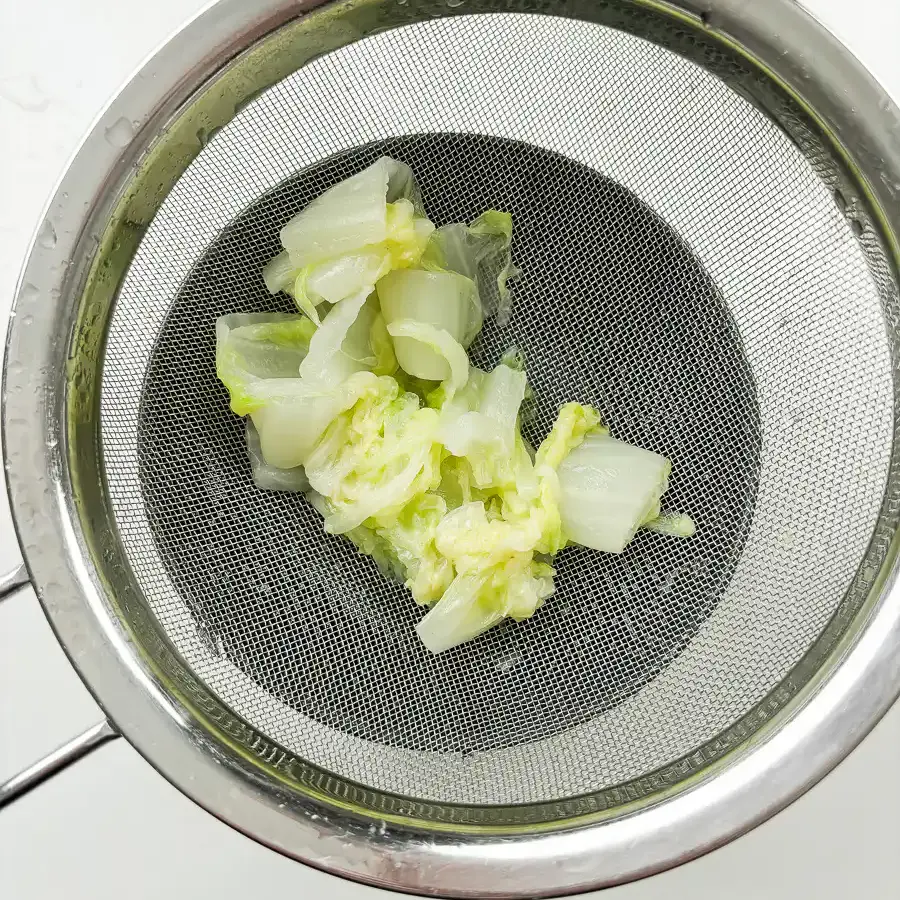
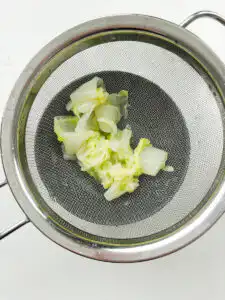
Transfer the blanched cabbage to a colander and rinse immediately under cold water. This stops the cooking process and keeps the color vibrant.
💡 Then squeeze out the water firmly with both hands. This is the single most important step in the entire recipe. If the cabbage holds too much water, the doenjang sauce will slide off and the dish will taste bland and watery. Squeeze! Really squeeze!
Step 4: Make the Doenjang Sauce
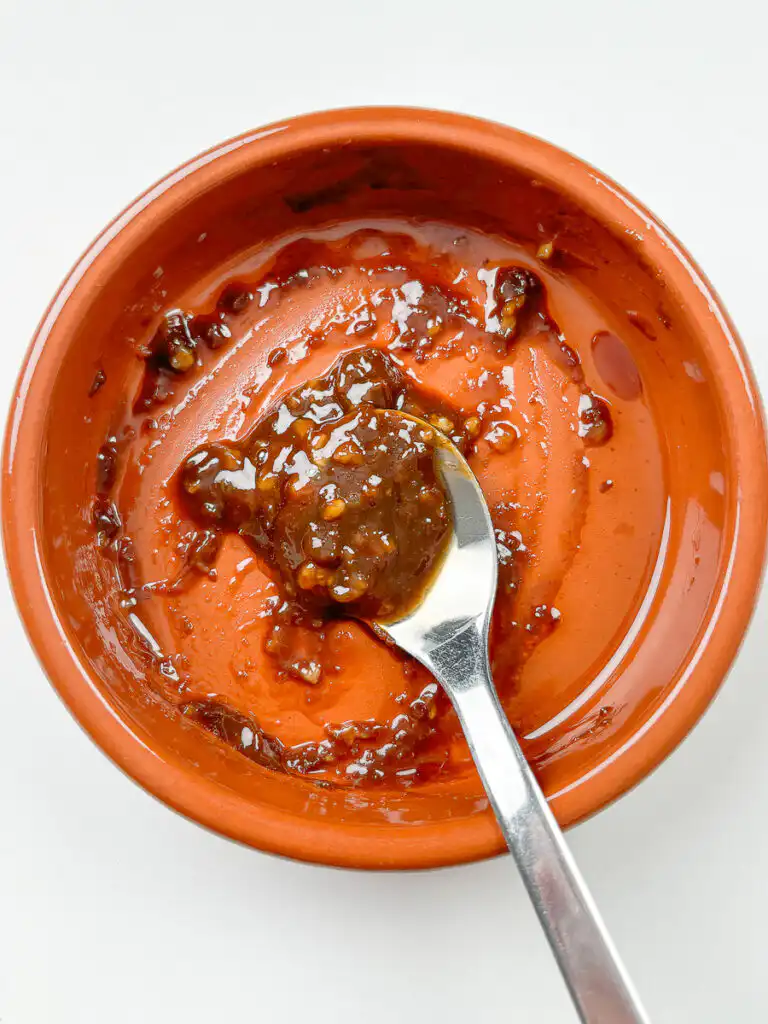
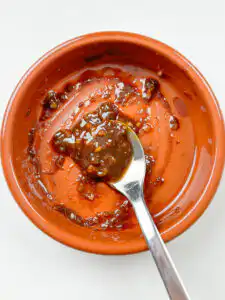
Mix together the doenjang, minced garlic, maesil-cheong, and sesame oil in a small bowl. Stir until fully combined into a smooth, aromatic sauce.
Step 5: Season the Cabbage
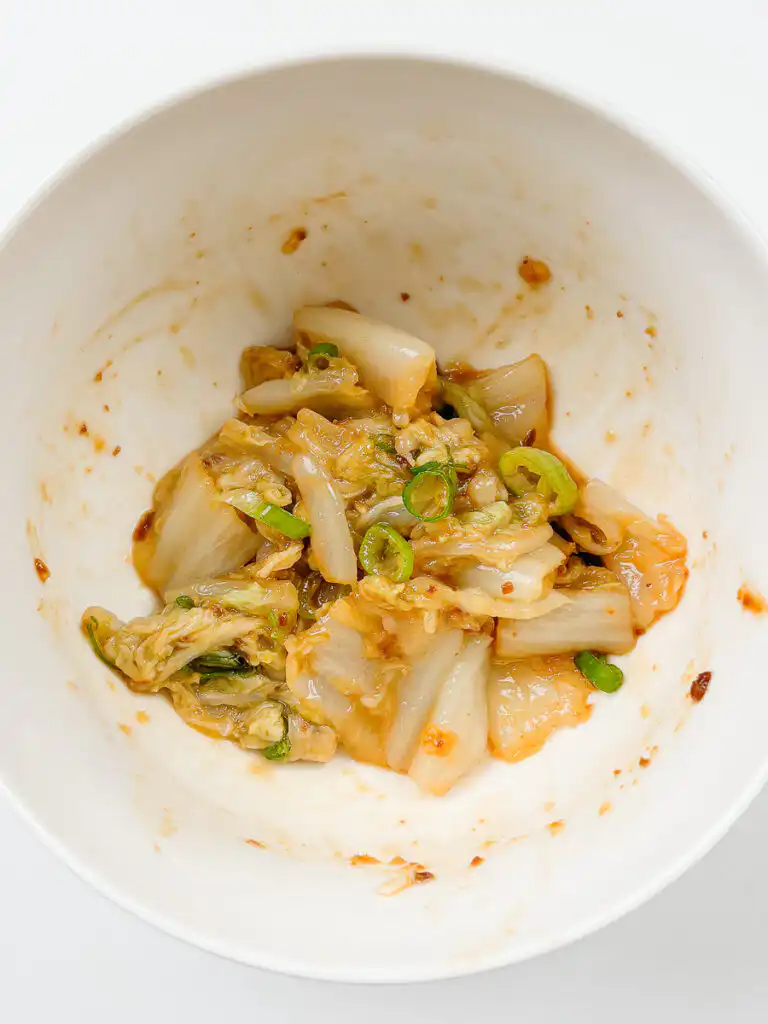
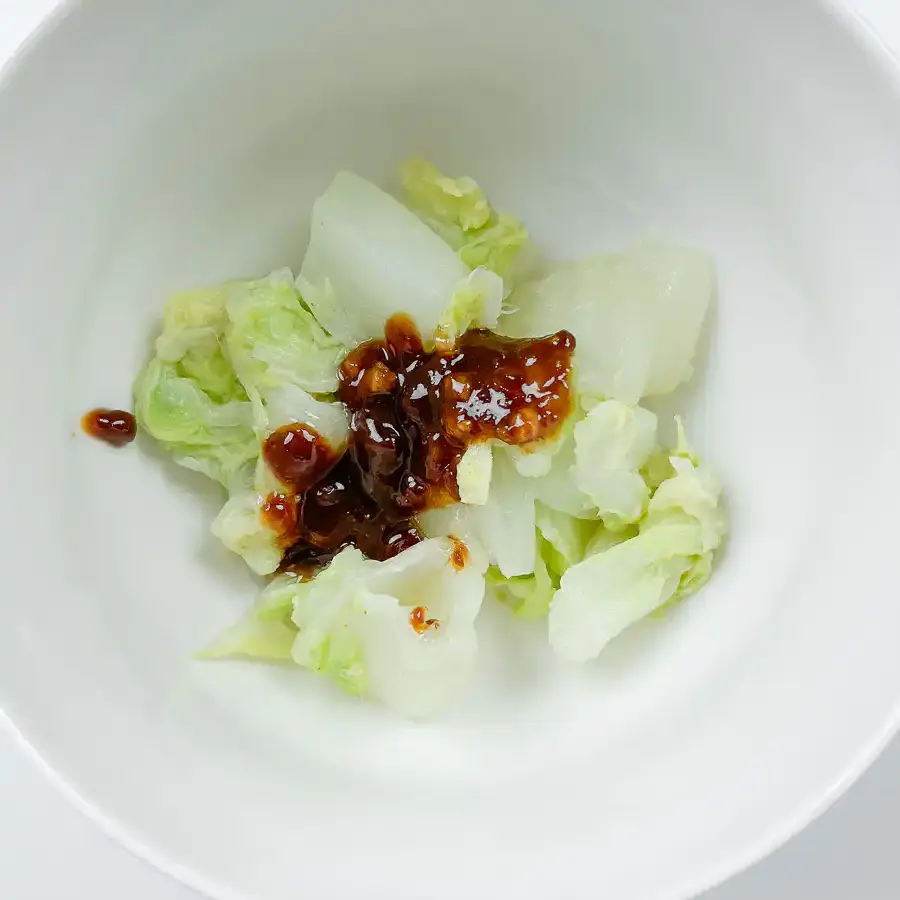
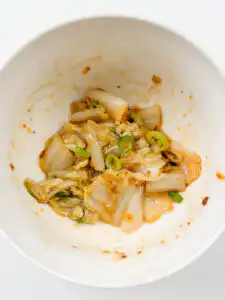
Add the sauce to the cabbage a little at a time. Toss, taste, and add more as needed. Mix gently by hand.
Step 6: Finish and Serve
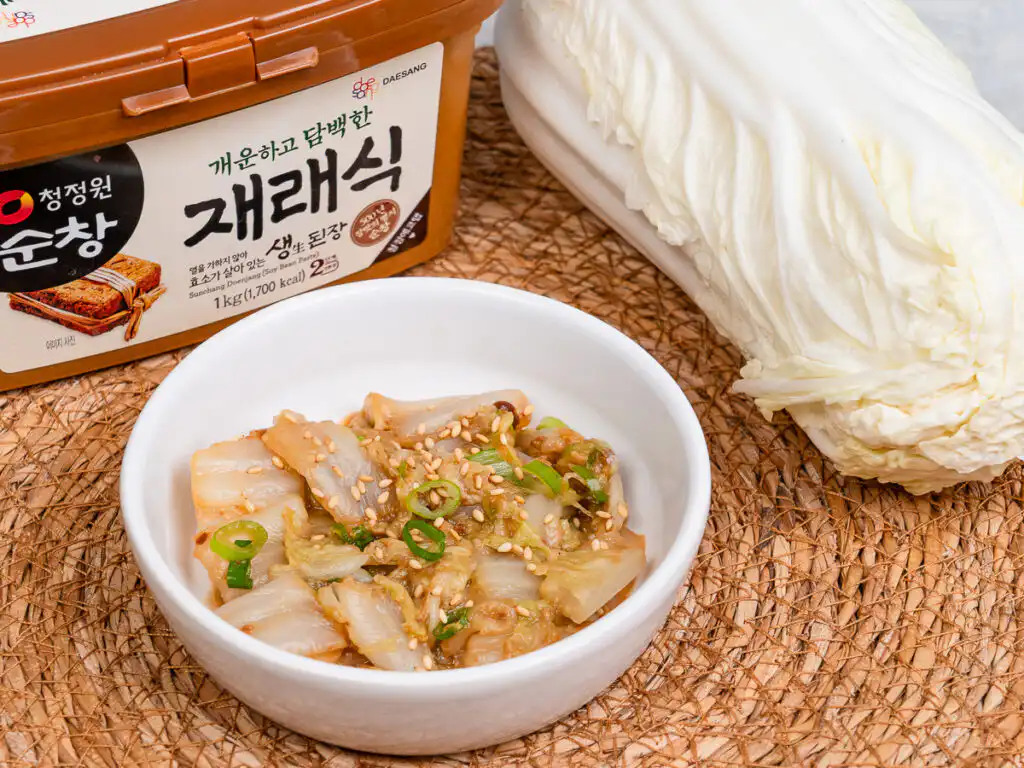
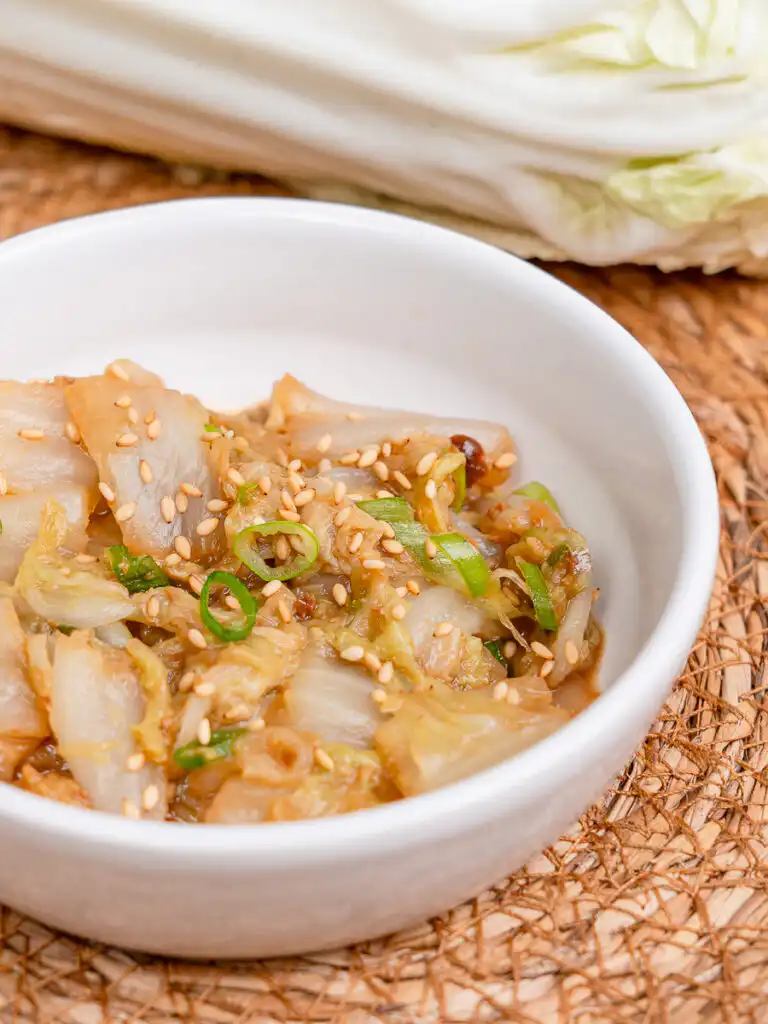
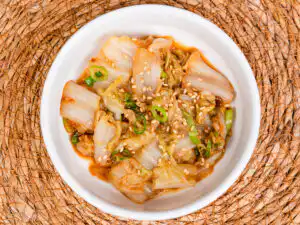
Once the cabbage is evenly coated, add the chopped green onion and sesame seeds. Give it one final gentle toss.
💡 Keeps in an airtight container in the fridge for up to 2 days.
Pro Tips for The Best Baechu Namul
💡 Squeeze the water out completely. Wet cabbage = watery, bland baechu namul.
💡Add the sauce gradually. Always start with less and taste as you go.
💡Use the inner leaves for a sweeter result. The inner leaves of napa cabbage are more tender and naturally sweeter.
🌿 Why Doenjang Is Secretly Good for Your Skin
Doenjang is a fermented food, which means it’s loaded with live probiotic cultures that support your gut microbiome. And your gut health is far more connected to your skin.
When your gut is balanced, inflammation decreases throughout your entire body including on your skin.
Doenjang specifically contains:
👉 Want to go deeper? I wrote a full guide on exactly how Korean food works as skincare, covering the best foods for clear skin, which ingredients support glass skin, and what to avoid.
🌿 Pair It: Support Your Skin from Outside Too
While your diet does the inside work, pairing it with the right skincare makes a visible difference.
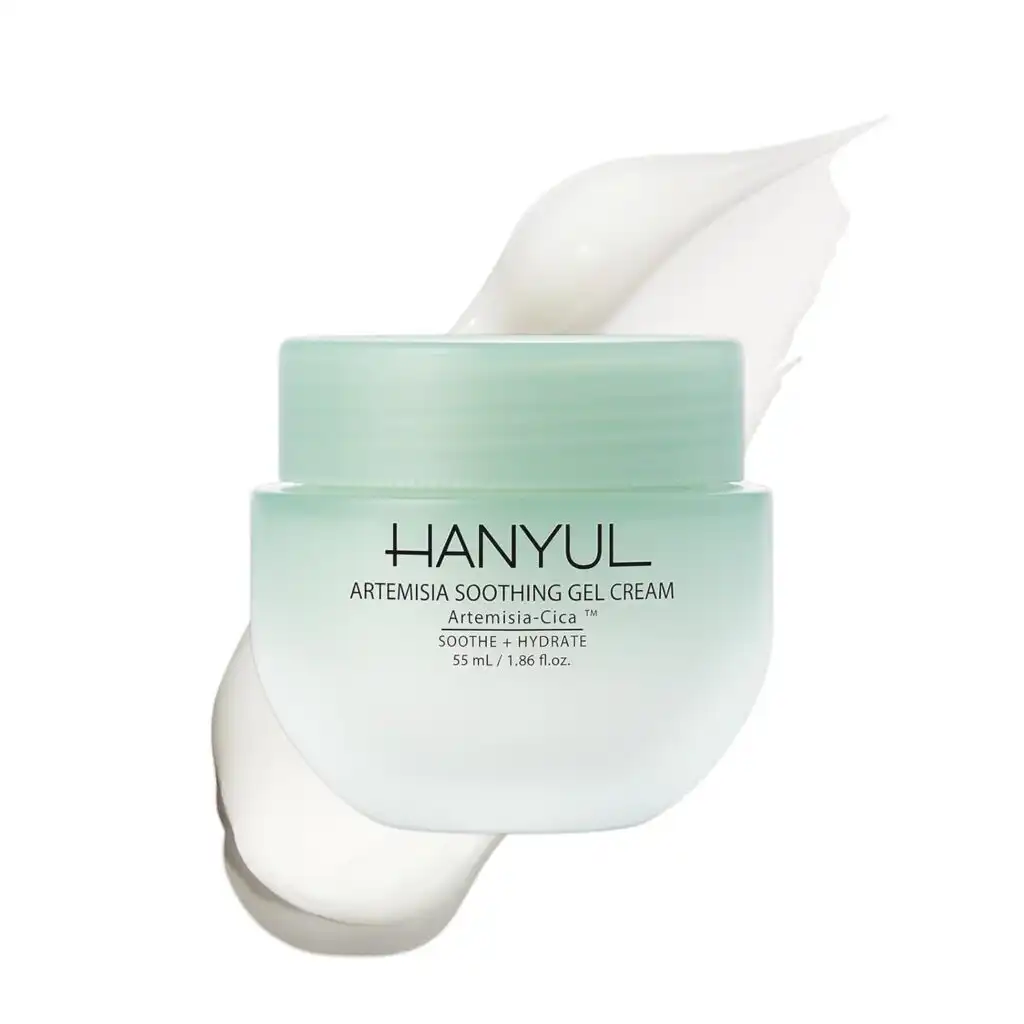

🌿 HANYUL Artemisia Soothing Gel Cream Cooling, hydrating, and ideal for sensitive or acne-prone skin
⭐ 4.6/5 (108 reviews) → Check on Amazon
💧 Dr.Althea 345 Relief Cream & Mist Duo Soothing recovery and moisture for sensitive skin, a Korean vegan skincare set formulated for all skin types.
⭐ 4.7/5 (136 reviews) → Check on Amazon
More Korean Doenjang Dishes You’ll Love
🍲 15-Minute Doenjang Napa Cabbage Soup
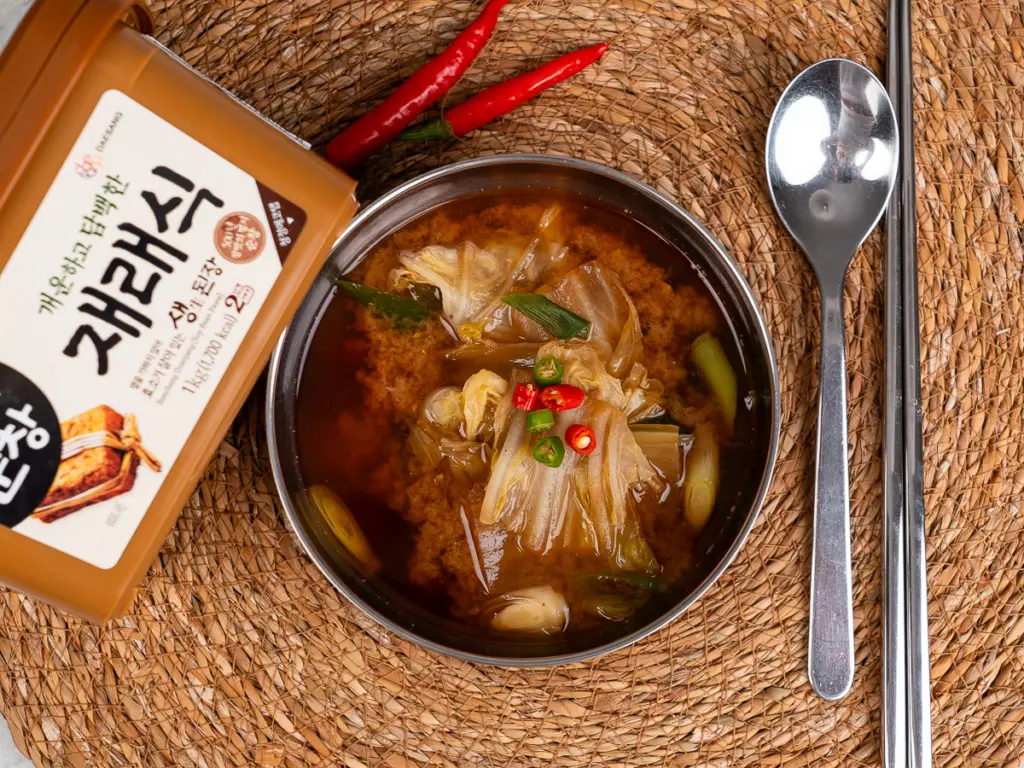
15-Minute Doenjang Napa Cabbage Soup: Easy Korean Soybean Paste Soup
🐚 Clam Spinach Doenjang Soup
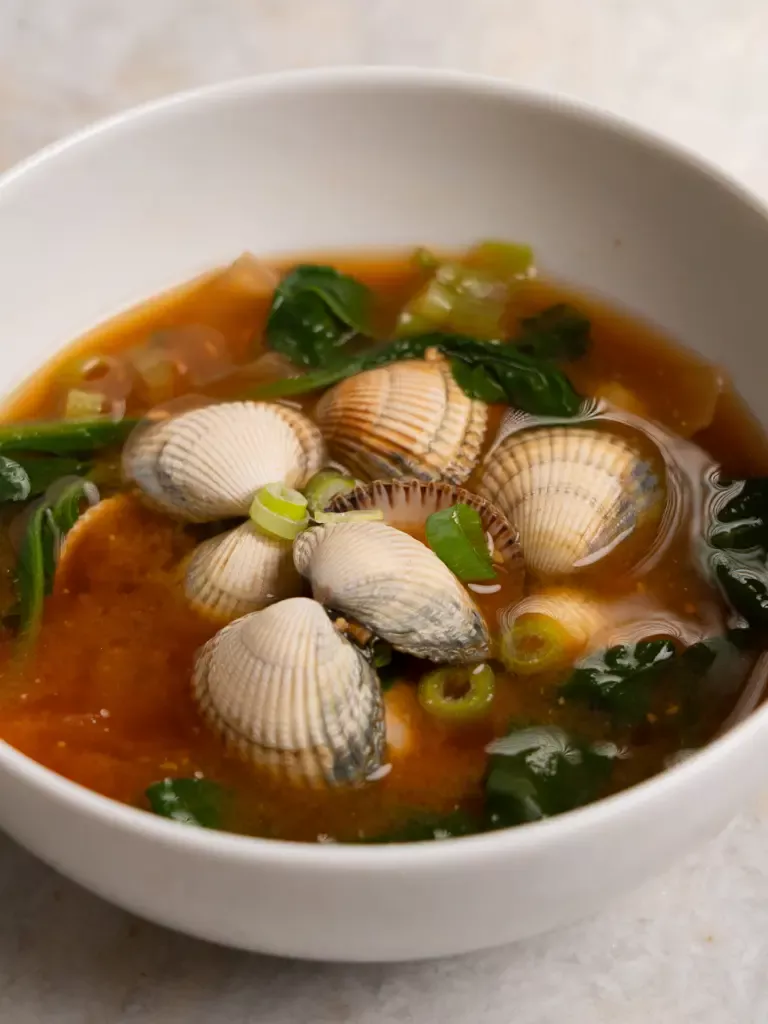
Clam Spinach Doenjang Soup | Bon Appétit, Your Majesty Recipe
What to Serve With This Korean Cabbage Banchan
- Steamed white rice
- Kimchi, any Jjigae and Banchan
- Korean BBQ
- Bibimbap: Add this Korean cabbage banchan directly into a bibimbap bowl
FAQ about Baechu Namul
Doenjang Baechu Namul (Korean Cabbage Side Dish)


Ingredients
Cabbage
- 3 leaves Napa cabbage
- 1 L Water
- 1 tsp Salt for blanching
- 1/2 tbsp Green onion finely chopped
- 1 tbsp Korean sesame seeds
Doenjang Sauce
- 1.5 tsp Doenjang Korean fermented soybean paste
- 1/2 tsp Minced garlic
- 1 tsp Maesil-cheong Korean plum syrup. Substitute maesil-cheong with 1 tsp honey or ½ tsp sugar if needed.
- 1 tbsp Korean sesame oil
Instructions
- Cut napa cabbage into 2cm pieces.3 leaves Napa cabbage
- Blanch in salted boiling water for 3 minutes until soft and pliable.1 L Water, 1 tsp Salt
- Rinse in cold water and squeeze out all moisture firmly with both hands.
- Chop green onion and mince the garlic.1/2 tbsp Green onion, 1/2 tsp Minced garlic
- Mix doenjang, minced garlic, maesil-cheong, and sesame oil to make the sauce.1.5 tsp Doenjang, 1 tsp Maesil-cheong, 1 tbsp Korean sesame oil, 1/2 tsp Minced garlic
- Add sauce to cabbage a little at a time, tasting and adjusting as you go.
- Add chopped green onion and sesame seeds. Toss gently. Serve.1 tbsp Korean sesame seeds, 1/2 tbsp Green onion
Nutrition
Tried this recipe?
I read and reply to every comment. Even one line tells me you made it, and helps the next reader find this recipe.
Rate & reviewBlonde Kimchi
Final Thoughts
This Korean cabbage side dish is proof that the best banchan don’t need to be complicated. 3 leaves of cabbage, a simple doenjang sauce, and 15 minutes is all it takes to put something genuinely Korean on your table.
What makes baechu namul special isn’t just the flavor, it’s the fact that this single dish connects your meal to centuries of Korean food wisdom. It feeds your body. And quietly, it feeds your skin too.
⭐️ If you try this Korean cabbage banchan, let me know how it turned out in the comments below!