Easy Korean Radish Side Dish (Mu Namul Recipe) with Perilla Seeds

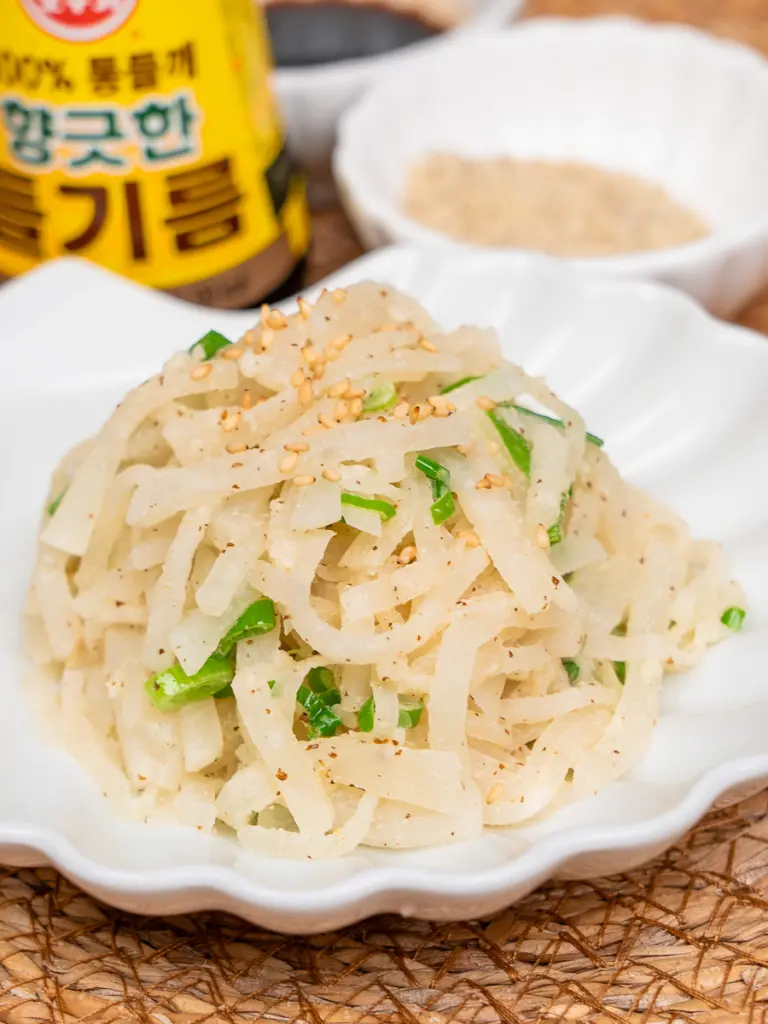
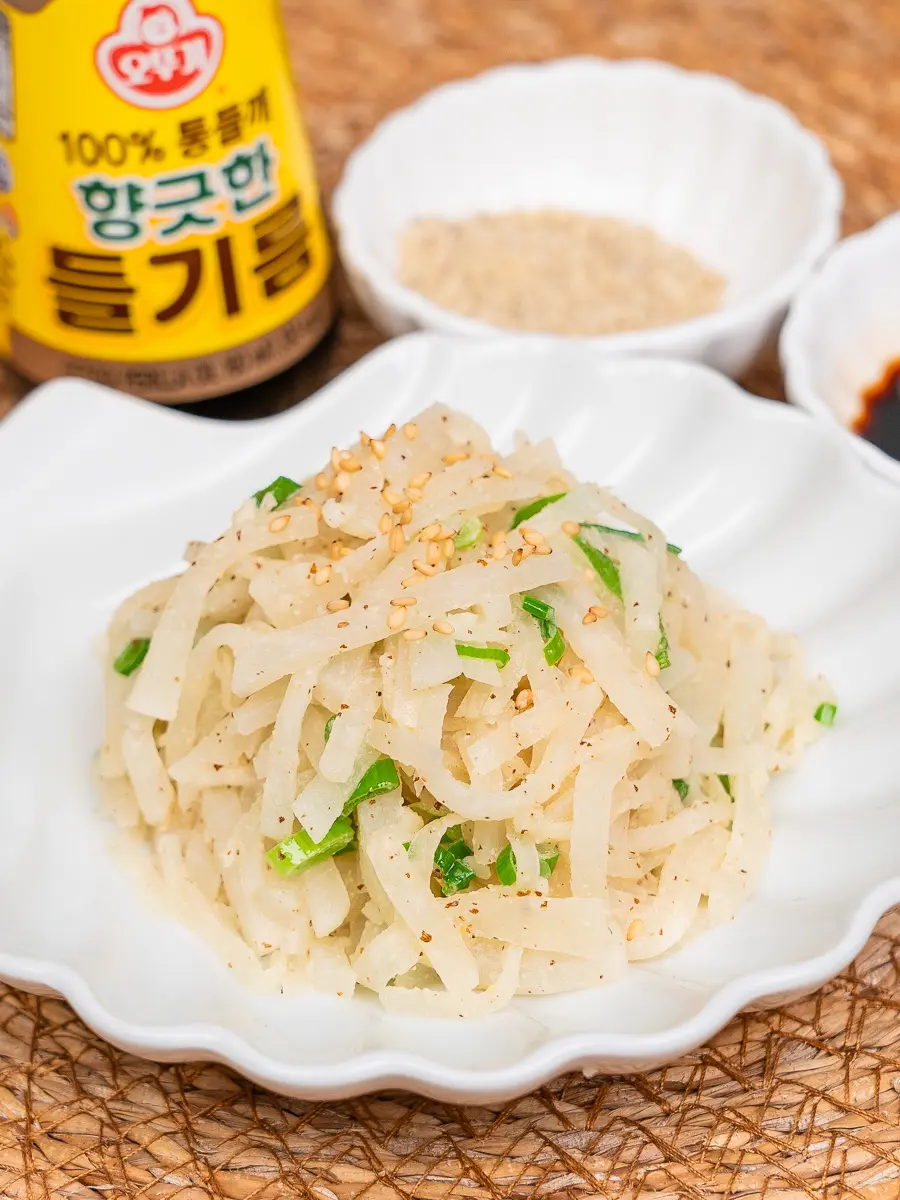
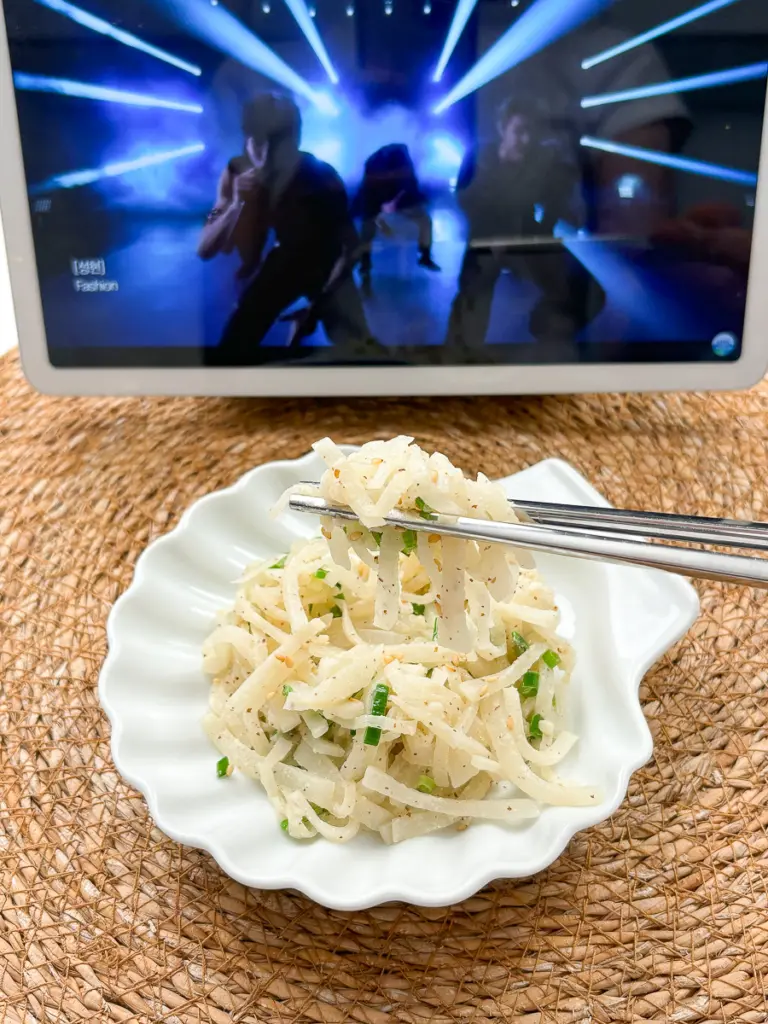
Korean Radish Side Dish, also known as Mu Namul, is the perfect low-calorie, healthy banchan for anyone looking for a light yet satisfying meal without sacrificing flavor. This comforting stir-fry highlights the natural sweetness of the radish, and by adding perilla seeds, we create a rich, nutty flavor profile that is incredibly satisfying. This specific recipe uses a hint of tuna fish sauce to provide an authentic umami depth to the Korean radish with perilla seeds, making it a delicious Mu Namul recipe that is as nutritious as it is tasty.
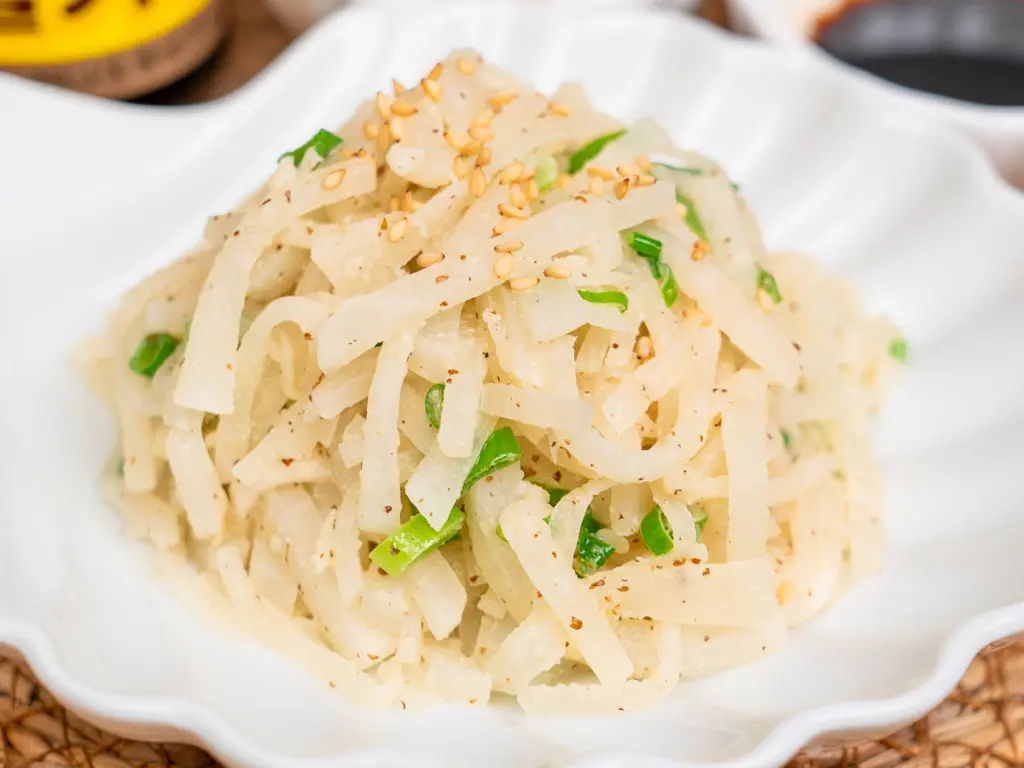
What is Korean Radish Side Dish with Perilla Seeds?
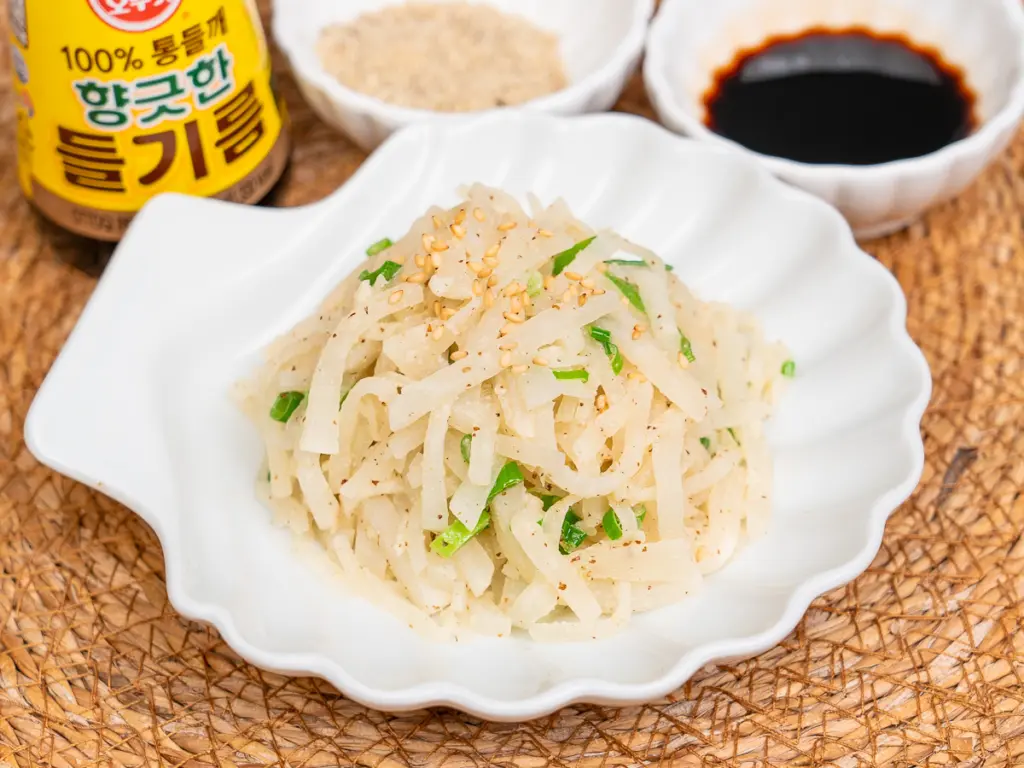
In Korea, there are many side dishes made using radish. As a representative among them, this dish is made by thinly julienning the radish and stir-frying it with perilla oil and perilla seed powder. The addition of perilla oil adds savoriness and softness, and the unique flavor of perilla seeds blends with the sweet radish, making it highly popular as a home-cooked side dish. You can also mix this into the Bibimbap that you know so well. In Korea, radish becomes sweeter in autumn and winter, making this Korean radish side dish most delicious during those seasons, but it is a common home-style Banchan enjoyed frequently in other seasons as well.
Why you’ll love this Mu Namul
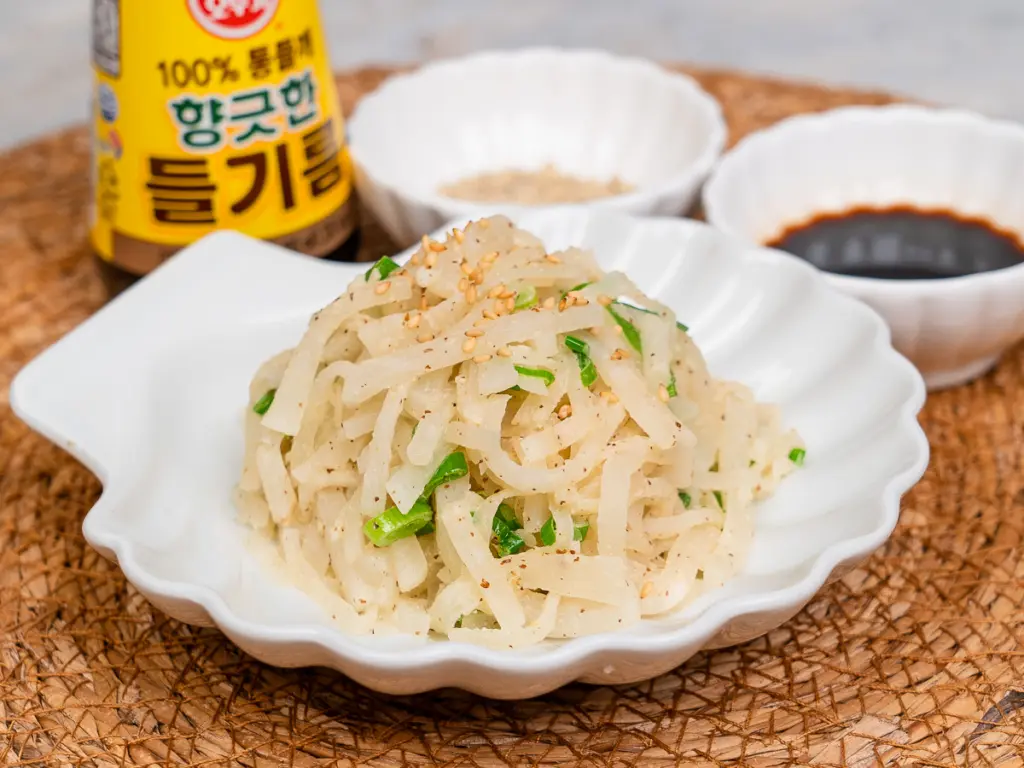
A Low-Calorie, Healthy Side Dish
Are you on a diet for your health? If you were looking for a Korean side dish that you can eat healthily while wanting to lose weight, this stir-fried Mu Namul recipe is perfect. Radish is fundamentally low in calories. Furthermore, this stir-fry does not use chili powder or strong seasonings, making it a pure-tasting side dish that is not irritating.
Radish is rich in dietary fiber and moisture, so it is good for gut health and is a healthy ingredient often called a “natural digestive.” I recommend this Korean radish side dish to you as one of the healthiest side dishes, featuring perilla seeds which are good for vascular health and reducing inflammation.
Ingredients You’ll Need
To make this authentic Korean radish side dish, gather these simple ingredients:
Substitutions
- What if I can’t find Korean Radish? The thick and sweet Korean radish might be hard to find if you are in Europe or the US. In that case, you can substitute it with Daikon (Japanese radish) found in Asian markets.
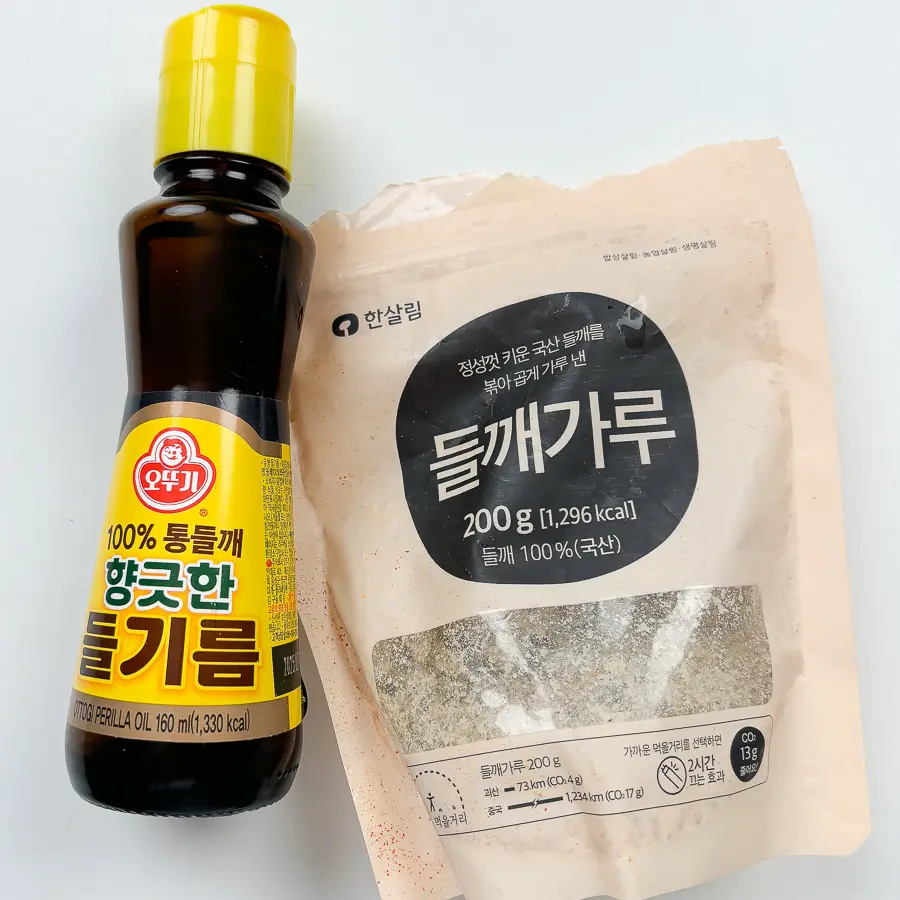
- What if I don’t have Perilla Oil and Perilla Seeds? Radish pairs best with the scent of perilla, so I recommend adding perilla oil and perilla seeds. The oil from the perilla seeds adds savoriness and softness, catching the bitterness of the radish and elevating the flavor. However, if you don’t have them, use sesame oil and toasted sesame seeds—though it will become a completely different dish.
- Make it Vegan You can omit the tuna fish sauce and add the Korean seasoning Yondu. But if that is hard to find, you can add a tiny bit more salt. However, since the umami will decrease significantly, I strongly recommend adding a very small amount of MSG. The deep flavor provided by that umami will make a huge, huge difference.
Step-by-Step Instructions
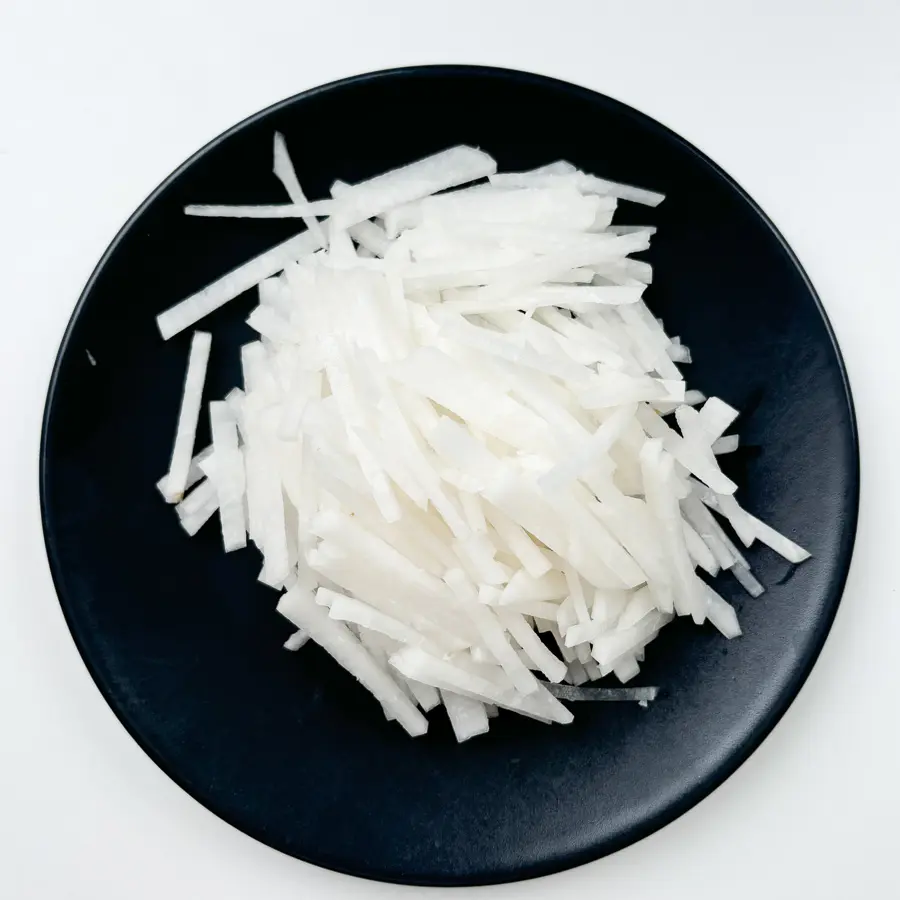
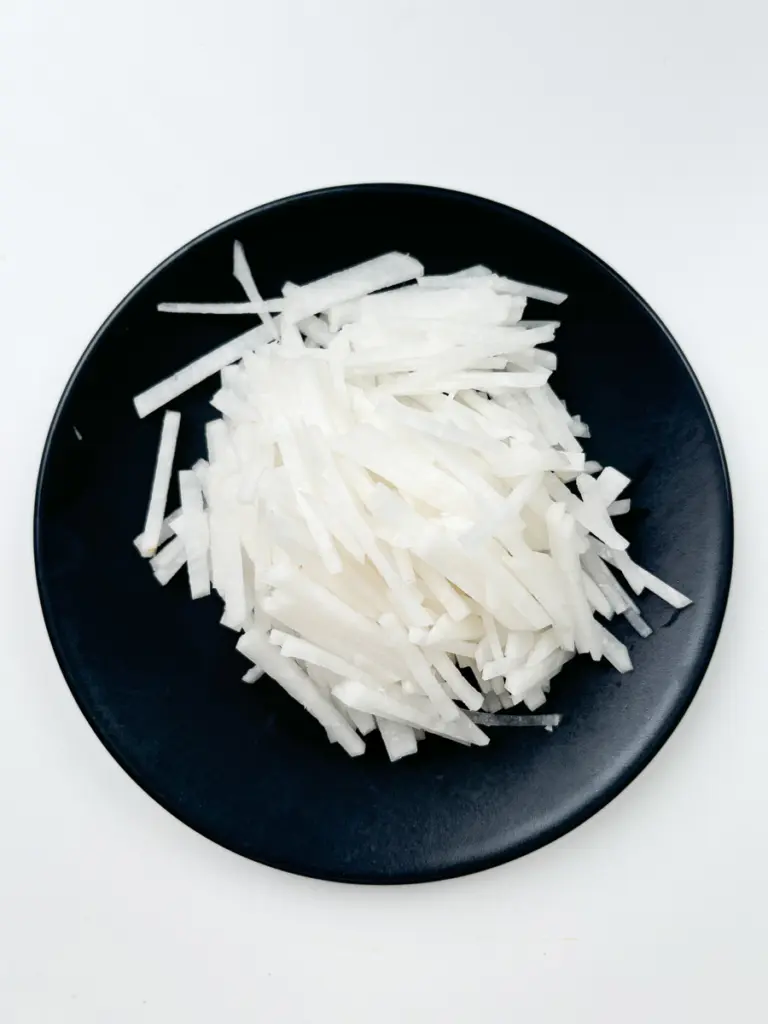
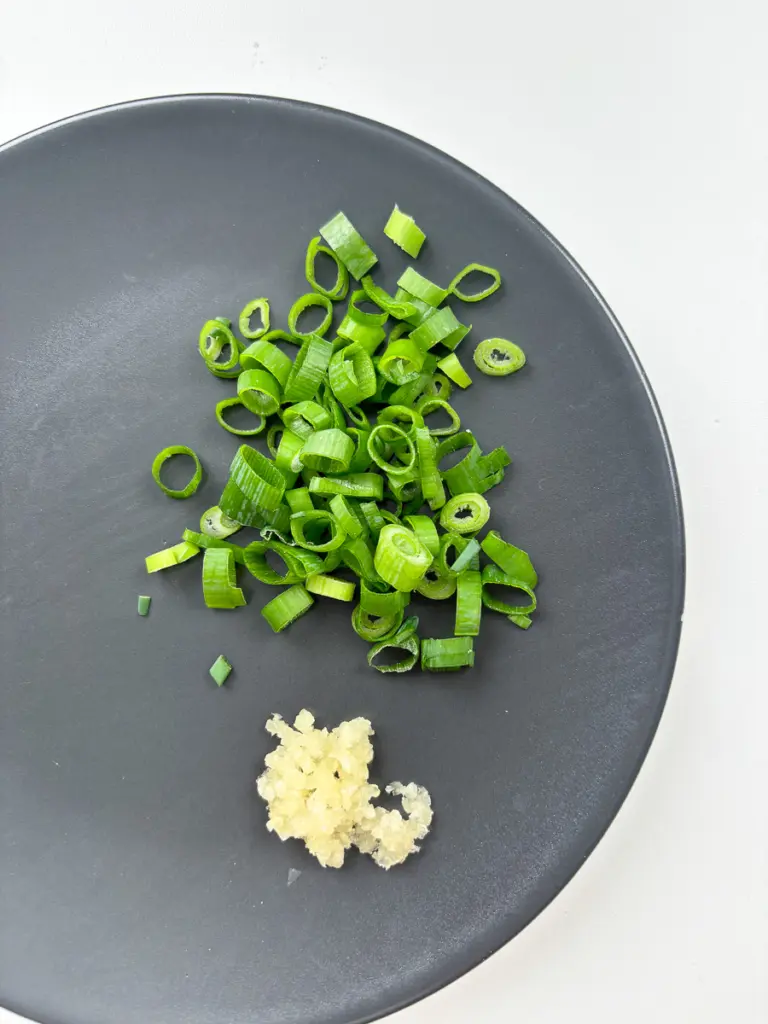
- Prep the Veggies: Julienne the Korean radish into thin, uniform strips. Thinly slice the green onion (song-song) and keep it ready for the final touch.
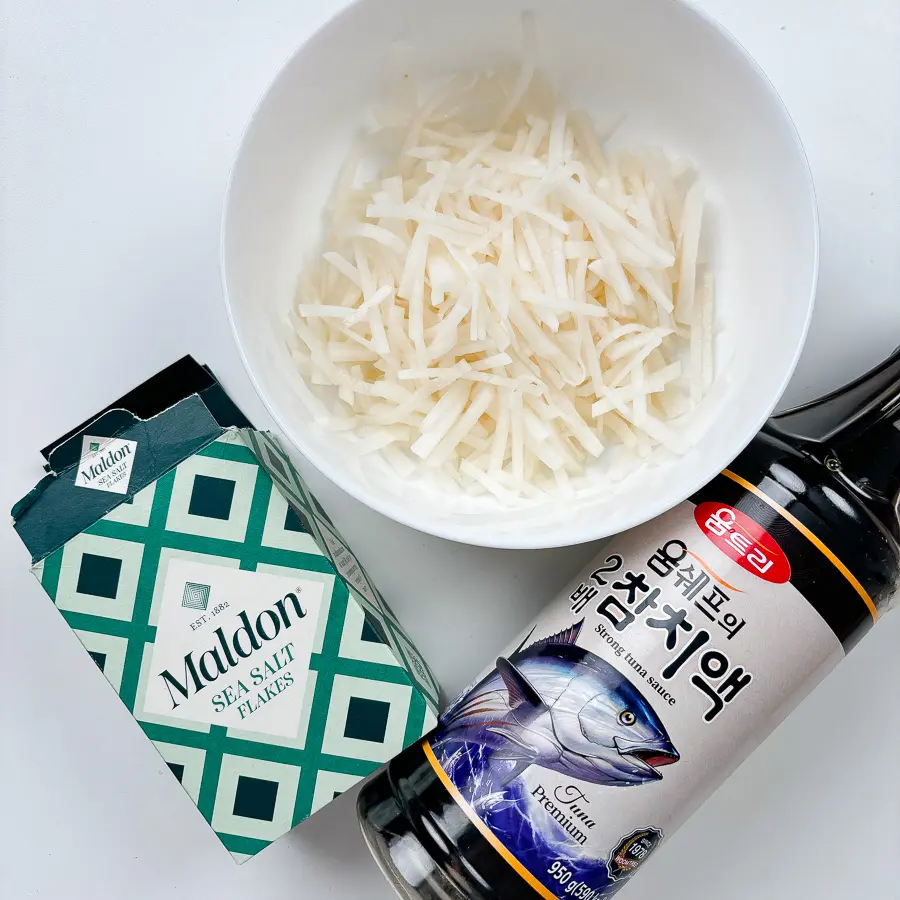
- The 10-Minute Marination: In a bowl, toss the julienned radish with 2 pinches of salt and 1/2 tsp of tuna fish sauce. Let it sit for 10 minutes. This step allows the seasoning to penetrate deep into the radish fibers of this Mu Namul recipe.
- Start the Stir-fry: Transfer the marinated radish (including any juices) into a pan over medium heat. Stir-fry the radish for about 1 minute, then add the minced garlic and continue to stir-fry. Sstir-fry gently until the radish starts to look slightly translucent.
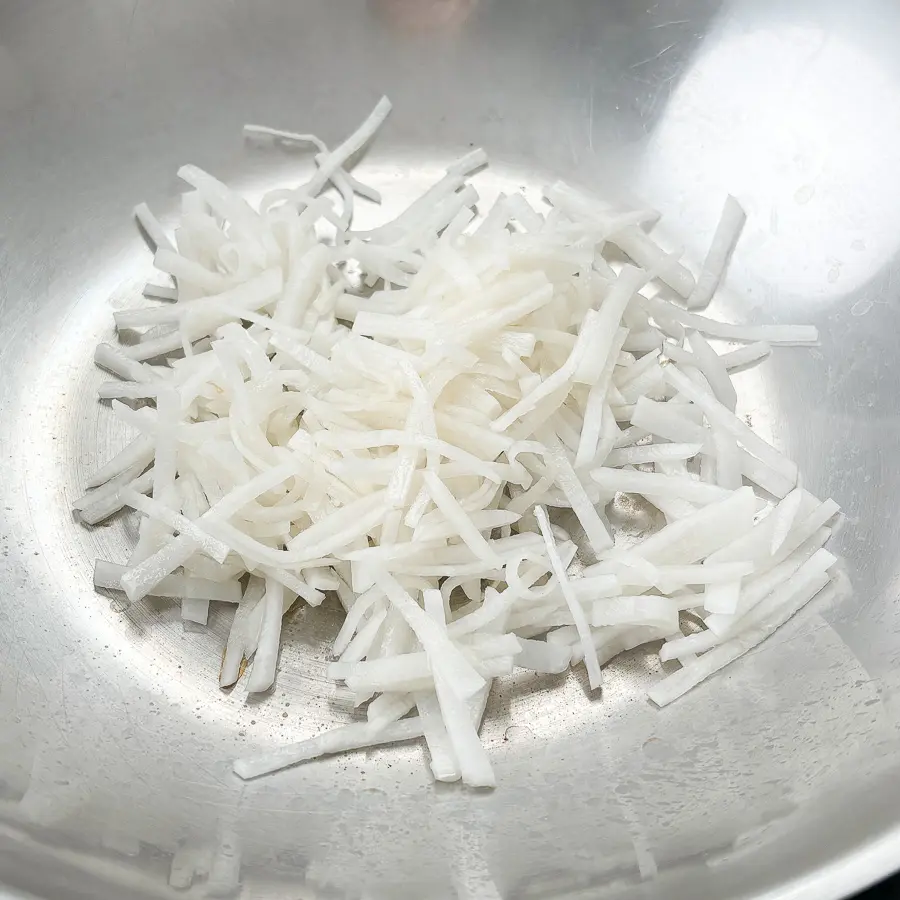
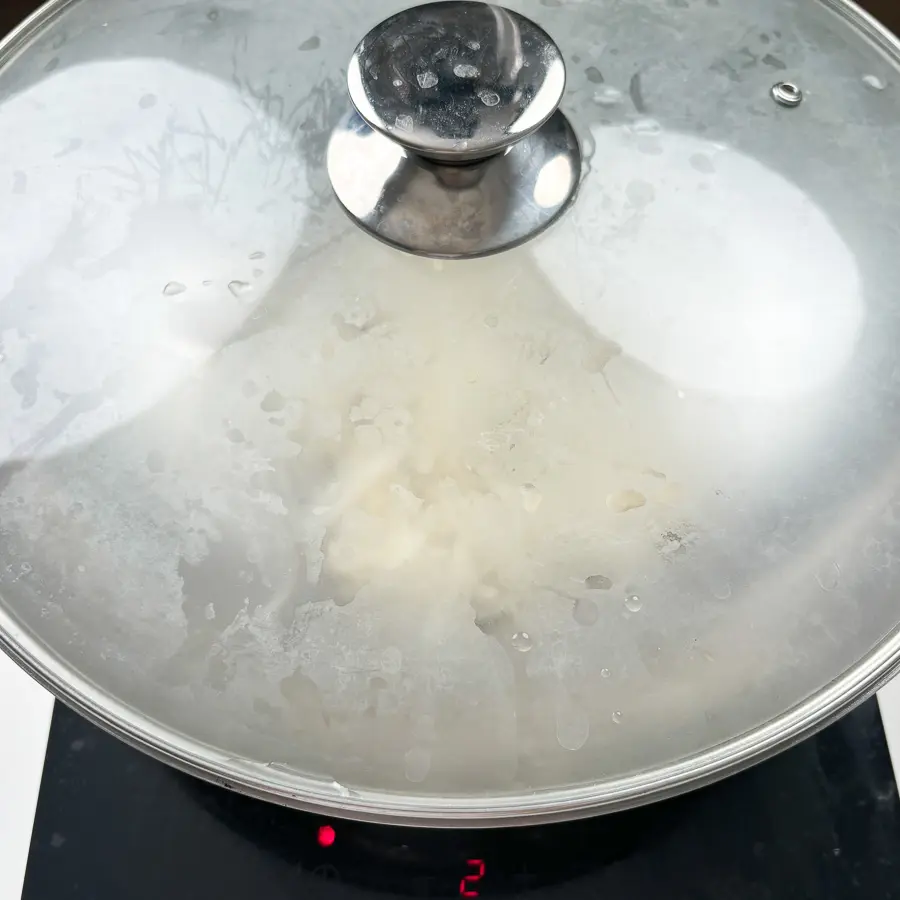
- Steam for Tenderness: When the radish starts to soften, add 50ml of water. Cover the pan with a lid, turn the heat down to low, and let it steam for 5 minutes. This makes the Korean radish side dish perfectly tender and “soft”, which is the hallmark of great Mu Namul.
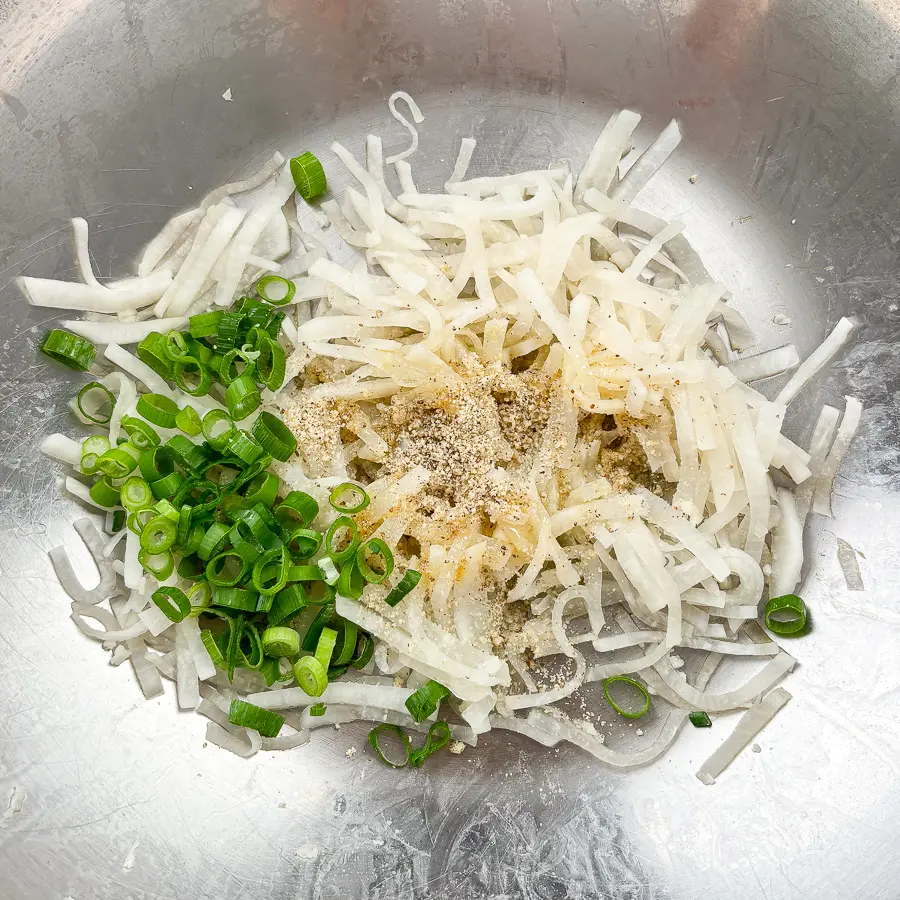
- The Nutty Finish: Once the radish is fully cooked, add 1.3 tbsp of perilla seed powder, 1 tbsp of perilla oil and the sliced green onions. Stir-fry for another minute so the Korean radish with perilla seeds is well-coated in the creamy perilla sauce.
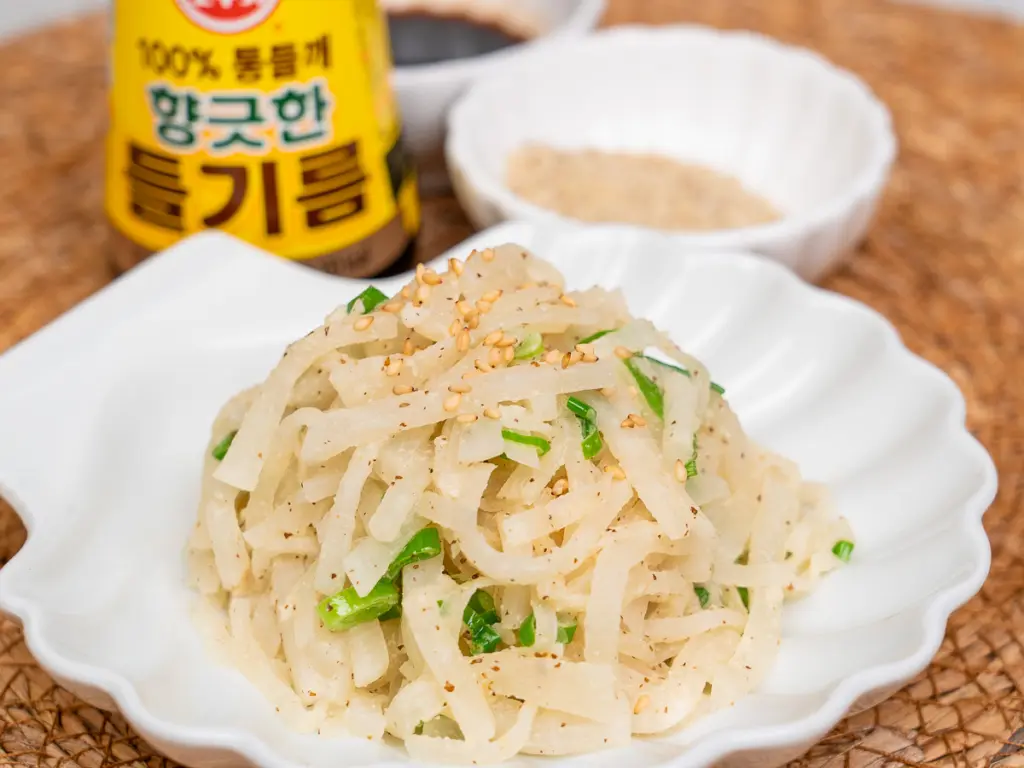
- Season to Taste: Give it a final taste. If you need a bit more salt, add 1-2 extra pinches. Sprinkle a pinch of toasted sesame seeds on top, and your healthy Mu Namul recipe is ready!
Expert Tips for the Best Results
Marinating the Radish: By marinating the radish, you draw out moisture to prevent it from breaking, making the texture delicious. You can also add seasoning to the radish this way.
Add Tuna Fish Sauce: There is an umami flavor that only tuna fish sauce gives, which salt or soy sauce cannot produce. If you don’t have it, you can substitute it with anchovy fish sauce.
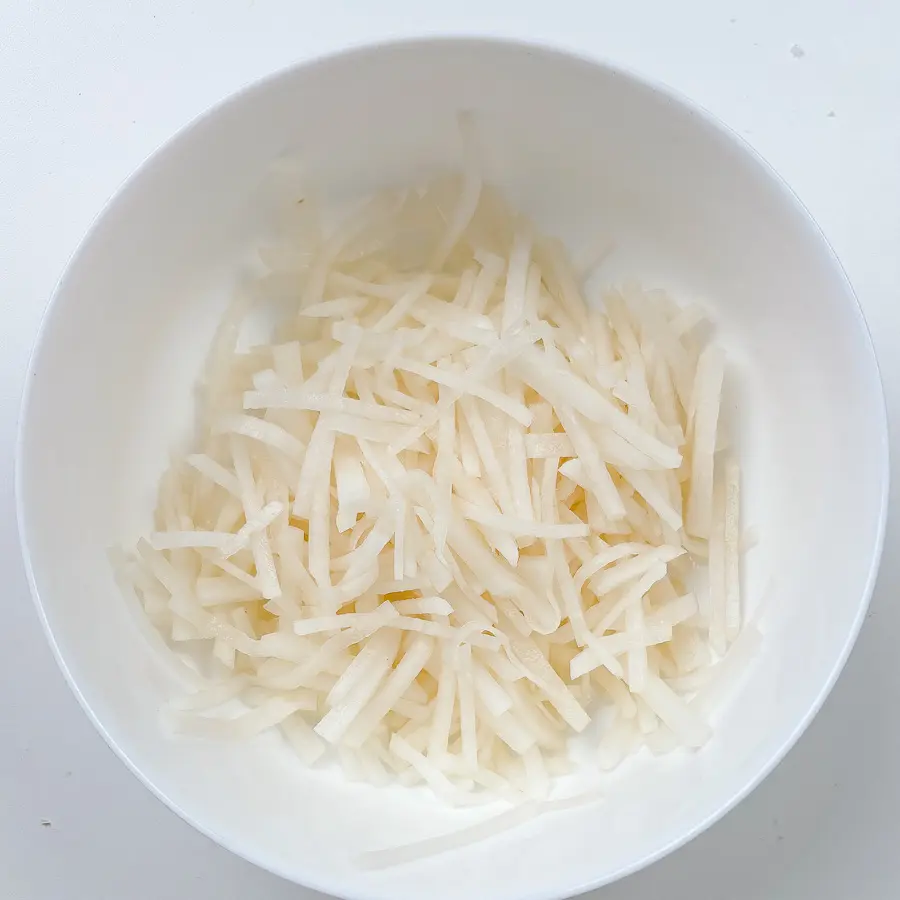
Cut the Radish with a Knife: Using a mandoline is convenient and good, but you can preserve a better texture of the radish when it is cut with a knife.
Cut the Radish into Consistent Thickness: If some radish strips are thin and others are thick, they won’t cook evenly, so some parts might become too mushy while others remain too hard. It’s better to cut them into a consistent thickness to cook evenly.
Steam with Water: Stir-fried radish should be cooked with a little water added to steam it so the radish becomes soft and well-cooked.
How to Serve Mu Namul
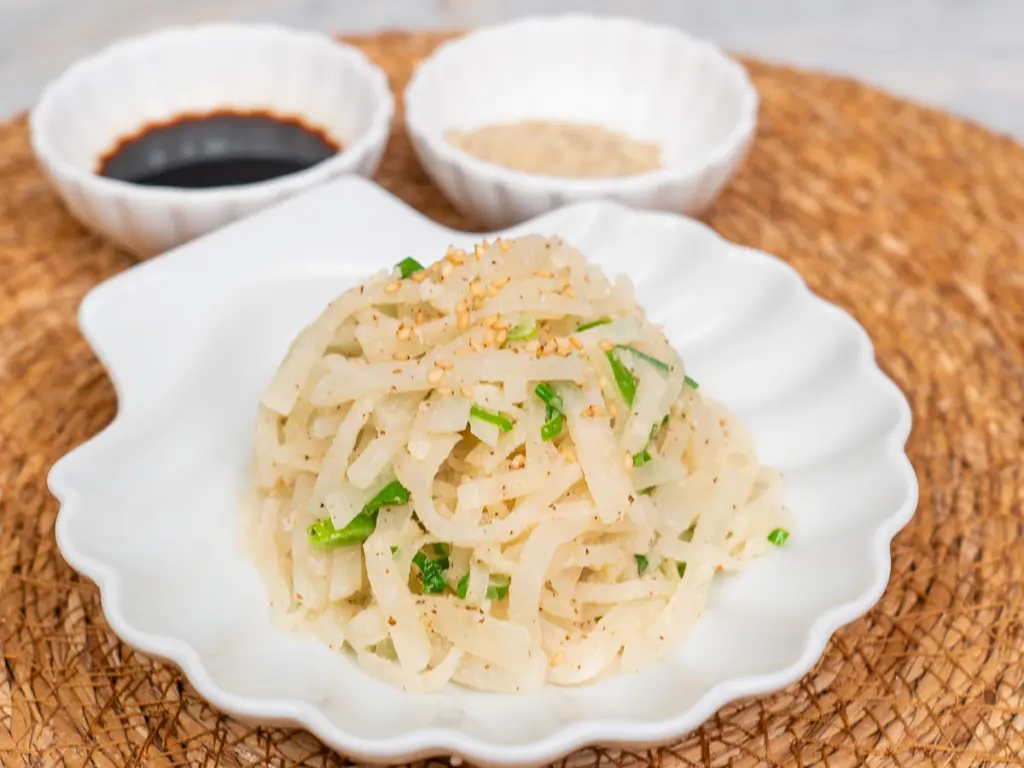
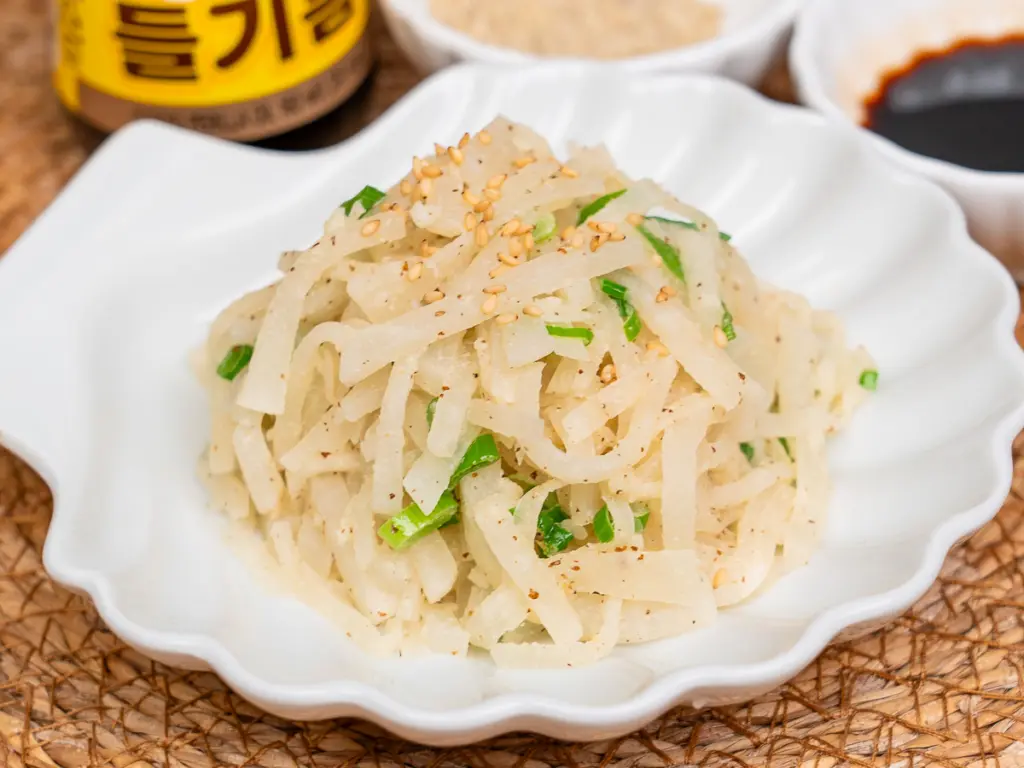
Stir-fried Korean radish with perilla seeds is great as a side dish to eat with rice and is also really delicious as a Bibimbap ingredient. If you put this Mu Namul recipe in Bibimbap, the savory perilla scent and the tender texture of the radish make your Bibimbap even more special.
Meal Prep & Storage Tips
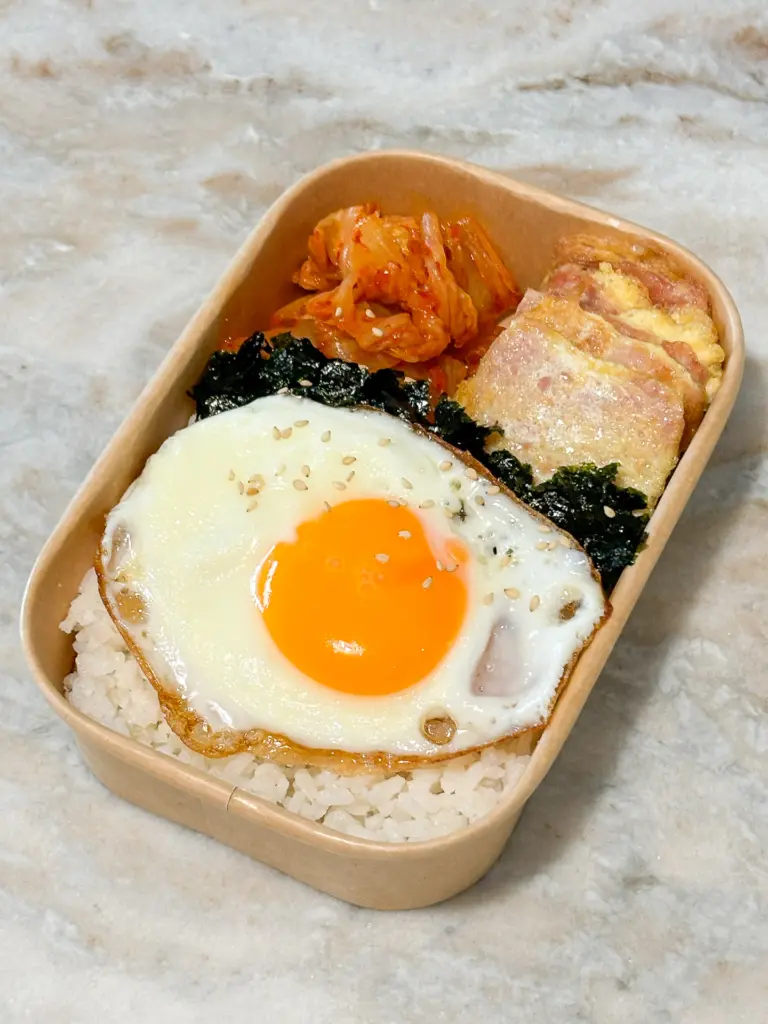
This side dish can be stored in the refrigerator for 3 to 5 days. It is a top-tier menu for those who prepare a week’s worth of meals in advance because it tastes delicious even when eaten cold. Try having the leftover Korean radish side dish the next day as a simple Bibimbap by adding a fried egg, Gochujang, and sesame oil! It is also a very delicious and healthy side dish to pack for lunch.
Other Korean Radish Recipes
- Musaengchae Bibimbap: You might have seen red-seasoned radish while eating Bibimbap. That is called Musaengchae. Its sweet, sour, and crunchy texture is so delicious that it tastes great just mixed with rice without any other ingredients.
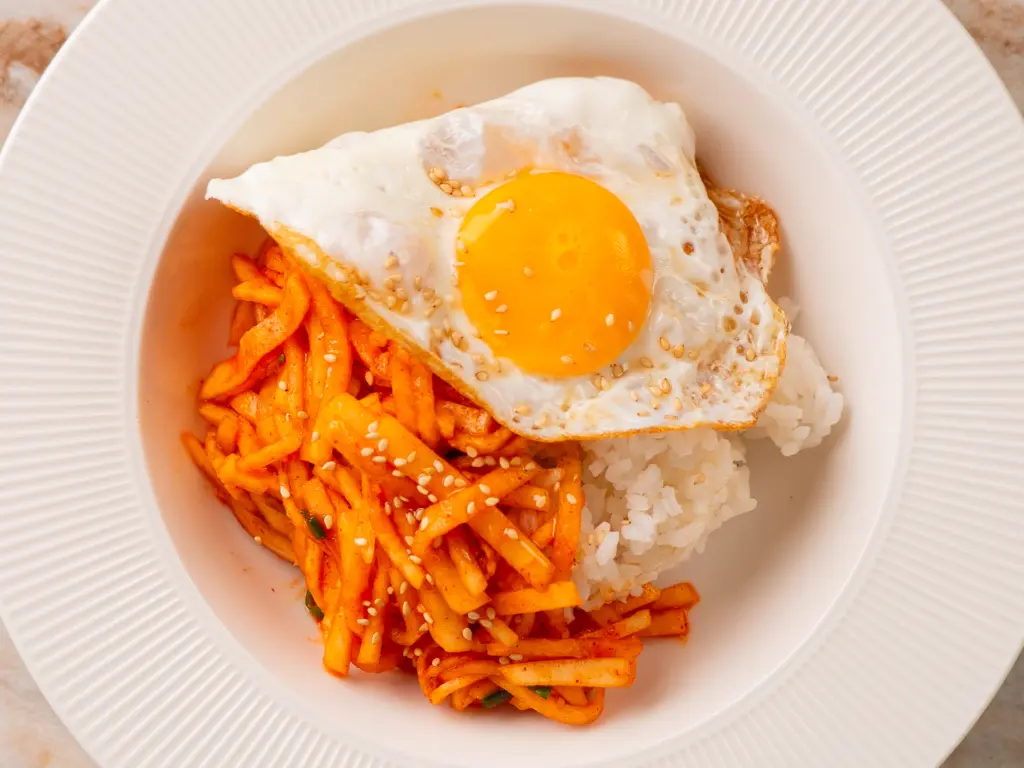
Musaengchae Bibimbap: Korean Spicy Radish Banchan
- Braised Mackerel with Radish: Mackerel is the most commonly eaten fish in Korean home meals. This mackerel is eaten grilled but also frequently eaten as a spicy braised dish called Godeungeo-jorim, usually with radish. It is one of the Korean dishes I miss most whenever I come from Korea to Belgium. If you were looking for a new Korean food, a home-style dish loved by Koreans, I confidently recommend this Braised Mackerel.
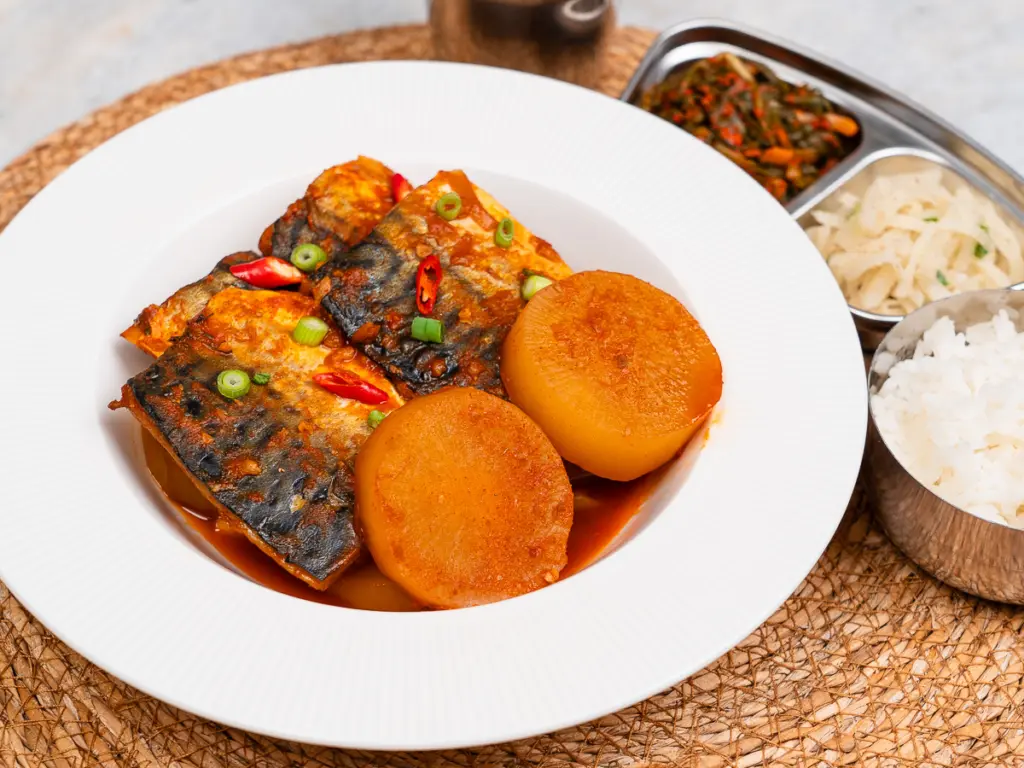
Korean Braised Mackerel with Radish: Mom’s Godeungeo Jorim Recipe
FAQ about Korean Radish Side Dish with Perilla Seeds
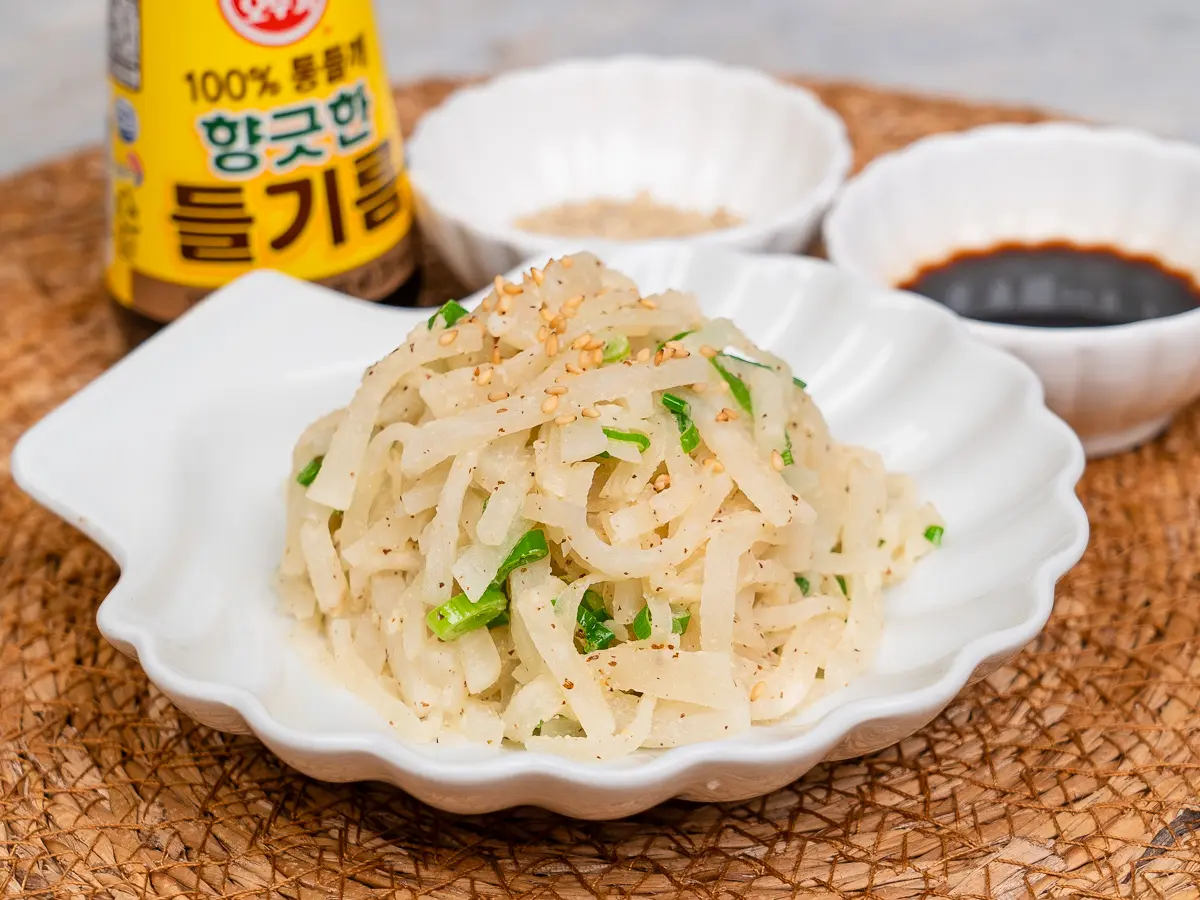
Easy Korean Radish Side Dish (Mu Namul Recipe) with Perilla Seeds
Equipment


Ingredients
- 160 g Korean radish Mu or Substitute with Daikon
- 2 pinches Salt for marinating
- 1/2 tsp Minced garlic
- 1/2 tsp Tuna fish sauce
- 50 ml Water
- 1/4 stalk Green onion
- 1.3 tbsp Perilla seed powder
- 1 tbsp Perilla oil
- 1 pinch Salt for final seasoning
- 1 pinch Toasted sesame seeds
Instructions
- Prepare the vegetables: Julienne the radish into thin strips.160 g Korean radish
- Thinly slice the green onion and prepare minced garlic.1/4 stalk Green onion, 1/2 tsp Minced garlic
- Marinate: Add salt and tuna fish sauce to the julienned radish, and let it marinate for 10 minutes.2 pinches Salt, 1/2 tsp Tuna fish sauce
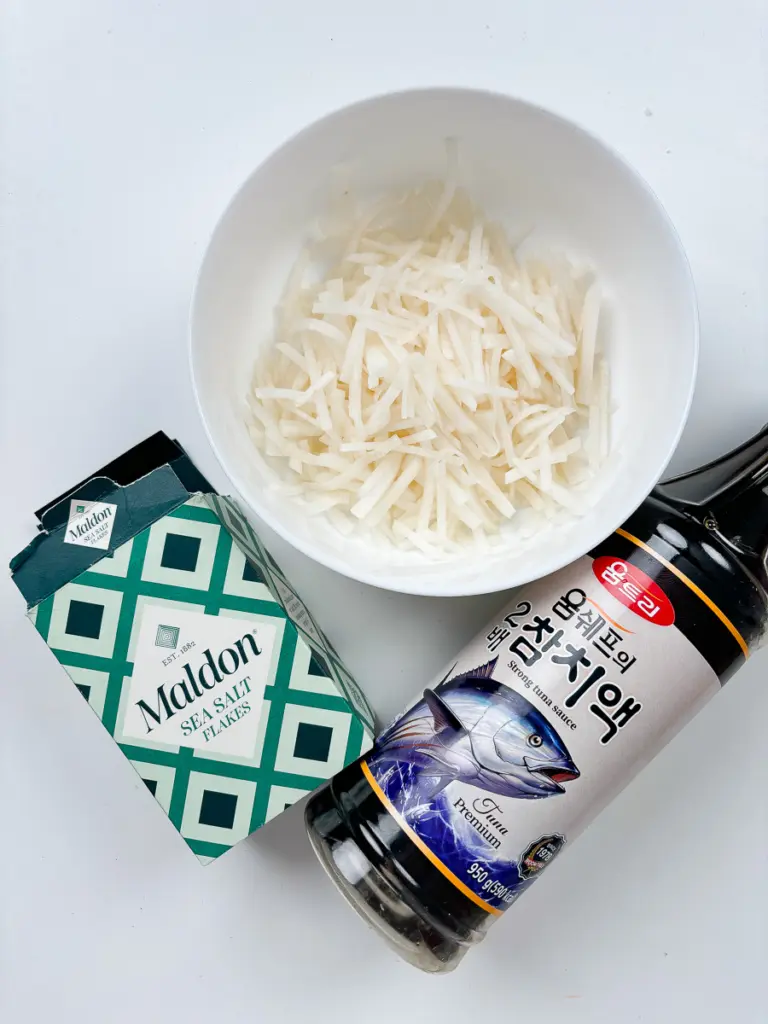
- Stir-fry: Place the marinated radish in a pan. Stir-fry the radish for about 1 minute, then add the minced garlic and continue to stir-fry. Sstir-fry gently until the radish starts to look slightly translucent.160 g Korean radish, 1/2 tsp Minced garlic
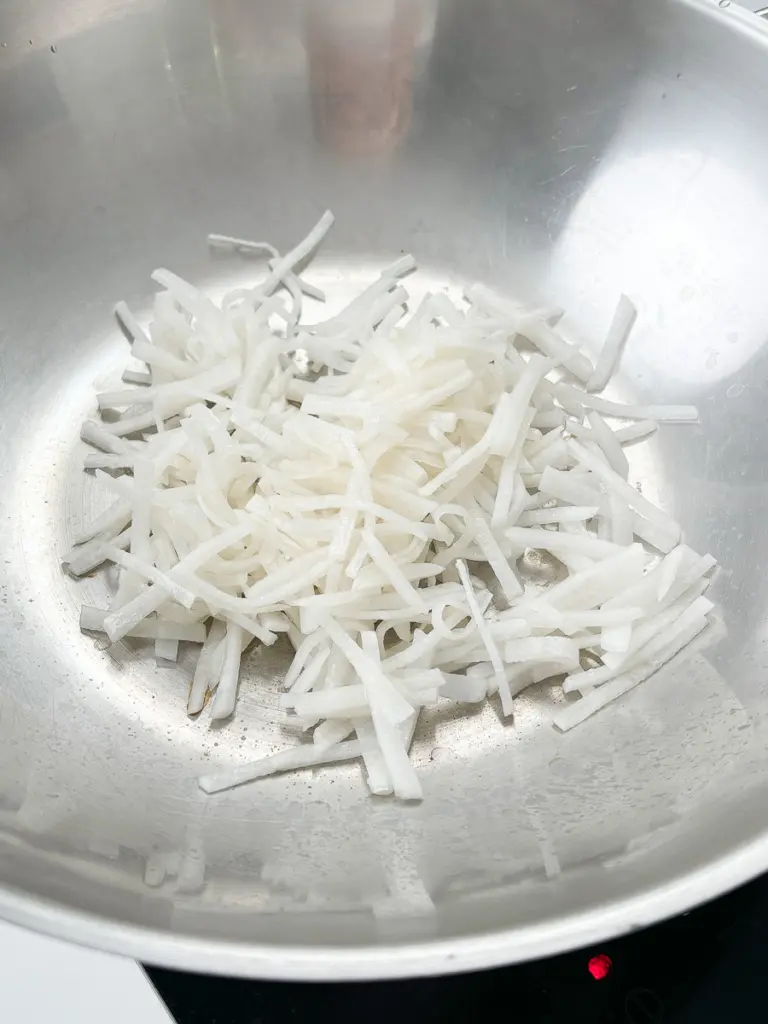
- Steam: When the radish starts to soften, add 50ml of water. Cover the pan with a lid and steam on low heat for 5 minutes.50 ml Water
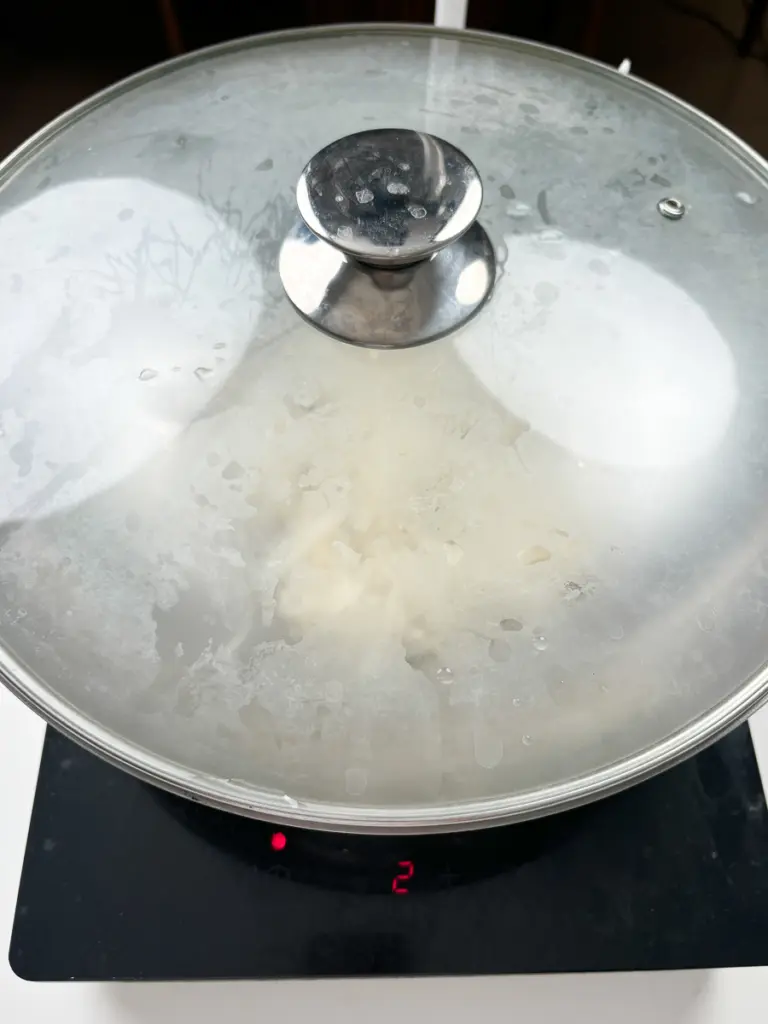
- Add Seasoning: Once the radish is cooked through, add perilla seed powder, perilla oil, and the sliced green onions. Then stir-fry together.1/4 stalk Green onion, 1.3 tbsp Perilla seed powder, 1 tbsp Perilla oil
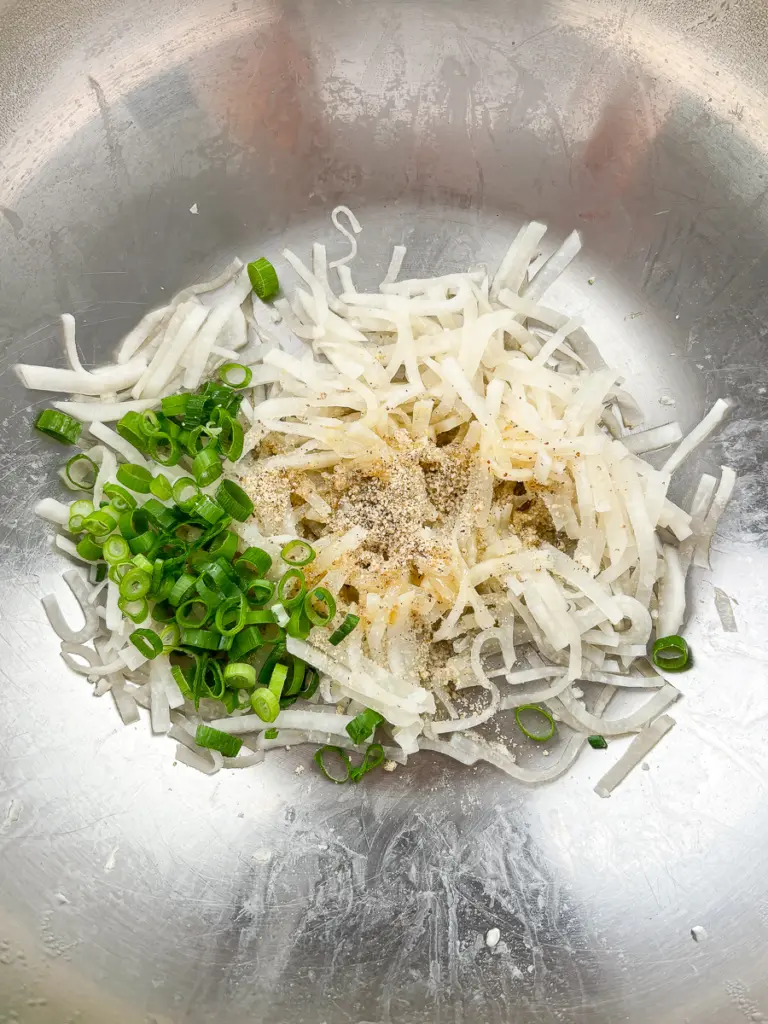
- Finish: Taste and adjust the seasoning with an extra 1-2 pinches of salt if needed. Finish by sprinkling a pinch of toasted sesame seeds on top.1 pinch Salt, 1 pinch Toasted sesame seeds