Easy Andong Jjimdak Recipe: Korean Soy Sauce Braised Chicken

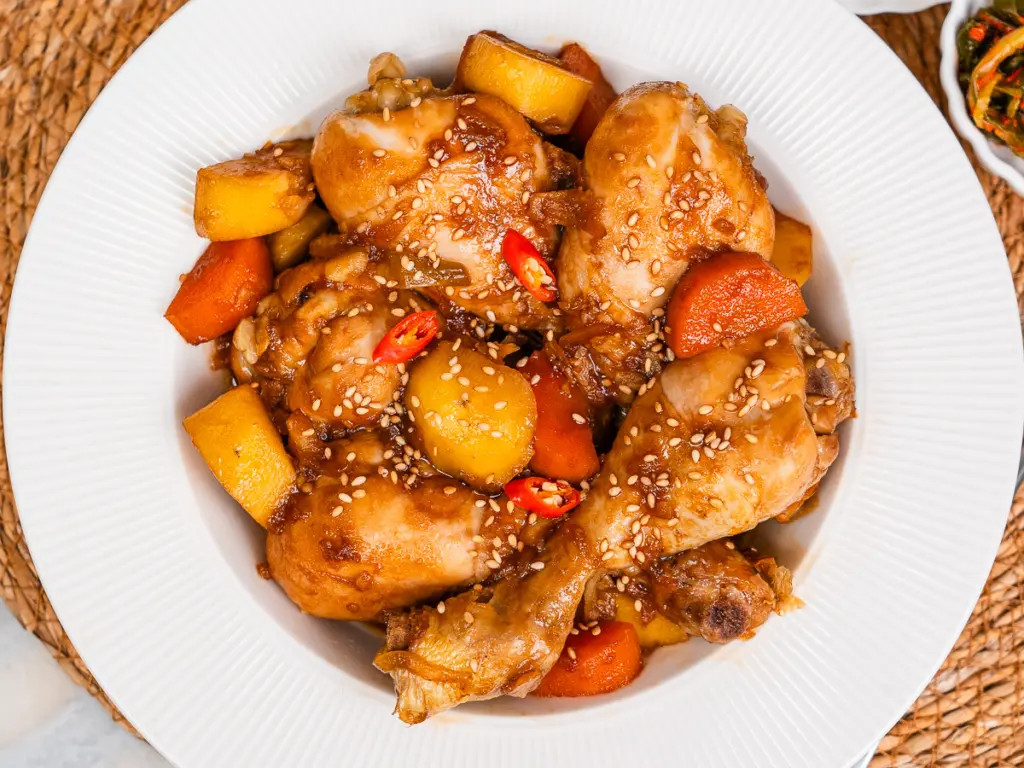
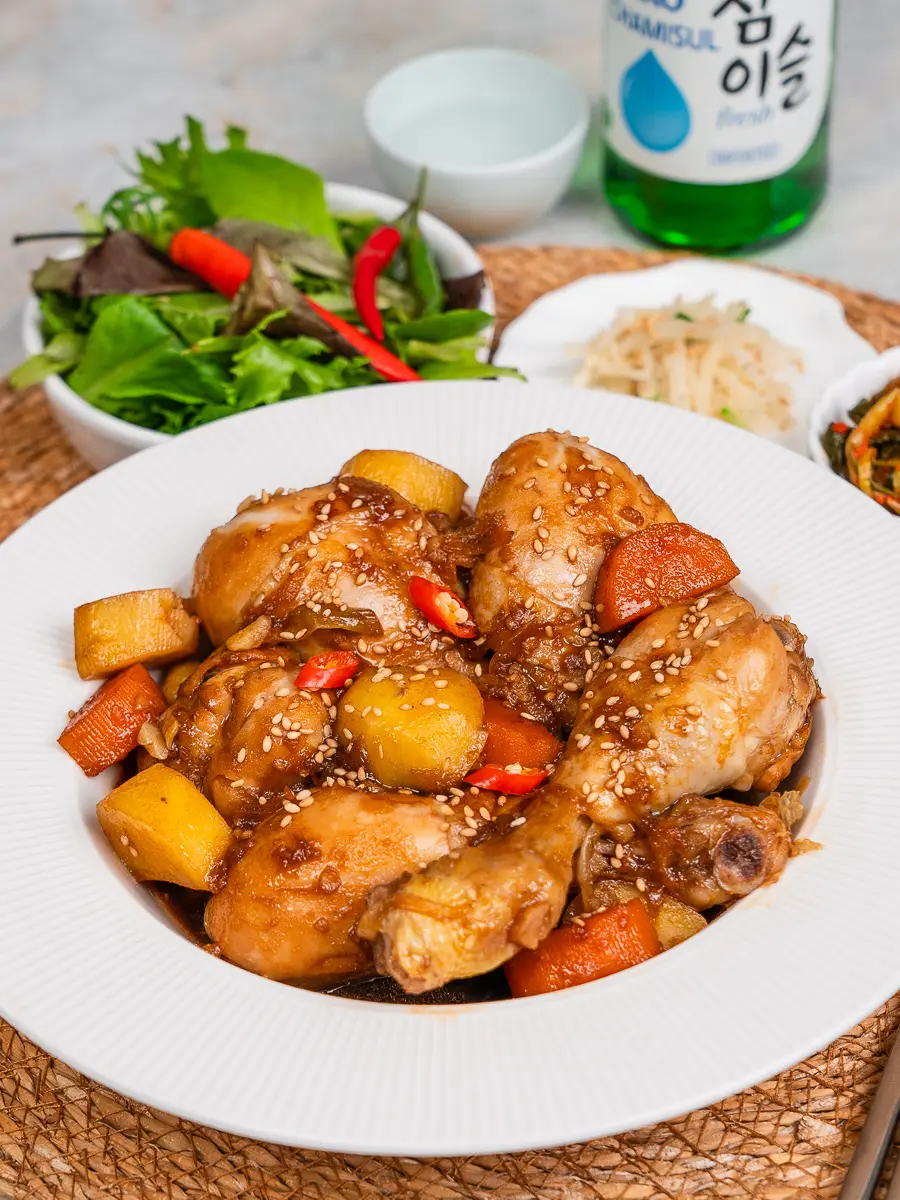
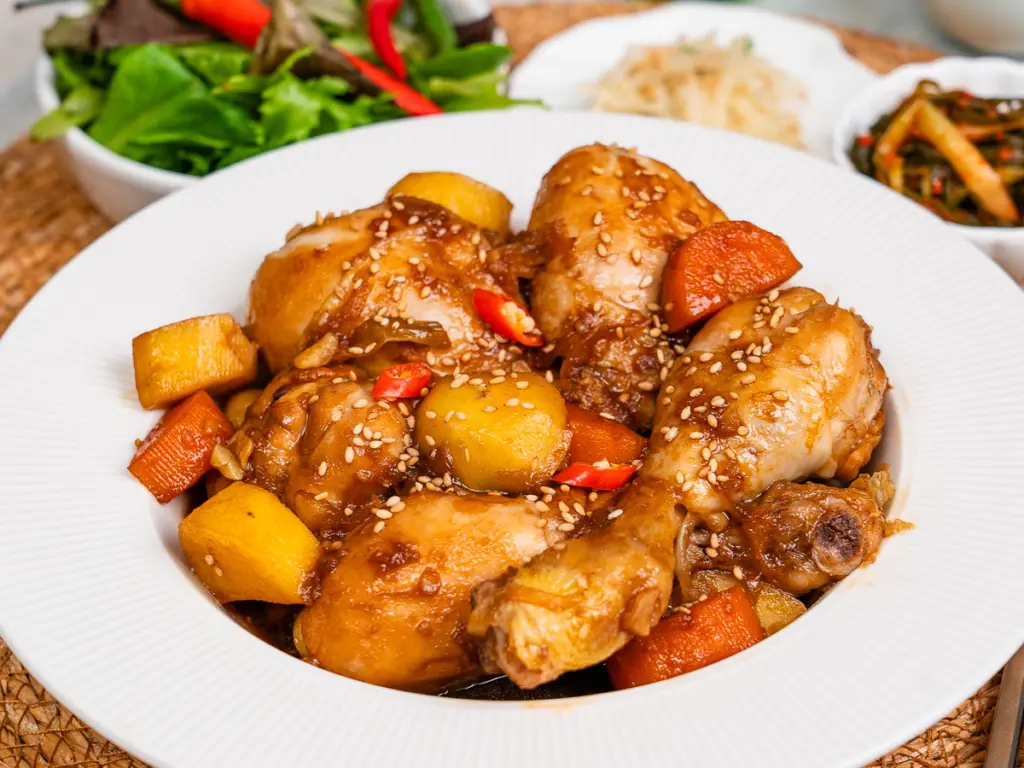
This jjimdak recipe is a must-try if you love Korean comfort food. Jjimdak is a popular Korean dish made with tender chicken braised in a rich soy sauce based sauce with vegetables. This style of braised chicken is often described as Korean soy sauce braised chicken, and it is one of the most satisfying dishes to eat with a bowl of rice.
To be honest, I almost never order Jjimdak at restaurants anymore. The last time I bought it outside was probably about ten years ago. Do you know why? Because once you learn how simple this jjimdak recipe is, there is really no reason not to make it at home. With just a few basic ingredients and one pot, you can recreate this comforting Korean braised chicken in your own kitchen.
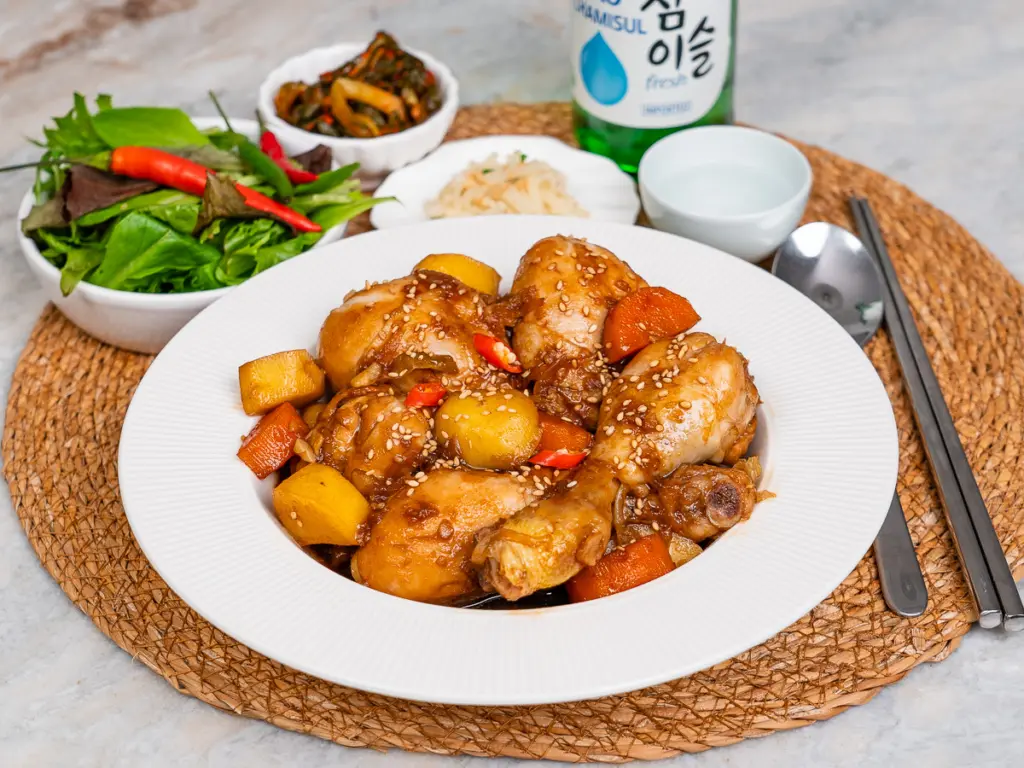
This Andong jjimdak is especially great for home cooking because the ingredients are simple and the cooking process is straightforward. As the chicken slowly braises in the soy sauce mixture, it becomes incredibly tender and absorbs all the deep, savory flavor of the sauce. By the time the vegetables cook down and the sauce thickens slightly, you have a rich and comforting dish that tastes even better with rice. If you have never tried making Korean soy sauce chicken before, this jjimdak recipe is a great place to start.
What Is Jjimdak?
Jjimdak is a Korean braised chicken dish made with vegetables such as potatoes and carrots, and bite-size pieces of tender chicken simmered together in a sweet and savory soy sauce based sauce. Many versions of a jjimdak recipe also include glass noodles, which absorb the flavorful sauce as they cook.
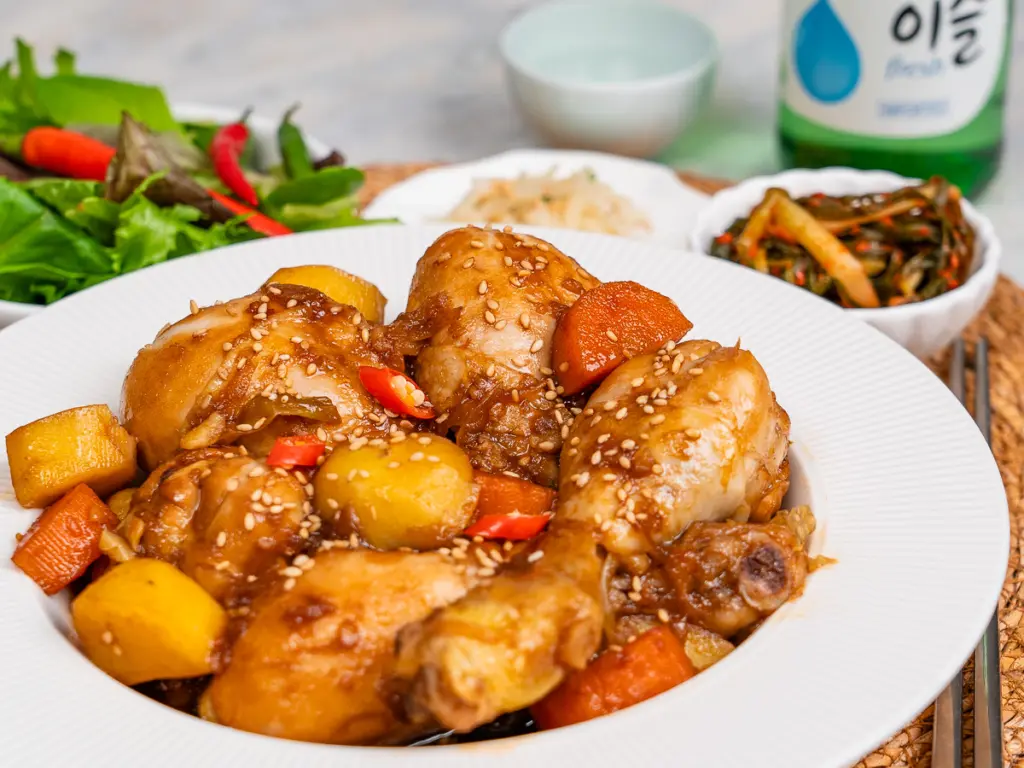
In the past, thin glass noodles were commonly used, but these days many Korean restaurants prefer wide, flat glass noodles because they have a chewier texture and soak up the sauce beautifully. For this Jjimdak recipe, I chose not to add glass noodles because I wanted to reduce the amount of carbohydrates and keep the dish a bit lighter. Of course, adding noodles is completely up to you.
Why Is It Called Andong Jjimdak?
The name comes from the city of Andong in Korea. The dish originated there, which is why it is often called Andong jjimdak. The history of Andong jjimdak is actually not very old. The dish was first created in the 1980s in the famous chicken alley of Andong’s old market. At the time, fried chicken shops were becoming very popular in Korea because of the influence of American-style fried chicken. Local restaurant owners developed this jjimdak as a new kind of chicken dish to compete with the growing fried chicken trend.
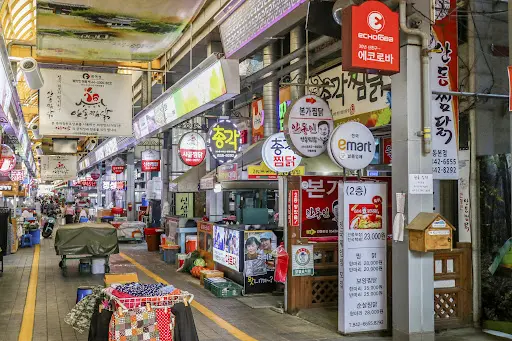
Instead of frying the chicken, they braised it in a sweet and salty soy sauce mixture and added sliced chili peppers to balance the richness. The result was a deeply flavorful Korean soy sauce braised chicken that was savory, slightly sweet, and gently spicy.
What Does Jjimdak Taste Like?
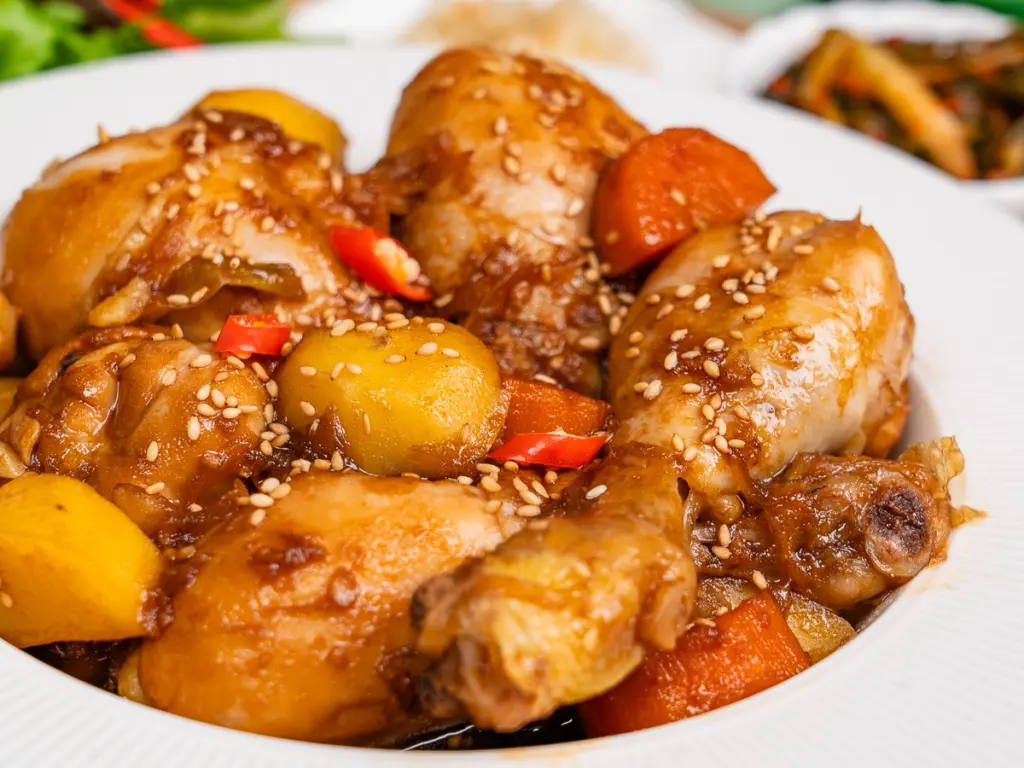
The flavor of Jjimdak is rich, comforting, and deeply savory. In a good Korean braised chicken, the sweet and salty soy sauce broth slowly soaks into the chicken, making the meat incredibly tender and juicy. As the dish cooks, vegetables such as potatoes, carrots, and onions release their natural sweetness and deepen the flavor of the sauce. The chicken also releases a little bit of its natural fat, which adds a rich and slightly nutty flavor to the broth.
When you spoon that sauce over rice, mix it with the vegetables, and take a bite with the tender chicken, you will understand why this Korean soy sauce braised chicken is so beloved in Korean home cooking. Many people who try this Andong jjimdak for the first time are surprised by how balanced the flavors are. It is sweet, savory, and slightly spicy all at the same time.
Is Jjimdak Healthy?
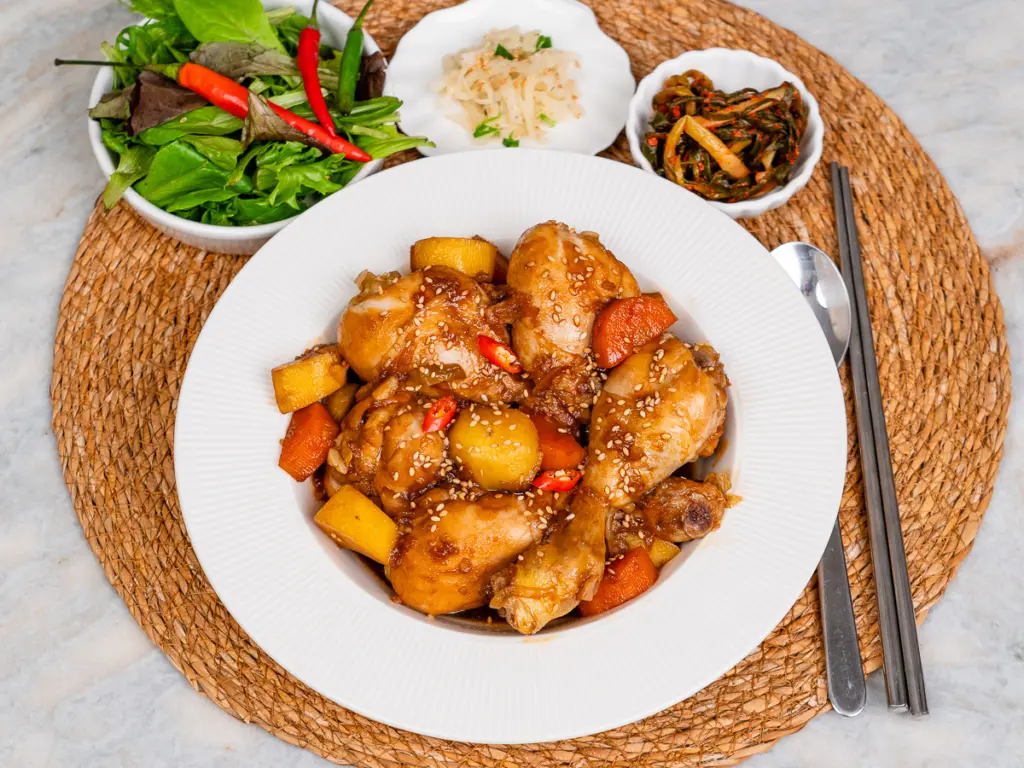
Jjimdak can be a balanced and satisfying meal because it contains protein from chicken and fiber from vegetables like potatoes, onions, and carrots. Compared to deep-fried chicken dishes, a jjimdak recipe is cooked by braising, which means it uses far less oil. If you want a lighter version of Korean soy sauce braised chicken, you can easily adjust the recipe. For example, you can reduce the sugar slightly or skip the glass noodles. The dish will still have plenty of flavor thanks to the soy sauce, garlic, and vegetables.
Because this Andong jjimdak is cooked slowly in a single pot, the ingredients blend together to create a comforting meal that feels hearty but not overly heavy. When served with rice and vegetables, Korean braised chicken can be part of a nourishing and satisfying home-cooked meal.
Why you’ll love this Jjimdak recipe
Best Chicken for Jjimdak
Traditionally, a classic Jjimdak recipe uses a whole chicken that is cut into pieces. Using the whole chicken gives the dish a deeper flavor because different cuts release different textures and juices while braising.
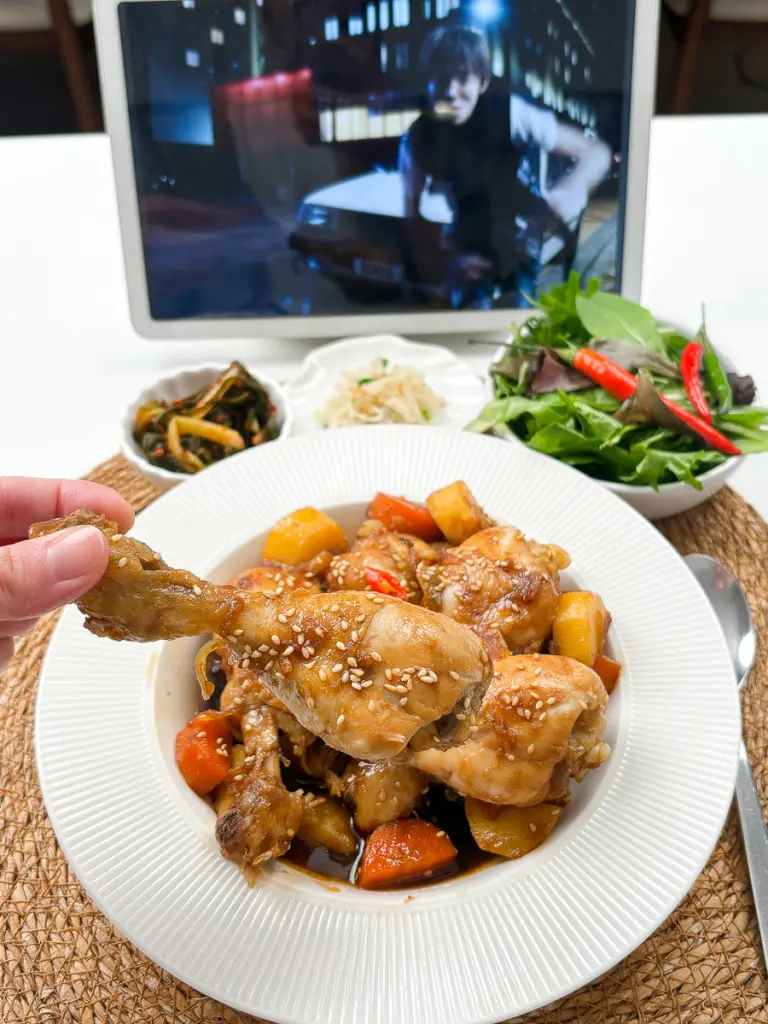
However, many people making a jjimdak at home prefer to use only certain parts of the chicken. These days, chicken thighs and drumsticks are the most popular choices because they stay juicy and tender during cooking. For this Korean braised chicken, I used chicken drumsticks. I wanted the chicken to be especially juicy and soft, which is why drumsticks work so well for this Jjimdak recipe.
Ingredients
Chicken
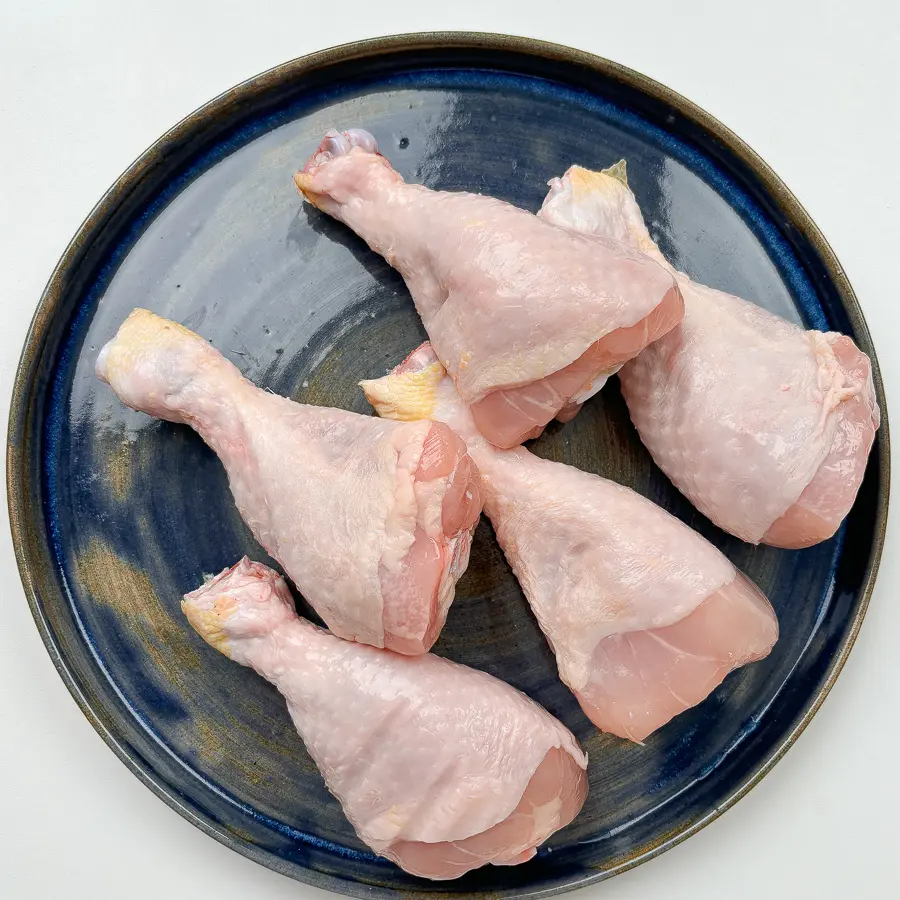
- 5 chicken drumsticks (600 g)
Vegetables
- 1 onion
- 1 green onion
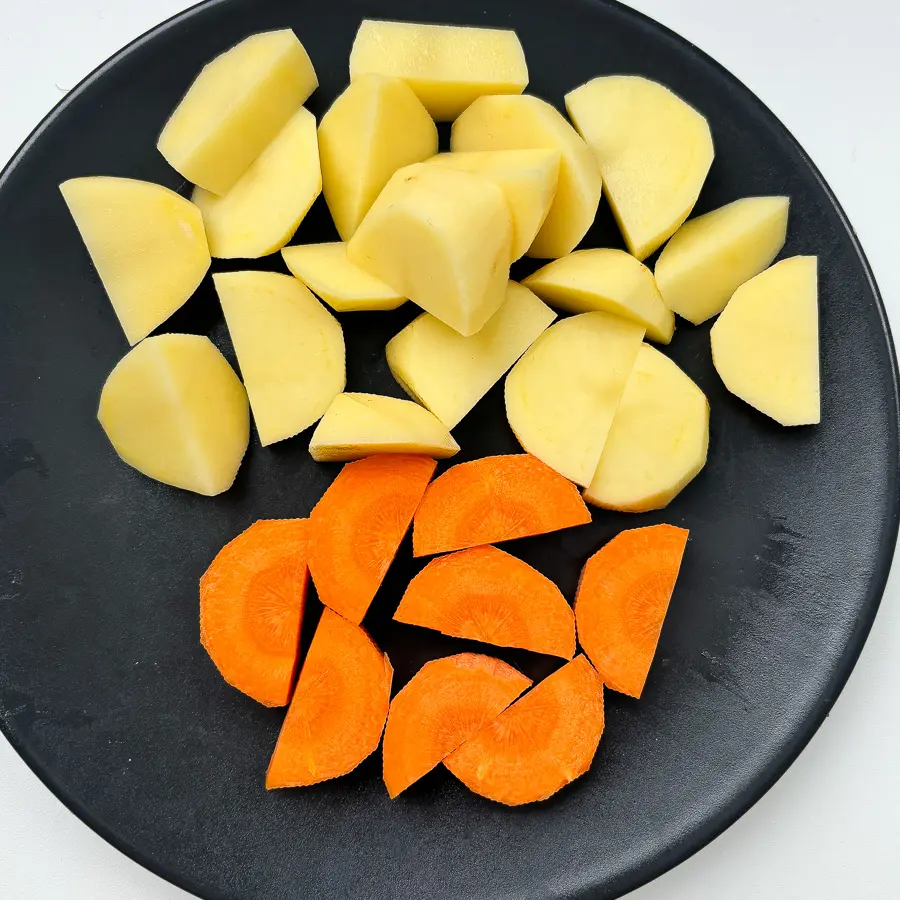
- 1 potato
- 1/3 carrot
Other
- 300 ml water
- 3 tbsp cooking wine (for boiling the chicken)
Optional Garnish
- 2 spicy peppers: these help balance the richness of the chicken with a bit of heat
- 1 tsp sesame seeds
Jjimdak Sauce
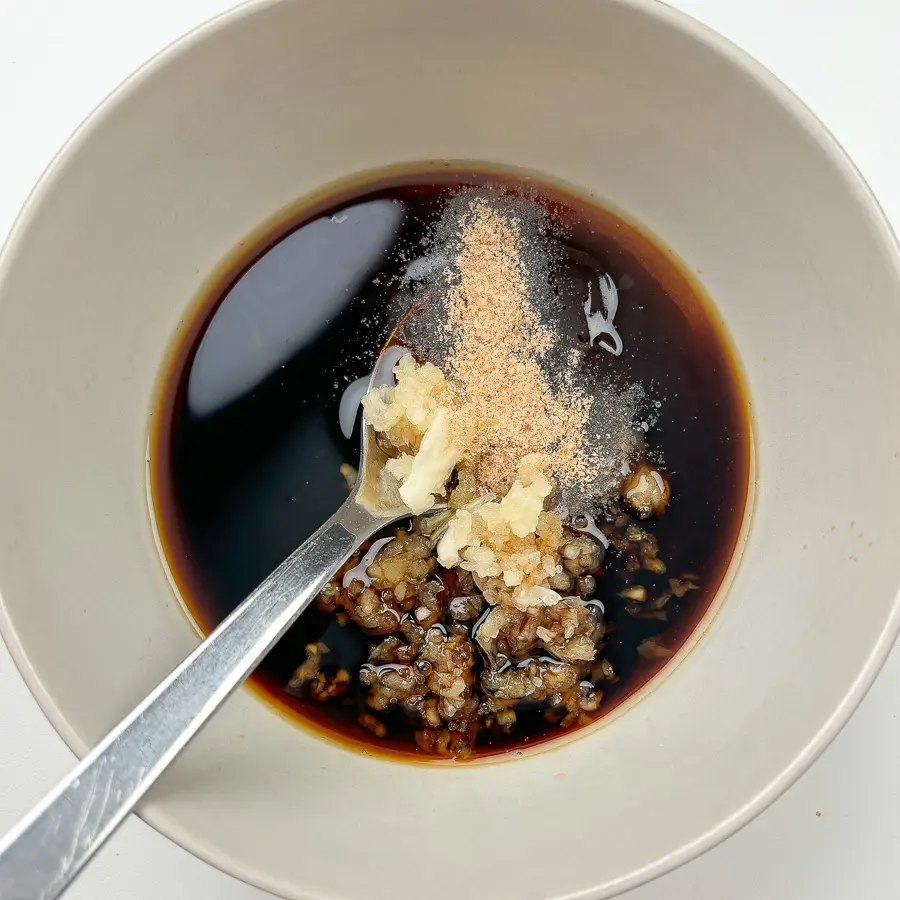
- 5 tbsp soy sauce (Korean soy sauce ‘Jin Ganjang’)
- 2 tbsp sugar
- 1 tbsp corn syrup
- 2 tbsp cooking wine (Matsul)
- 1 tbsp oyster sauce
- 1/2 tsp beef Dashida
- 1 tbsp minced garlic
- 1 tbsp dark soy sauce: used mainly to give the soy sauce braised chicken a deeper color
Ingredient Substitutions
Dark Soy Sauce
Dark soy sauce is mainly used to deepen the color of the sauce and make the jjimdak recipe look more appetizing. If you cannot find it, you can substitute Korean soy sauce. Since Korean soy sauce is usually saltier and less sweet, you can use about half the amount or simply skip it.
Corn Syrup
Corn syrup helps give the sauce a glossy finish in this jjimdak recipe, but it is not essential. You can replace it with agave syrup, maple syrup, or honey.
Beef Dashida
Beef dashida is a Korean seasoning powder that many Korean restaurants use when making Korean soy sauce braised chicken. In fact, you could say almost every jjimdak restaurant uses it. Adding dashida or a small amount of MSG helps recreate the deep savory flavor people often remember from restaurant versions of this jjimdak recipe. If you do not have it, you can skip it or add a small pinch of MSG instead.
Oyster Sauce
Oyster sauce adds extra umami to the sauce of this Andong jjimdak. If you do not have it, you can add a little MSG or a small amount of chicken stock powder to achieve a similar depth of flavor.
How to Make Jjimdak (Step-by-Step)
Step 1 – Remove the Chicken Smell
- I skipped the glass noodles today to reduce the carbs, but if you want to add them, soak the glass noodles in water for at least 30 minutes while you cook the dish.
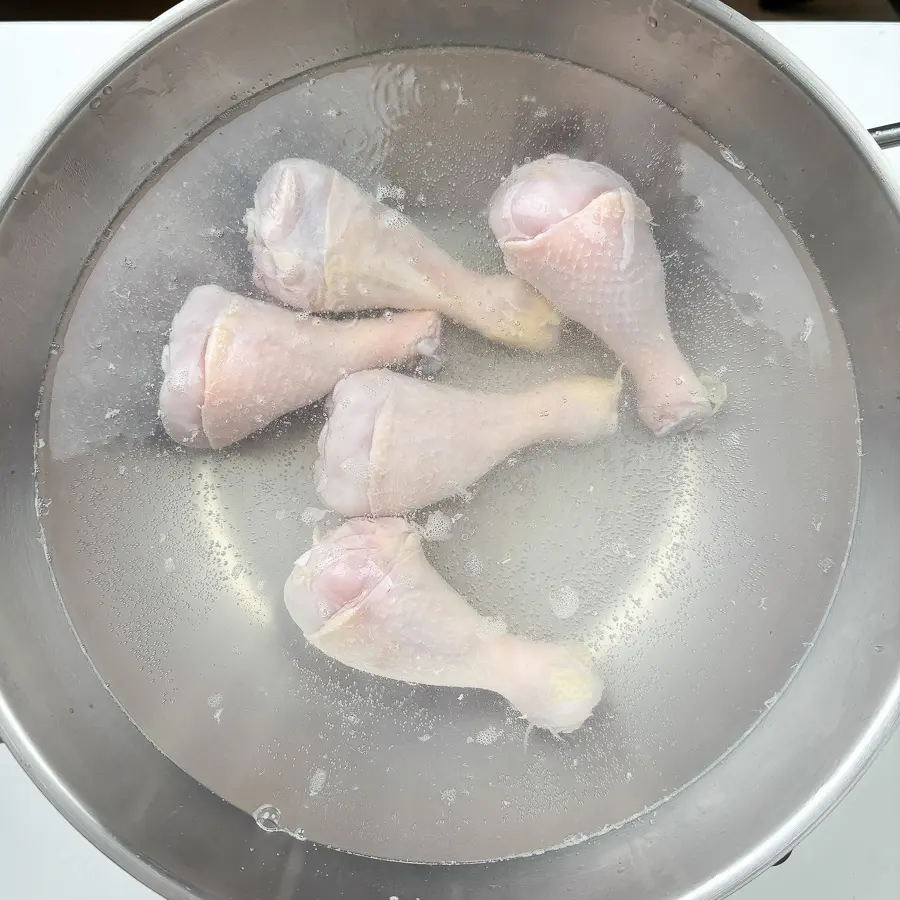
- Bring a pot of water to a boil and add 3 tablespoons of cooking wine. Add the chicken drumsticks and boil them for about 5 minutes to remove impurities.
- This step helps keep the broth clean and improves the flavor of the jjimdak recipe. After boiling, rinse the chicken thoroughly under running water.
Step 2 – Prepare the Vegetables
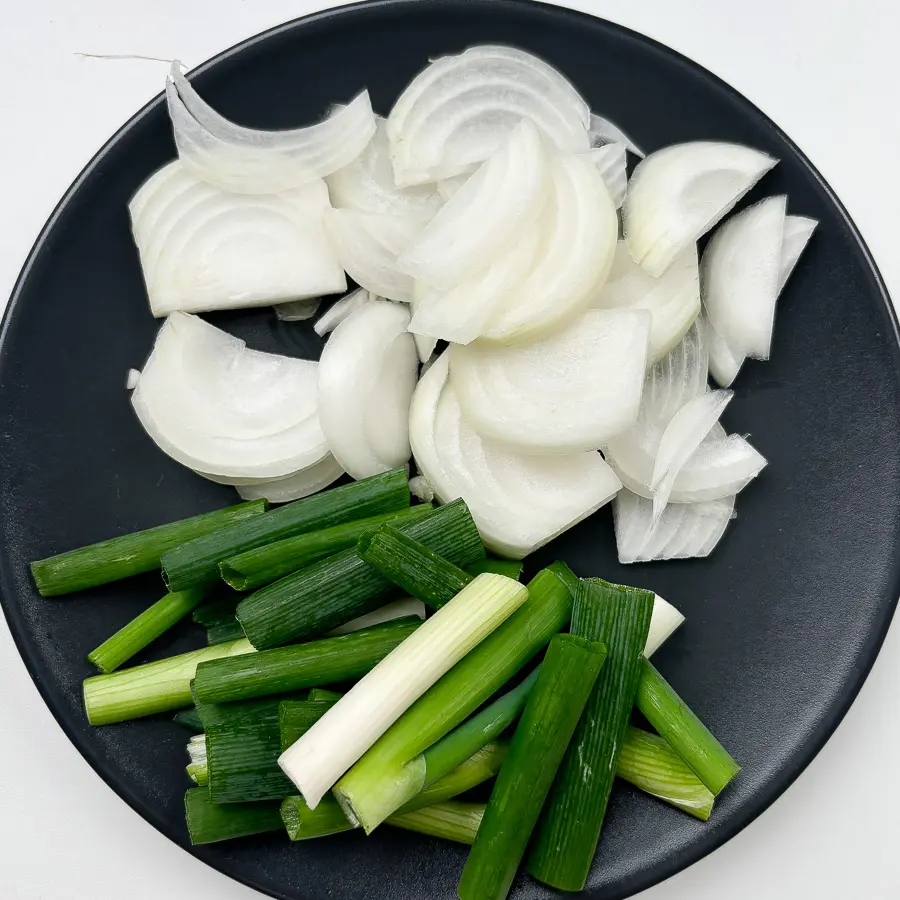
- Cut the green onion into large pieces. Slice the onion.
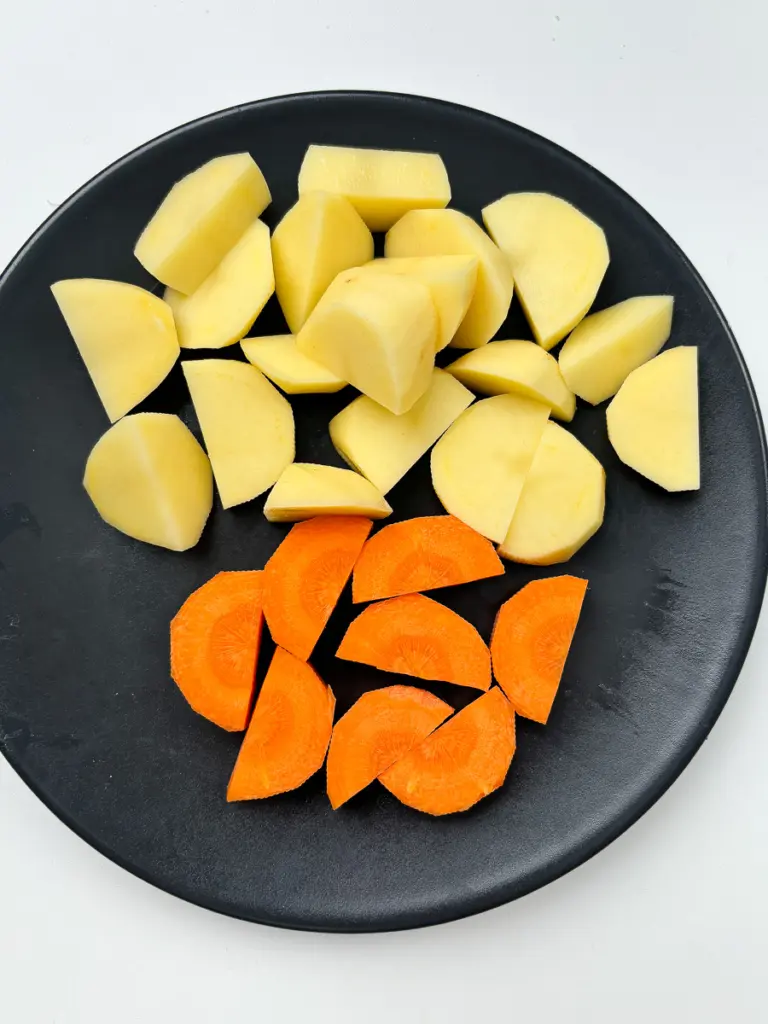
- Cut the potato into bite-size half-moon shapes.
- Slice the carrot into pieces of a similar size.
- Preparing the vegetables evenly helps them cook properly in the Korean soy sauce chicken.
Step 3 – Start Braising the Chicken
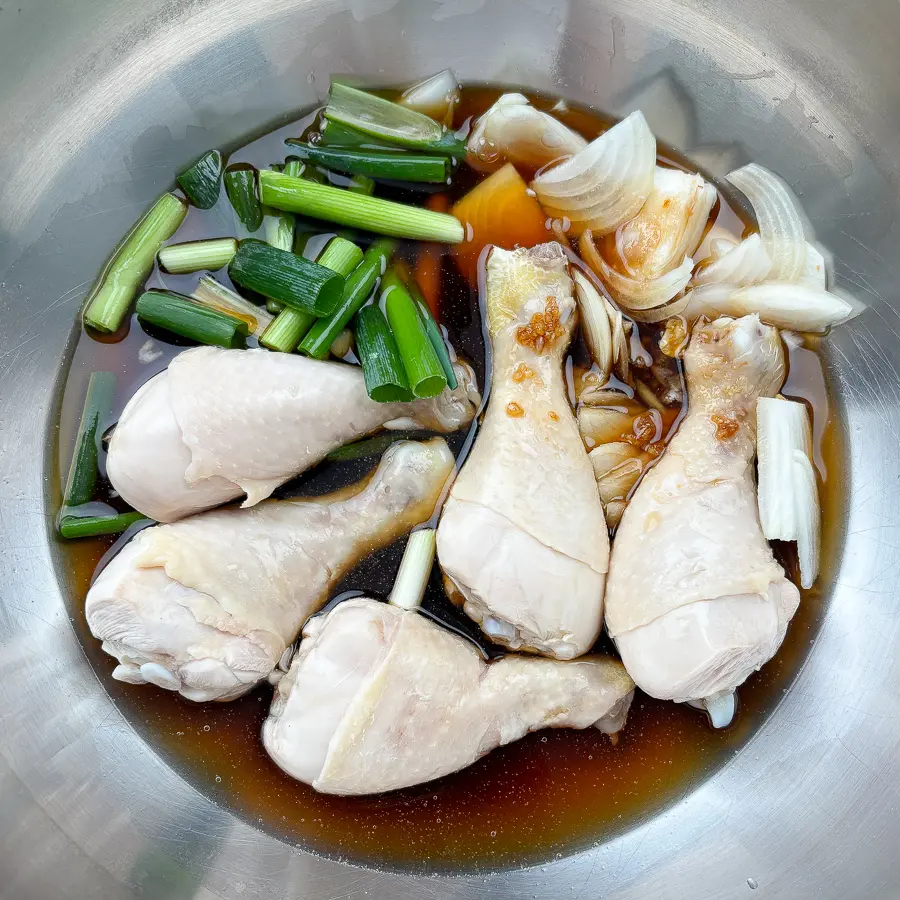
- Place the blanched chicken, onion, green onion, sauce ingredients, and water into a pot.
- Cover with a lid and bring everything to a boil over high heat. Once the liquid starts boiling, reduce the heat to medium and simmer for about 10 minutes.
- During this time, the chicken begins absorbing the sauce and developing the deep flavor that makes a good jjimdak recipe.
Step 4 – Add the Vegetables
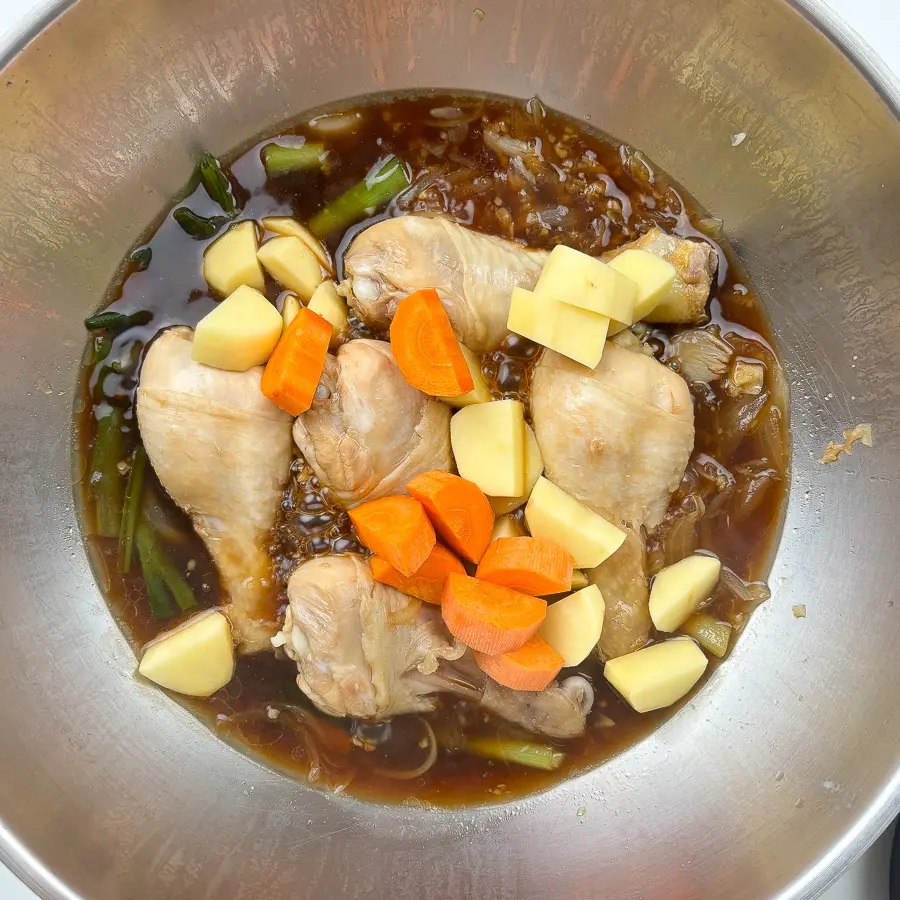
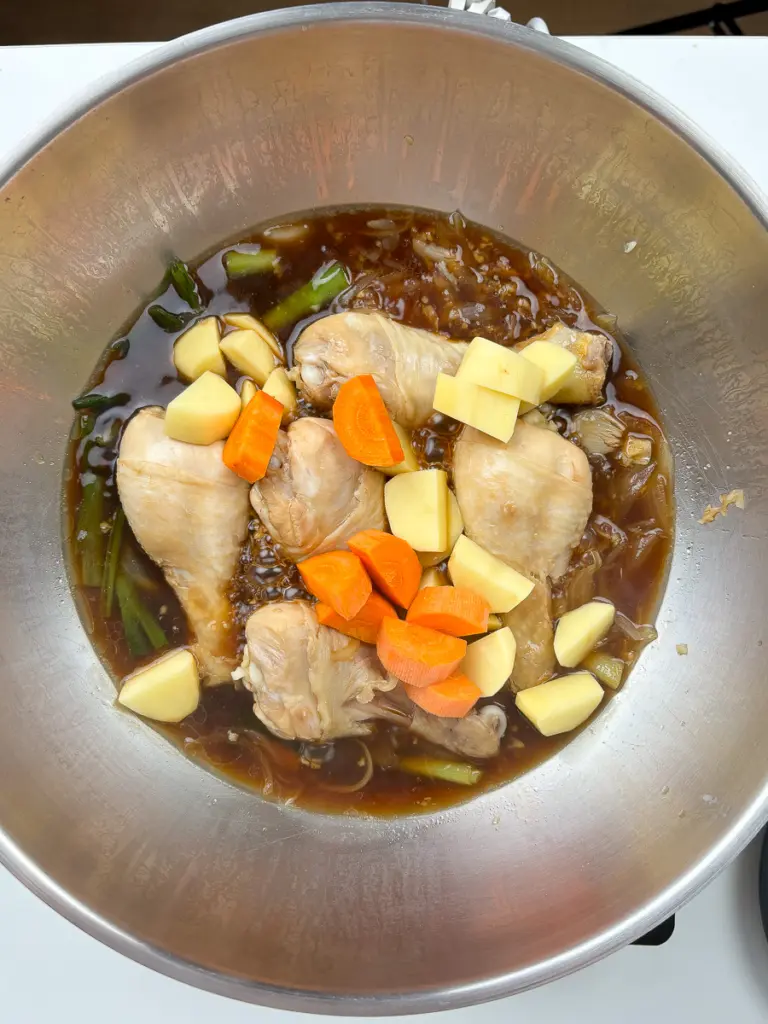
- Add the potatoes and carrots.
- Cover the pot again and cook over medium heat until the potatoes are tender, about 20 minutes. As the dish cooks, the vegetables soften and release their flavor into the sauce, which is what gives Jjimdak its rich and comforting taste.
- If the sauce reduces too much while cooking, simply add about 50 ml of water.
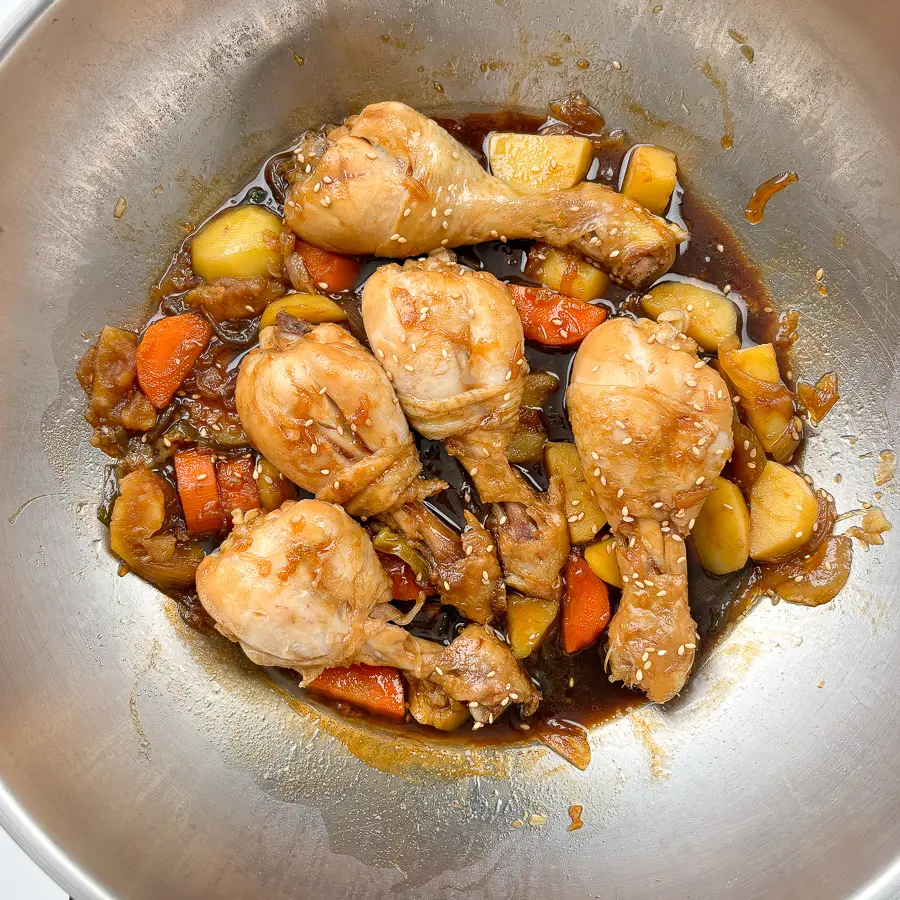
Step 5 – Finish the Dish
- Once the chicken is fully tender and the sauce has slightly thickened, Finally, add the soaked glass noodles and boil for about 1 minute. Turn off the heat.
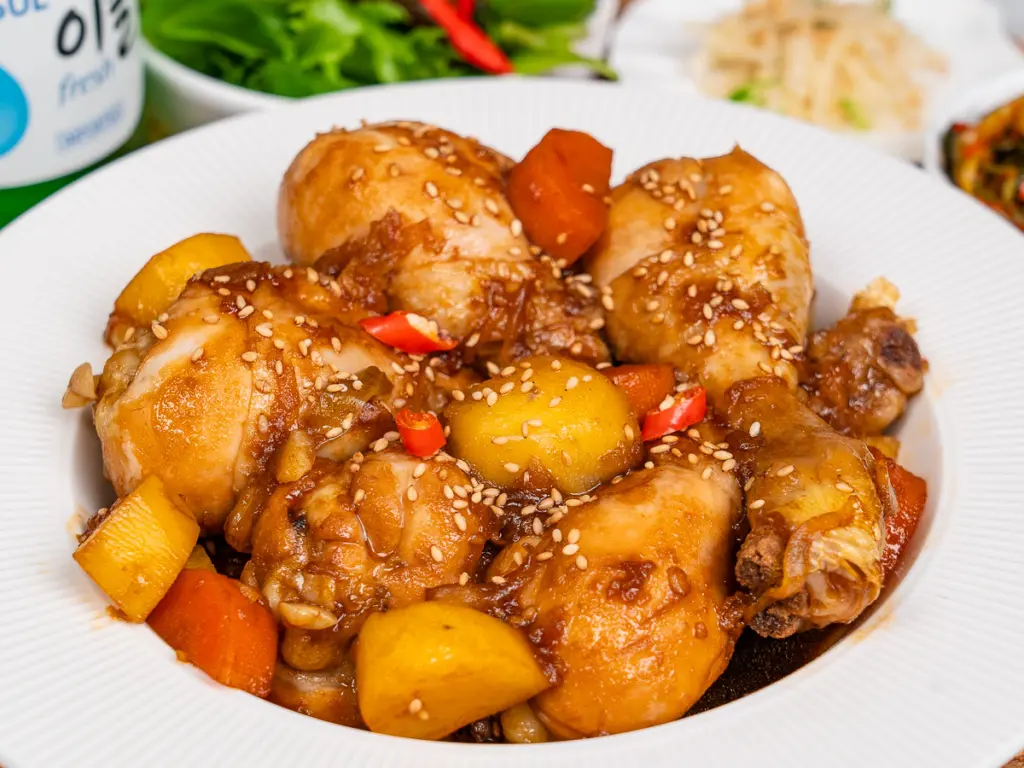
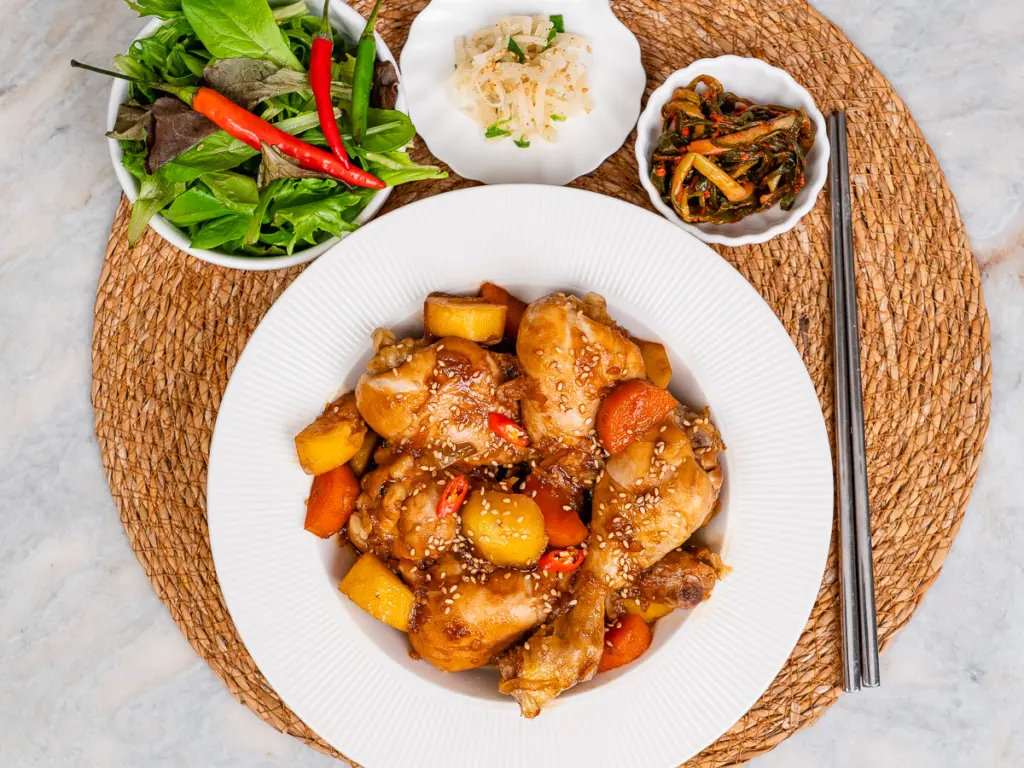
- Garnish the Andong jjimdak with sliced spicy peppers and sesame seeds. Serve the braised chicken hot with a bowl of rice.
My Tips for The Best Toast
Remove the chicken smell
Blanch the chicken in boiling water with cooking wine for about 5 minutes, then rinse it well. This step makes a big difference in the final flavor of the jjimdak recipe.
For a deeper color
Adding dark soy sauce gives the Korean braised chicken a darker, richer color that looks more appetizing.
For tender chicken
Simmer the dish gently over medium to medium-low heat. Cooking too aggressively can make the chicken tough instead of tender.
Common Mistakes When Making Jjimdak
- Skipping the blanching step: If you skip blanching the chicken, the finished jjimdak may have a strong chicken smell.
- Using too much soy sauce: Adding too much soy sauce can make the chicken overly salty.
- Cooking on high heat too long: If the heat is too high for too long, the chicken can become dry and tough instead of tender.
- Overcooking the vegetables: Potatoes can become too salty and carrots can turn mushy if they cook too long in the sauce.
What to Serve with Jjimdak
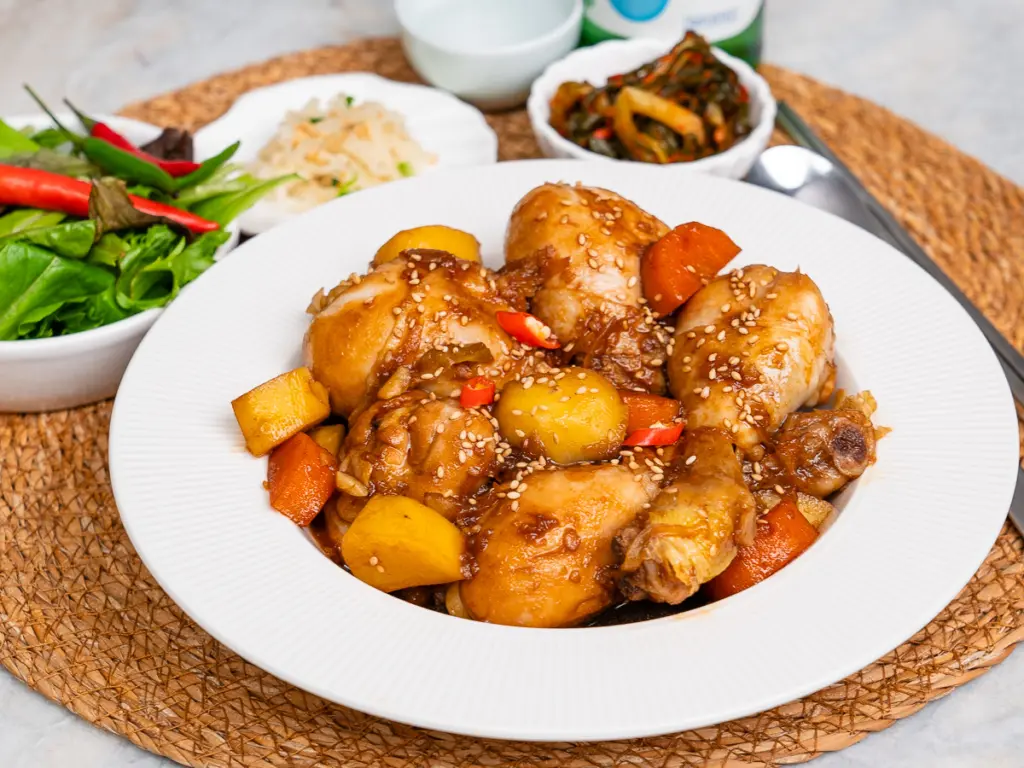
A good jjimdak recipe is already a complete dish, but it becomes even better when served with a few simple sides.
Rice
The best rice to serve with Korean soy sauce chicken is short-grain rice, which is the typical rice eaten in Korea. Sushi rice is also a great option.
Kimchi
Kimchi pairs perfectly with Korean braised chicken. The sweet and savory flavor of the jjimdak becomes more balanced when you eat it together with spicy and slightly sour kimchi.
Cucumber Salad
If kimchi is difficult to find where you live, a simple Korean cucumber salad is a great alternative. The fresh and slightly spicy flavor cuts through the richness of the Andong jjimdak and makes the meal feel lighter.
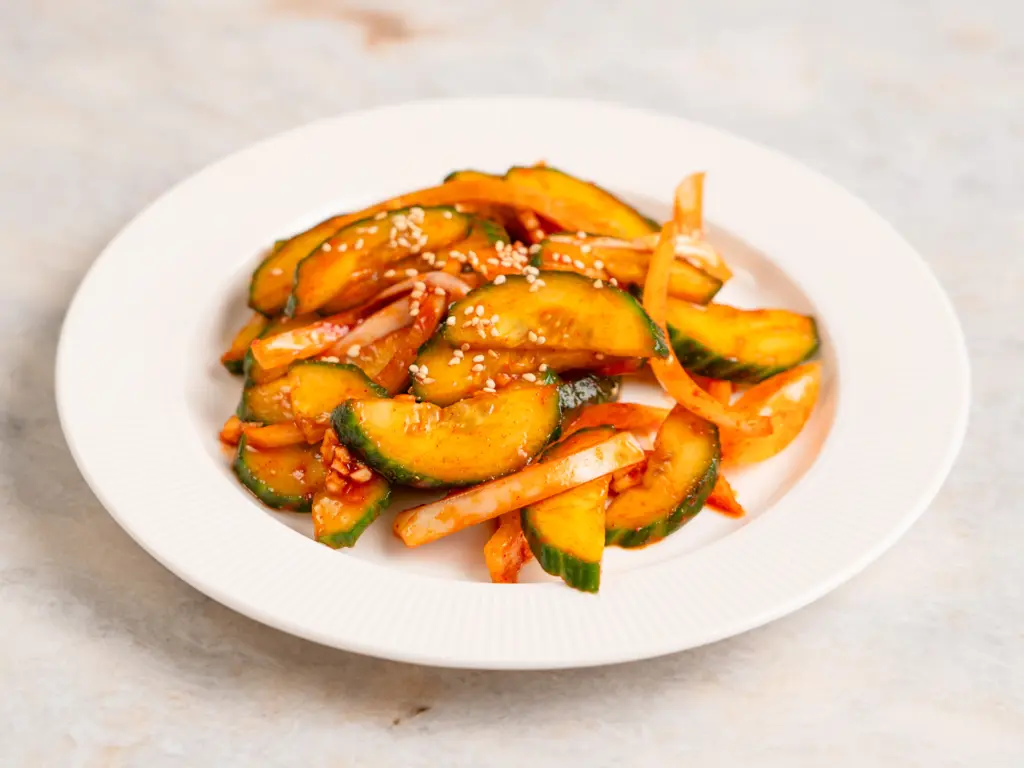
Korean Mom’s Spicy Cucumber Salad (Oi Muchim)
The Korean Way to Enjoy Jjimdak
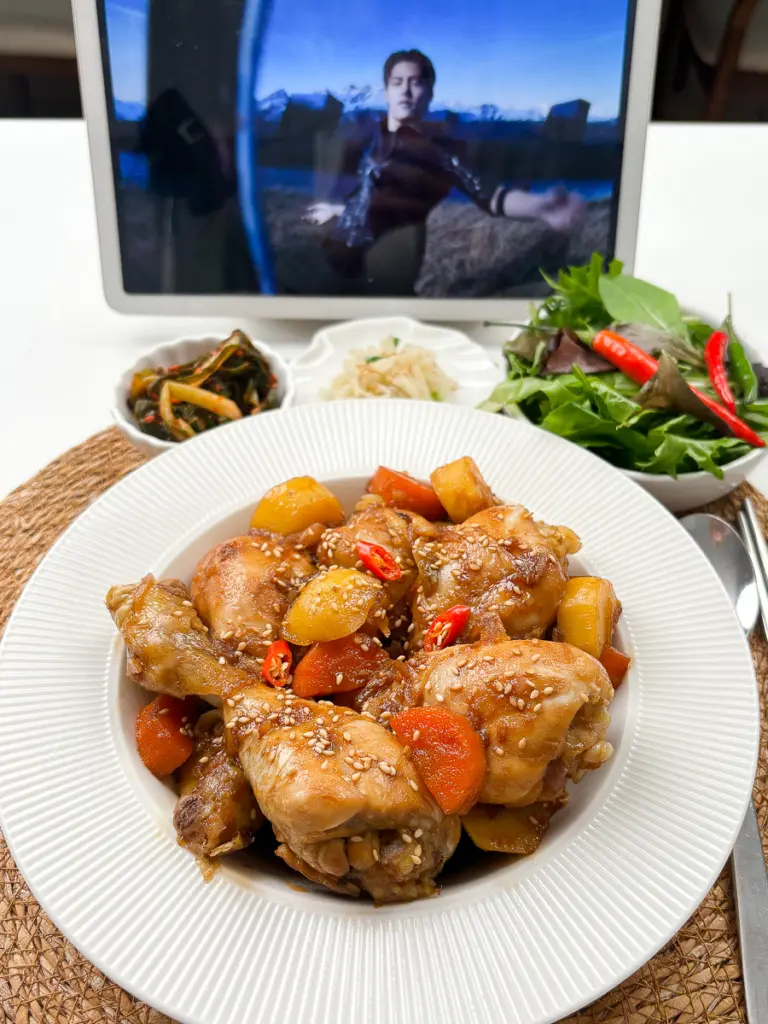
As a Korean, I have one recommendation for enjoying this jjimdak recipe the best way.
How to Store and Reheat
If you add glass noodles to your jjimdak recipe, it is best to eat them right away. Glass noodles absorb a lot of liquid and can become too soft if they sit in the sauce for too long. If you plan to store leftovers of this Korean soy sauce braised chicken, it is better to remove the glass noodles first. Store the leftover Andong jjimdak in an airtight container in therefrigerator for up to 2 days. To reheat, warm the jjimdak in a pan over medium heat with a small splash of water to loosen the sauce.
Other Korean Chicken Recipes You May Like
If you enjoy Korean chicken dishes, you may also like my Korean fried chicken recipe or this easy chicken mayo rice bowl.
Rose Jjimdak
Rose jjimdak is a trendy variation of the classic Jjimdak recipe. Instead of a soy sauce base, it uses a creamy gochujang sauce. In Korea, this dish is simply called “rose jjimdak,” and many people actually prefer it over traditional Korean braised chicken.
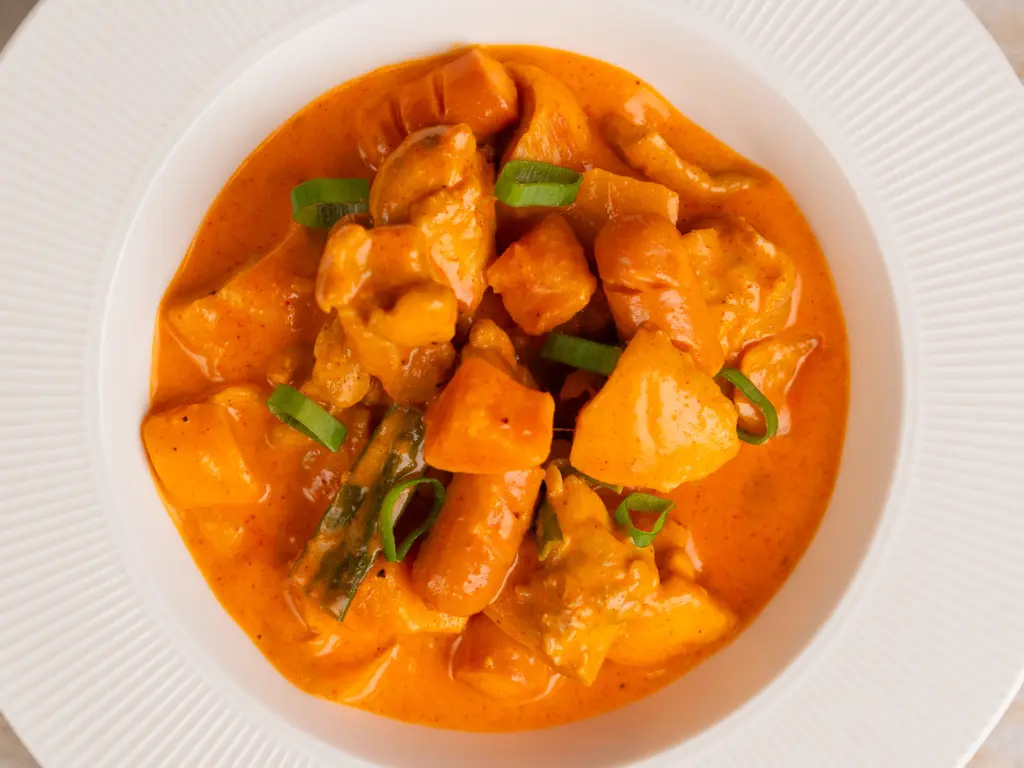
Korean Rose Jjimdak: Creamy Gochujang Braised Chicken
Ban Ban Korean Fried Chicken
In Korea, people rarely order only one flavor of fried chicken. The most popular option is “ban ban,” which means half fried chicken and half seasoned chicken. If you enjoy chicken dishes, this is another fun Korean recipe to try at home.
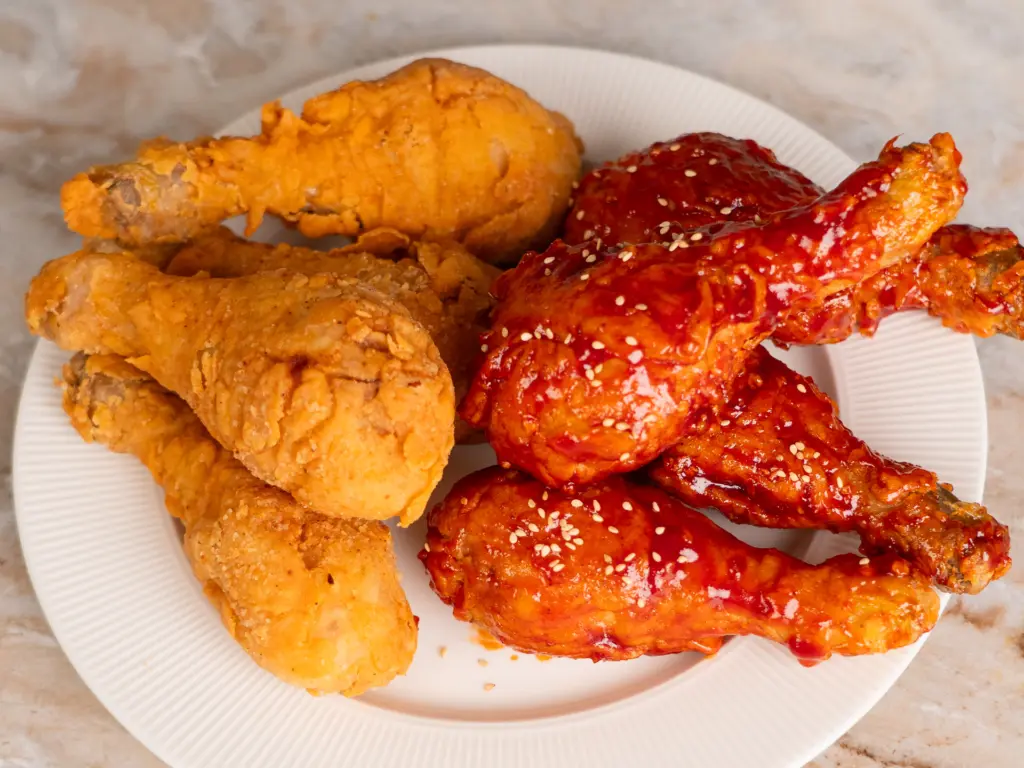
Ban Ban Korean Fried Chicken – Half Yangnyeom & Half Fried
Chicken Mayo Rice Bowl
Chicken mayo rice bowls are a popular Korean school food. You do not even need to fry the chicken. You can easily make this dish using frozen chicken nuggets and still enjoy a delicious Korean-style meal.
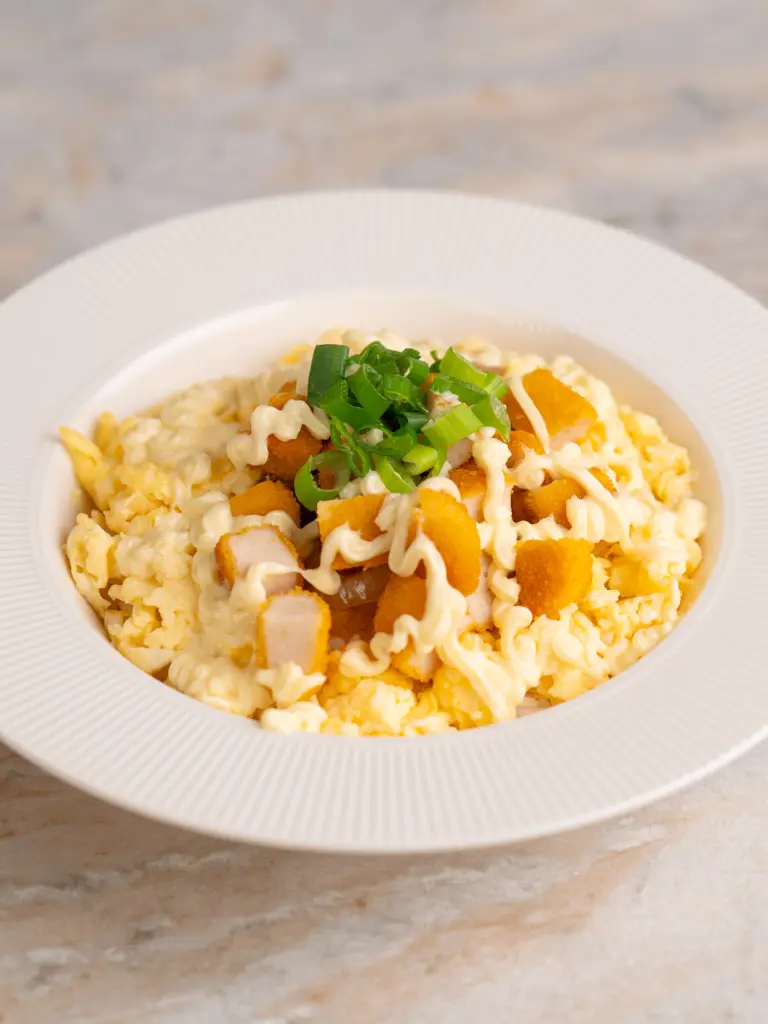
Korean Chicken Mayo Rice Bowl with Chicken Nuggets
FAQ about Andong Jjimdak
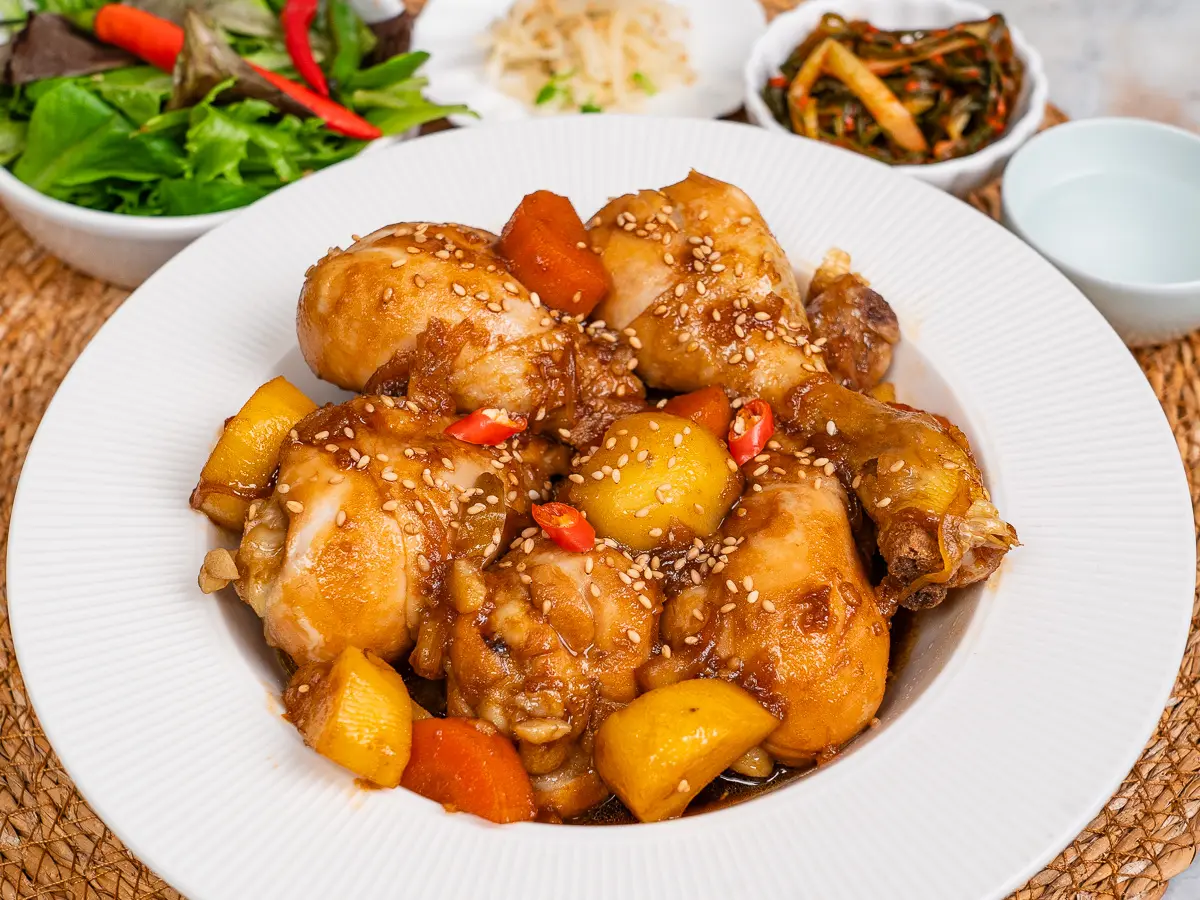
Easy Andong Jjimdak Recipe: Korean Soy Sauce Braised Chicken
Equipment


Ingredients
- 5 pcs Chicken drumsticks 600g
- 3 tbsp Cooking wine for boiling the chicken
- 1/2 Green onion
- 1 Onion
- 1 Potato
- 1/3 Carrot
- 50 g Glass noodles optional
- 300 ml Water
Jjimdak Sauce
- 5 tbsp Soy sauce Korean Jin Ganjang
- 2 tbsp Sugar
- 1 tbsp Corn syrup or honey, agave syrup, maple syrup
- 2 tbsp Cooking wine Matsul or white wine or Soju
- 1 tbsp Oyster sauce
- 1/2 tsp Beef Dashida
- 1 tbsp Minced garlic
- 1 tbsp Dark soy sauce or skip or 0.5tbsp soy sauce
Optional Garnish
- 2 Chili peppers spicy one
- 1 tsp Sesame seeds
Instructions
- I skipped the glass noodles today to reduce the carbs, but if you want to add them, soak the glass noodles in water for at least 30 minutes while you cook the dish.
- Remove the chicken smellBring a pot of water to a boil and add 3 tbsp cooking wine. Boil the chicken drumsticks for 5 minutes to remove impurities.Rinse the chicken under running water.5 pcs Chicken drumsticks, 3 tbsp Cooking wine
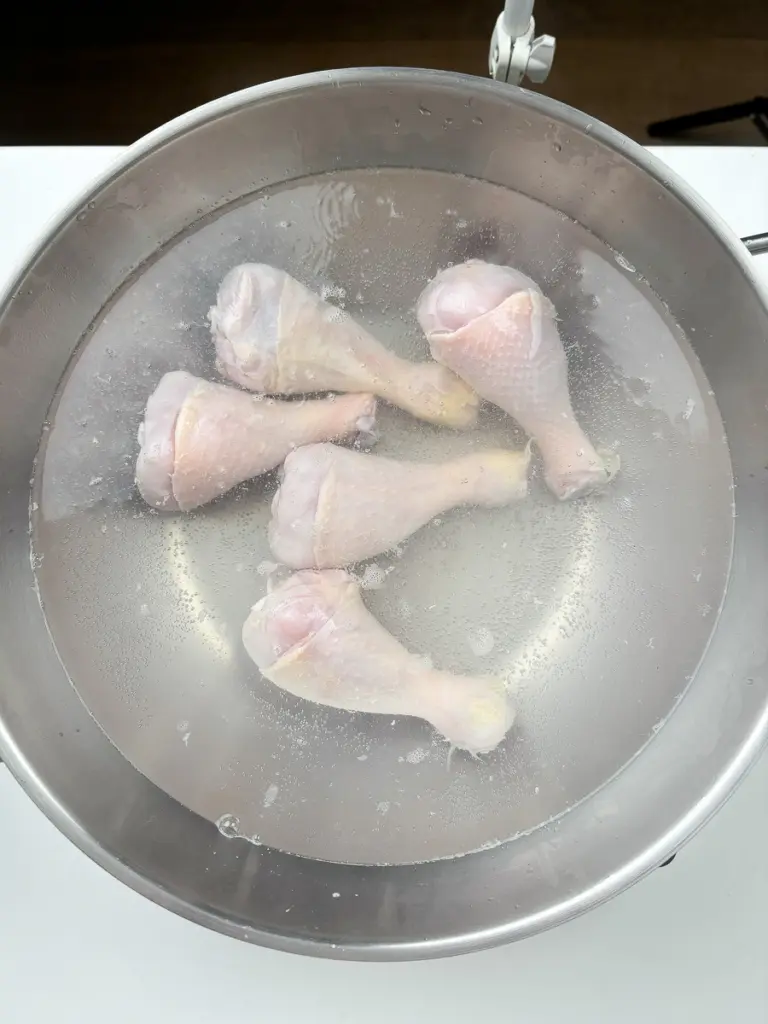
- Prepare the vegetablesCut the green onion into large pieces. Slice the onion.1/2 Green onion, 1 Onion
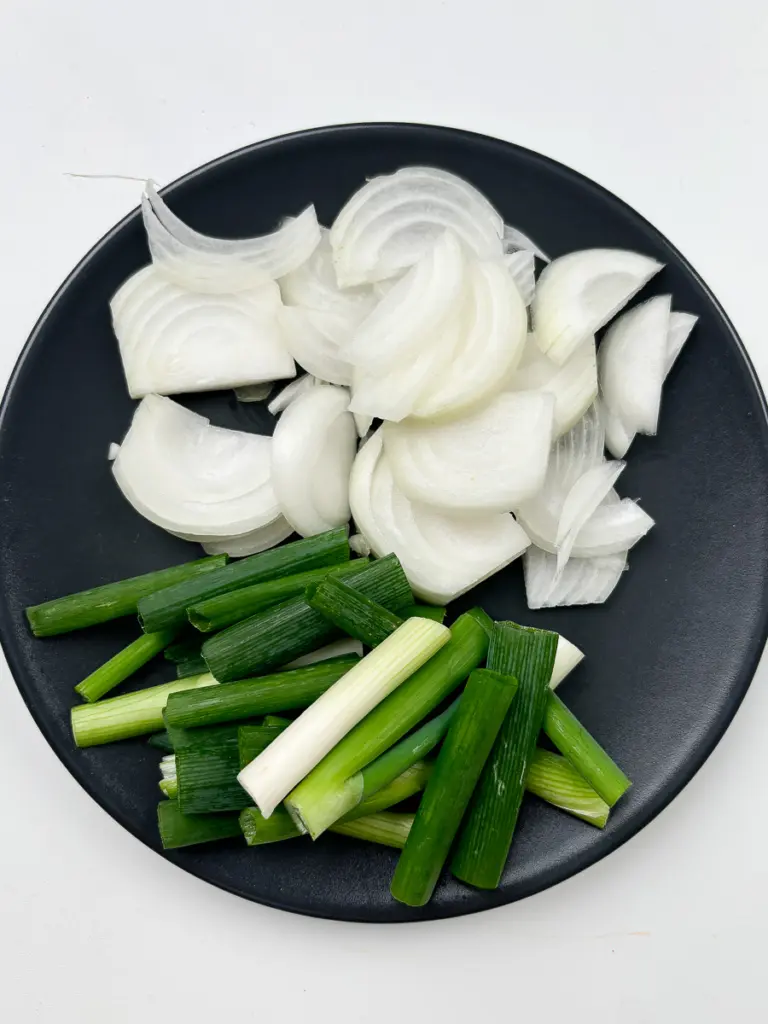
- Cut the potato into bite-size half moons. Slice the carrot into a similar size.1 Potato, 1/3 Carrot
- Start braising the chickenAdd the blanched chicken, onion, green onion, sauce ingredients, and water to a pot. Cover with a lid and bring to a boil over high heat.5 pcs Chicken drumsticks, 1/2 Green onion, 1 Onion, 5 tbsp Soy sauce, 2 tbsp Sugar, 1 tbsp Corn syrup, 2 tbsp Cooking wine, 1 tbsp Oyster sauce, 1/2 tsp Beef Dashida, 1 tbsp Minced garlic, 1 tbsp Dark soy sauce, 300 ml Water
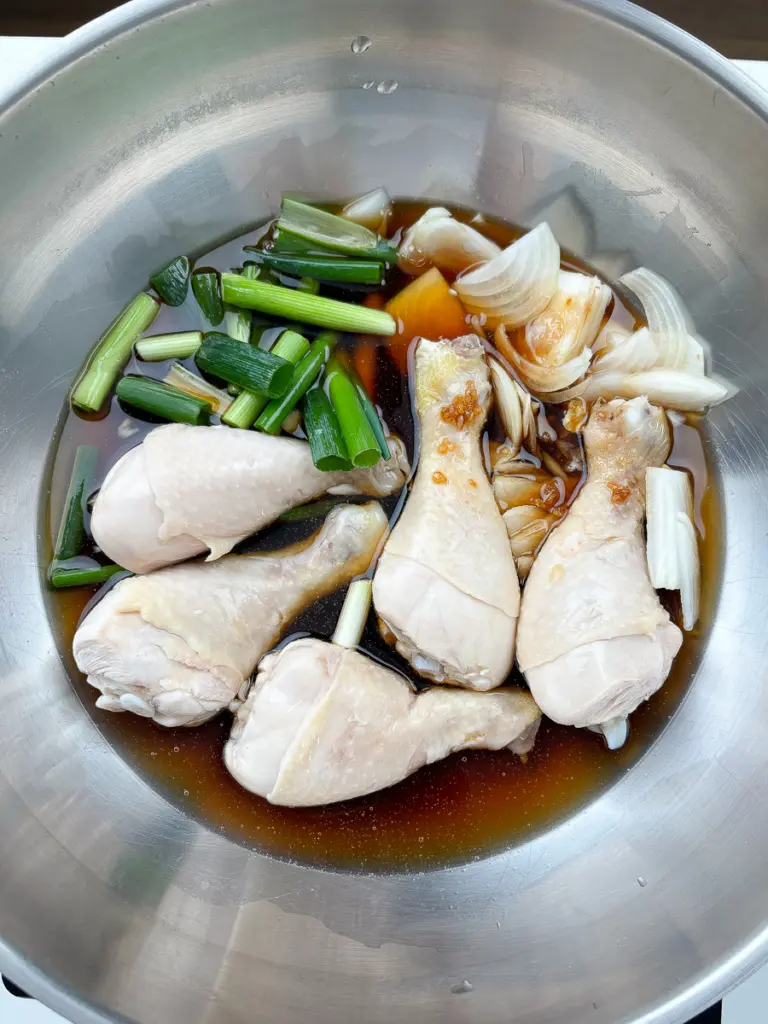
- Once boiling, reduce to medium heat and simmer for 10 minutes so the chicken absorbs the sauce.
- Add the vegetablesAdd the potatoes and carrots. Cover and cook over medium heat until the potatoes are tender, about 20 minutes.* If the sauce reduces too much, add about 50 ml water.
- Finish the dishOnce the chicken is fully tender and the sauce has slightly thickened, if you want glass noodles, add the soaked glass noodles and boil for about 1 minute. Turn off the heat.50 g Glass noodles
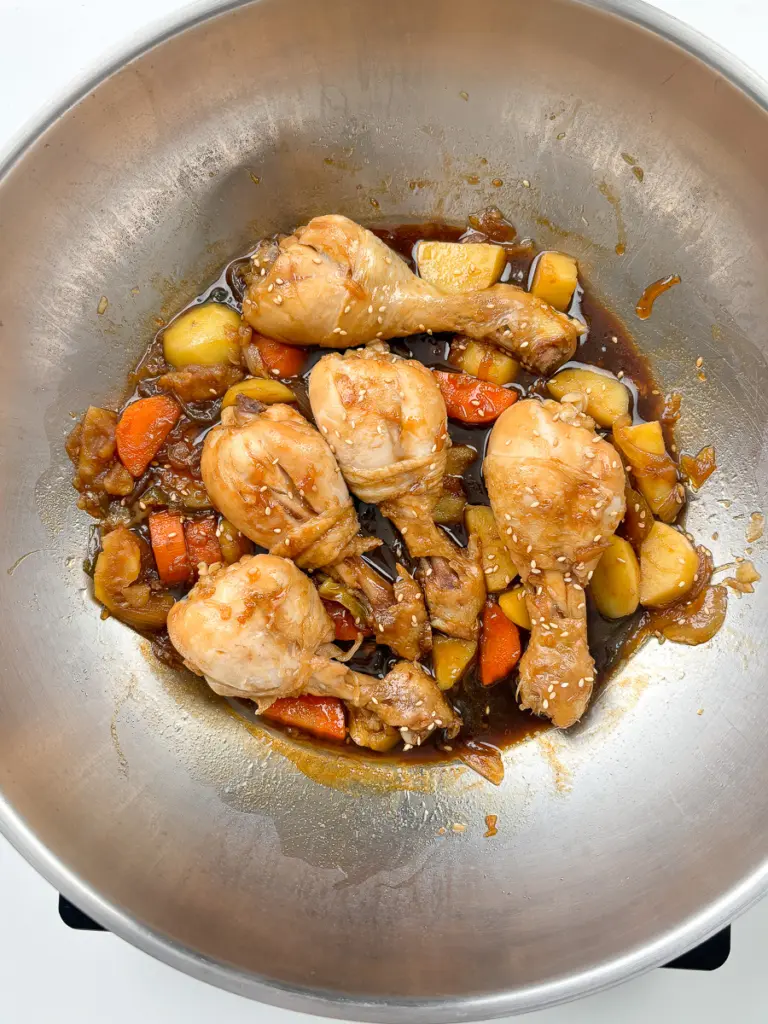
- Garnish with sliced peppers and sesame seeds.Serve hot with rice!2 Chili peppers, 1 tsp Sesame seeds