
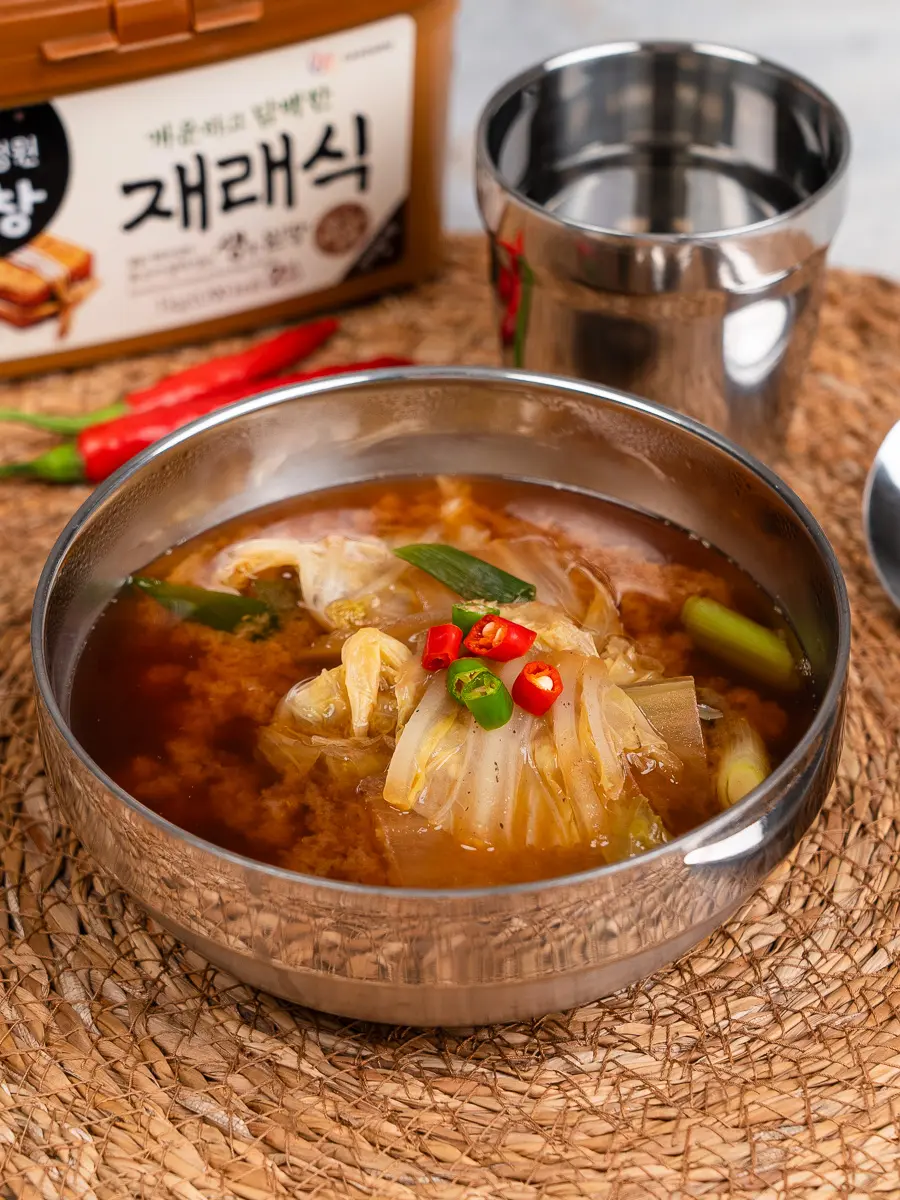
15-Minute Doenjang Napa Cabbage Soup: Easy Korean Soybean Paste Soup

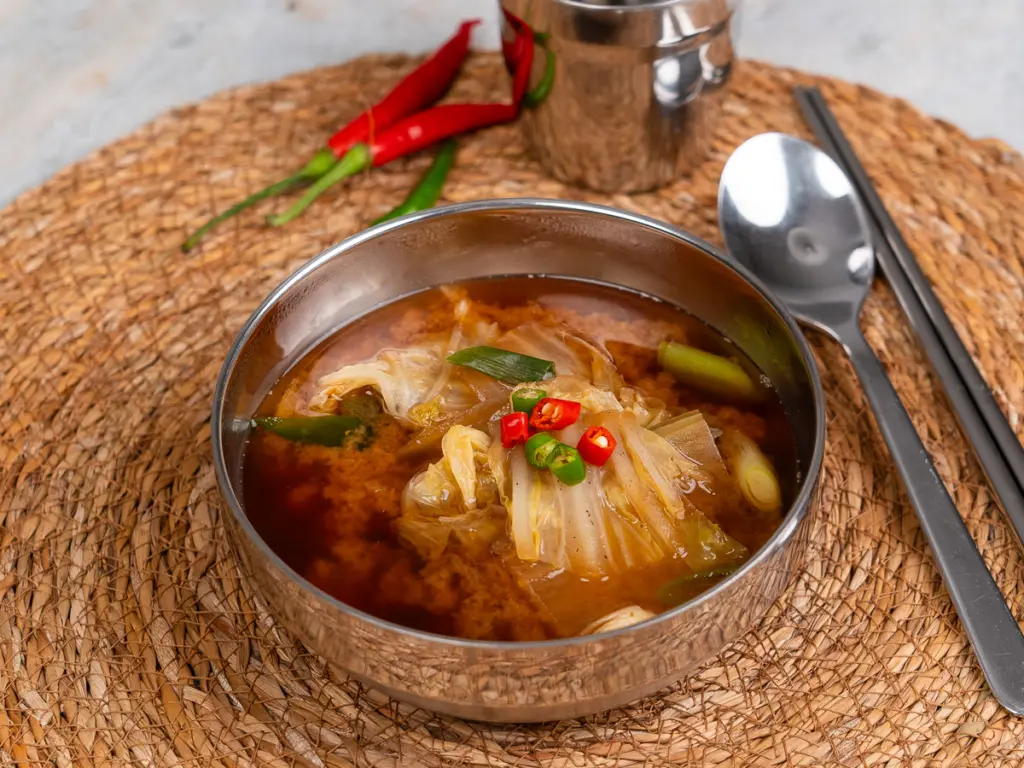
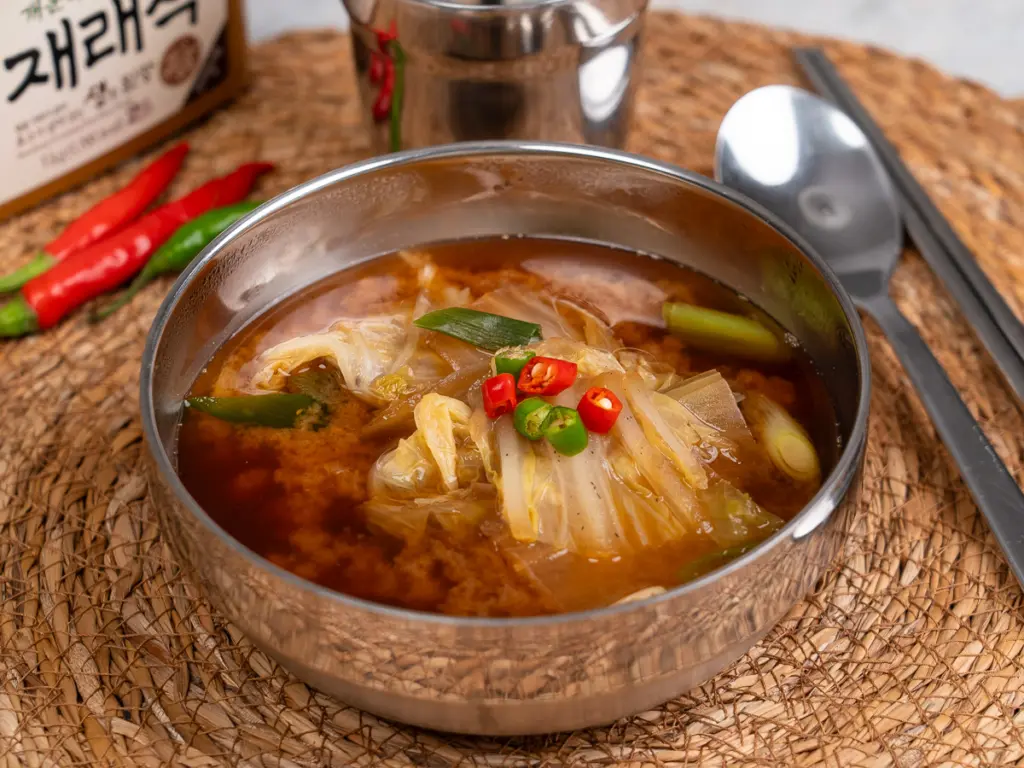
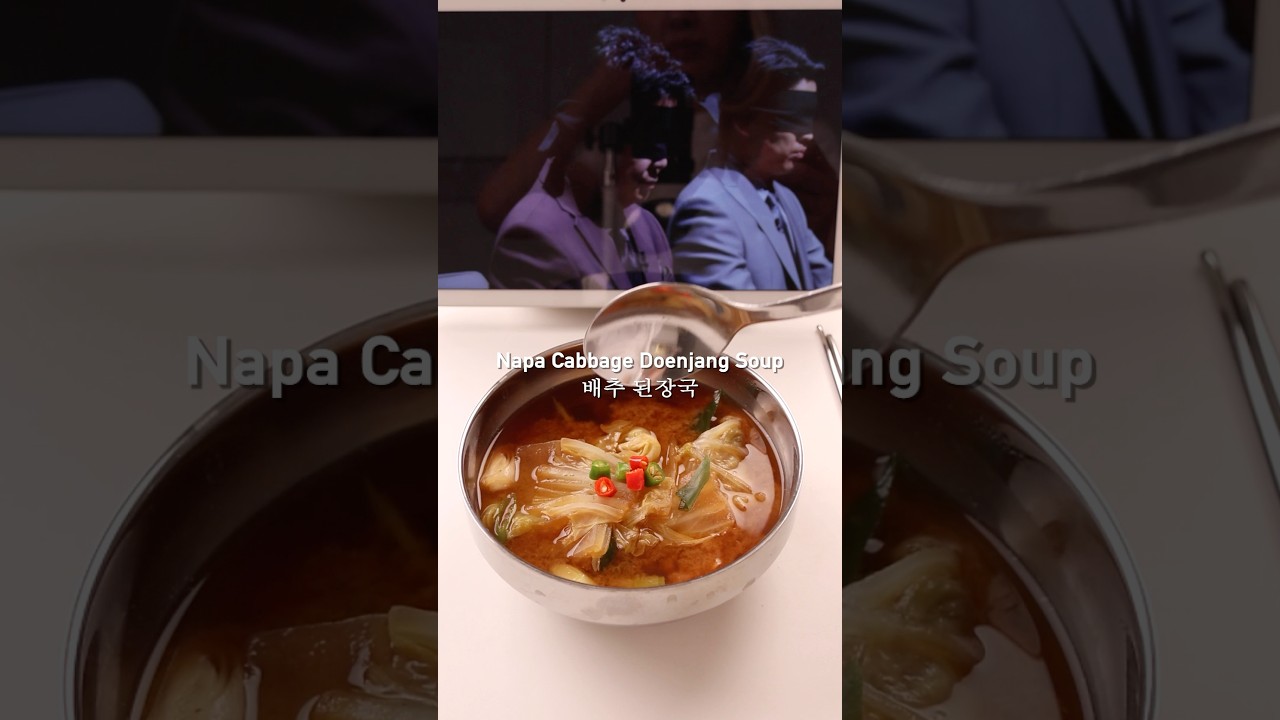
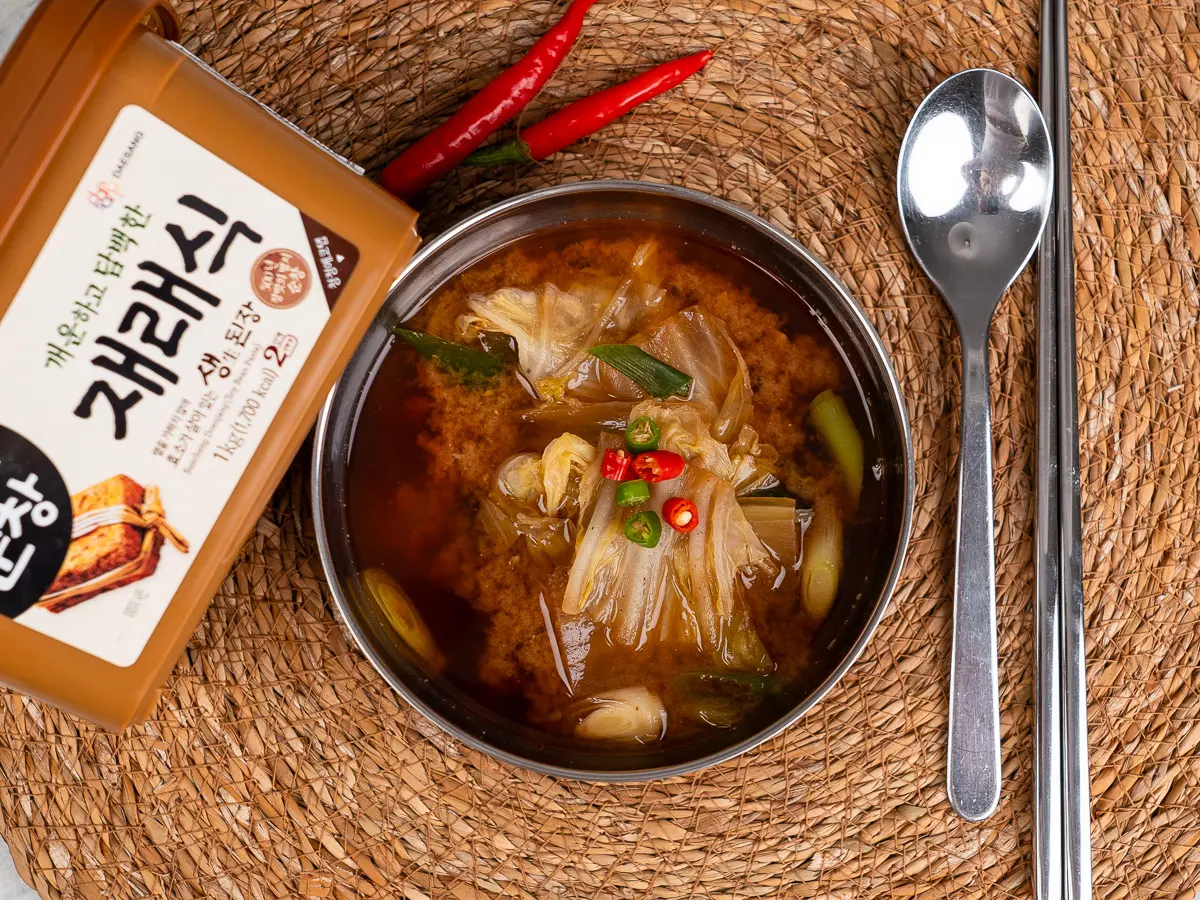
Napa cabbage soup is one of my Korean mom’s signature home-cooked meals; the mere scent of this soup brings back fond memories of her. If you are looking for an authentic Korean comfort food experience at home, this Korean soybean paste soup, also known as Doenjang soup, is the perfect place to start. Unlike complex stews, this doenjang cabbage soup takes only 15 minutes and uses simple pantry staples to create a rich broth. Whether it’s a chilly day or you’re simply craving a healthy meal, this soybean paste soup will become your new go-to Korean comfort soup. Let’s learn how to make this Doenjang Guk step by step.
Why you’ll love this quick Doenjang Soup
Ingredients for This Healthy Korean Soybean Paste Soup
- Napa cabbage
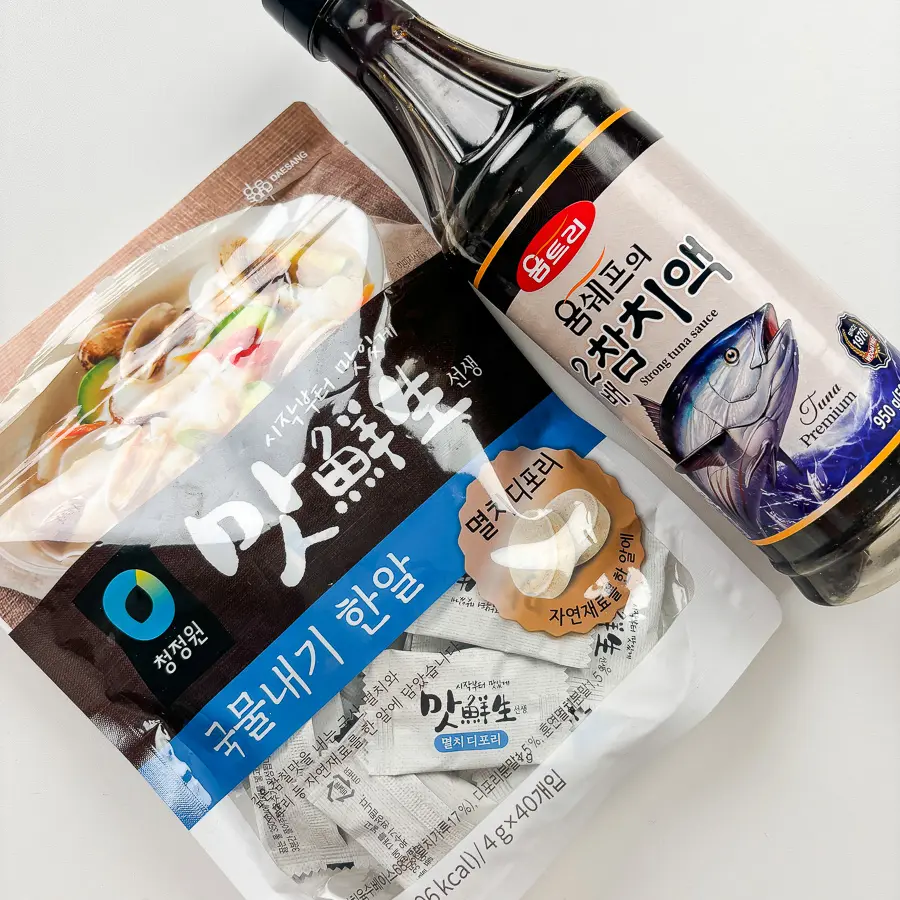
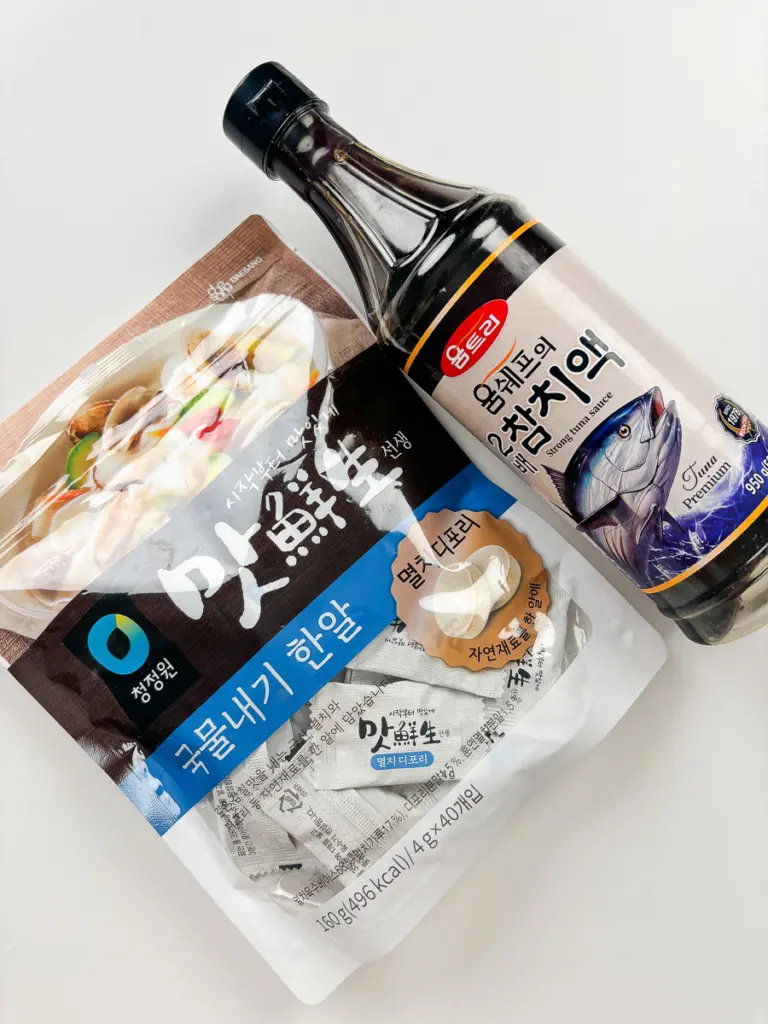
- Korean seafood bouillon coin: One coin contains all the flavors of dried anchovies and kelp, creating a deep broth instantly for your Korean napa cabbage soybean paste soup.
- Water
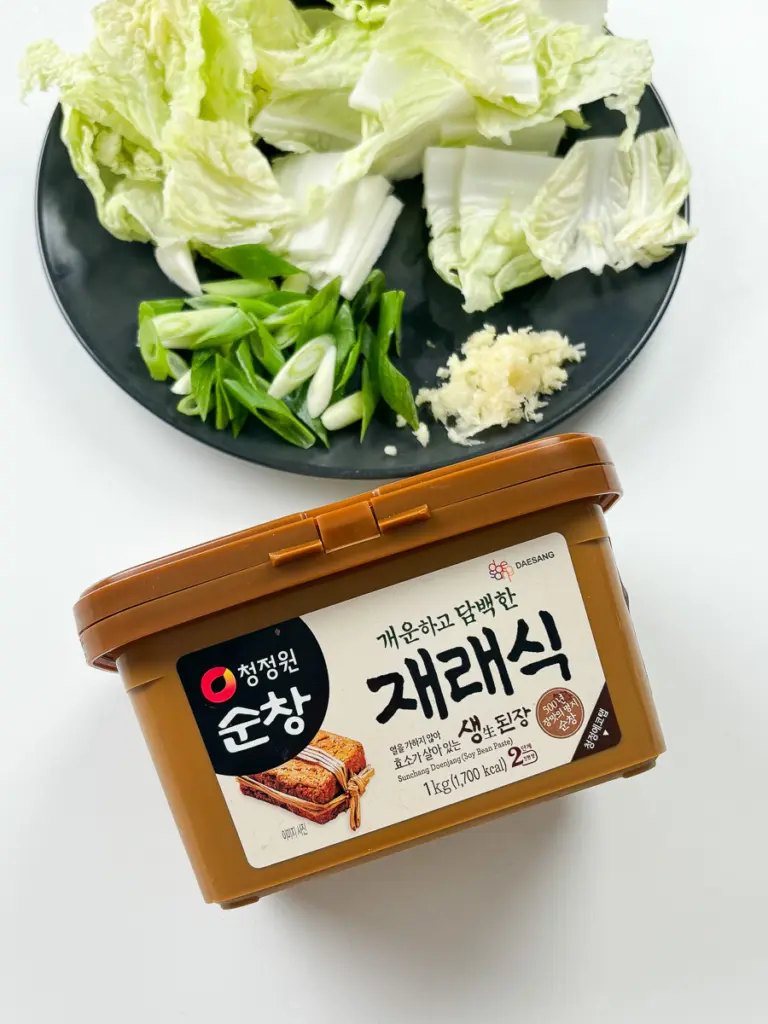
- Doenjang (Korean soybean paste)
- Minced garlic
- Tuna fish sauce: Unlike regular fish sauce, this modern Korean pantry staple has no fishy smell and significantly boosts the umami of your korean soybean paste soup.
- Green onion
Substitutions & Variations
- Tuna fish sauce: You can replace this with anchovy fish sauce. If you don’t have either, you may omit it, though the napa cabbage soup might lack that signature deep umami. Simply add salt to your preference to adjust the seasoning.
- Seafood bouillon coin: If unavailable, simmer dried anchovies or dried kelp to create a traditional base for your doenjang guk.
- Vegan option: Use vegetable broth and skip the fish sauce. You can adjust the final taste with salt to keep this korean soybean paste soup as a delicious plant-based korean comfort dish.
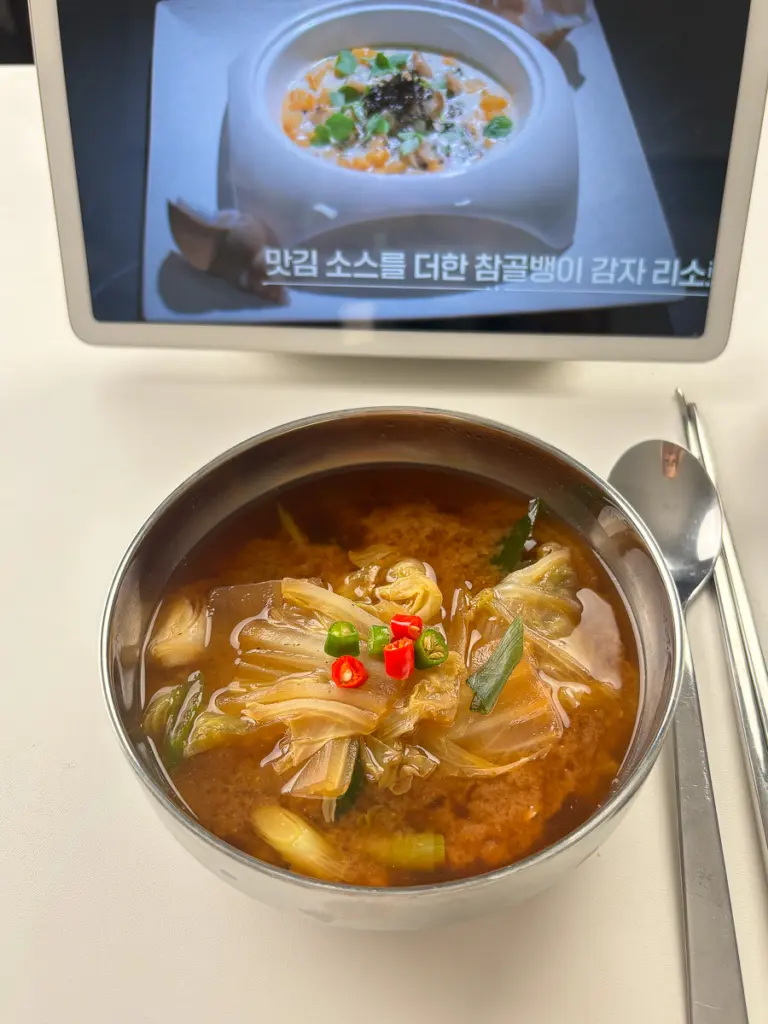
Step-by-Step Napa Cabbage Soup Recipe
Preparing the Vegetables and Base
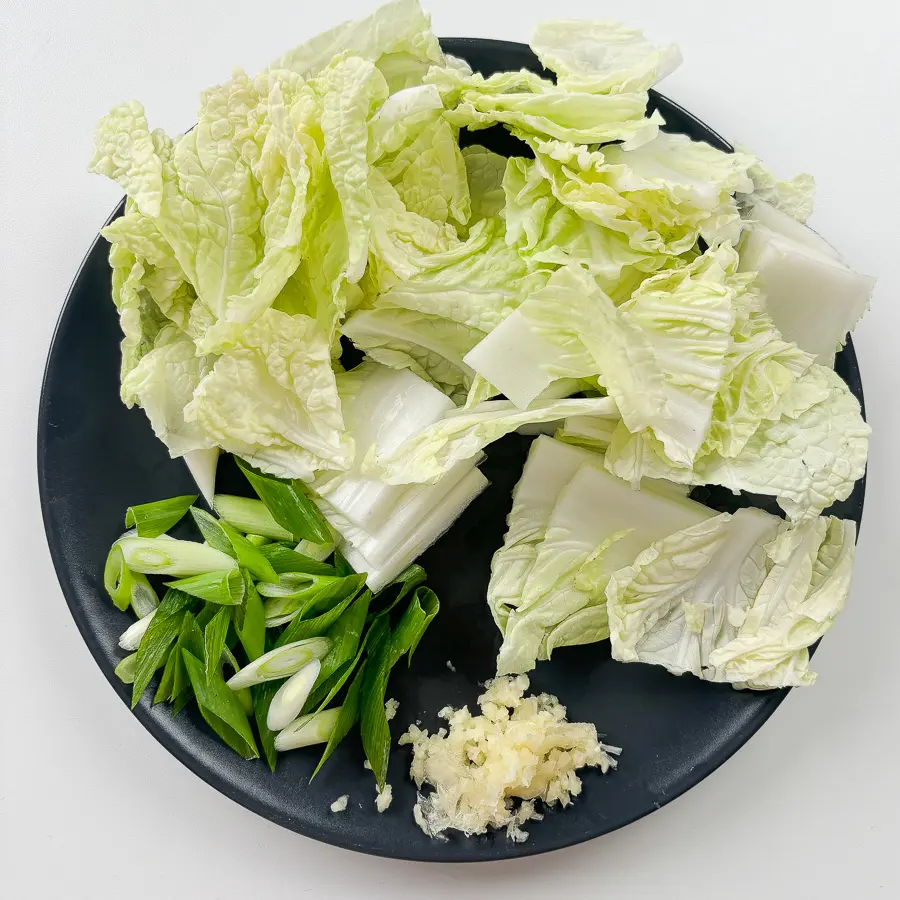
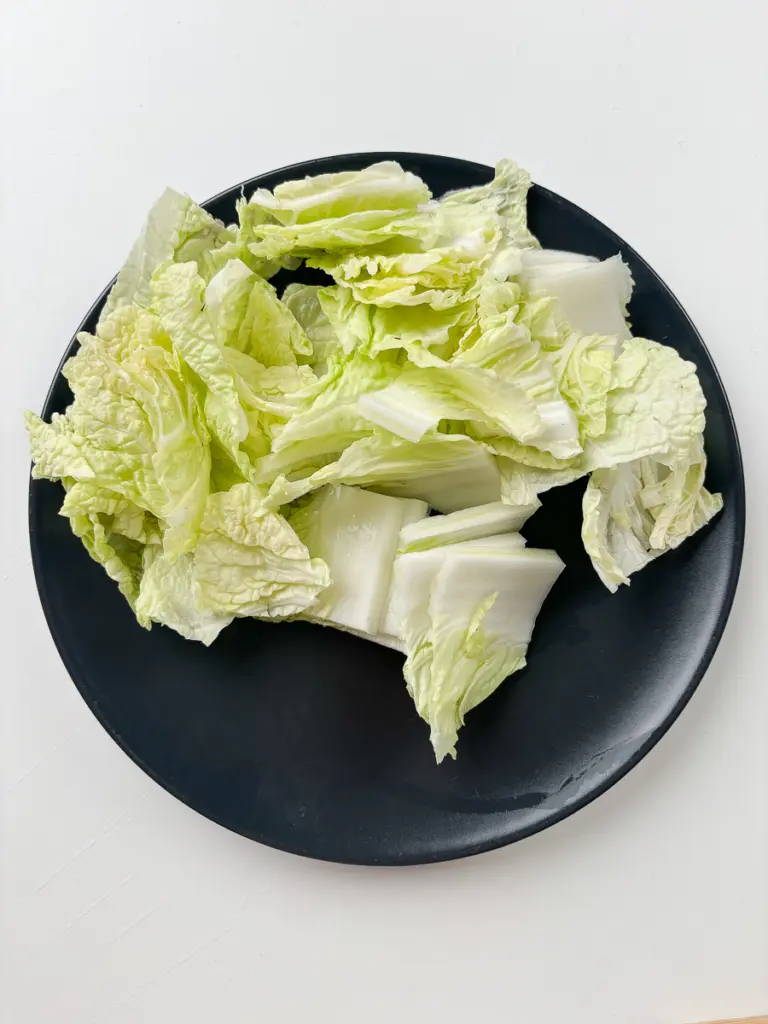
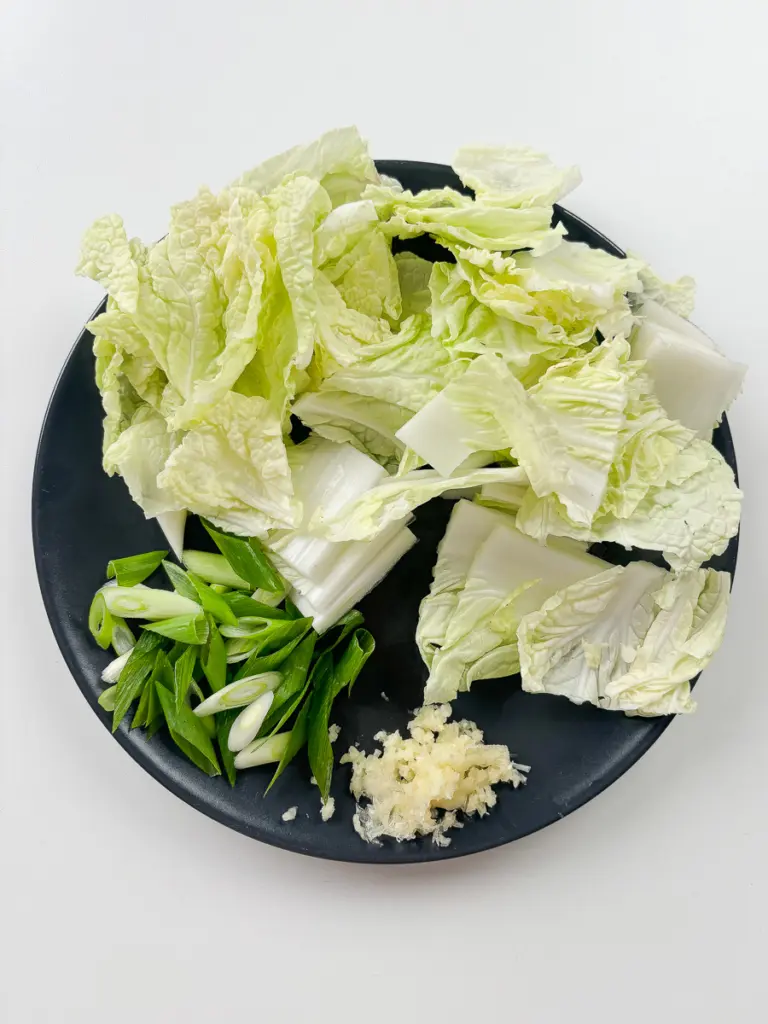
- Prep the cabbage: Cut the leaves into bite-sized squares so every spoonful of napa cabbage doenjang soup is perfect.
- Aromatics: Mince the garlic and slice the green onions for that essential Korean food fragrance.
- Boil the broth: Add water, the seafood stock coin, and minced garlic to a pot. This builds the umami foundation for your Korean soybean paste soup.
Perfecting the Doenjang Soup Broth
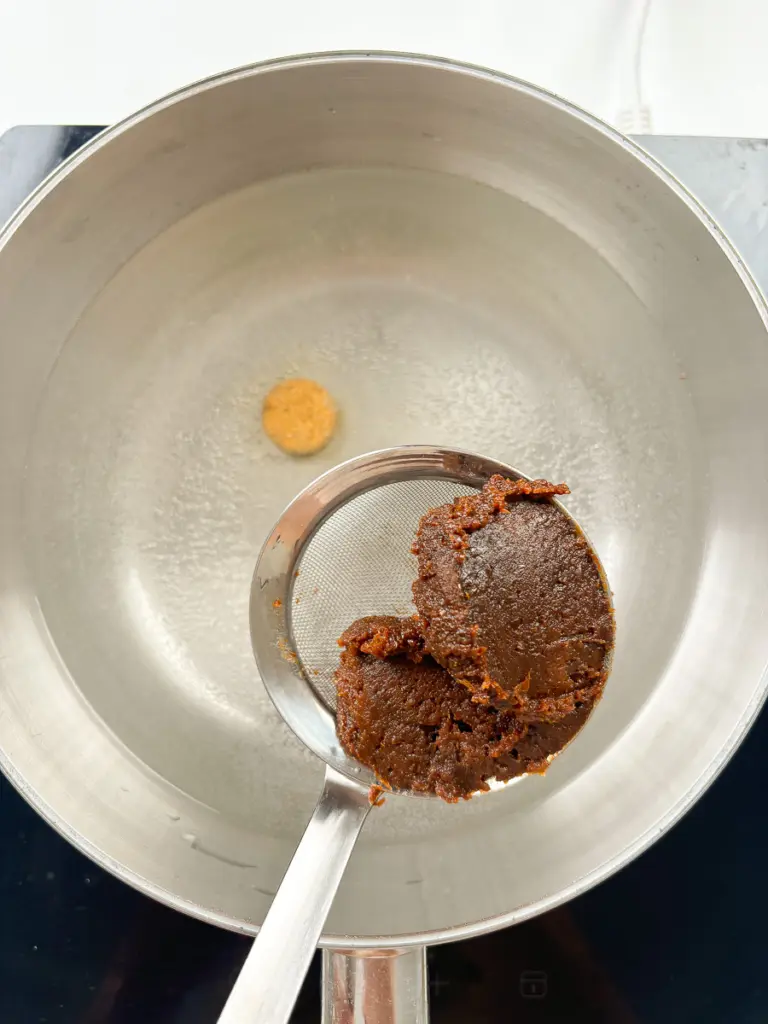
- The Sieve Technique: Place doenjang in a sieve and dissolve it into the boiling water with a spatula. This ensures a clean doenjang guk without grainy bits.
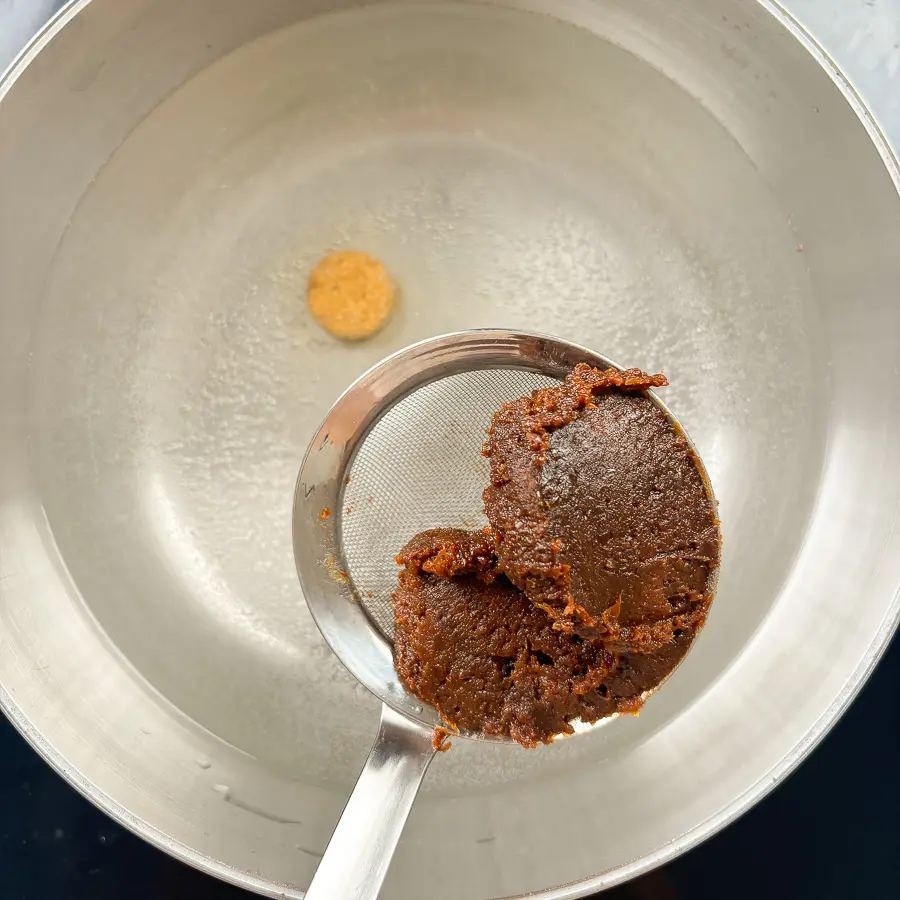
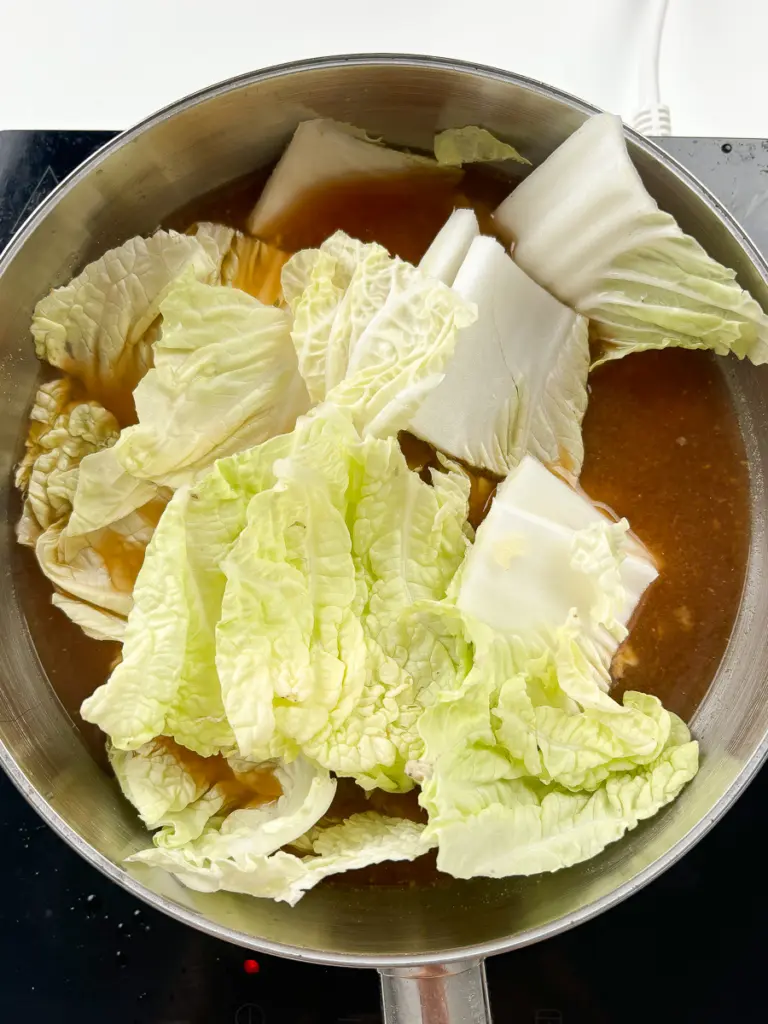
- Simmer: Add the cabbage and cook for 10 minutes. The vegetable sweetness will meld into the napa cabbage doenjang soup.
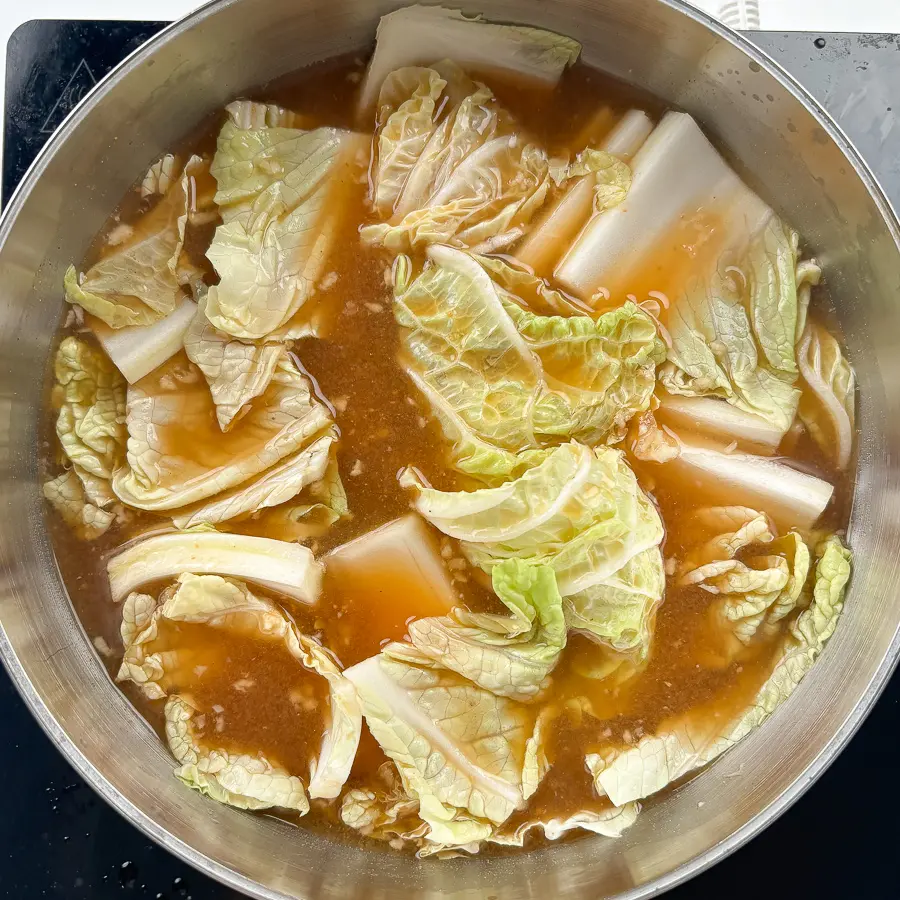
- Finish: Stir in the tuna fish sauce and green onions. Simmer for 1 more minute to complete your savory Korean soup.
Pro Tips for The Best Doenjang Soup
- Using a Sieve: Always strain your paste through a sieve for a cleaner, smoother soybean paste soup.
- Don’t Overcook: Add the green onions at the very end and boil for just 1 minute to keep their fresh scent in your Korean napa cabbage soybean paste soup.
- The Power of the Coin: Using a bouillon coin is a modern trick to get instant deep flavor for your doenjang soup. Otherwise, use dried anchovies for a traditional broth.
- Zero-Waste Tip: Use Outer Leaves: Don’t discard the tough outer leaves! In Korean comfort dish, these are prized for adding a deep texture to Korean napa cabbage soybean paste soup. Simmering them makes them tender and eco-friendly.
How to Eat Doenjang Cabbage Soup
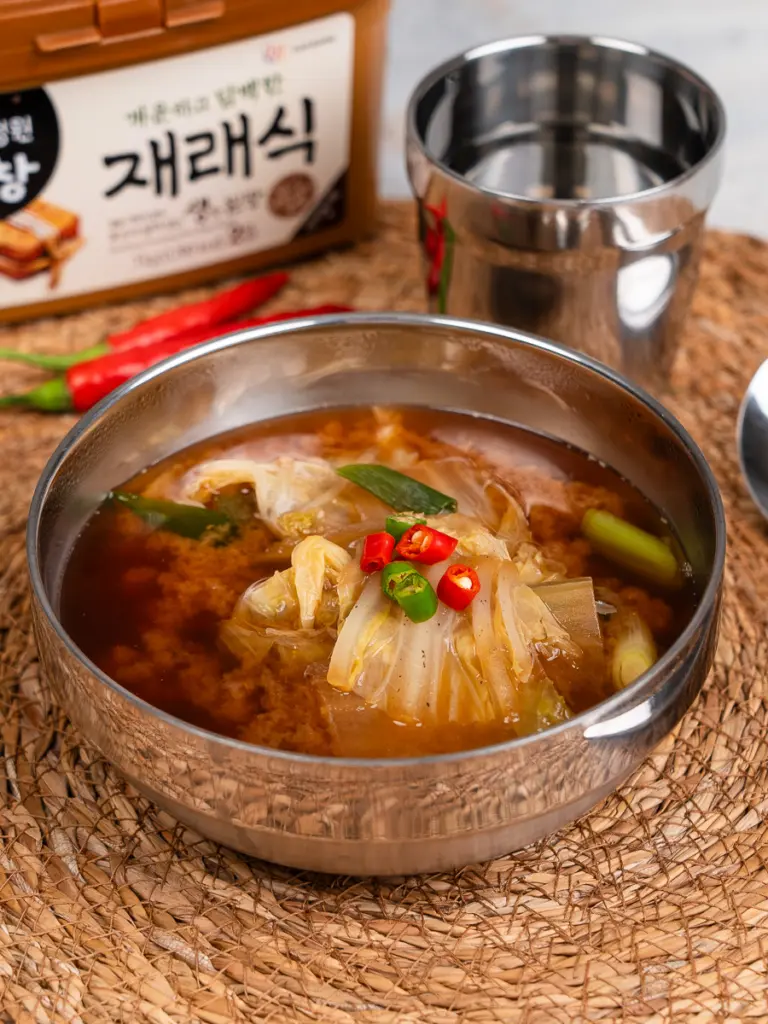
In Korea, soup is always served with rice. You can take a sip of napa cabbage doenjang soup and then a bite of rice, or simply mix the rice into the broth. For a side dish, I highly recommend Kimchi. Adding some Korean seasoned seaweed (Gim) and a fried egg creates the perfect, traditional Korean breakfast table alongside your doenjang guk.
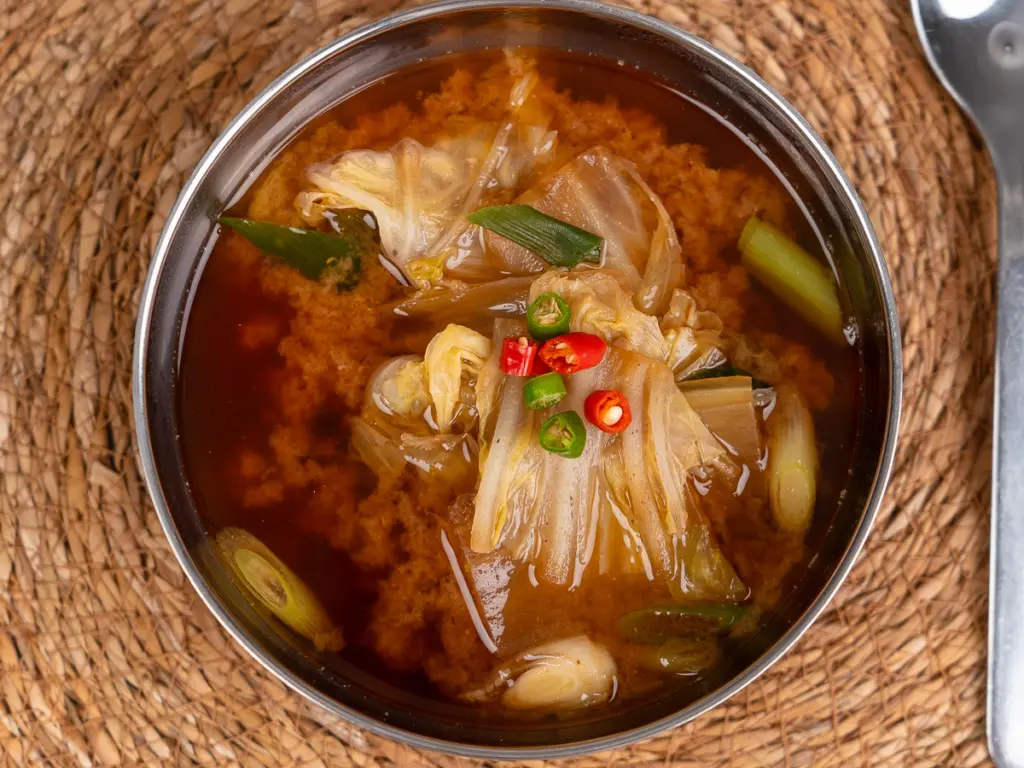
Miso Soup vs Doenjang Guk: What is the Difference?
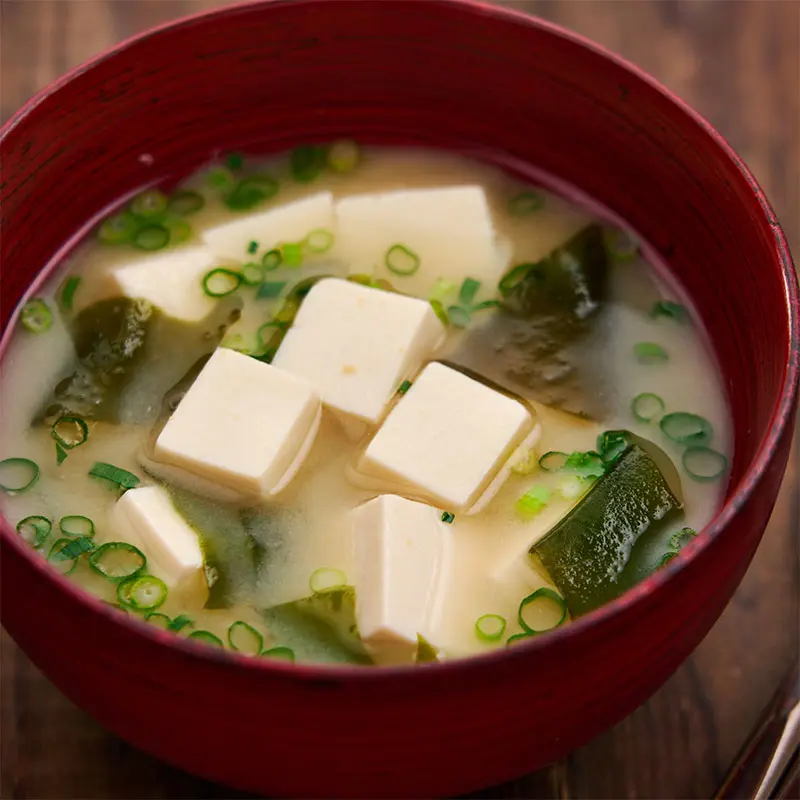
If you haven’t tried Korean doenjang yet, you might think it’s just like Japanese Miso. However, they differ greatly in flavor, aroma, and cooking methods. Japanese Miso is fermented for a short time, making it sweet and mild. It loses its aroma if boiled too long, so the heat is usually turned off as soon as the paste is added. In contrast, the doenjang used in this napa cabbage soup is fermented longer, resulting in a stronger aroma, less sweetness, and a bolder saltiness. The flavor of doenjang soup actually becomes deeper and richer the longer you simmer it with ingredients like cabbage.
Craving Variety? Try My Spinach Doenjang Soup
If you enjoy this comforting Korean napa cabbage soybean paste soup, you will definitely love my other variations. While cabbage adds sweetness to a Korean soybean paste soup, spinach provides its own unique earthy flavor. Spinach doenjang soup is delicious on its own, but adding clams makes the broth infinitely deeper. This specific Korean comfort soup became even more famous after being featured in the K-drama “Bon Appetit, Your Majesty.” Why not try making another healthy bowl of soup today?
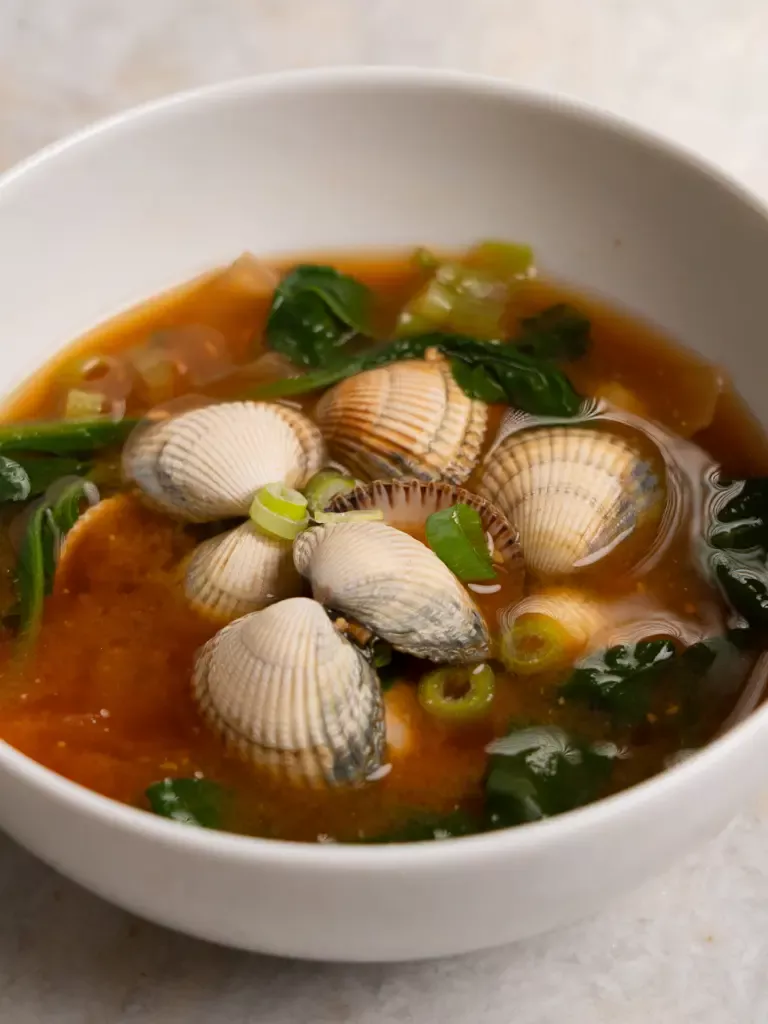
Clam Spinach Doenjang Soup | Bon Appétit, Your Majesty Recipe
FAQ about Cabbage Soybean Paste Soup
15-Minute Doenjang Napa Cabbage Soup: Easy Korean Soybean Paste Soup
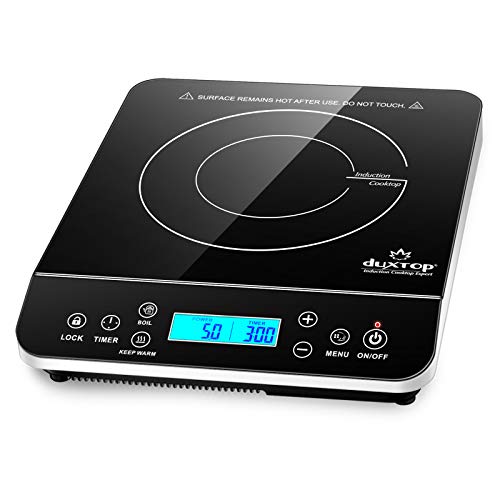
Equipment

Ingredients
- 4 leaves Napa cabbage
- 1 Korean seafood bouillon coin
- 2 tbsp Doenjang (Korean soybean paste)
- 700 ml Water
- 1 tbsp Minced Garlic
- 1 tbsp Tuna fish sauce
- 1/2 Green onion
Instructions
- Prepare the vegetables: Cut the Napa cabbage into bite-sized square pieces.4 leaves Napa cabbage
- Prep the aromatics: Mince the garlic and thinly slice the green onion.1 tbsp Minced Garlic, 1/2 Green onion
- Boil the base: Pour water into a pot. Add the seafood stock coin and minced garlic, then bring to a boil.1 Korean seafood bouillon coin, 700 ml Water, 1 tbsp Tuna fish sauce
- Add Doenjang: Strain the doenjang through a fine mesh sieve into the pot. This step ensures a cleaner and smoother broth.2 tbsp Doenjang
- Cook the cabbage: Add the prepared Napa cabbage and simmer for 10 minutes.4 leaves Napa cabbage
- Finish: Add the green onions and cook for 2 more minutes to reach the total cooking time.
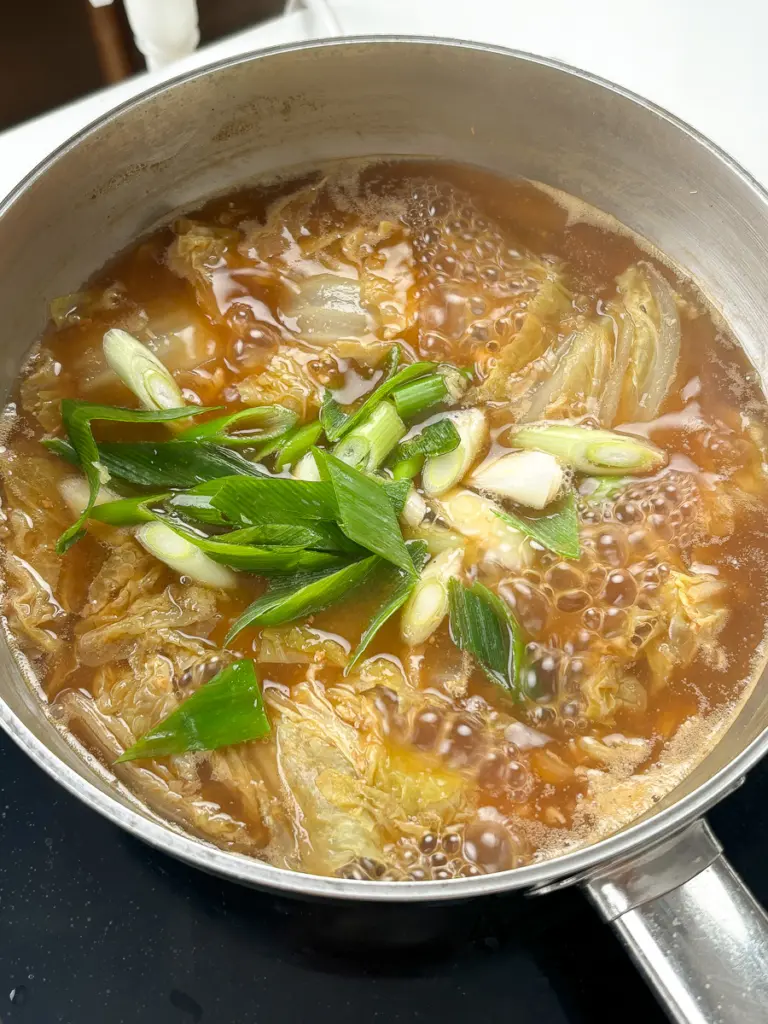
- Baechu Doenjang Guk (Korean soybean paste soup with napa cabbage)



I’m 18 and trying to cook more authentic Korean food at home, this is my new favorite! 😭 It is so simple but tastes exactly like the comfort food I was craving. I served it with a big bowl of rice and some kimchi, and it was perfect. Thank you for breaking down the steps so clearly!
This makes me so happy to hear 🥹 Thank you! Enjoy your Korean food journey!