
Radish Kimchi Fried Rice: The Best 15-Minute Kkakdugi Bokkeumbap Recipe

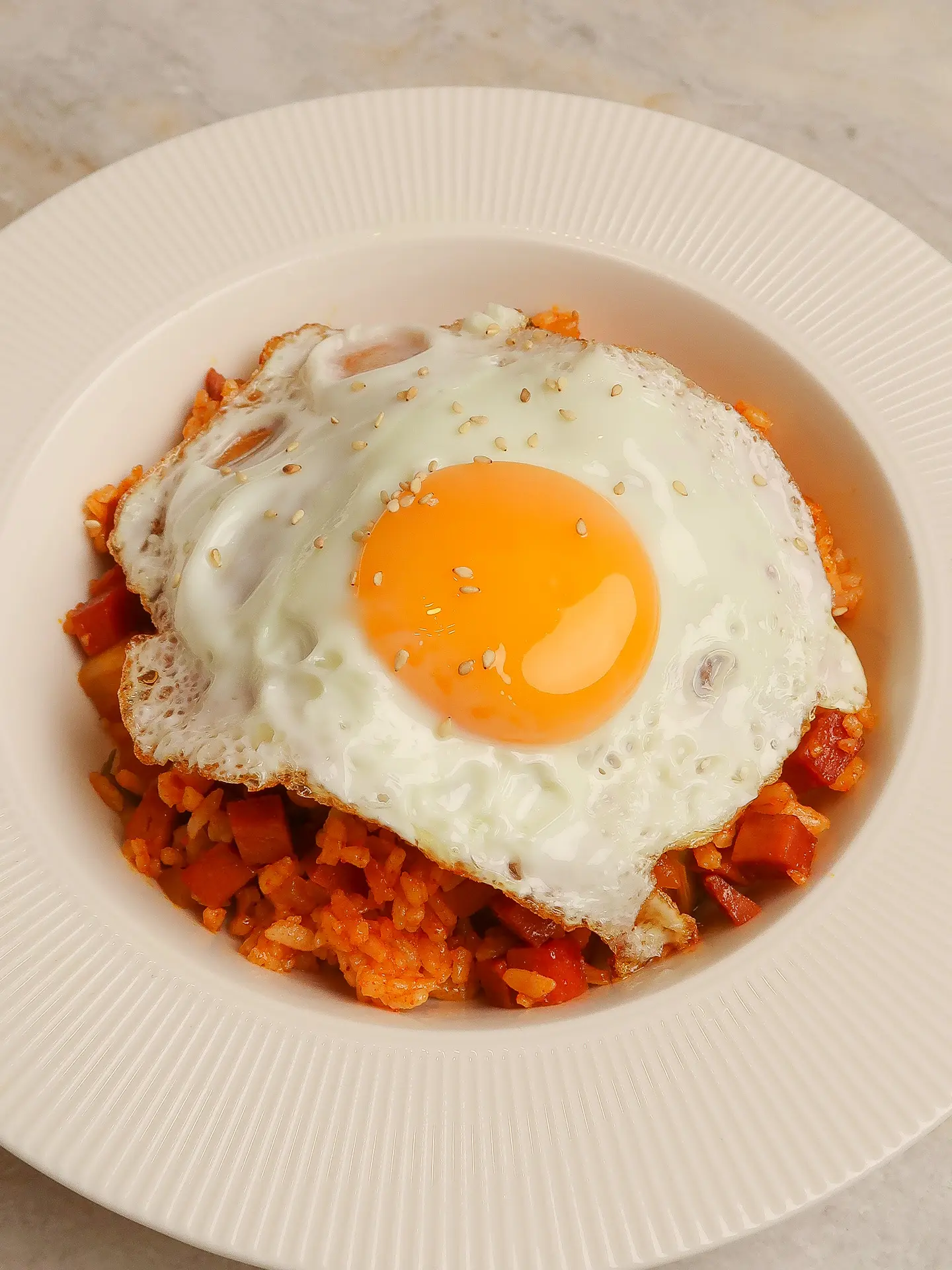
If you’ve only made kimchi fried rice with Napa cabbage kimchi, it’s time to level up. Today, we’re making Radish Kimchi Fried Rice, a dish that offers a unique, satisfying crunch you can’t get from cabbage. This Kkakdugi Bokkeumbap is what Koreans truly crave at home when they want something quick yet incredibly flavorful. Known as Kkakdugi Fried Rice in many Korean BBQ restaurants, this version is the ultimate comfort food you can whip up in just 15 minutes.

What is Kkakdugi (Korean Radish Kimchi)?
Before we dive into the Radish Kimchi Fried Rice recipe, let’s talk about the star ingredient. Kkakdugi is a type of kimchi made from Korean radish (Mu). The radish is cubed, salted, and seasoned to perfection.
The biggest selling point of using it for Kkakdugi Fried Rice is the texture. While Napa cabbage becomes soft when cooked, the radish in this Kkakdugi Bokkeumbap retains its signature “crunch,” making every bite exciting.


Why you’ll love this Kkakdugi Fried Rice

How to Make Kkakdugi? (Radish Kimchi)
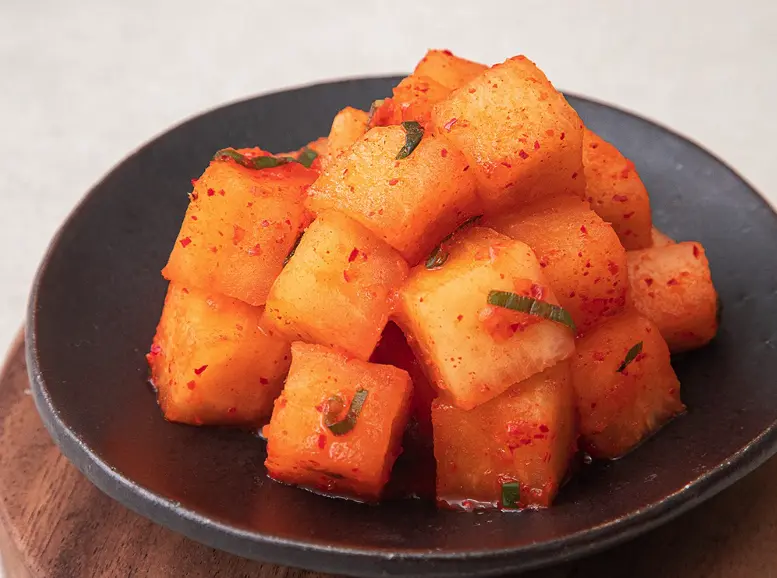
The recipe for kkakdugi is very simple. After salting the radish, it is simply mixed with kimchi seasoning. Unlike Napa cabbage kimchi, kkakdugi doesn’t require a long salting time, has minimal additional ingredients, and doesn’t involve time-consuming steps like slicing the radish into thin strips. Just mix it with the seasoning and you’re done!
Essential Ingredients for Radish Kimchi Fried Rice
To make the most authentic Kkakdugi Bokkeumbap, you only need a few pantry staples:

How to Make Crispy Radish Kimchi Fried Rice (Step-by-Step)
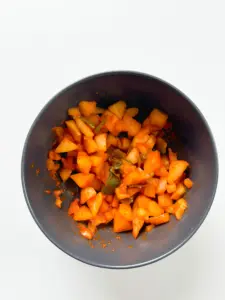
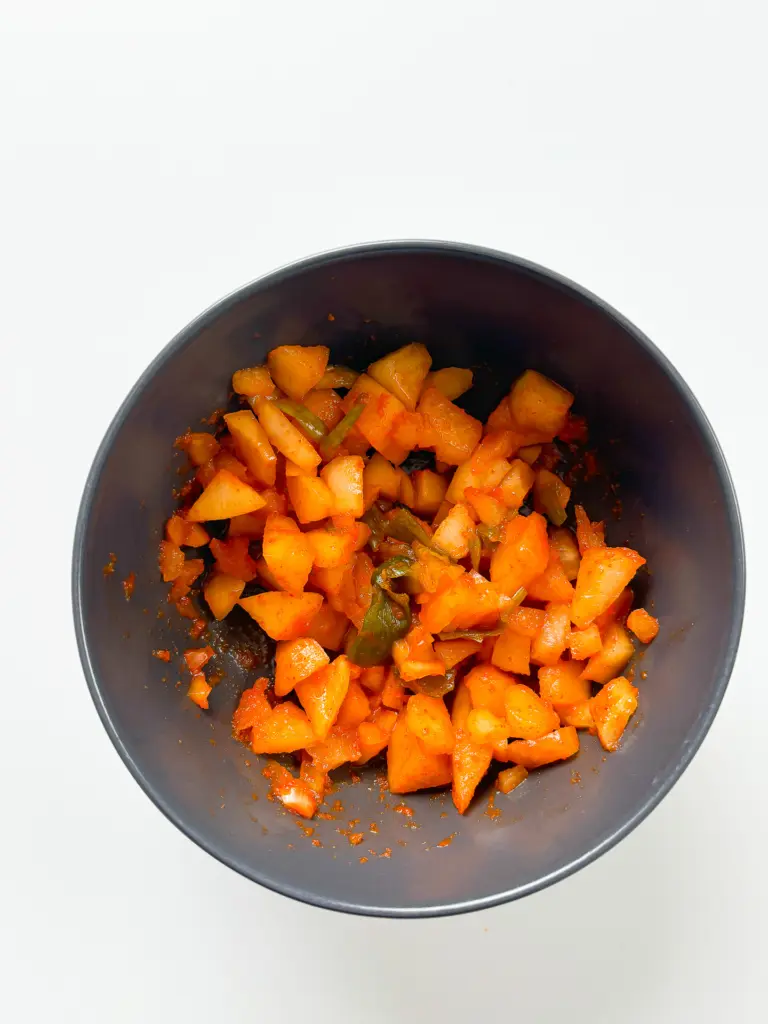
- Prep the Radish: Cut your kkakdugi into small, bite-sized pieces. Small cubes ensure you get a bit of crunch in every spoonful of your Kkakdugi Fried Rice.
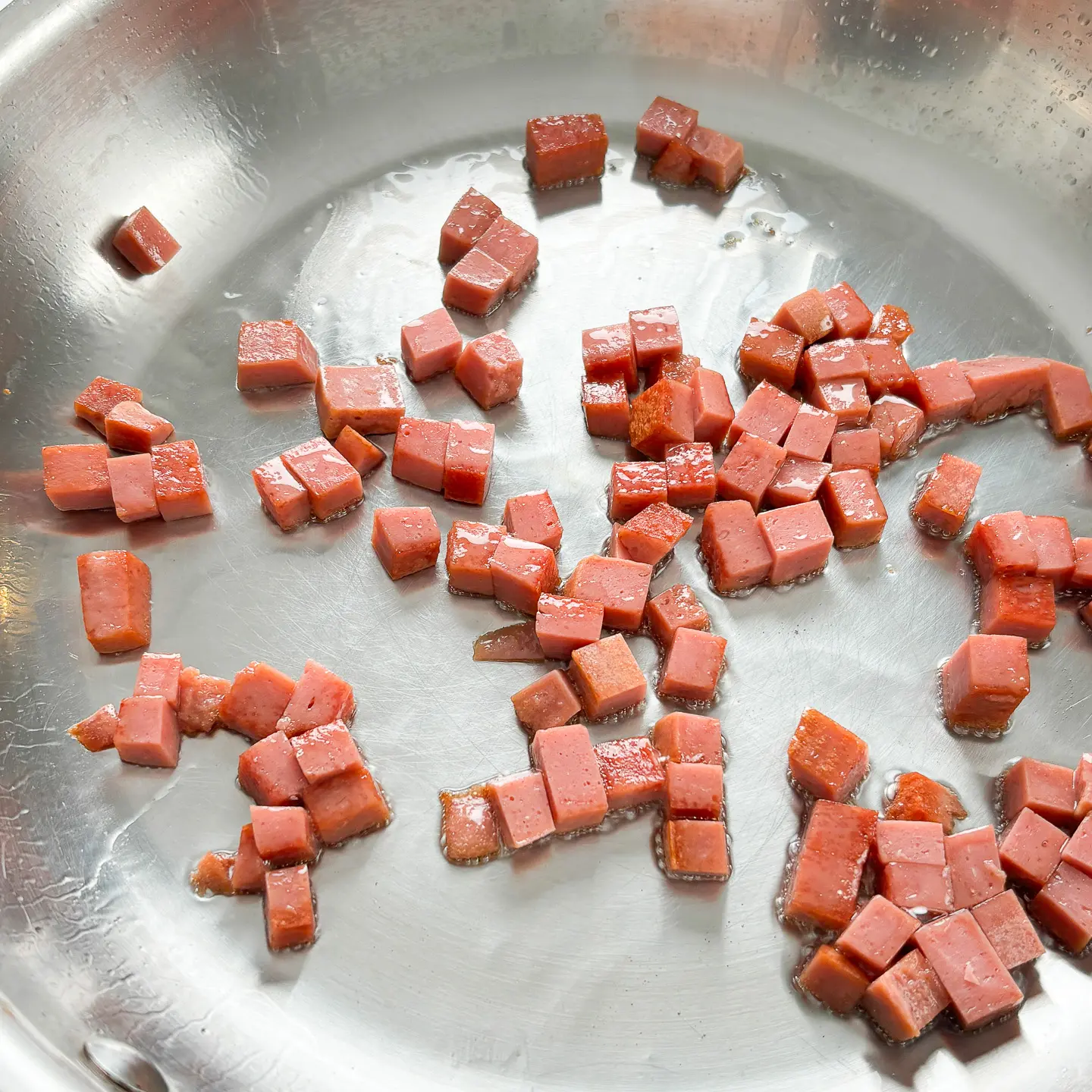
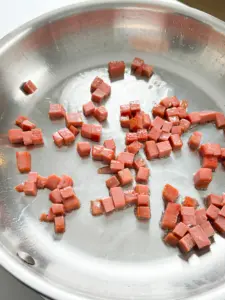
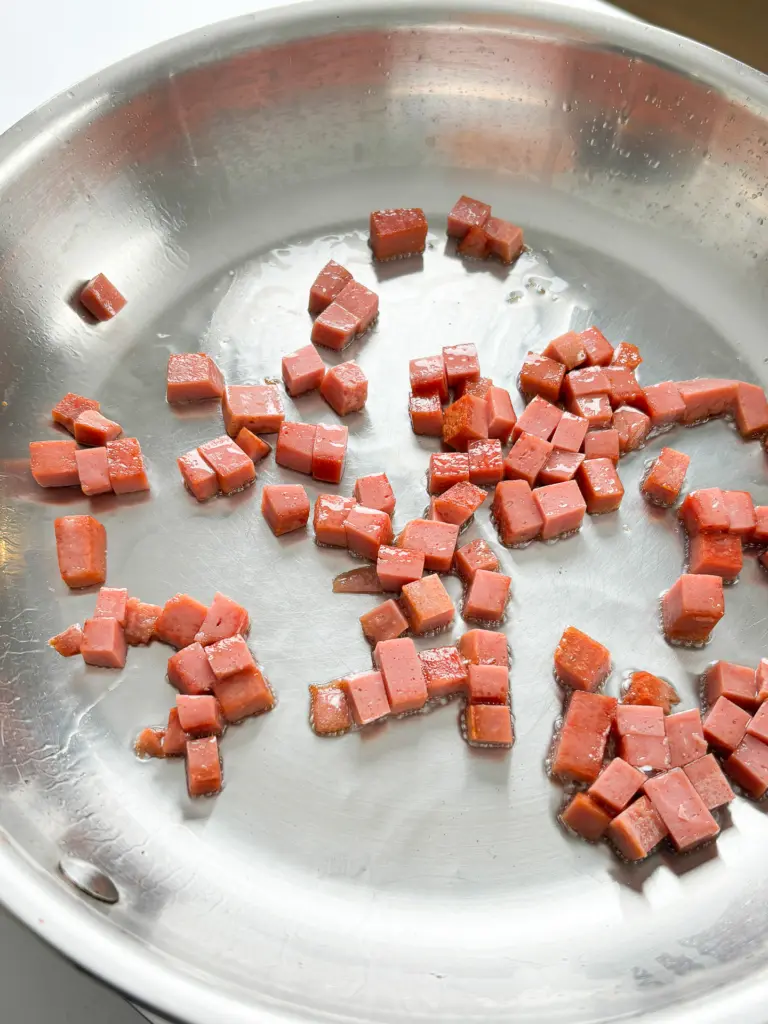
- Sauté the Protein: Fry your ham or bacon until crispy. This fat will flavor the entire Kkakdugi Bokkeumbap.
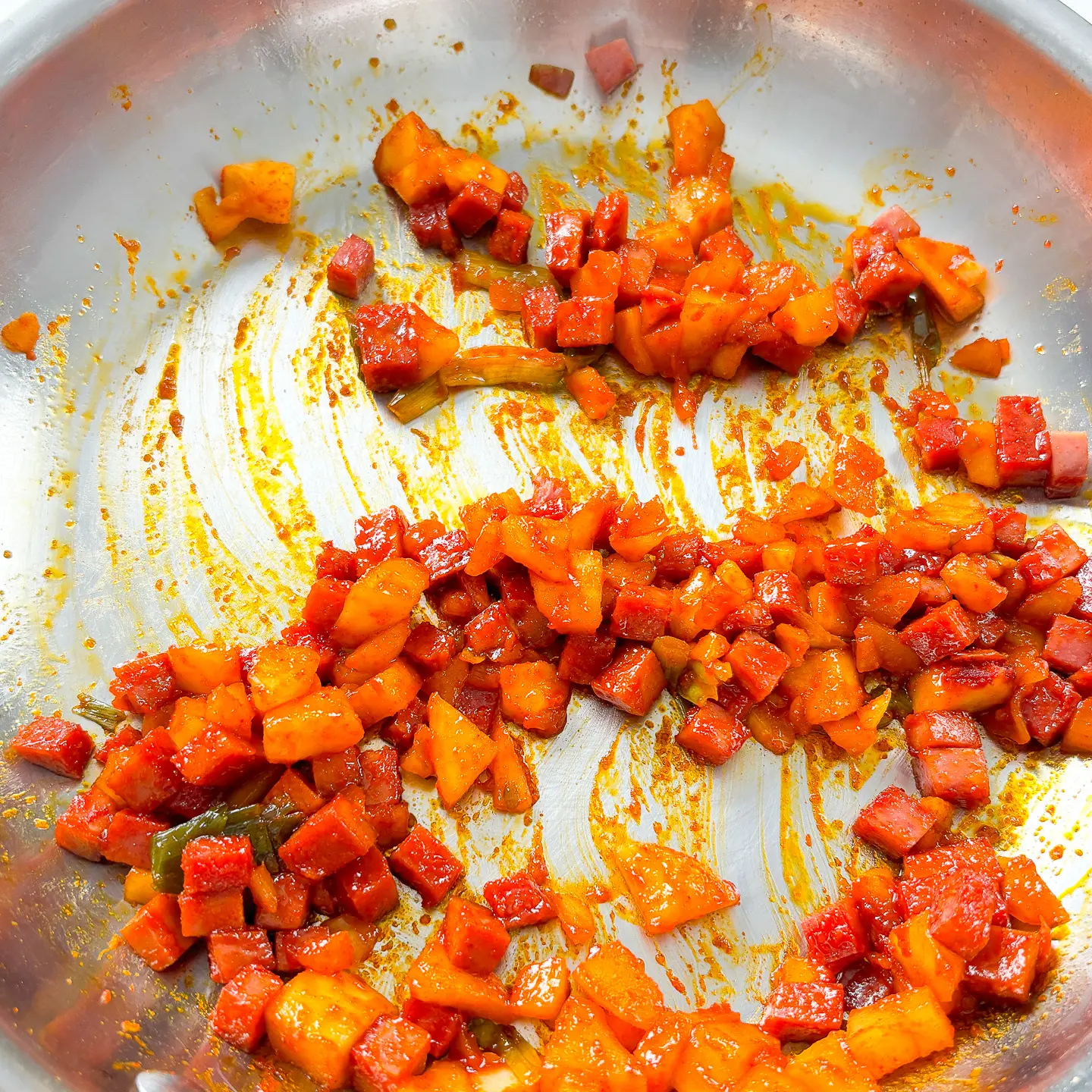
- Stir-fry the Kimchi: Add the chopped radish and seasonings. Stir-fry until the radish looks slightly translucent.
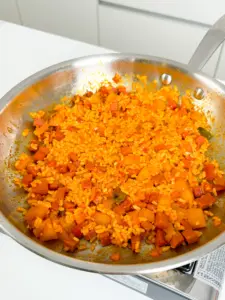
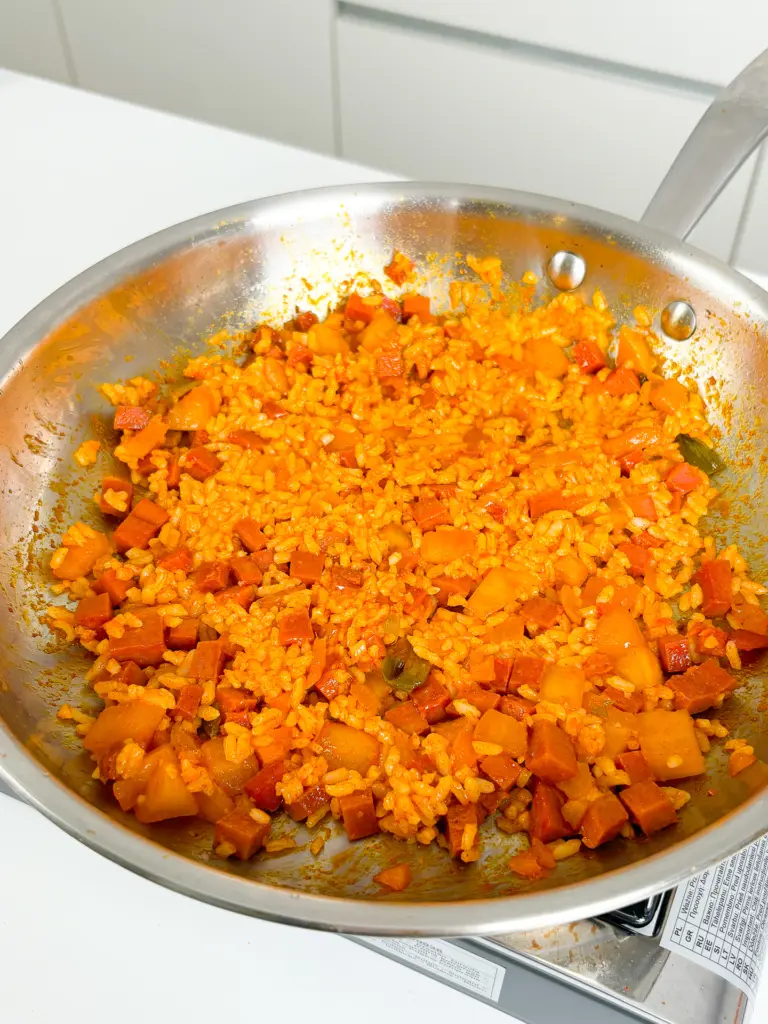
- The Rice Secret: Add your rice and the kkakdugi juice. To get that “crispy” bottom often found in Korean BBQ restaurants, press the rice down firmly and let it sizzle for 2 minutes on high heat.
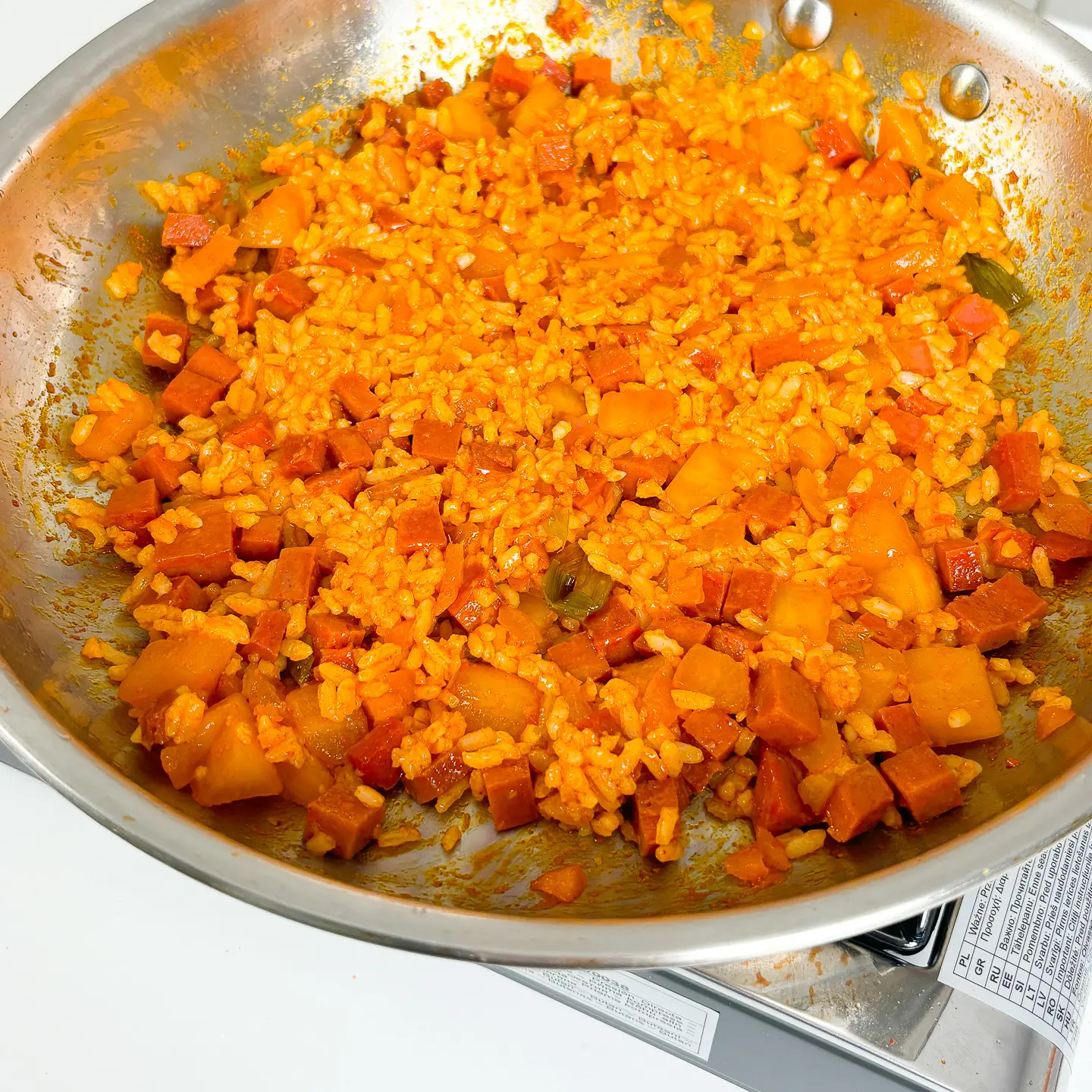
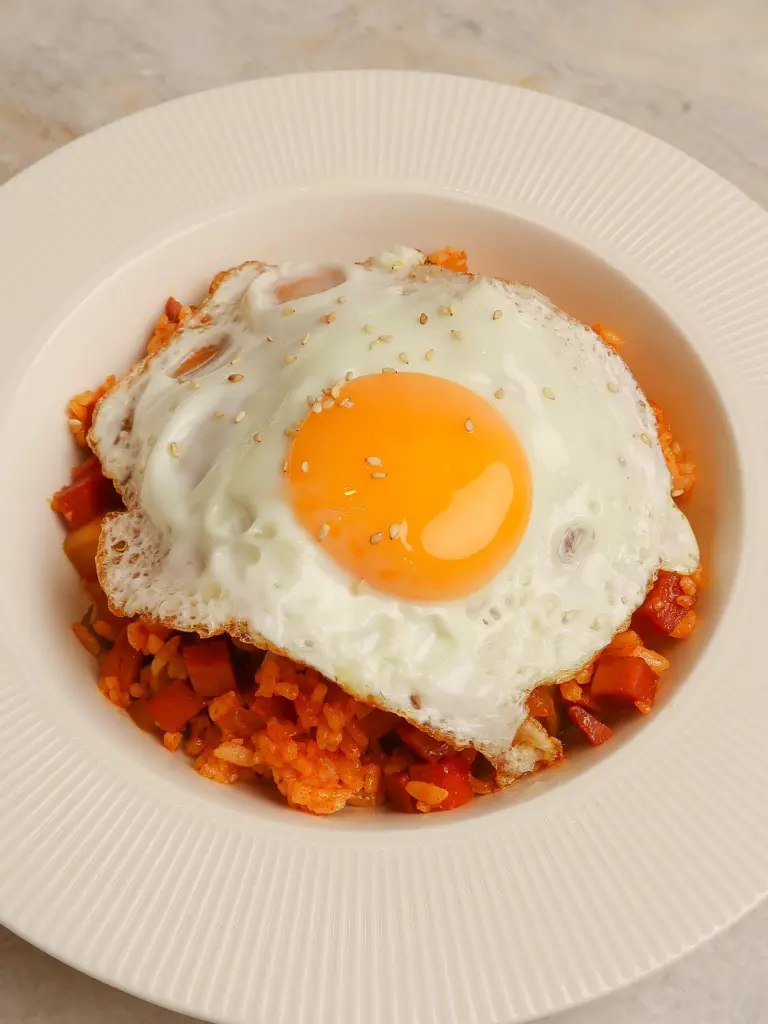
- Finish: Drizzle sesame oil and top with a sunny-side-up egg. Your Radish Kimchi Fried Rice is ready!
Pro Tips for The Best Kkakdugi Bokkeumbap
Use the Juice: Don’t throw away the liquid in your kimchi jar! It’s the primary seasoning for Radish Kimchi Fried Rice.
The “Scorched” Bottom: If you love the crispy rice at the bottom of the pan (Nurungji), use a cast-iron skillet for your Kkakdugi Fried Rice.
Balance the Acidity: If your radish kimchi is very sour, add a little extra sugar to your Kkakdugi Bokkeumbap to balance the flavors.
How Does Kkakdugi Kimchi Fried Rice Taste?
Kkakdugi kimchi fried rice has a different texture than napa cabbage kimchi fried rice. While napa cabbage becomes softer when stir-fried, kkakdugi retains its crunch, giving it an incredibly satisfying bite. The best kkakdugi for fried rice is fully fermented and sour, as it enhances the flavor of the dish. No special ingredients are needed – kkakdugi alone makes the fried rice incredibly flavorful and delicious.
Some Korean BBQ restaurants even serve kkakdugi fried rice instead of the usual napa cabbage kimchi fried rice. It’s also an easy and popular home-cooked dish among Koreans.
10 Minute Meal

Kkakdugi fried rice is a dish that many Koreans make at home, just like Napa cabbage kimchi fried rice. One of the best things about it is that it doesn’t require many ingredients. After all, kkakdugi already contains scallions and onions, so you don’t even need to add them separately – the kkakdugi and its seasoning alone are enough to make a flavorful fried rice.
Plus, it takes less than 10 minutes to cook. Is there anything better than kimchi fried rice when you don’t feel like cooking? Add ham, meat, or eggs for a complete, protein-packed meal with even more flavor.
Kimchi Fried Rice Add-Ins
Kimchi fried rice is delicious just with kimchi and rice, thanks to its clean and bold flavors. But adding extra ingredients takes it to the next level, making it an umami-packed, irresistible dish.
Popular Add-Ins for Kimchi Fried Rice
- Ham or Sausage
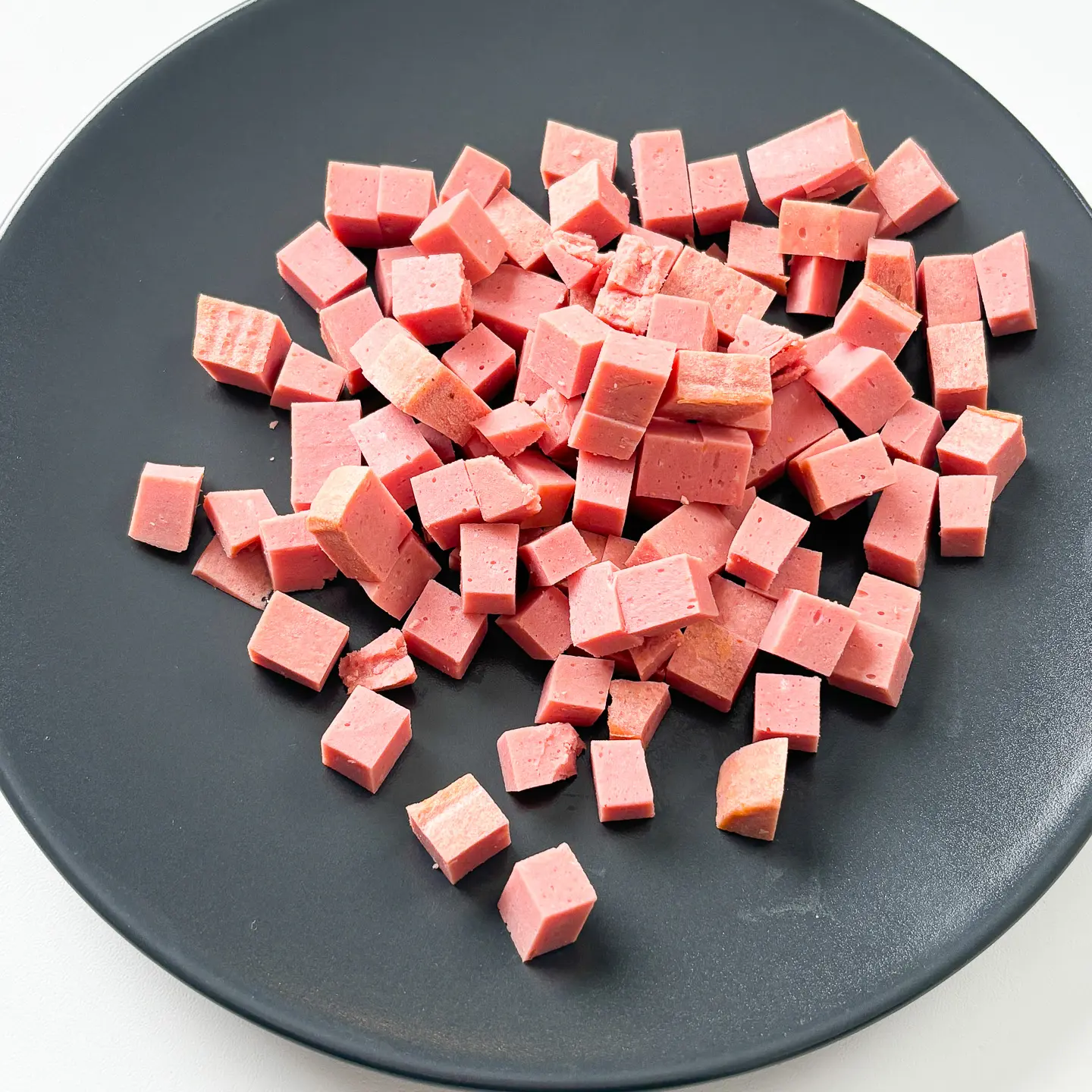
The most common addition to kimchi fried rice among Koreans is ham. Luncheon meats like Spam work well, and sausages add a salty, umami-rich flavor with a satisfying texture. You can also use bacon for extra depth and smokiness.
- Tuna
Canned tuna is a popular ingredient in Korean cuisine. Its light and clean flavor pairs perfectly with kimchi fried rice. A pro tip: use the oil from the canned tuna when stir-frying – it adds an extra layer of richness. Try it and taste the difference!
- Egg
Eggs are a staple of Korean cuisine. When moms make kimchi fried rice, they often top it with a fried egg, making it a special treat for kids. You can use a fully cooked egg, but a runny yolk works best and creates a creamy, rich contrast when mixed with the rice.

- Seaweed Flakes (Gim)
Adding seaweed flakes gives kimchi fried rice a deep, savory flavor and a hint of toasted sesame or perilla oil. Crush dried seaweed in a bag and sprinkle over the rice, or stir-fry together for an even bolder flavor. Be warned-you may find yourself stocking up on seaweed from now on!
How to Use Old Kimchi?
Aged kimchi develops a strong sour flavor but never throw it away! It’s actually a treasure of Korean cuisine, adding incredible depth and umami to many dishes.
- Kimchi Fried Rice
When stir-fried with ham, meat, or other rich ingredients, the acidity of aged kimchi enhances the umami and makes the dish even more flavorful.

The best kimchi jjim is made with well-fermented, aged kimchi. It’s usually made with pork or fish, and the acidity of the kimchi helps tenderize the meat. The acidity also blends beautifully with the richness of the fat. Below is a recipe for pork kimchi jjim which is my mother’s secret recipe!
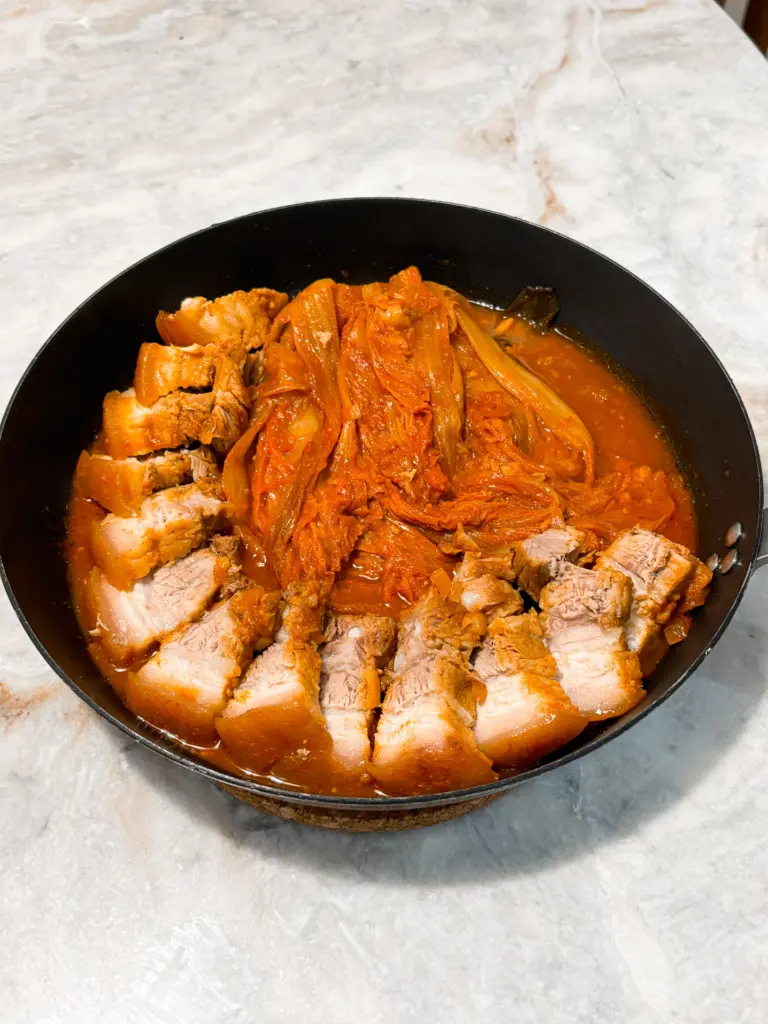
Pork Belly Kimchi Jjim (Braised Kimchi)
- Kimchi Jjigae (Kimchi Stew)
For the best kimchi jjigae, aged kimchi is a must. If the kimchi isn’t fermented enough, the stew lacks depth, and some people even add vinegar to mimic the tangy flavor. This is the recipe of tuna kimchi jjigae which is easy and simple.
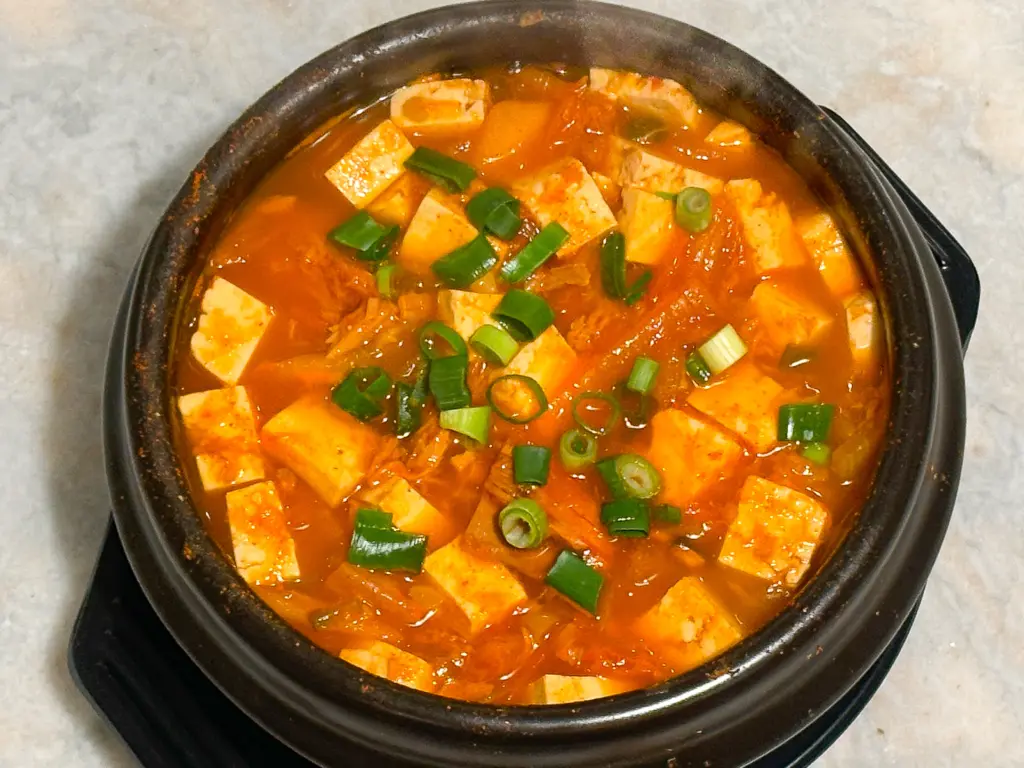
Healthy Tuna Kimchi Jjigae Without Gochujang (Low Calories)
FAQ about Kkakdugi Bokkeumbap
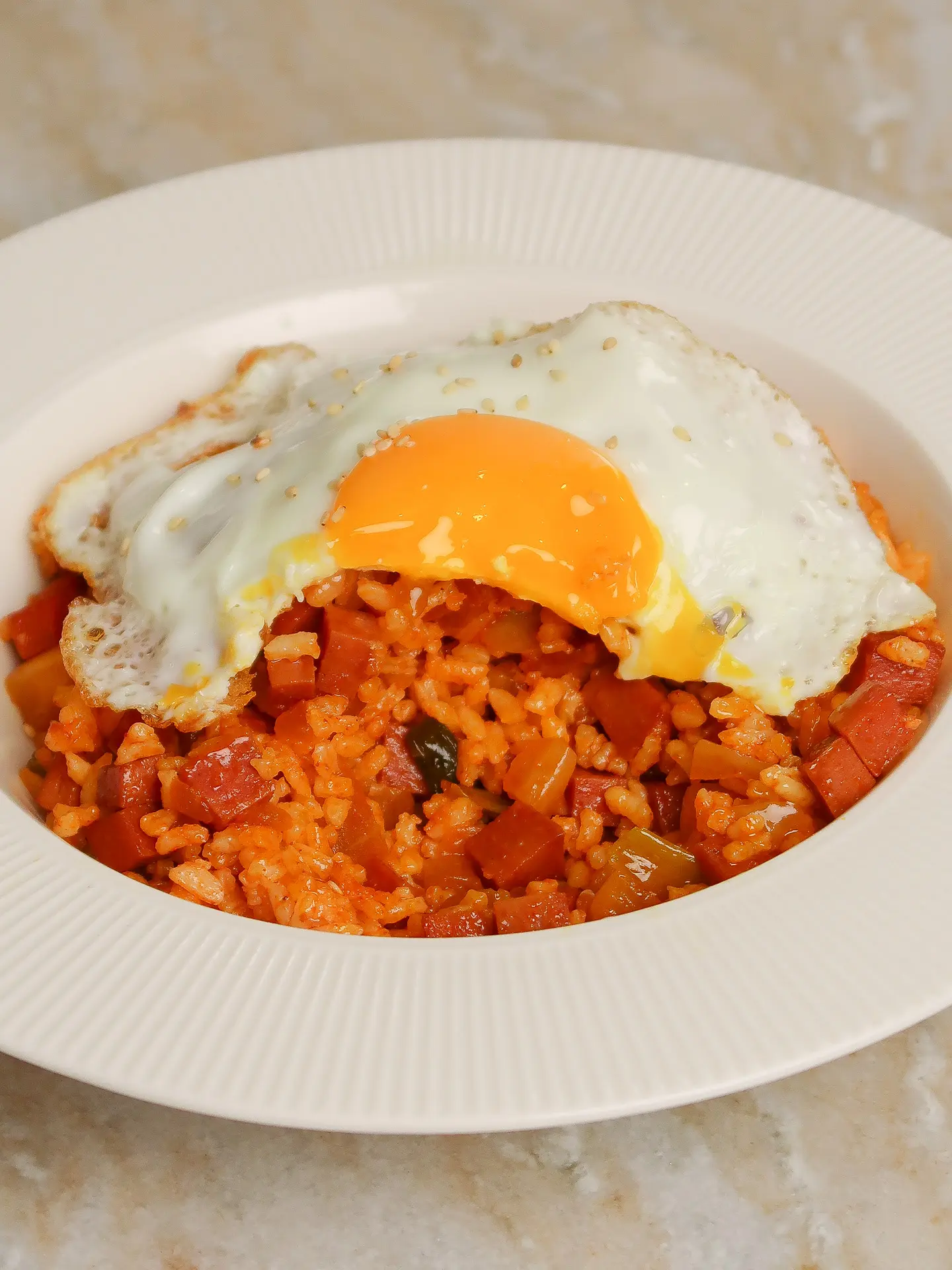
Kkakdugi Kimchi Fried Rice


Ingredients
- 3 tbsp kkakdugi (cubed radish kimchi)
- 1/3 can luncheon meat (any ham, spam is fine)
- 2 tbsp kkakdugi juice
- 1/2 cup water (90ml)
- 1/2 tbsp gochugaru (Korean red pepper flakes)
- 1/2 tbsp sugar
- 1/3 tbsp gochujang (Korean red pepper paste)
- 1 bowl rice
- 2 tbsp cooking oil
- 1 tbsp sesame oil
- 1 pinch sesame seeds
Instructions
Prep the Ingredients
- Cut the kkakdugi (radish kimchi) into small pieces using kitchen scissors.3 tbsp kkakdugi
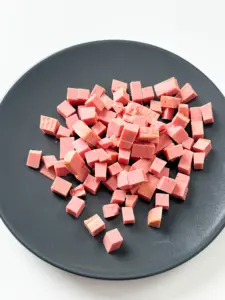
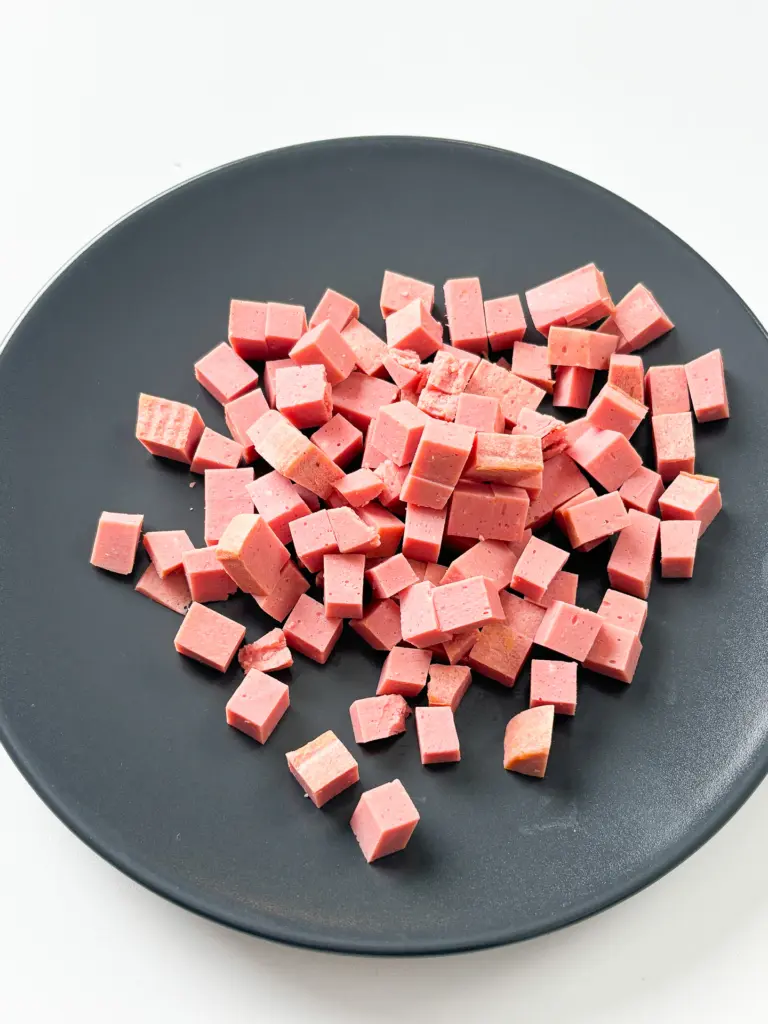
- Cube the ham into small pieces.1/3 can luncheon meat
Cooking in the Pan
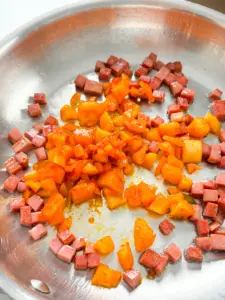
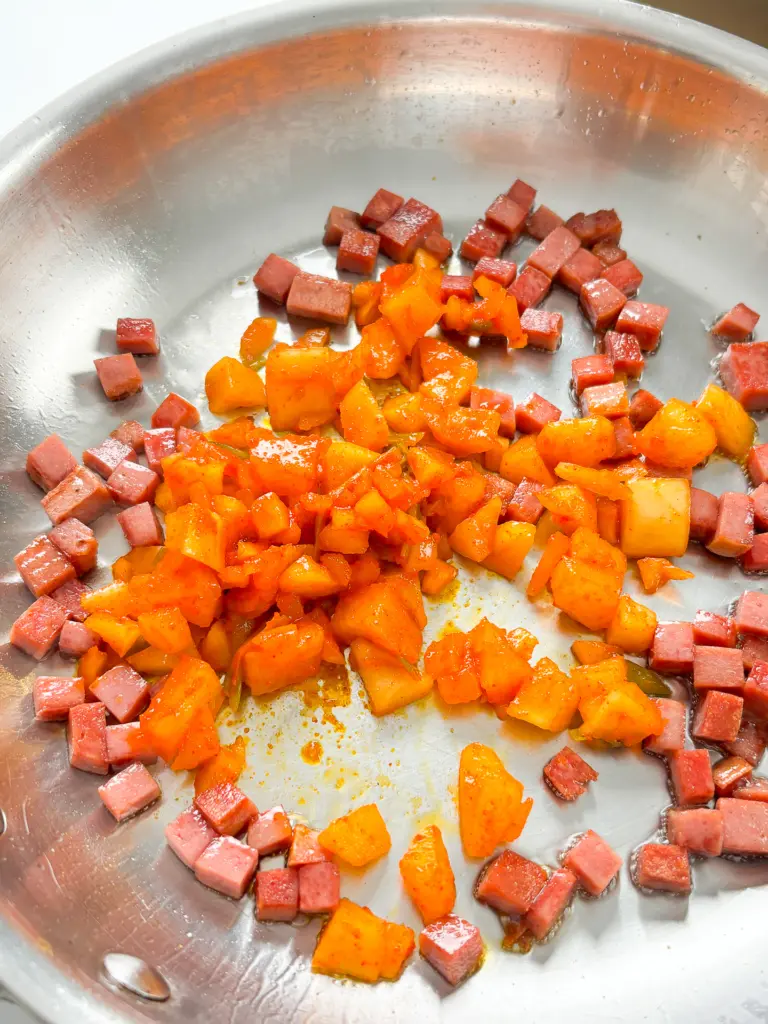
- Heat cooking oil in a pan and add the ham. Cook until browned.2 tbsp cooking oil, 1/3 can luncheon meat
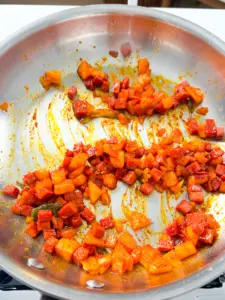
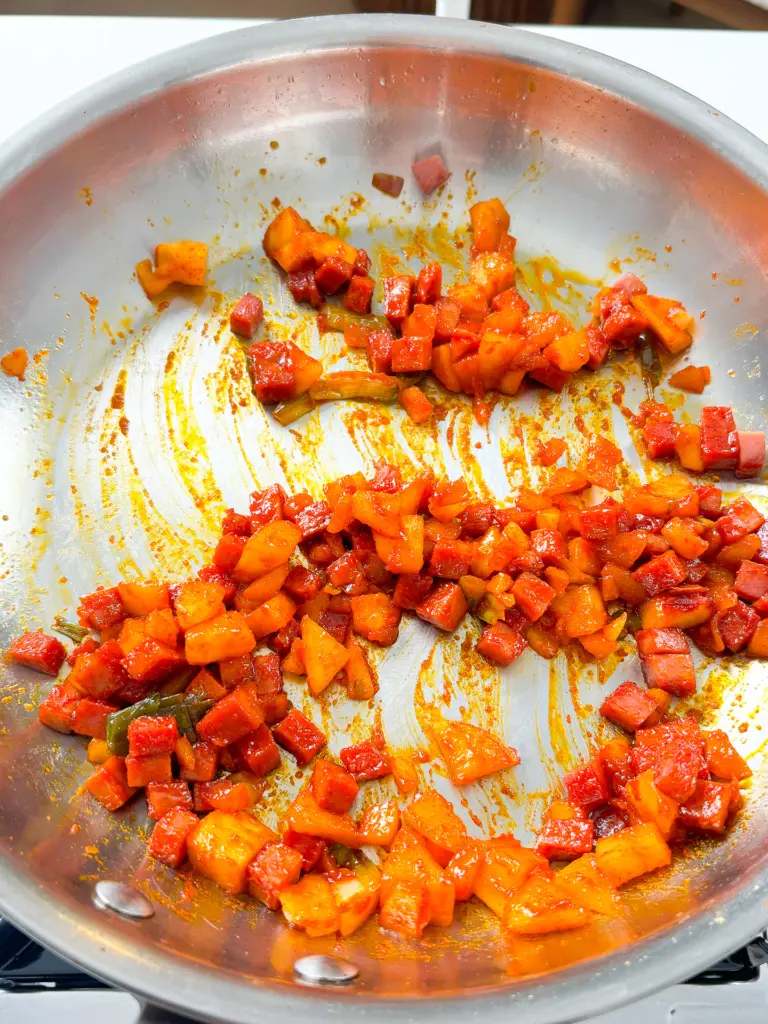
- Add the kkakdugi and its juice to the pan and stir-fry.2 tbsp kkakdugi juice, 3 tbsp kkakdugi
- Add sugar, gochugaru (Korean red pepper flakes), and gochujang (Korean red pepper paste) and continue to stir-fry.1/2 tbsp gochugaru, 1/2 tbsp sugar, 1/3 tbsp gochujang
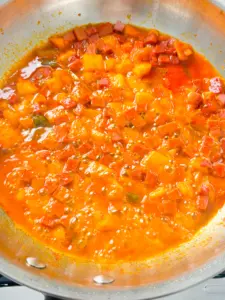
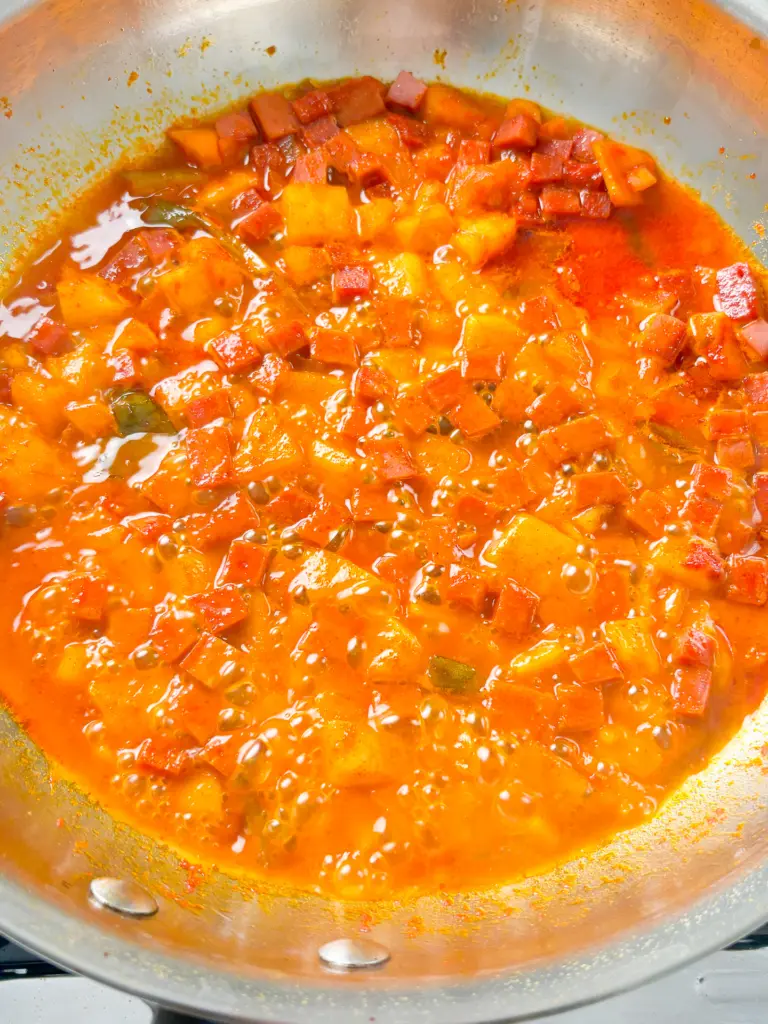
- Pour in water and simmer on low heat until the flavors meld together.1/2 cup water
Frying the Rice
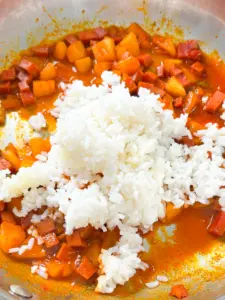
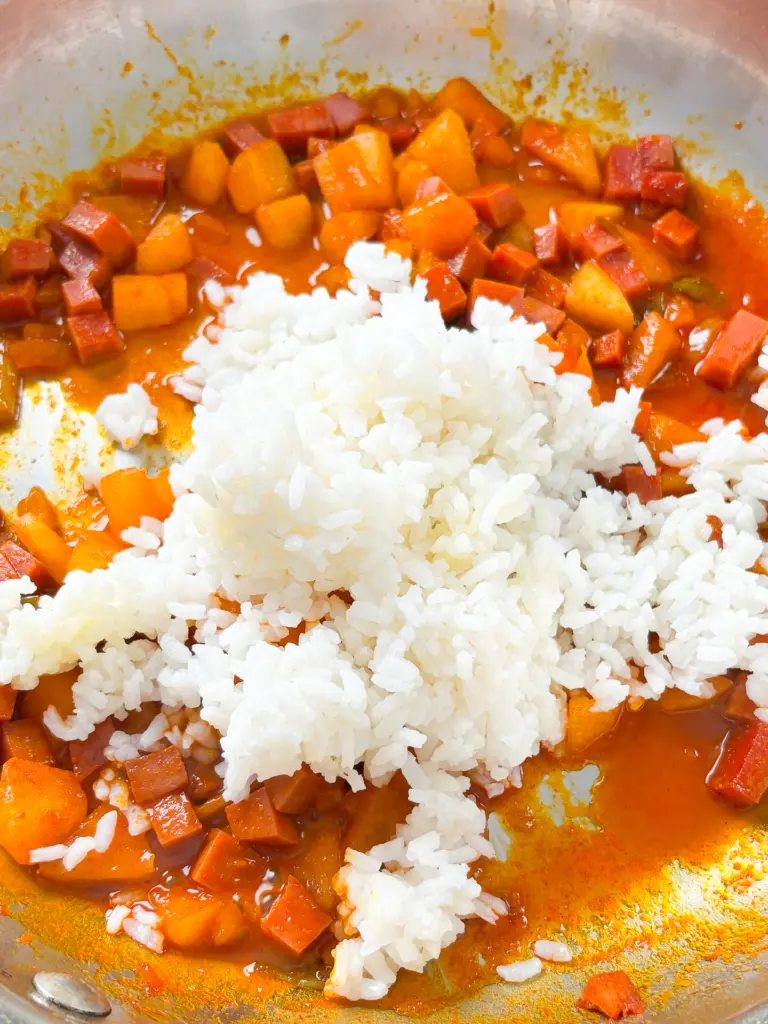
- Add the rice and stir-fry.1 bowl rice
- Increase the heat to high and cook until the moisture evaporates.
- Once everything is well mixed, add 1 tbsp sesame oil and stir briefly to finish.1 tbsp sesame oil
Final Touch
- Fry one egg to your desired doneness (sunny side up).
- Place the fried egg on top of the rice.
- Garnish with sesame seeds.1 pinch sesame seeds



Nutrition
Tried this recipe?
I read and reply to every comment. Even one line tells me you made it, and helps the next reader find this recipe.
Rate & reviewBlonde Kimchi

I did not know you could make fried rice with radish kimchi. The texture is so good, I am addicted!