
Top 10 Essential Korean Kitchenware & Cookware

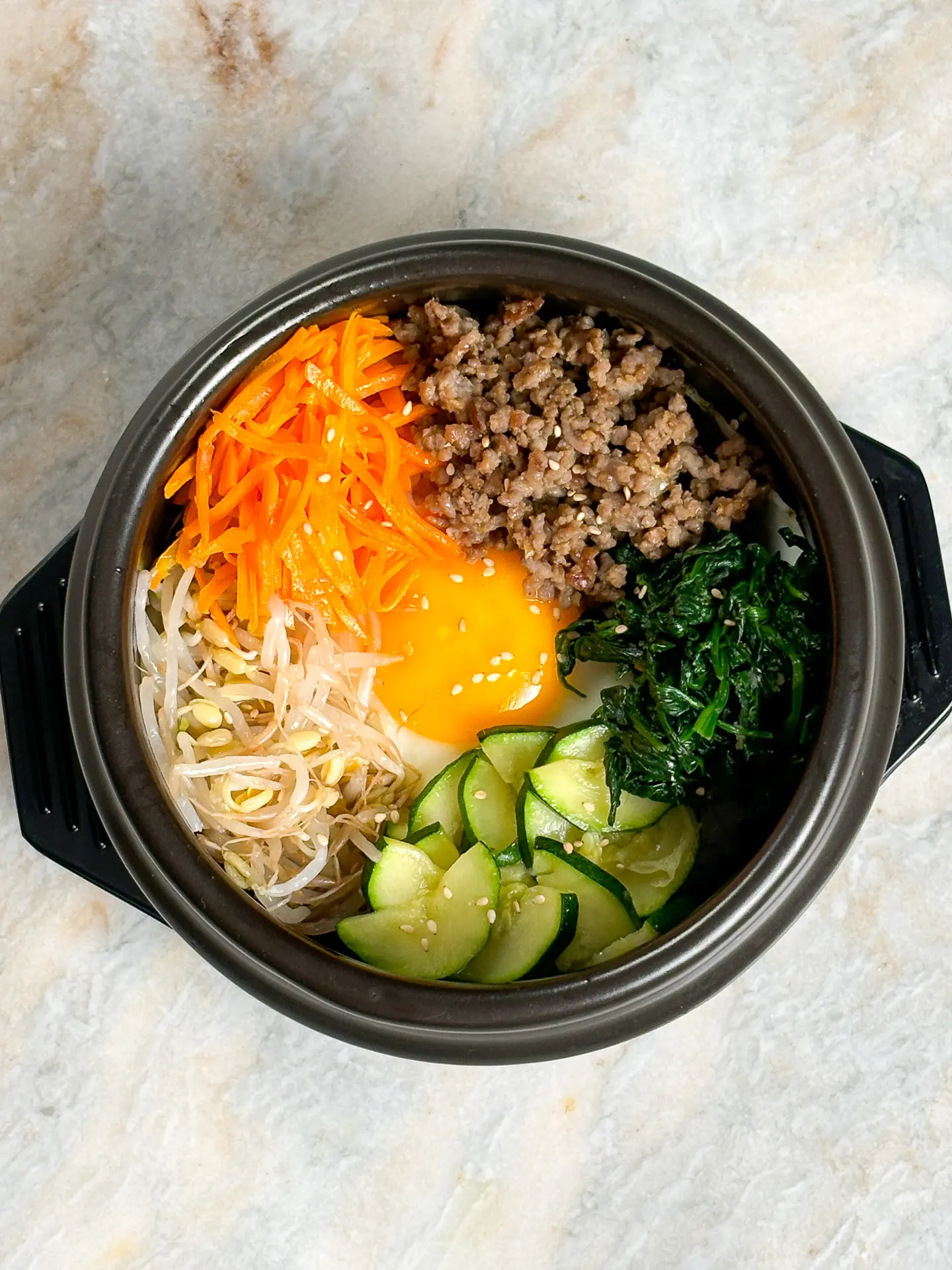
Today, as a Korean, I want to introduce you to the Top 10 essential Korean kitchenware and cookware from authentic Korean pots and pans to must-have Korean kitchen utensils that every home cook should have.
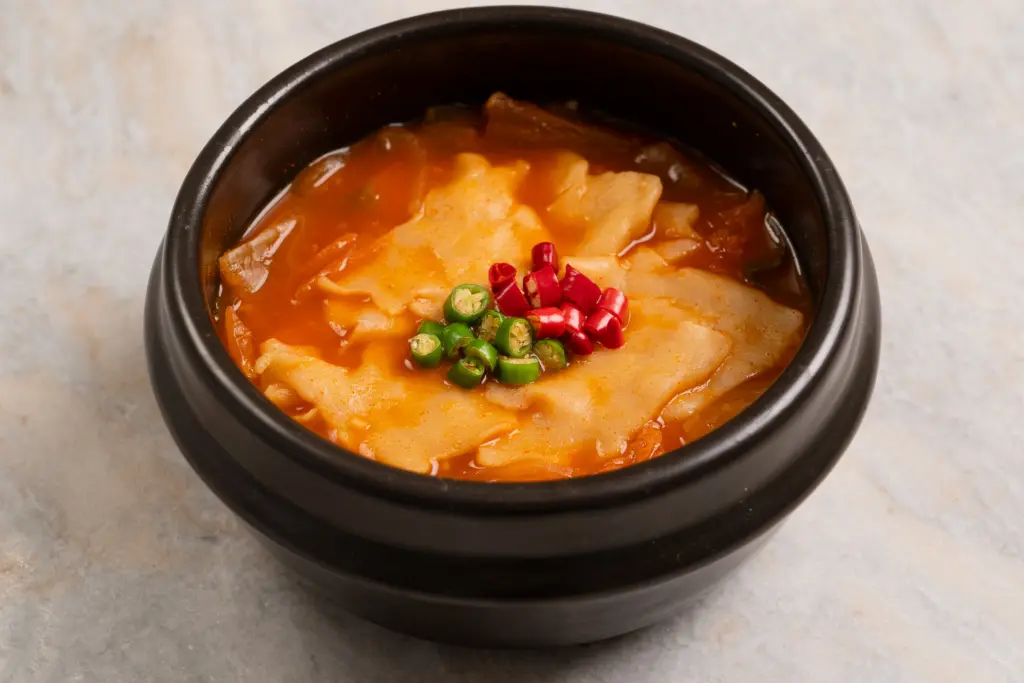
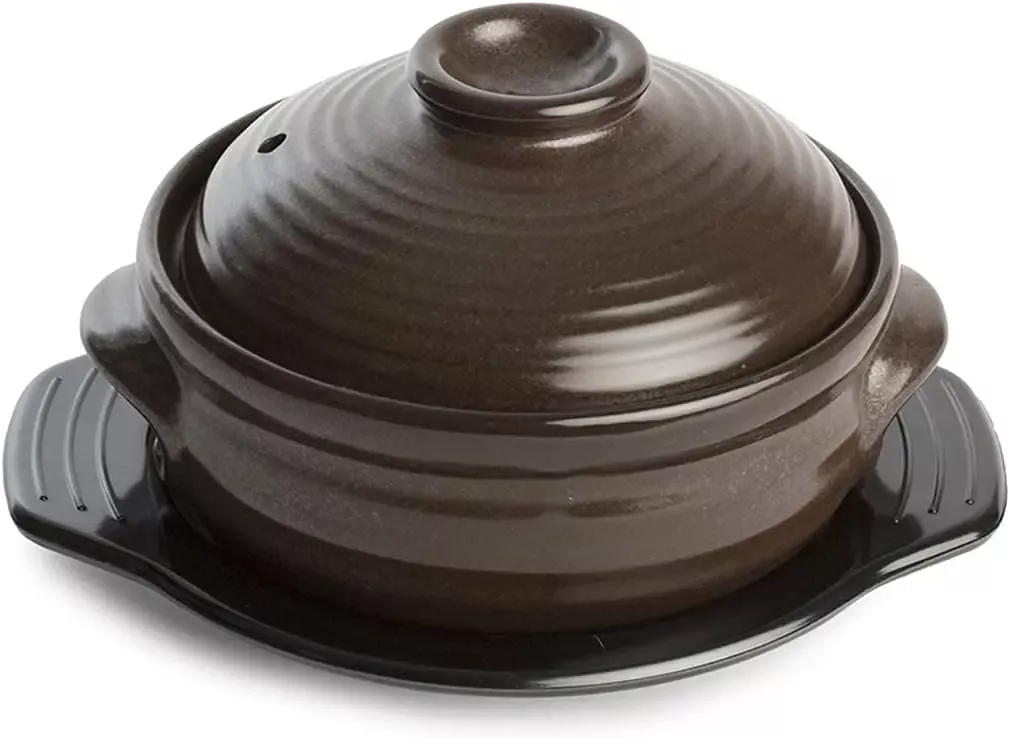
After moving from Korea to Belgium, I realized how different European and American kitchens are compared to Korean kitchens. Many Korean cookware items are specifically designed to bring out the best flavors in our dishes. Whether you are making bibimbap, kimchi stew, or Korean BBQ, having the right Korean cookware can make cooking easier, healthier, and more authentic.
Why Do You Need Korean Cookware?
Top 10 Essential Korean Kitchenware
1. Korean Pressure Rice Cooker (밥솥 | Rice Cooker in Korean: Bapsot)
Rice is a staple food for Koreans. Although younger generations are eating less rice and opting for more flour-based dishes like noodles and bread, rice remains essential in Korean cuisine.
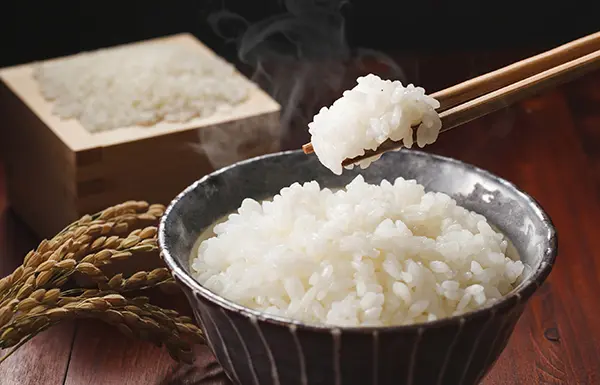
To achieve the perfect Korean-style rice, a high-pressure electric rice cooker is necessary. This ensures the rice is chewy, glossy, and cooked evenly. Cooking rice in a regular pot can sometimes result in undercooked and less flavorful rice which is why a Korean pressure rice cooker is the single most essential Korean cooking appliance you can own.
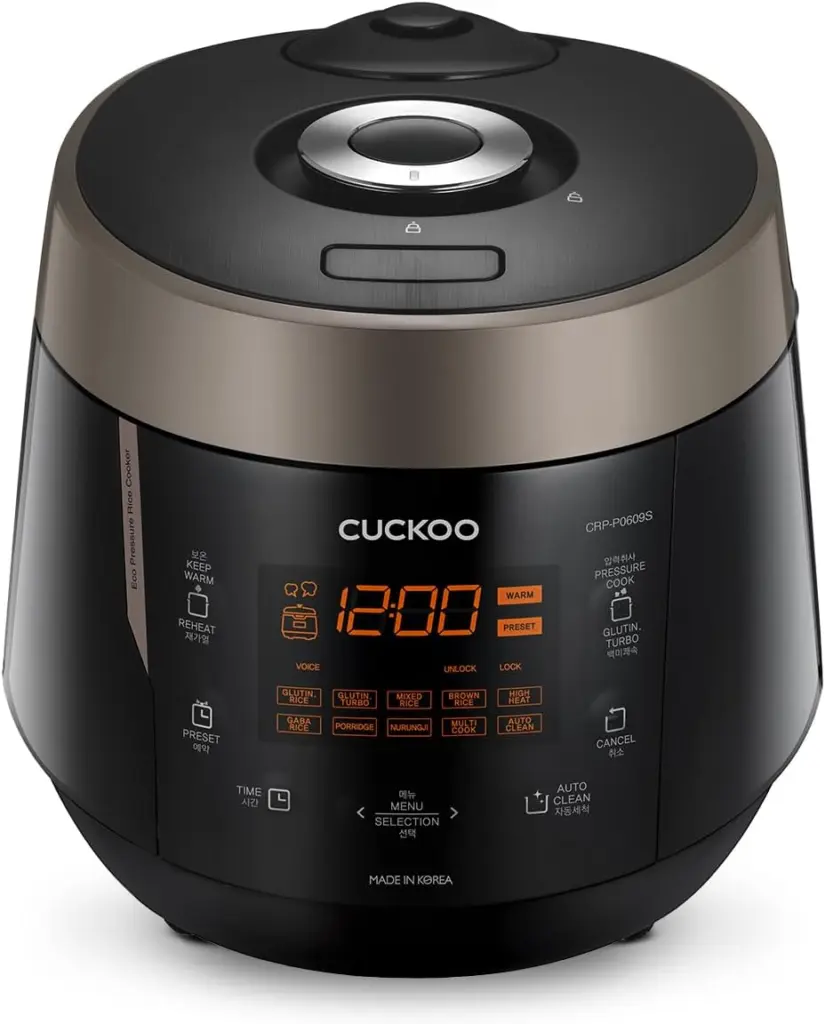
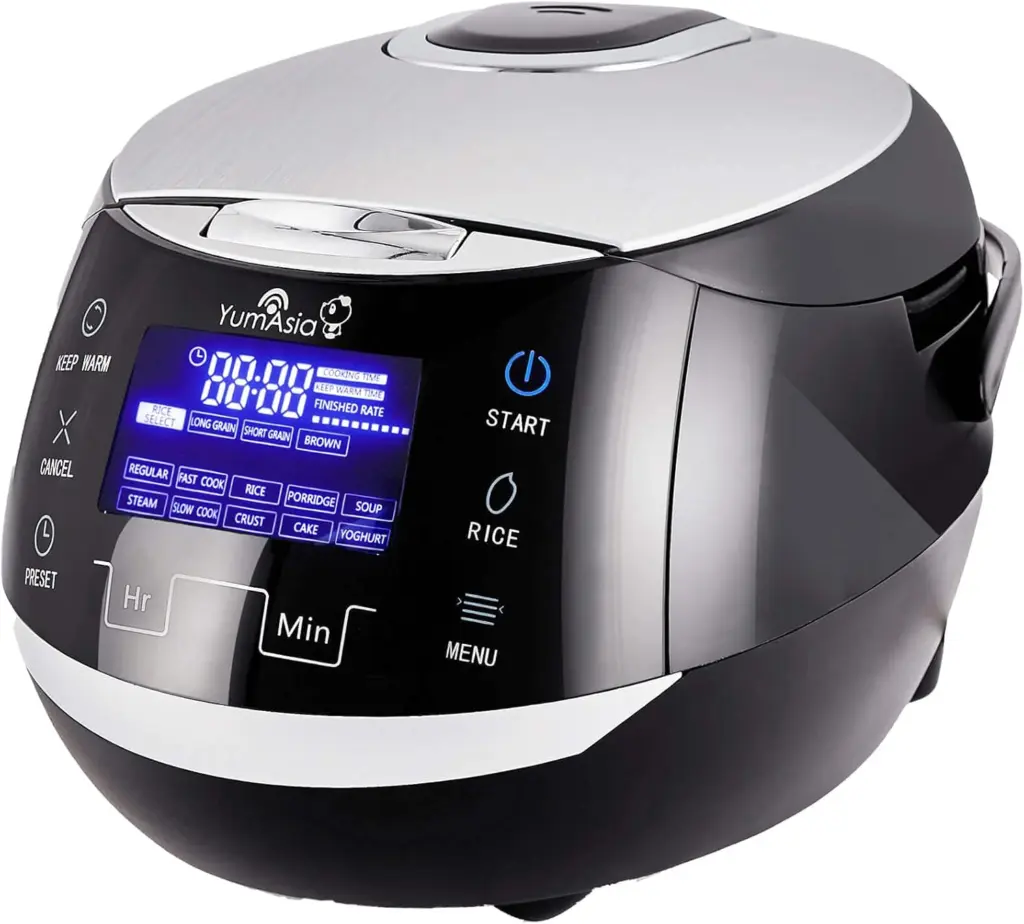
One of the most popular brands among Koreans is Cuckoo, which my mom absolutely loves. Currently, after moving to Belgium, I am using Yum Asia, which my boyfriend bought a long time ago. Cuckoo makes delicious rice and keeps rice moist and fresh for a long time. Yum Asia makes decent rice, but it tends to dry out after a few hours.
Why Western Rice Cookers Can’t Recreate the Taste of Korean Rice?
| Western Rice Cookers | Korean Pressure Rice Cookers 👍 | |
| Function | Mainly for cooking rice, with few extra features | Can cook rice and other dishes (stews, soups) with pressure cooking for moist and shiny rice |
| Pressure | No pressure function | Uses pressure to cook rice evenly and keep it warm for longer |
| Variety | Primarily plain white rice | Rice, stews, soups, porridge, and more |
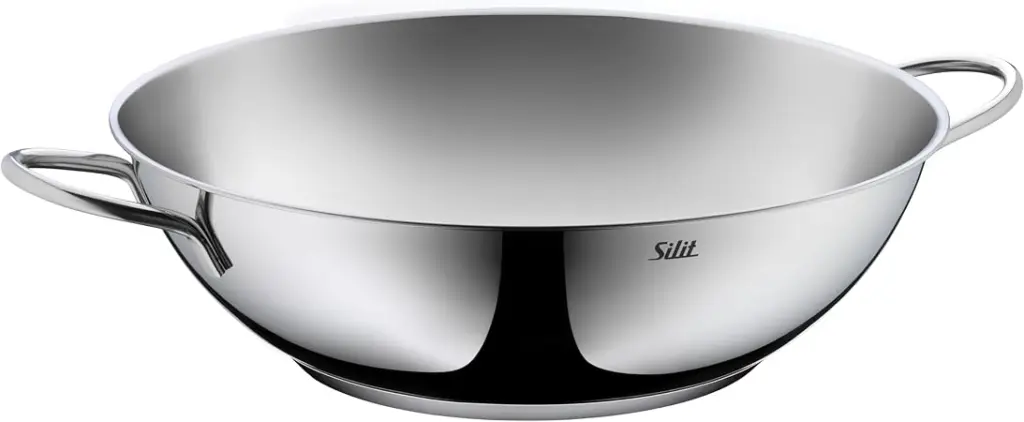
2. Wok with a Lid – Do Koreans Use Woks?
- Perfect for jeongol, budae jjigae, dakgalbi, jjimdak and fried rice.
- Look for high heat conductivity, non-coated woks.
This Korean pan is essential kitchenware for dishes like jeongol (Korean hot pot), budae jjigae (army stew), and shabu-shabu. Having the right Korean kitchenware ensures that these dishes are cooked perfectly.
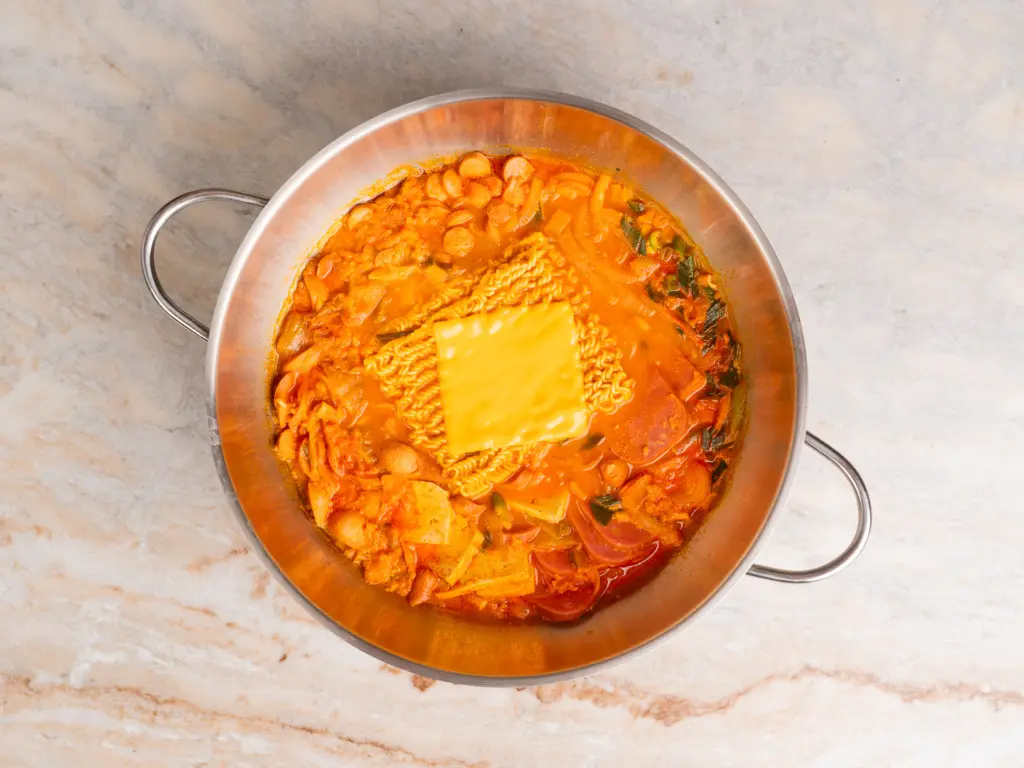
Authentic Budae Jjigae, Korean Army Stew
After moving to Belgium, I bought three different woks before finally finding the perfect one. The wok I now use is great for fried rice, hot pots, jjimdak and dakgalbi (spicy stir-fried chicken), and more. It has high heat conductivity and is not coated, so I don’t have to worry about peeling.
The Wok I Use Every Day
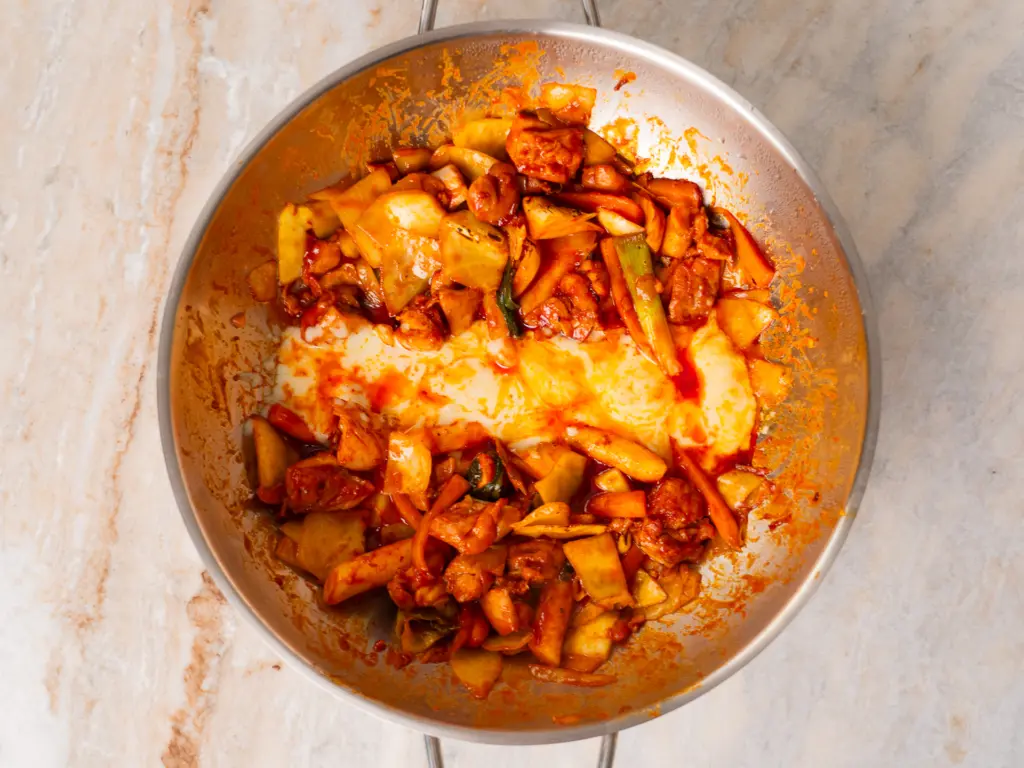
Cheese Dakgalbi – Famous Seoul Restaurant Style
3. Mandoline Slicer
- Essential for julienned vegetables: carrots, radish, potatoes.
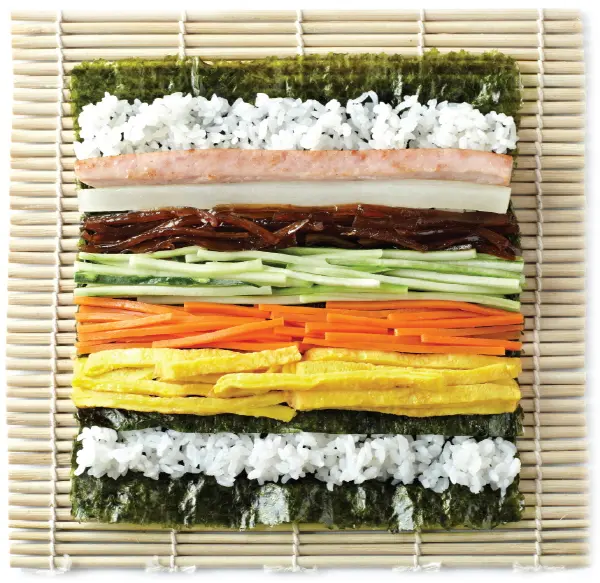
- Saves time and ensures consistent thickness for dishes like bibimbap, kimbap, kimchi and banchan.
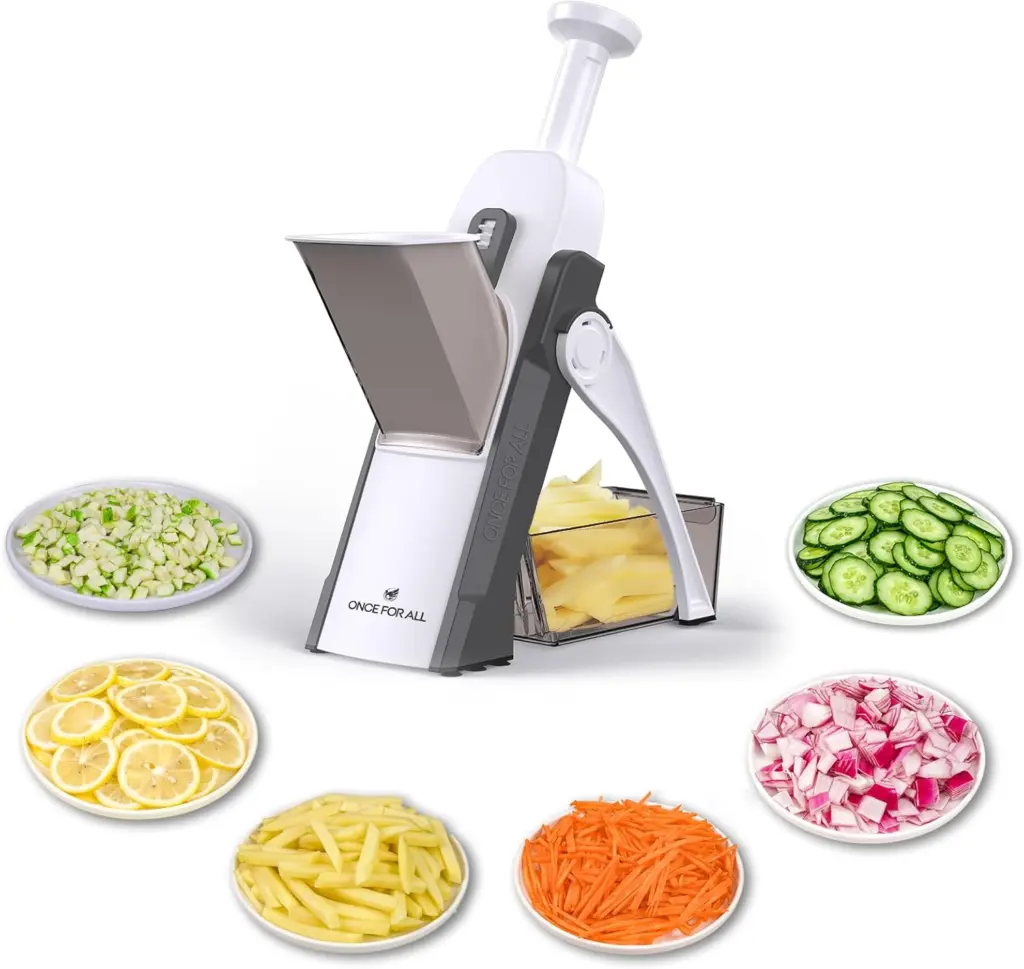
Korean cooking involves a lot of julienned vegetables. Carrots for bibimbap, kimbap, radish for kimchi, potatoes for stir-fried dishes, these all need to be julienned.
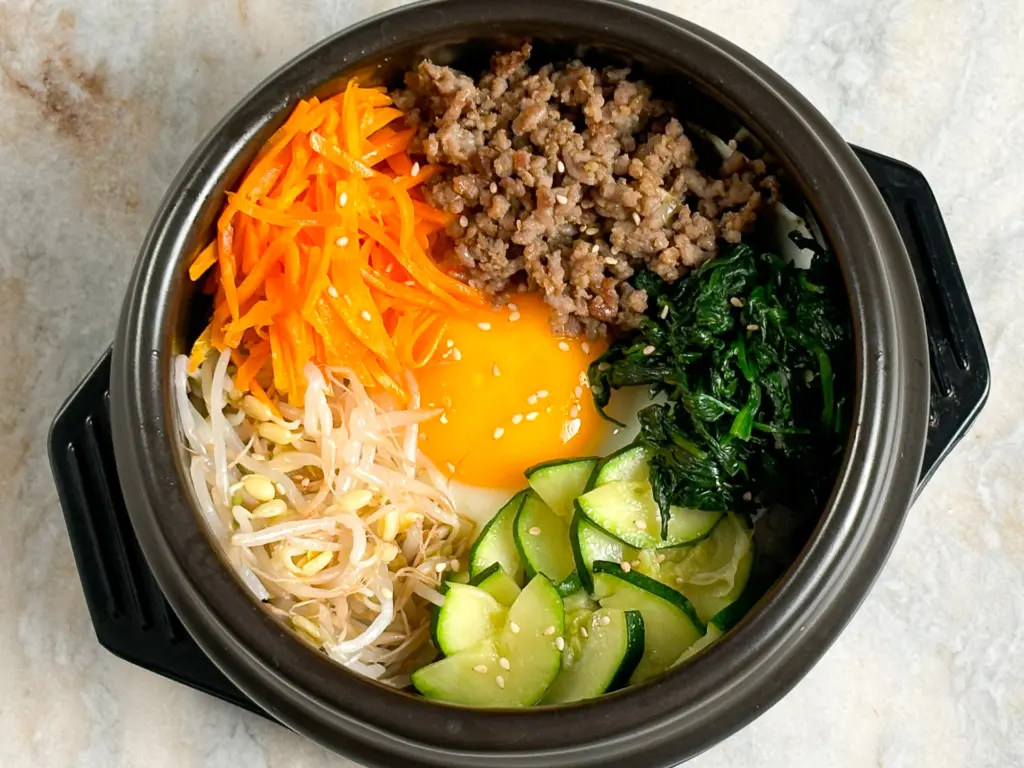
Dolsot Bibimbap (Korean Stone Bowl Bibimbap)
While you can cut them by hand, it takes a long time, the thickness is inconsistent, and your wrist may hurt. Many Koreans use a mandoline slicer at home, especially when preparing large amounts of radish for kimchi.
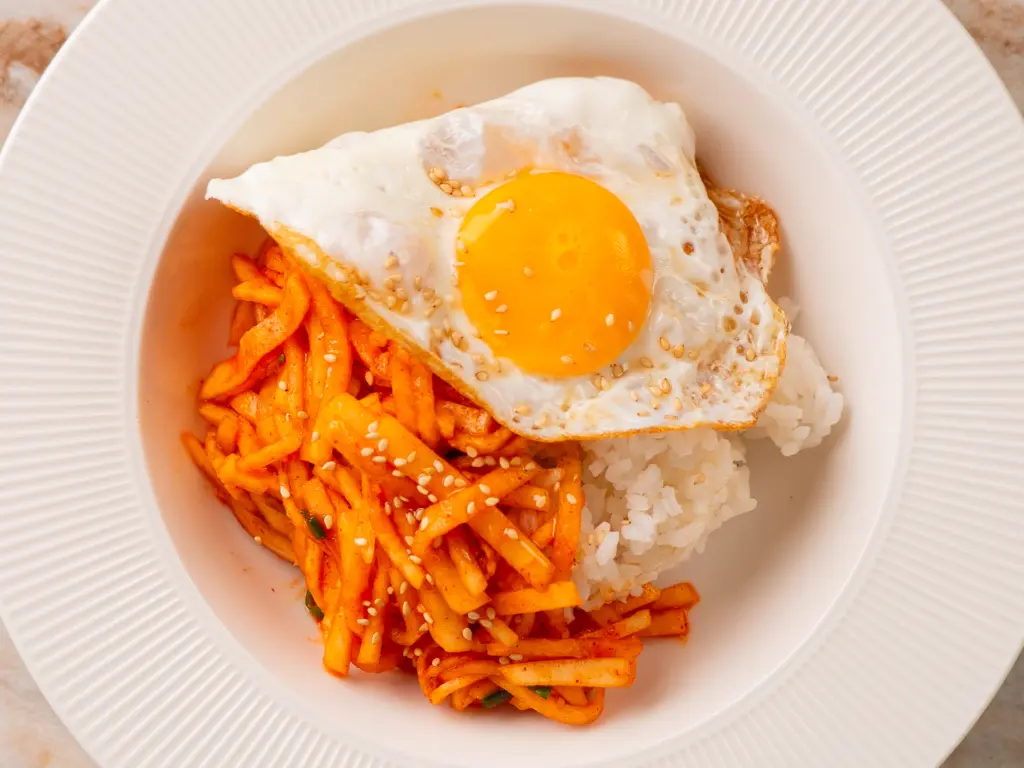
Musaengchae Bibimbap: Korean Spicy Radish Banchan
The first thing I regretted after moving to Belgium was not bringing my mandoline slicer. It’s nearly impossible to find in regular European supermarkets, so I recommend buying one online. This is a necessary Korean cookware.
👉 [🥒Shop mandoline slicer for kimbap, bibimbap and banchan]
4. Steamer
- Steaming dumplings, vegetables, corn, potatoes, and sweet potatoes.
- Healthy and prevents food from breaking.
A steamer is essential Korean kitchenware in Korean kitchens. In Korea, we prefer steaming dumplings over pan-frying them for a healthier option. Steaming also prevents them from breaking and makes the wrapper chewier.
👉 [🥟 Shop Steamer for Mandu, healthy steamed veggies]
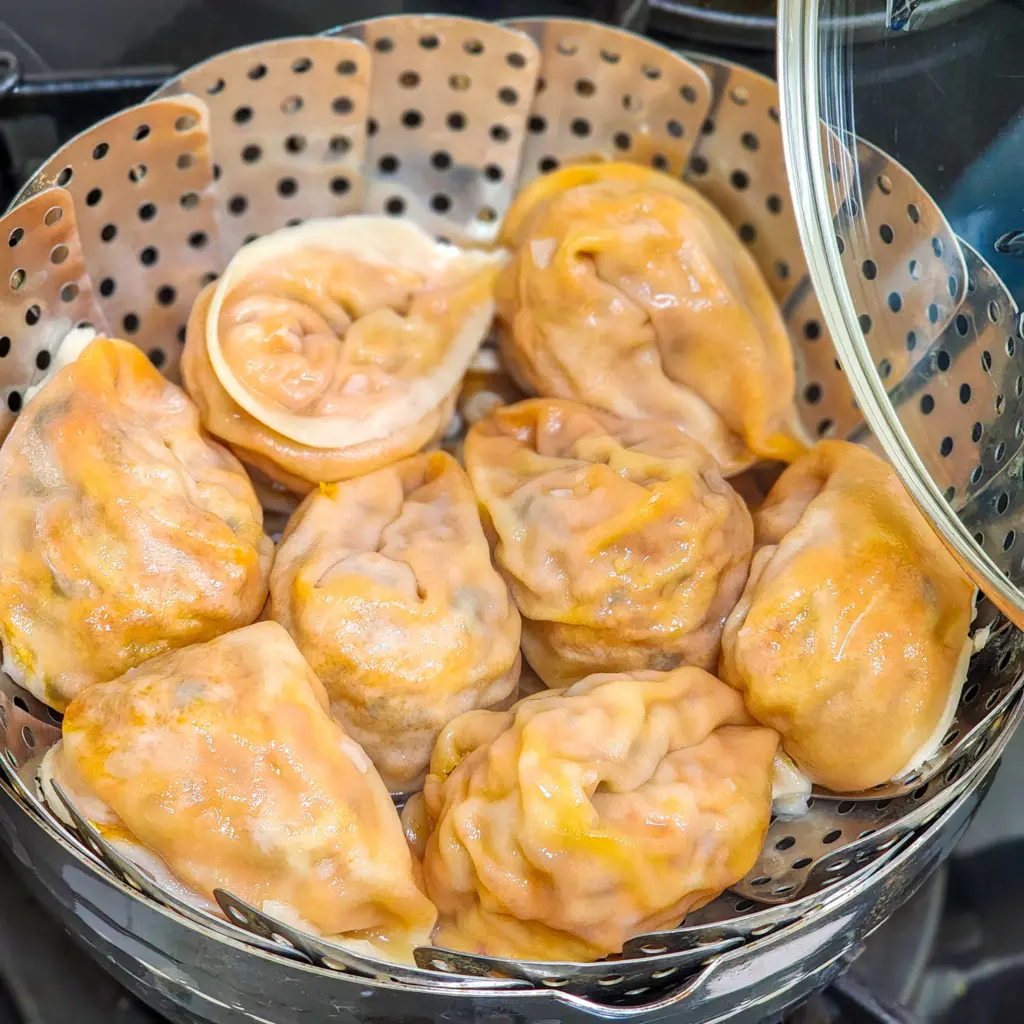
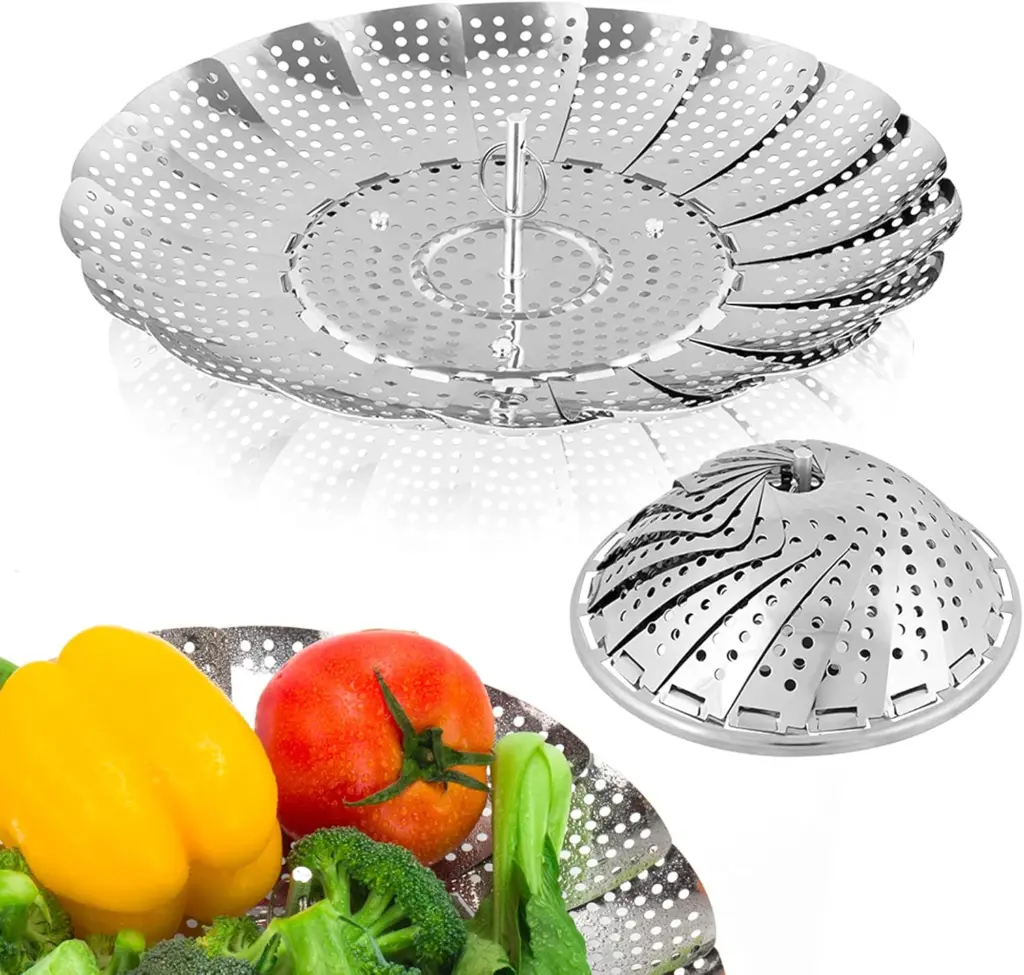
Steamers are also great for steaming vegetables, corn, potatoes, and sweet potatoes. Instead of stir-frying vegetables for bibimbap, you can steam them all at once for a healthier and quicker meal. My mom’s kitchen in Korea always had multiple steamers, and I’ve found them indispensable as well.
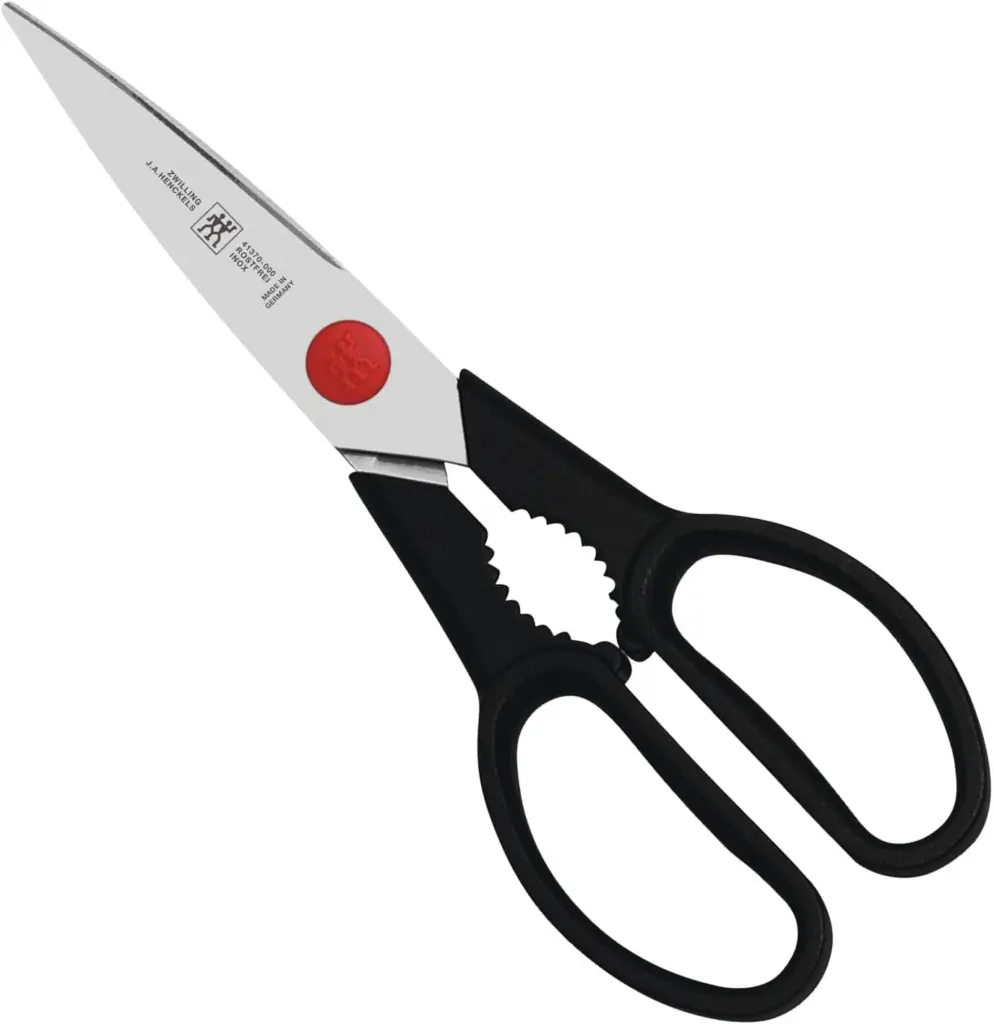
5. Kitchen Scissors
- Must-have in Korean kitchens for BBQ, pancakes, kimchi.
- Cuts faster than knives and reduces cleaning.
Kitchen scissors are an absolute must-have Korean kitchen utensil and one of the most iconic authentic Korean utensils passed down through generations. If a foreigner asked me, ‘What is the first essential Korean kitchenware I should buy?’ I would immediately say kitchen scissors! Korean BBQ? We cut the meat with scissors right on the grill. Korean pancakes (jeon)? Foreigners often use a knife, but Koreans always use scissors to cut them faster and easier.
👉 [✂️Shop ZWILLING Kitchen Shears on Amazon]
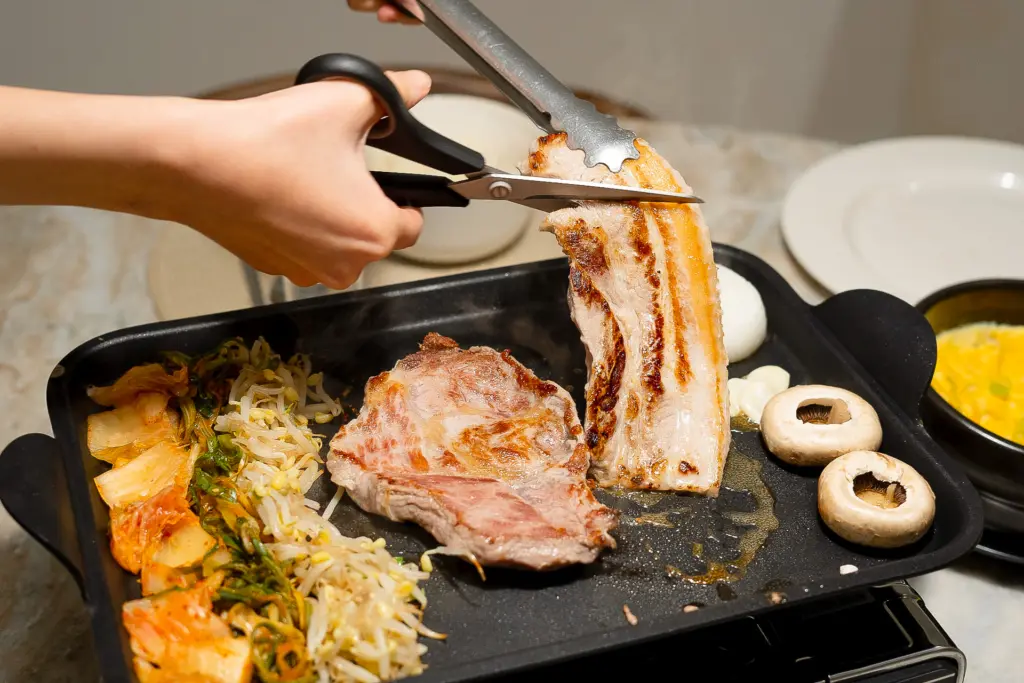
To cut kimchi, Koreans prefer scissors over a knife and cutting board. A cutting board is harder to clean and absorbs kimchi stains, so we simply use scissors to avoid extra cleaning.
6. Braiser (Heavy Pot)
- For galbijjim, gamjatang, braised fish.
- Heavy lid helps build pressure and enhance flavor.
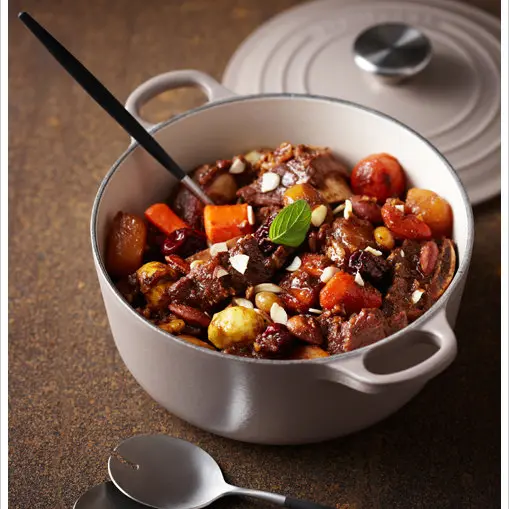
A braiser is a perfect Korean kitchenware for dishes like galbijjim (braised short ribs) and godeungeo jjim (braised mackerel), where the stock is shallow but needs to be simmered for a long time. The thicker the pot, the better, as it prevents burning during prolonged cooking.
👉 [🥘 Shop Le Creuset Braiser on Amazon]
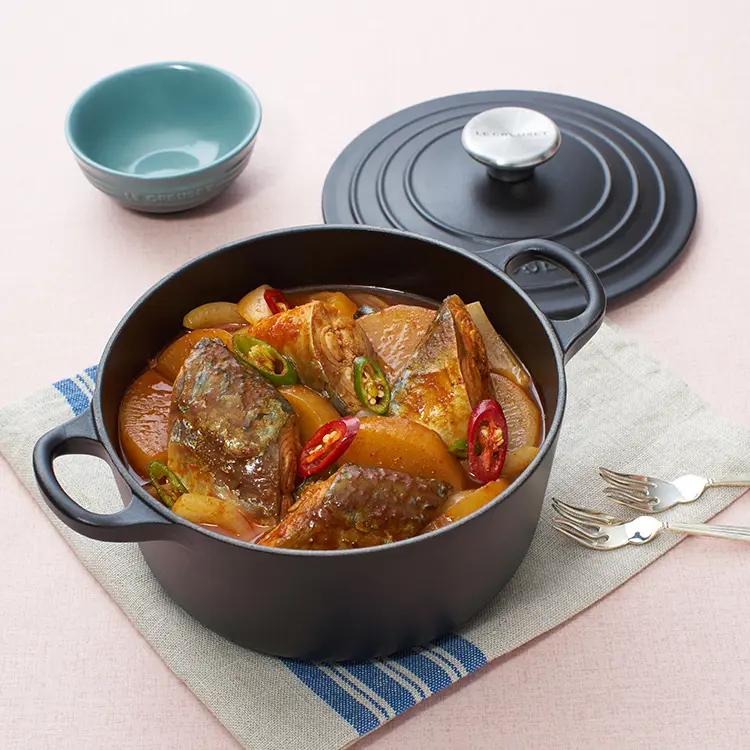
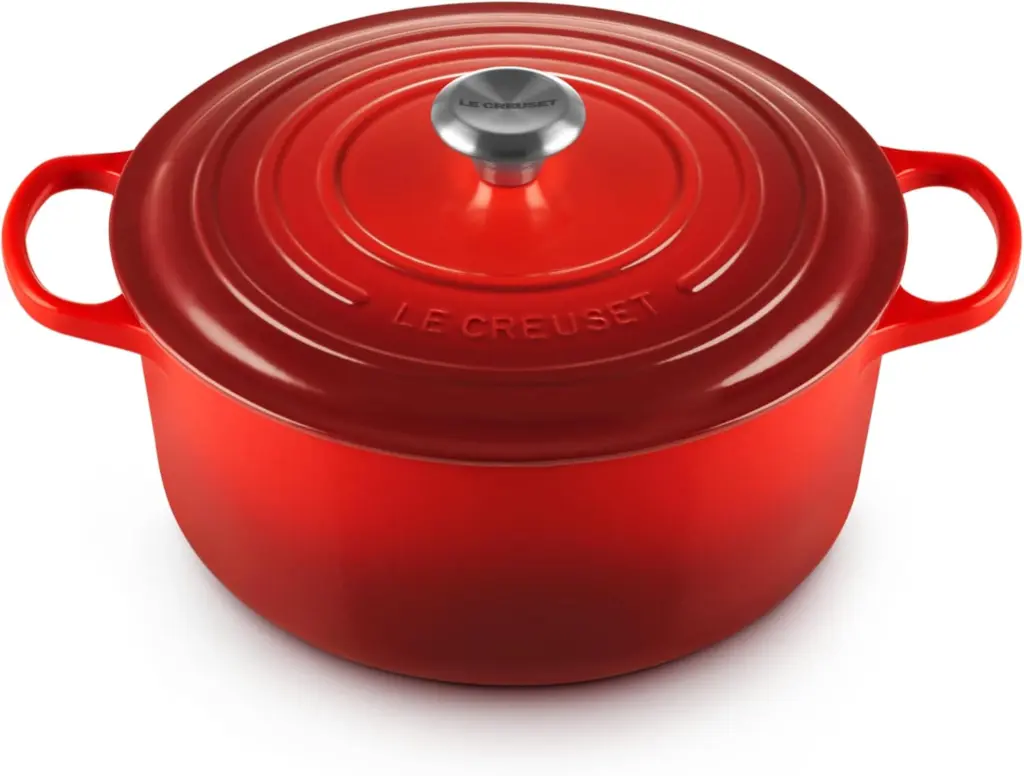
A heavy lid helps build pressure, which enhances the flavors. It’s also great for dishes like gamjatang (pork bone soup), which has a shallow broth and requires long cooking. Utilizing proper Korean kitchenware allows for healthier cooking techniques and preserves the authentic taste of Korean cuisine.
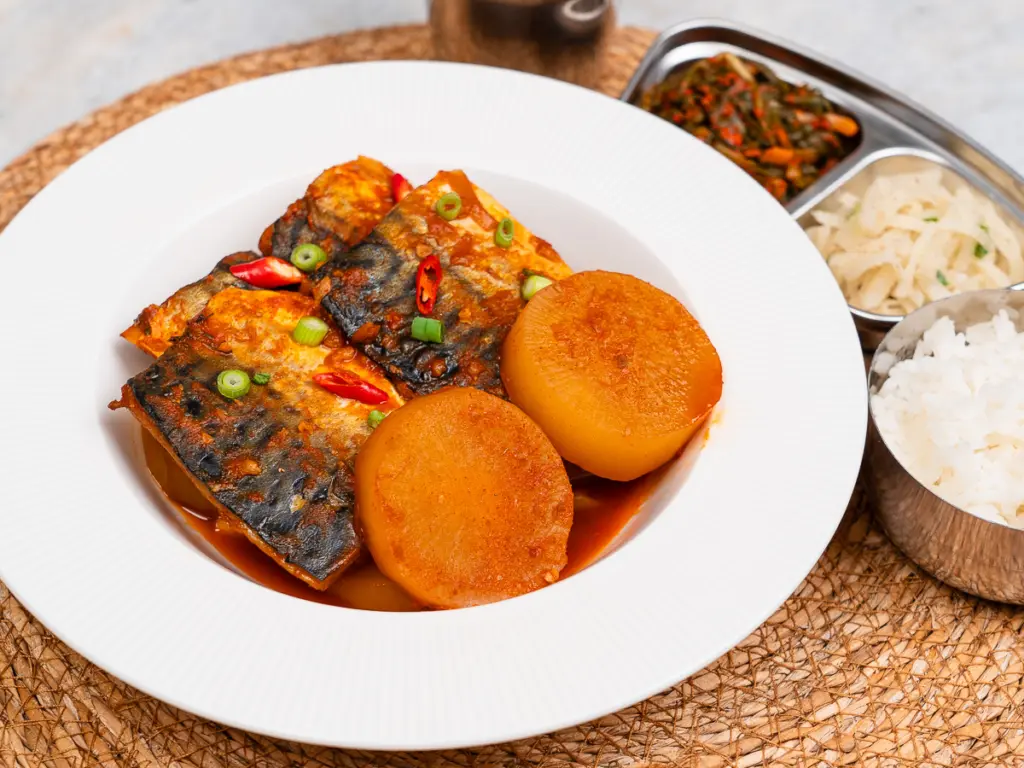
Korean Braised Mackerel with Radish: Mom’s Godeungeo Jorim Recipe
7. Ttukbaegi (Traditional Korean Earthenware Pot)
- Essential for: kimchi jjigae, sundubu jjigae, doenjang jjigae.
- Can also make dolsot bibimbap if a stone pot(dolsot) is unavailable.
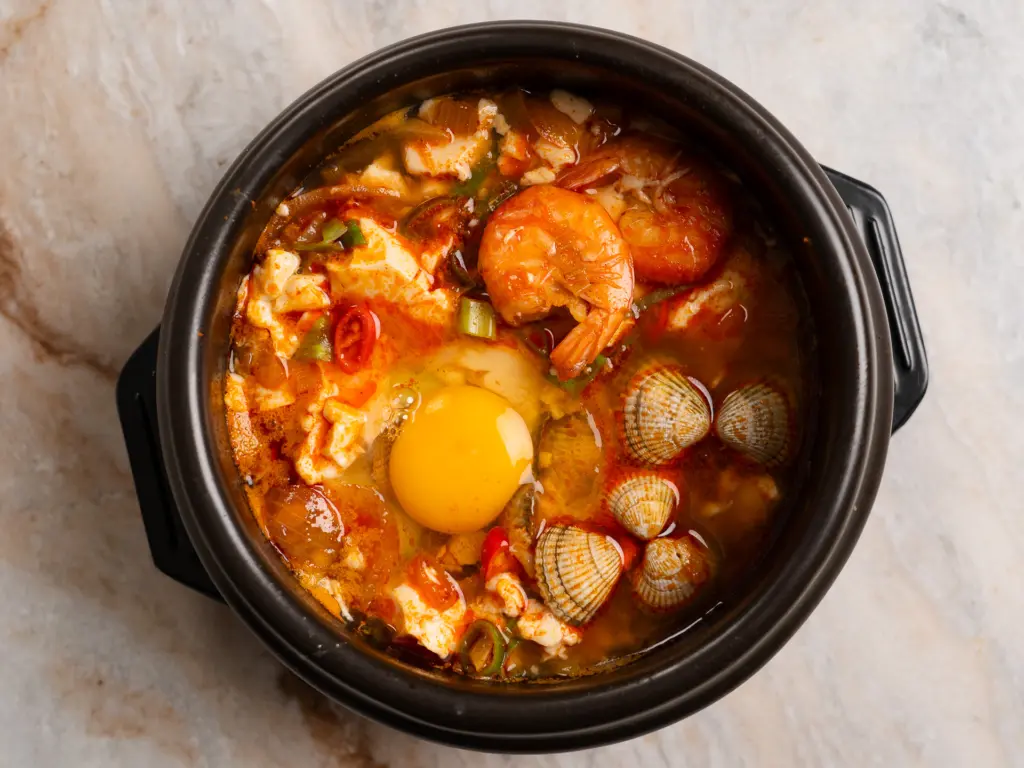
Easy Korean Seafood Sundubu Jjigae with Clams & Shrimp
A ttukbaegi is one of the most traditional Korean pots and an essential Korean cooking ware for making all types of Korean stews. If you’re debating between getting a dolsot (stone pot) or a ttukbaegi, start with the ttukbaegi. Dolsot is mainly used for cooking rice, but since most people use electric rice cookers, it’s not commonly used at home. However, ttukbaegi is a must for kimchi jjigae, sundubu jjigae, doenjang jjigae, and other stews.
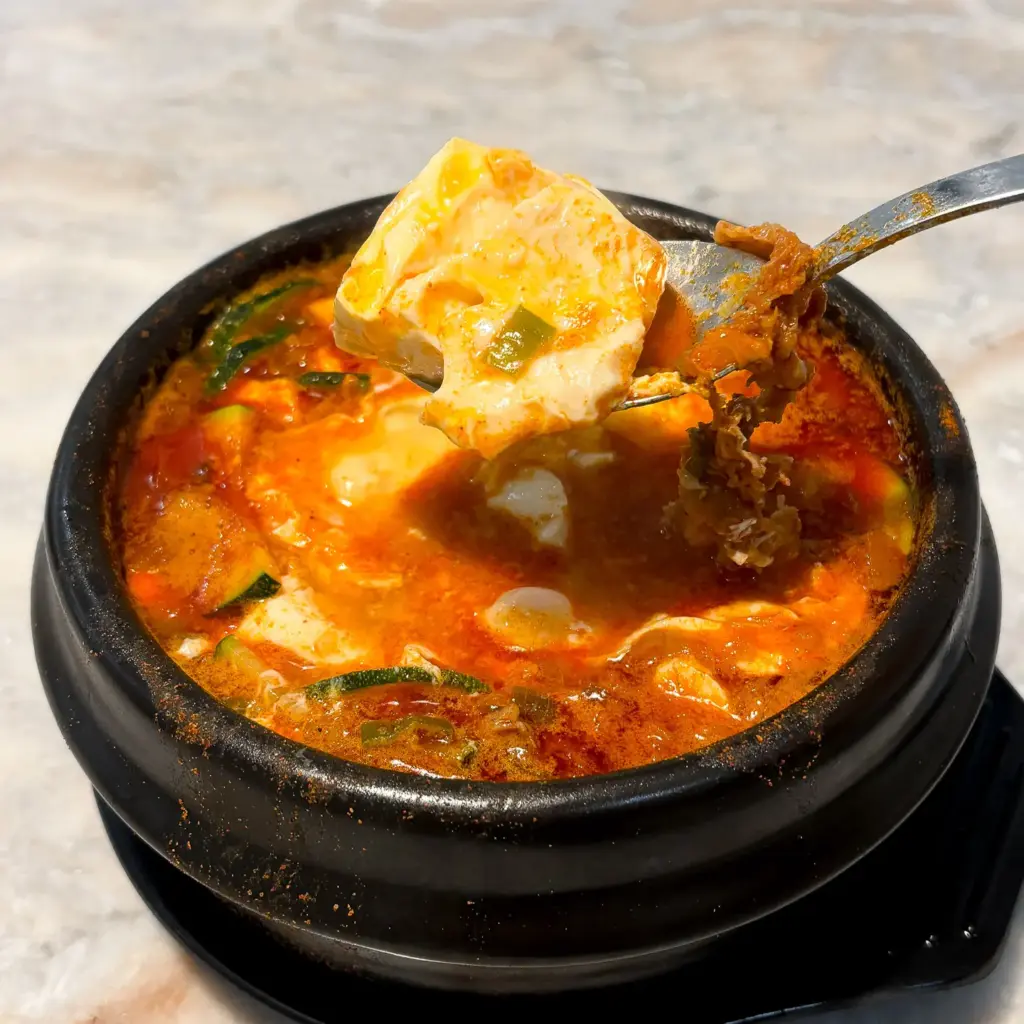
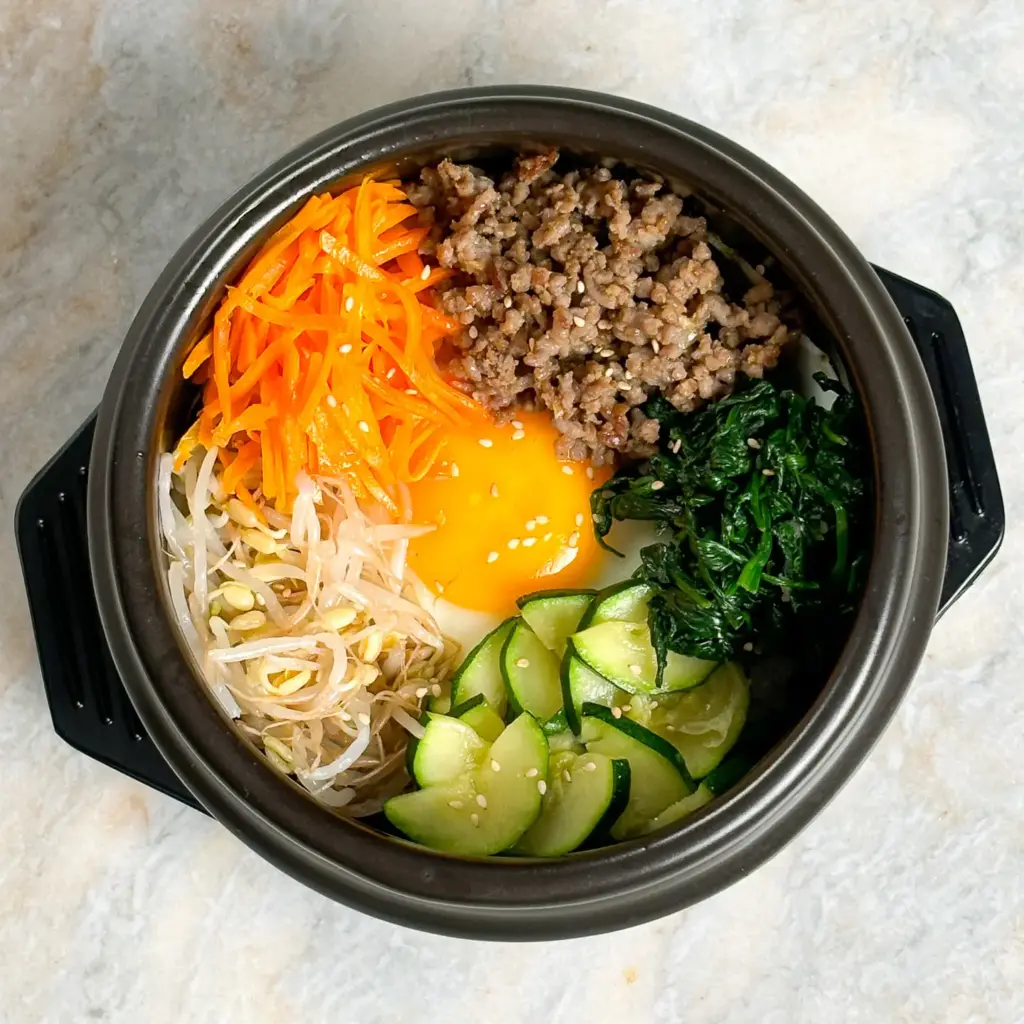
👉 [🥘 Shop Ttukbaegi for your authentic Korean jjigae stew]
Even if you don’t have a dolsot, you can make dolsot bibimbap in a ttukbaegi. While the amount of crisped rice on the bottom is different, you can still make a delicious dolsot bibimbap or pot rice in a ttukbaegi. Ideally, choose one with a lid for better heat retention.
Dolsot Bibimbap (Korean Stone Bowl Bibimbap)
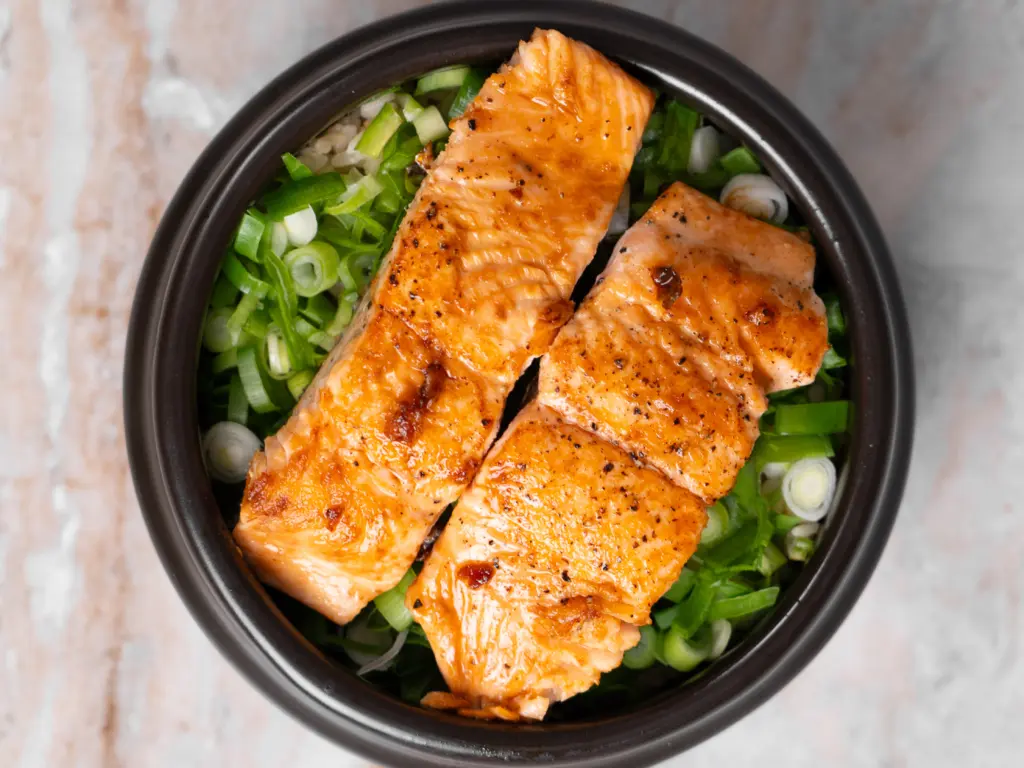
Salmon Pot Rice: Healthy Korean Diet Sotbap Recipe
👉 [🥘 Shop Korean earthenware pot on Amazon]
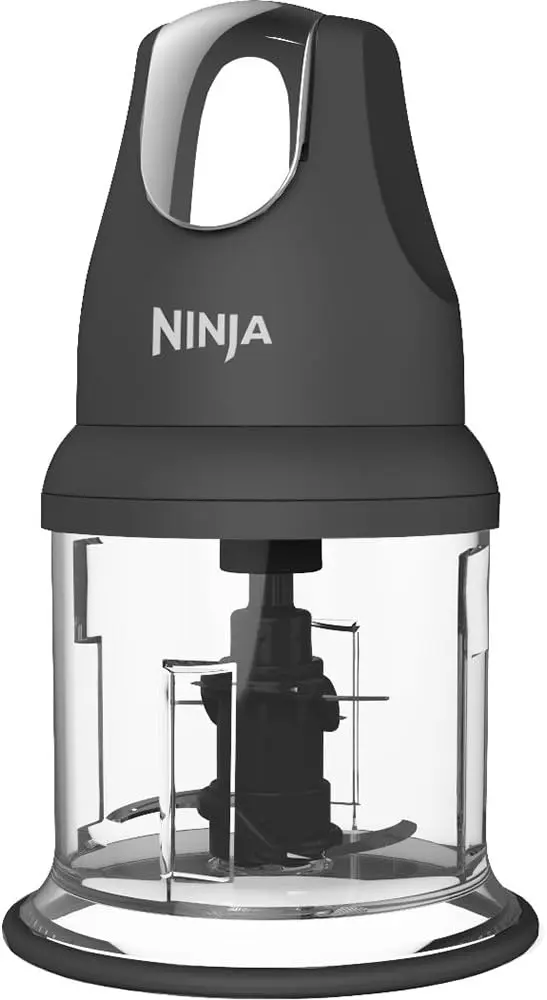
8. Food Chopper
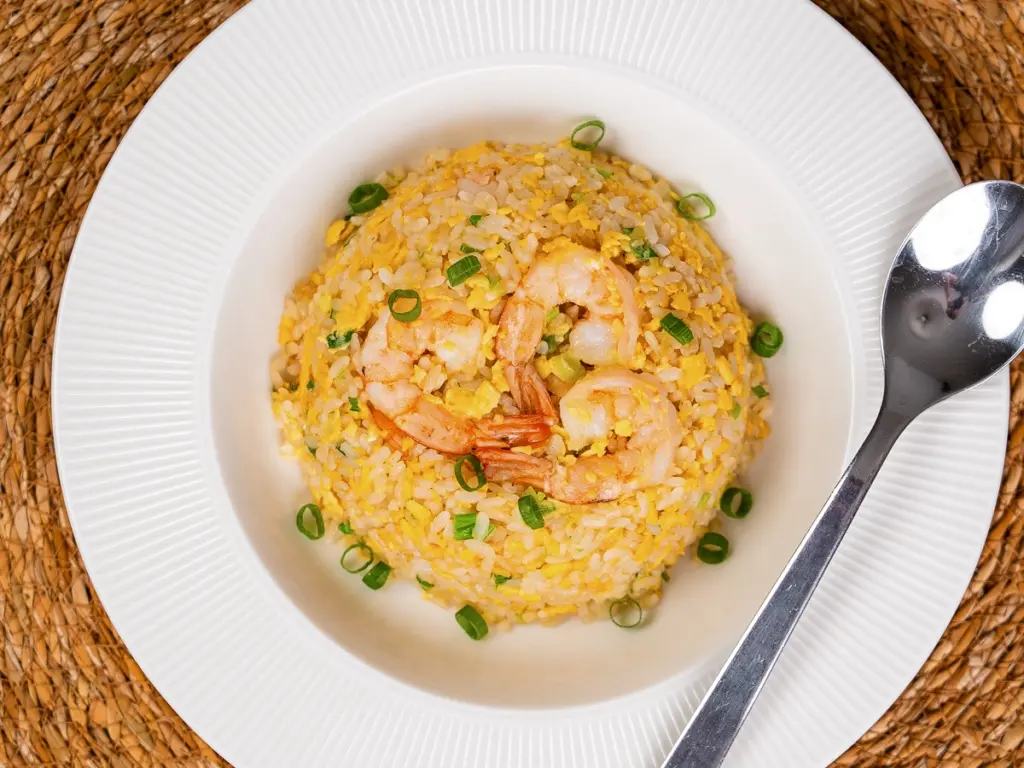
- Ideal for: Fried rice, Tteokgalbi (Korean grilled short rib patties) and Dong-geulangttaeng (Korean meat patties).
- Why it’s essential: Handles the most repetitive prep work in Korean cooking in seconds.
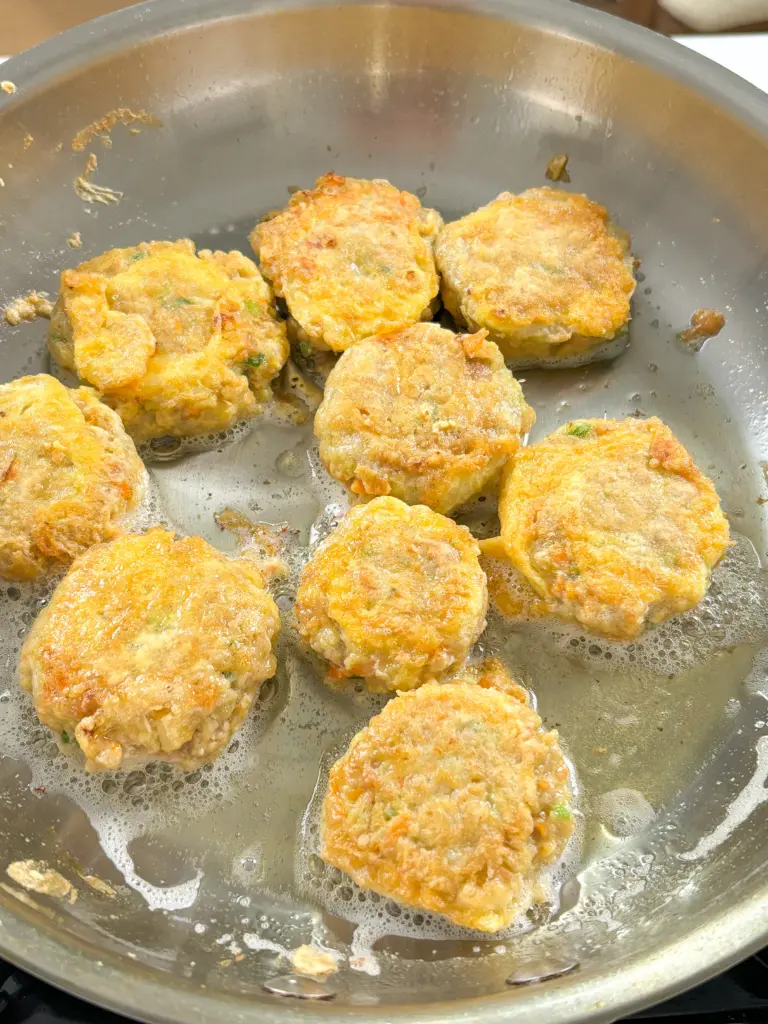
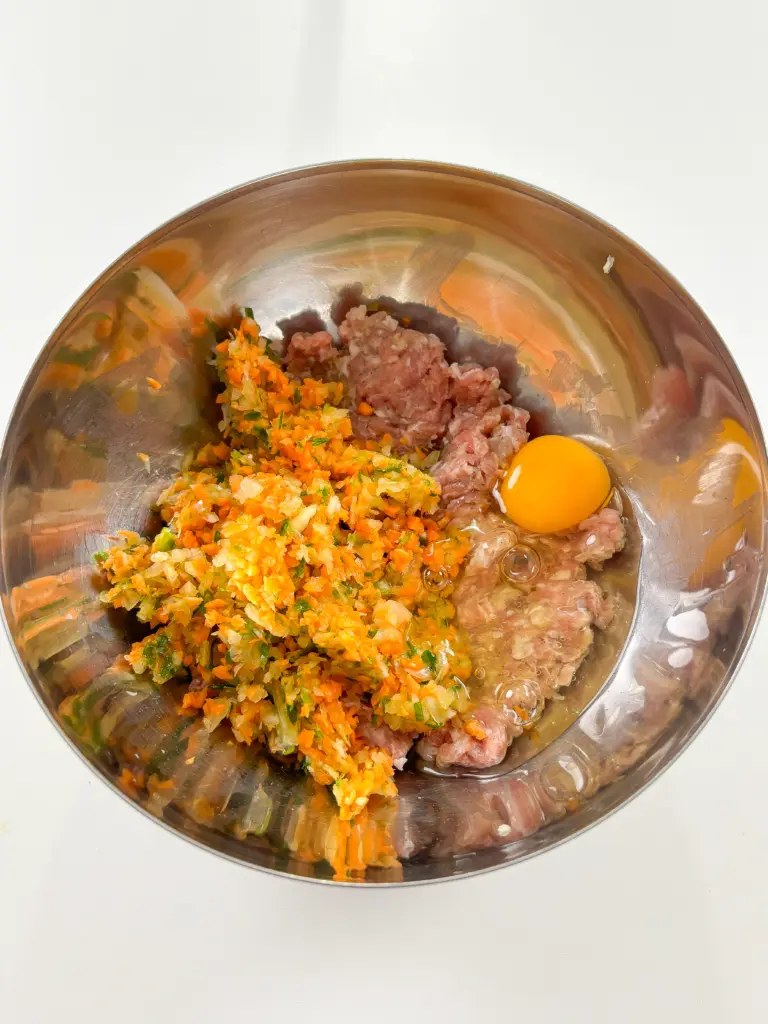
A food chopper might not be the first thing that comes to mind when you think of Korean kitchenware but once you start cooking Korean food regularly, you’ll wonder how you ever managed without one.
👉 [🥕 Shop Ninja food chopper on Amazon]
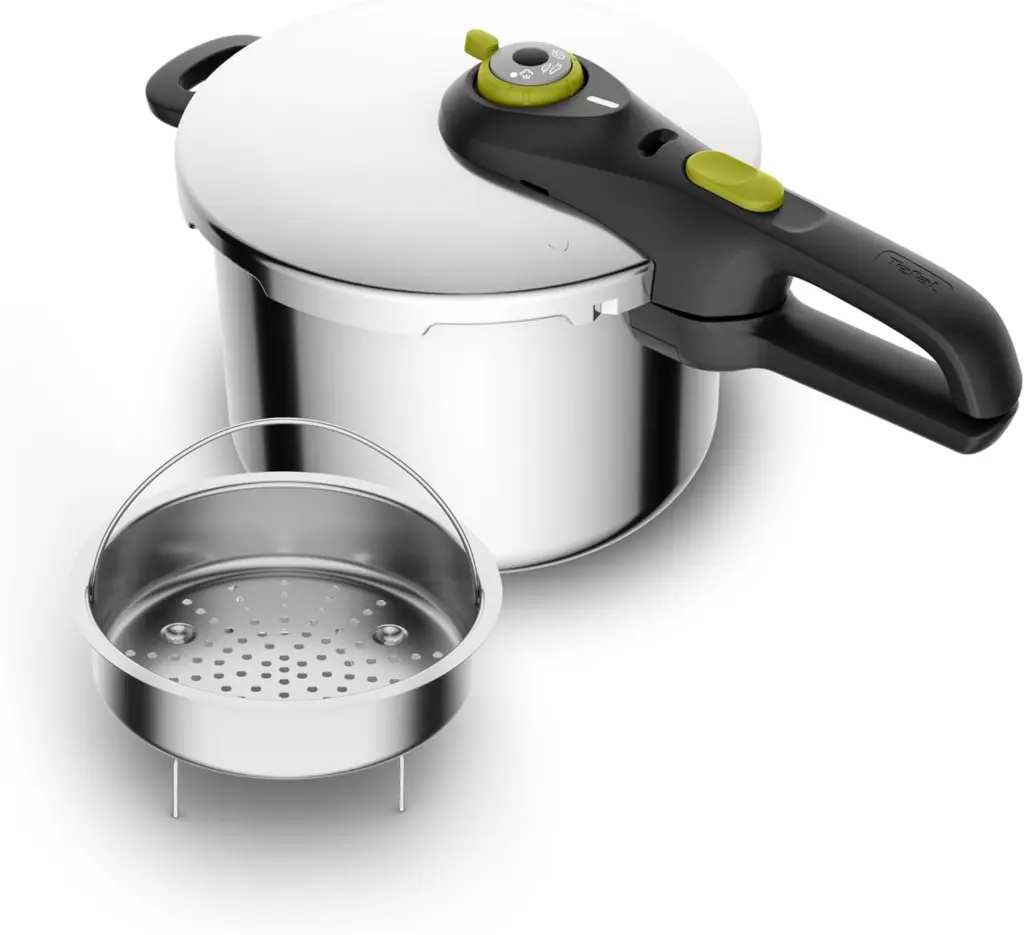
9. Pressure Cooker
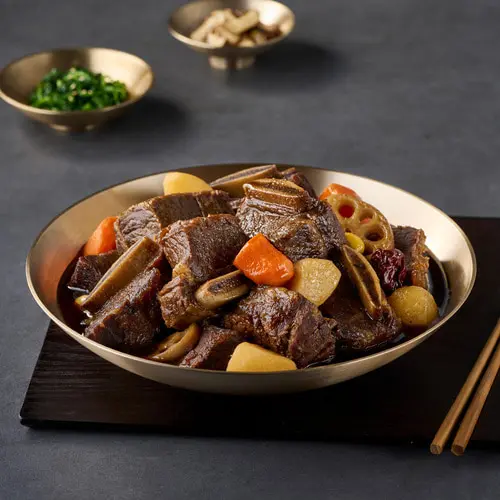
- Ideal for: Galbi Jjim (Korean braised short ribs), Samgyetang (Korean braised chicken), Bossam (Korean boiled pork).
- Why it’s essential: Cuts cooking time in half while making meat fall-off-the-bone tender and juicy.
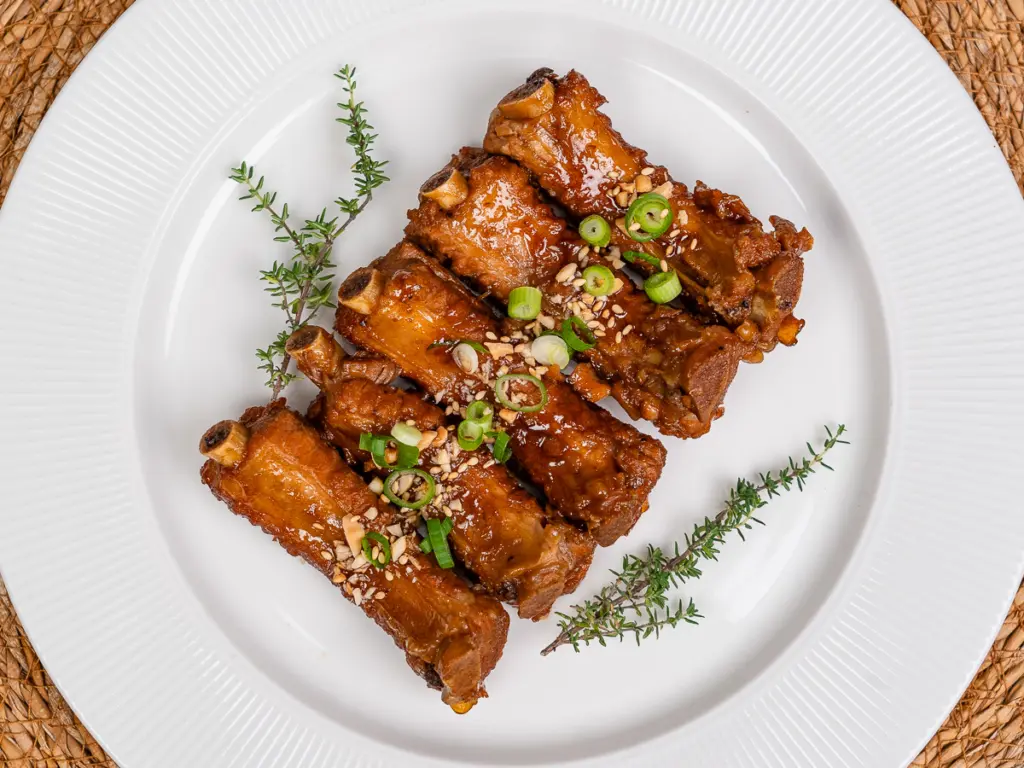
Korean Pork Ribs: Super Tender Sweet Soy Sauce Braised Ribs
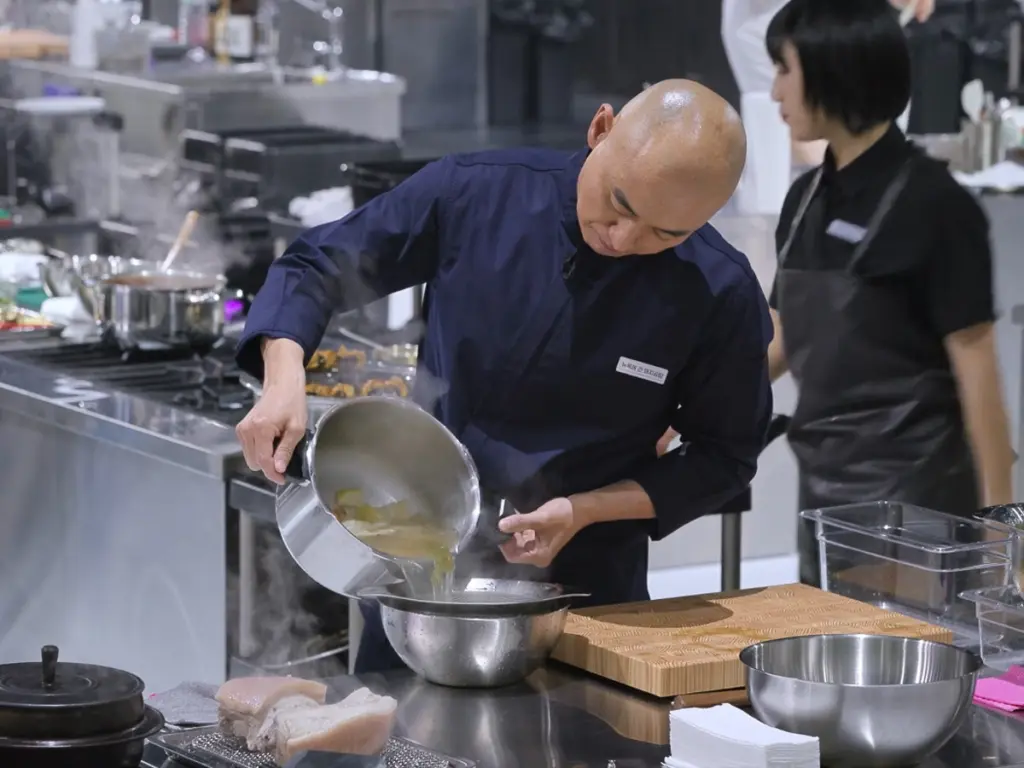
If you’ve watched Culinary Class Wars, you’ve probably noticed the chefs reaching for a pressure cooker constantly and for good reason. A pressure cooker is one of the most powerful tools in Korean cooking.
👉 [🥘Shop a pressure cooker on Amazon]
How Does a Pressure Cooker Work?
A pressure cooker seals in steam to raise the internal pressure, which raises the boiling point of water above 100°C.
This high-heat, high-pressure environment cooks food significantly faster than conventional methods, on average, cutting cooking time by half. Because the meat is cooked under pressure, it becomes incredibly tender and juicy while retaining more nutrients than long stovetop boiling.
👉 [🥘Shop a pressure cooker for your tender meat in a short time]
10. Dolsot (Korean Stone Pot)
- Ideal for: Dolsot Bibimbap, Korean Stone Pot Rice
- Why it’s essential: Creates perfectly chewy warm rice with a crispy nurungji base, from the first bite to the last.
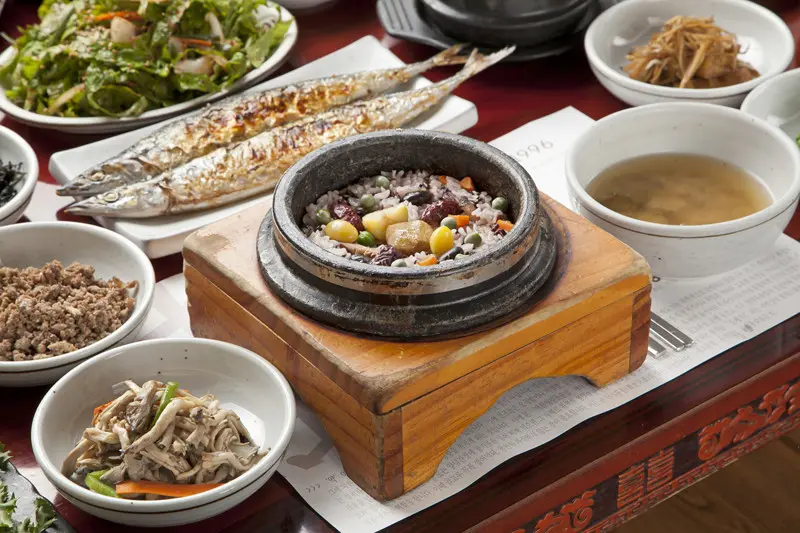
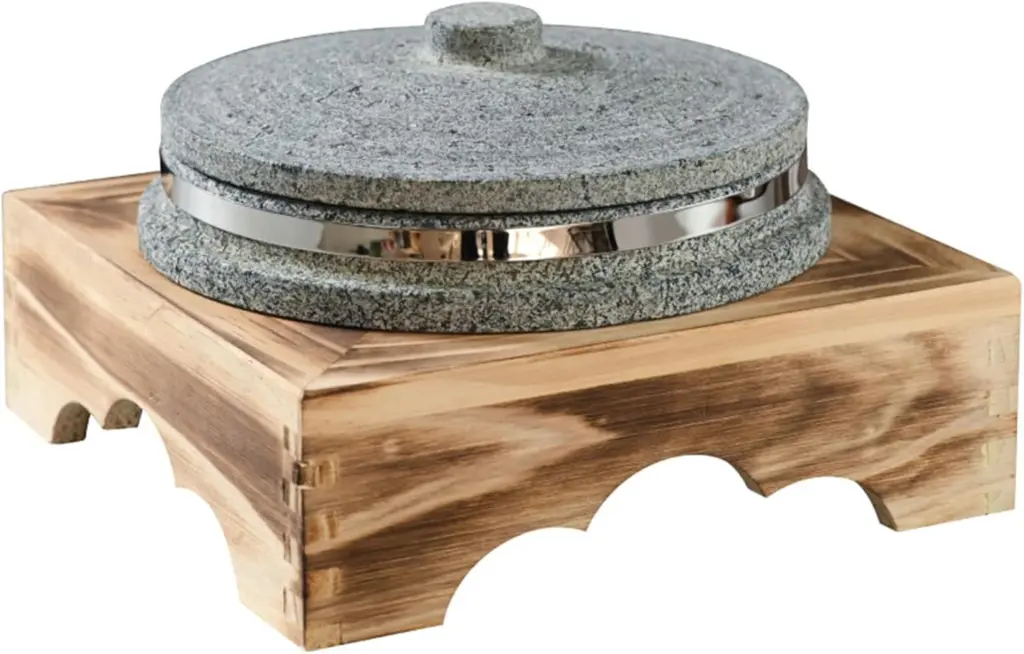
The dolsot (Korean stone pot) is the secret behind one of the most satisfying textures in Korean food: crispy nurungji rice at the bottom of a piping hot bowl.
👉 [🍚 Shop Korean Dolsot for pot rice on Amazon]
What Makes Dolsot Special?
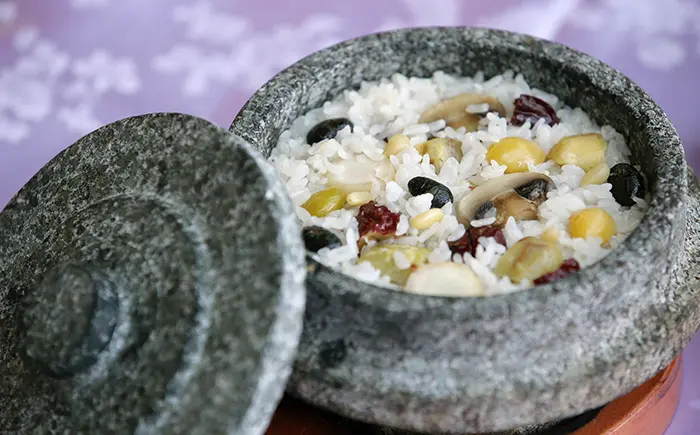
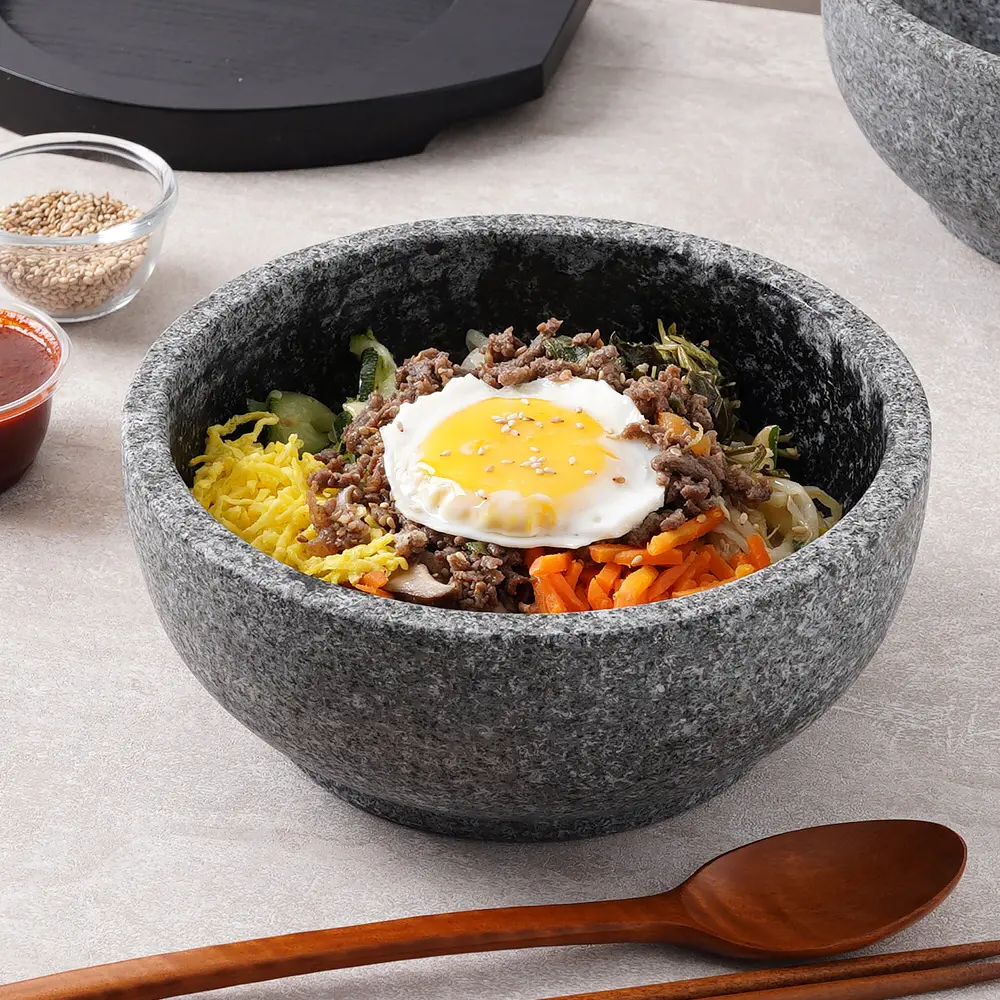
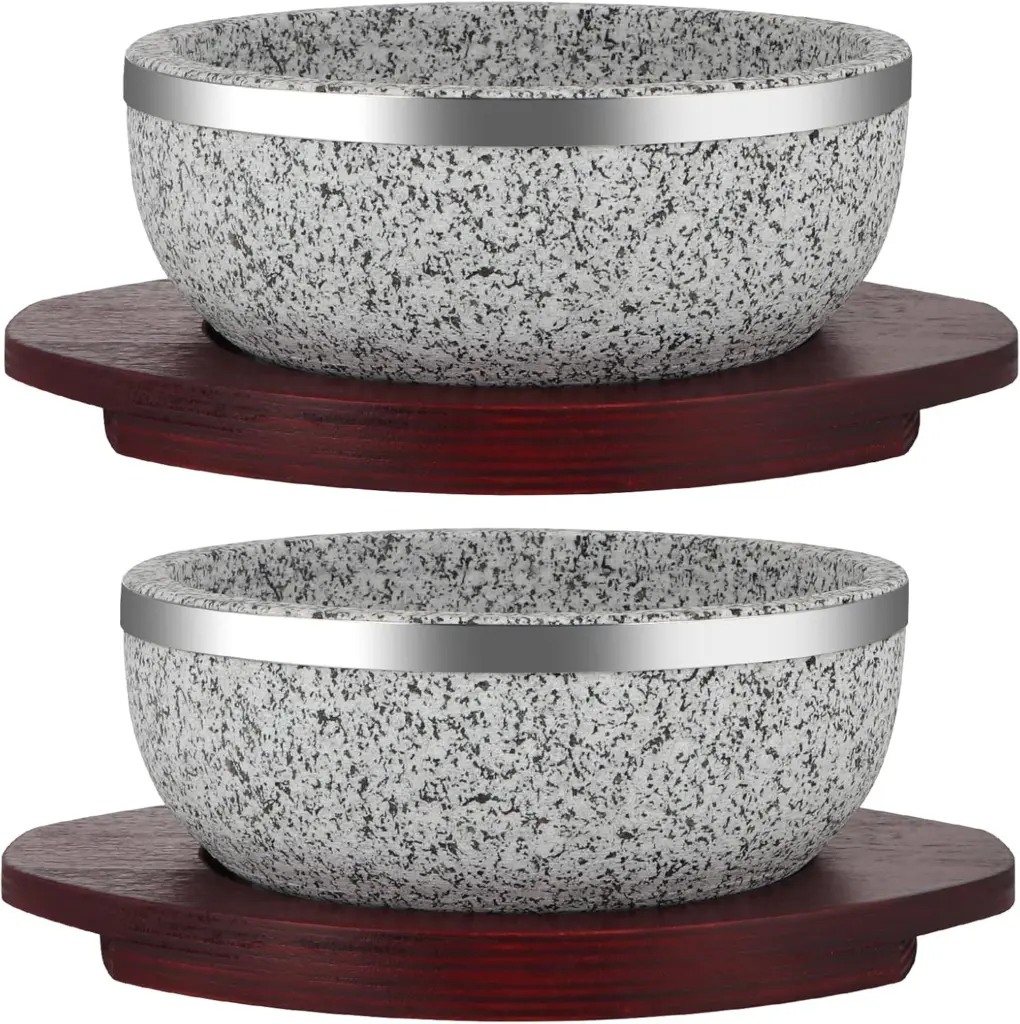
A dolsot is a small stone pot carved from a special mineral stone called gobdol. It’s the same pot you see served sizzling at Korean bibimbap restaurants.
👉 [🍚 Shop stone pot on Amazon]
Its exceptional heat retention keeps your rice hot from the very first bite all the way to the end of the meal and the intense heat from the stone creates nurungji, a golden crispy layer of scorched rice at the bottom that adds an incredible crunch.
Beyond bibimbap, dolsot is used for sotbap (pot rice) Korean stone pot rice cooked with ingredients like salmon, mushrooms, or marinated meat. And once you’ve finished eating, pour hot water over the remaining nurungji to make sungnyung (water with nurungji), a traditional roasted rice water that Koreans have enjoyed for centuries as a light, nutty after-meal drink.
👉 [🌶 Shop Dolsot for Bibimbap on Amazon]
Once you eat bibimbap from a dolsot, the regular bowl version just doesn’t hit the same.