
Healthy Tuna Kimchi Jjigae Without Gochujang (Low Calories)

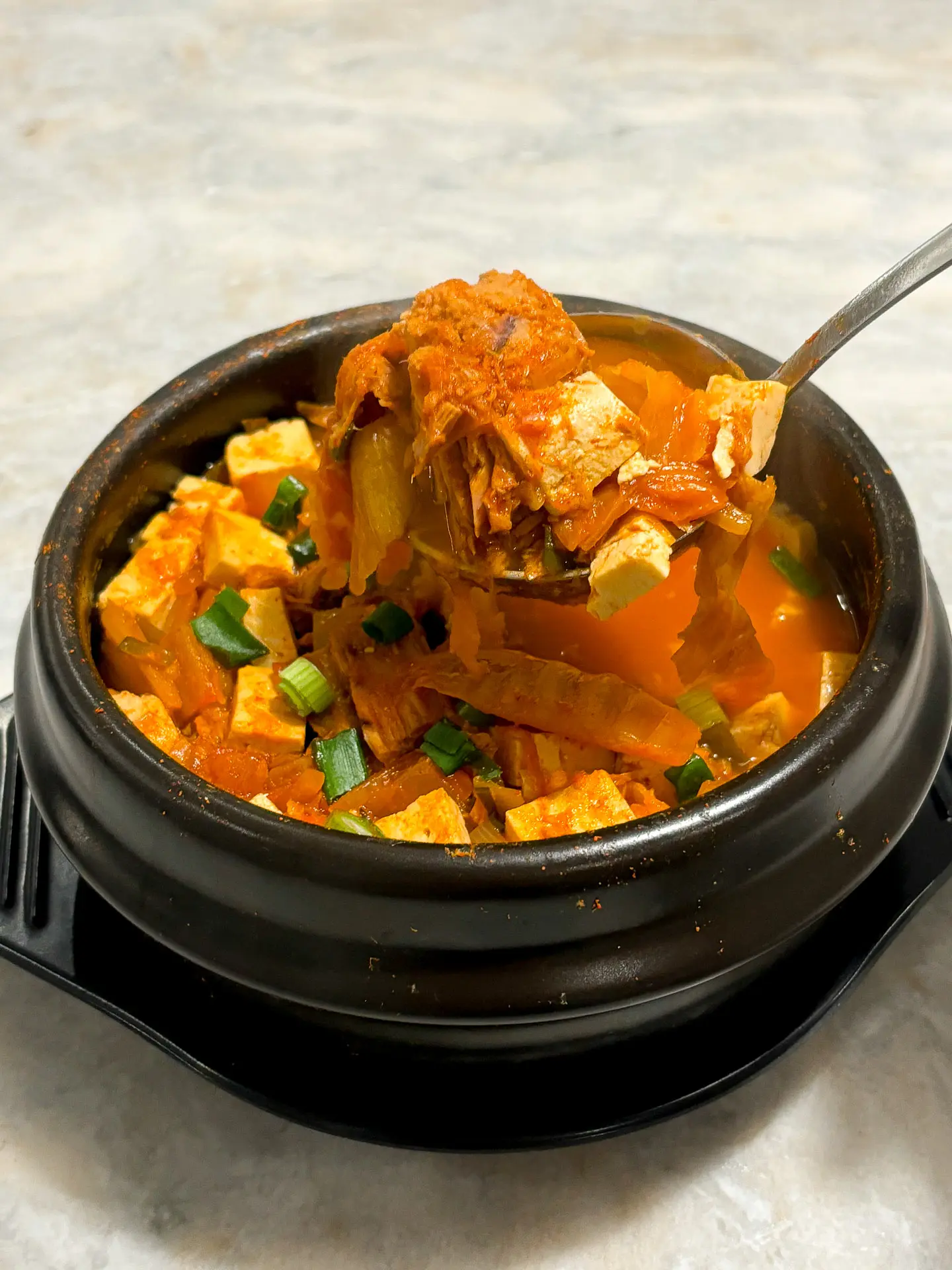
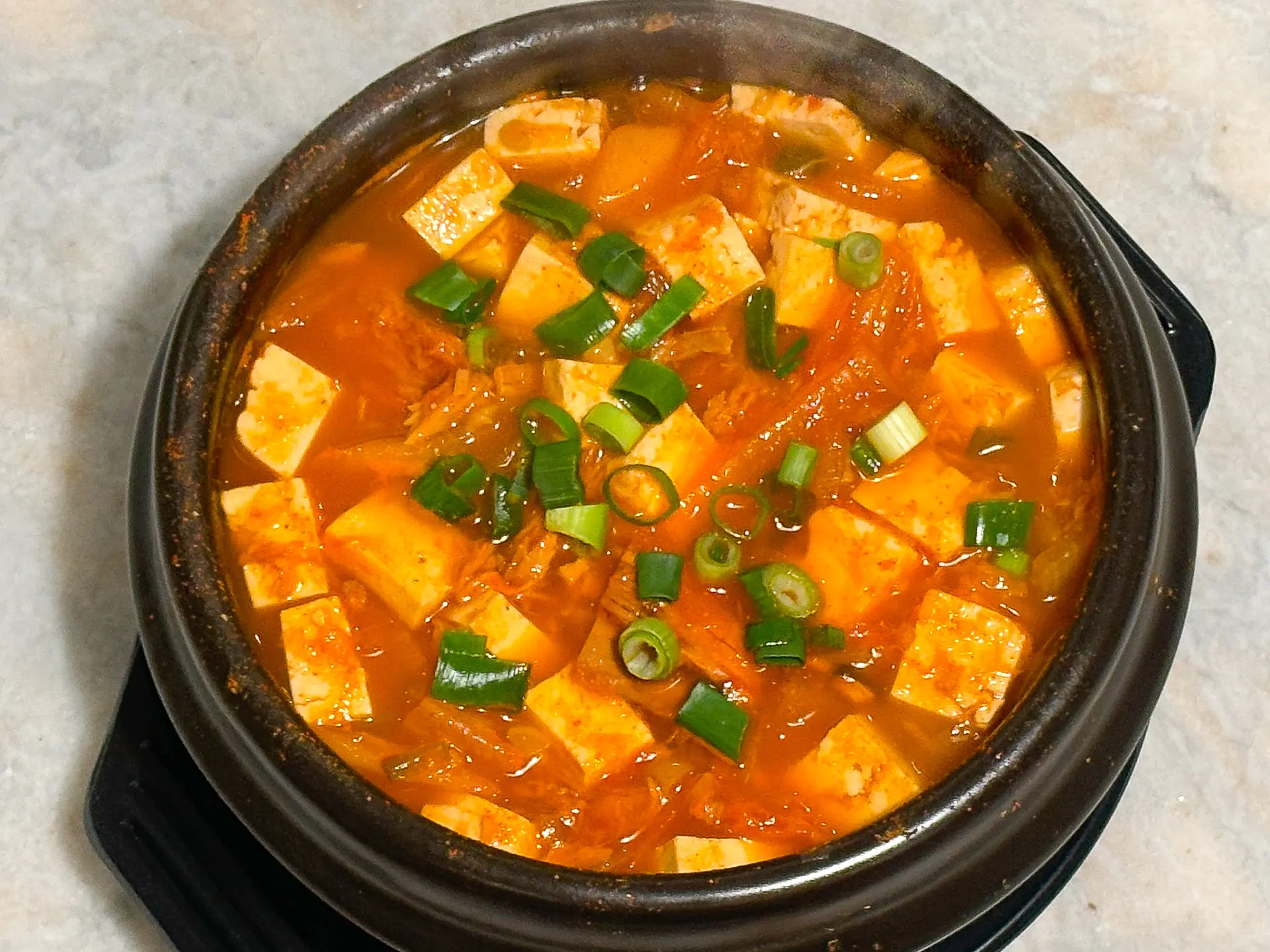
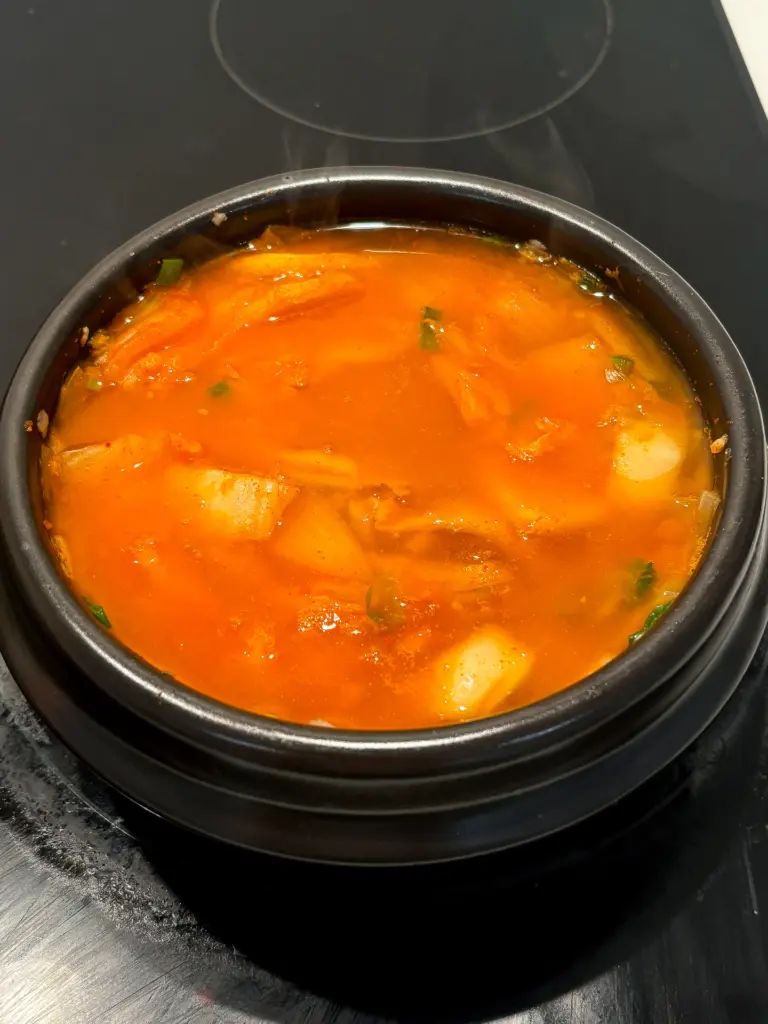
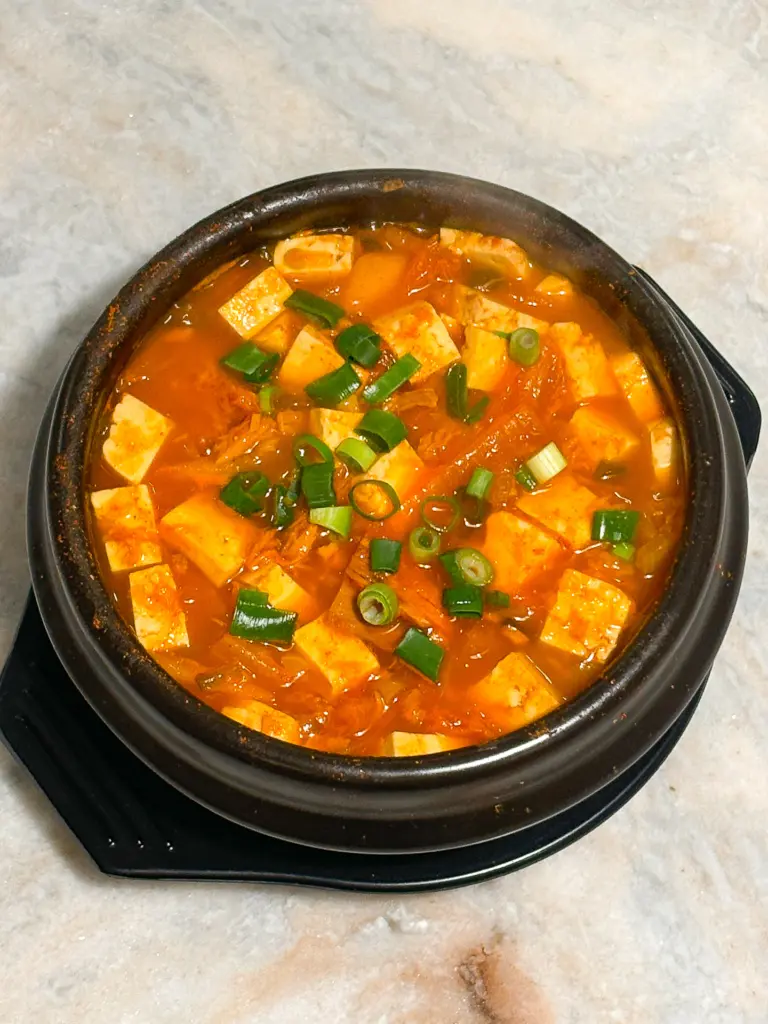
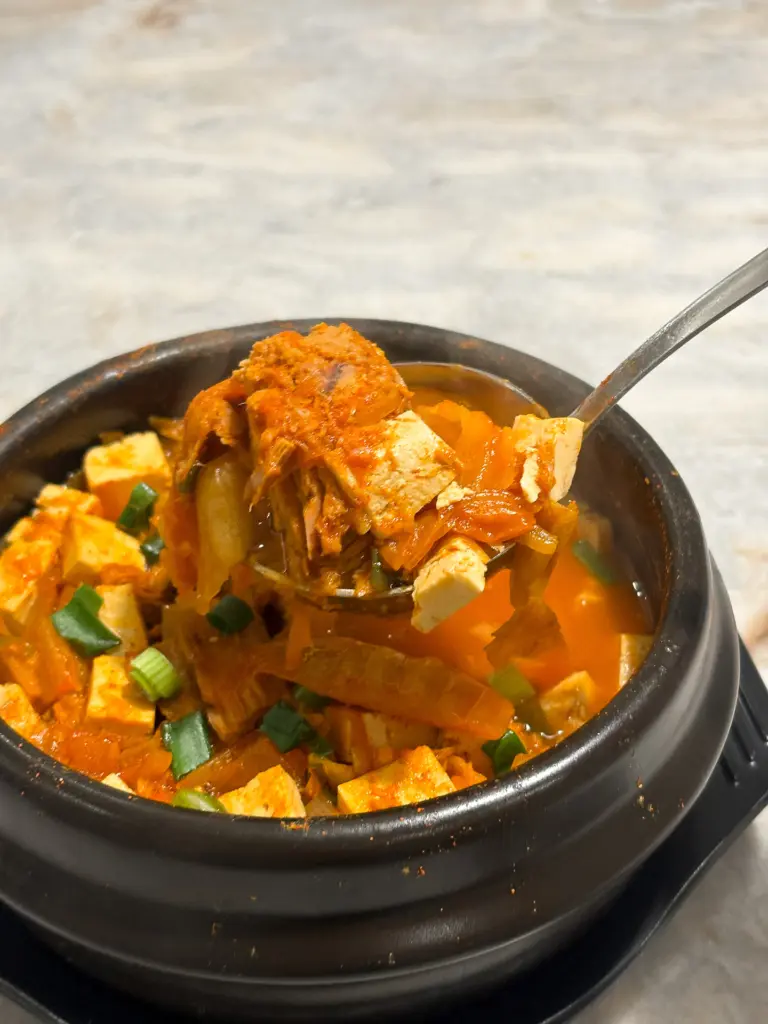
Tuna kimchi jjigae is one of the most popular Korean home stews, and this healthy version is made without gochujang and with fewer calories. In this recipe, I will show you how to make kimchi stew with tuna the authentic Korean way, using canned tuna, aged kimchi, and a few secret ingredients for deep umami flavor.
This kimchi jjigae without gochujang is lighter than pork kimchi jjigae and contains only 180 calories per serving, making it a perfect healthy Korean stew for weeknight meals. If you are looking for a real tuna kimchi jjigae recipe, lower in fat but full of bold Korean flavor, you are in the right place.
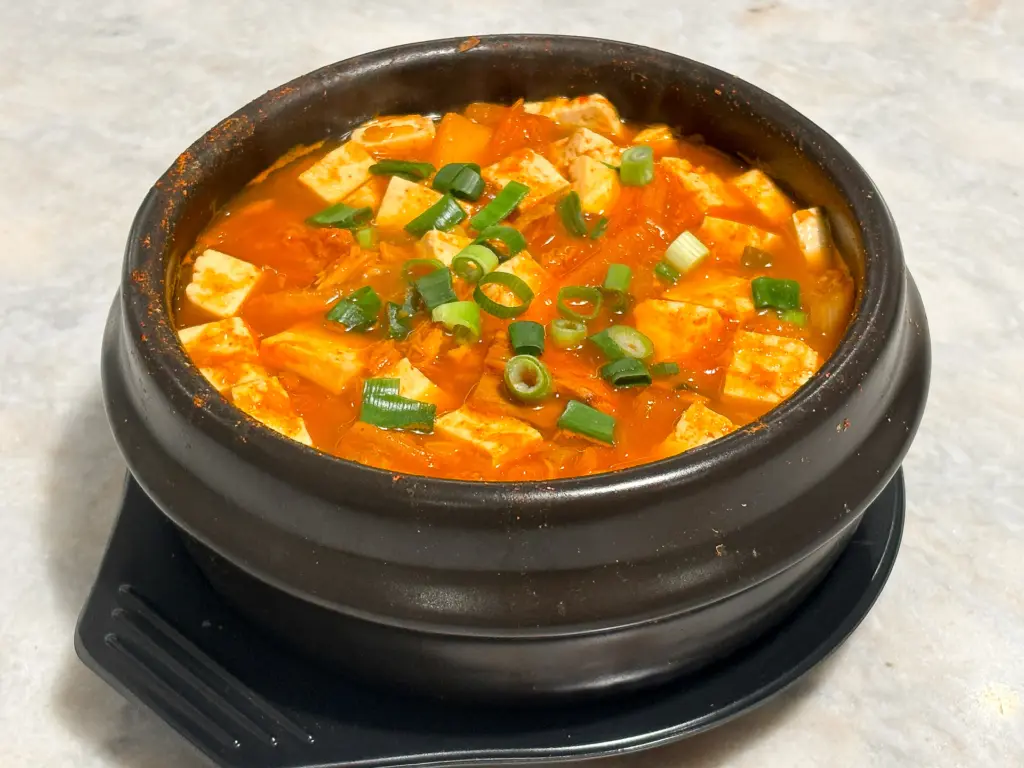
What Is Tuna Kimchi Jjigae Made Of?
Kimchi jjigae(김치찌개) is a stew in which kimchi is the main ingredient. You might ask, “What does jjigae mean in Korean? Jjigae(찌개) refers to a Korean-style stew.
In kimchi jjigae, kimchi is the main ingredient, while ingredients such as pork or canned tuna are often added to enhance the depth of flavor of the broth. Some variations use Pacific saury (kkongchi), sausage, or Spam(ham). In the Gyeongsang-do region, people even make anchovy-based kimchi jjigae.
Other common ingredients include green onions, garlic, and tofu. Some people also add mushrooms for extra texture and nutrition. To increase the umami in the broth, fish sauce or other secret ingredients can be used. And today, I’m going to share those secret ingredients with you in my recipe!

Why This Kimchi Jjigae Is Made Without Gochujang
I’ve noticed that many non-Korean recipes for kimchi jjigae call for gochujang. There is no absolute right or wrong in cooking, so I can’t say that these recipes are wrong. But I can guarantee that most Koreans do not put gochujang in kimchi jjigae.
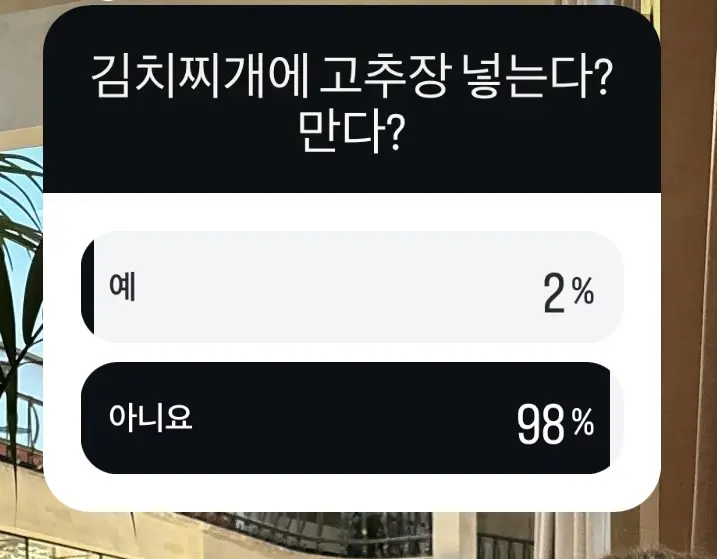

In fact, I have proof-I asked Koreans, “Do you put gochujang in kimchi jjigae?” and 98% said no. Of course, that doesn’t represent every single Korean, but it shows that most people don’t use it. I also got DMs saying, “If you add gochujang, it’s gochujang jjigae, not kimchi jjigae!” I also got DMs saying, “If you add gochujang, it’s gochujang jjigae.”
In the end, it’s up to you whether you use gochujang or not. But if you want to recreate the authentic kimchi jjigae flavor you had in Korea, skip the gochujang today and follow my recipe instead. You’ll be amazed! This recipe proves that kimchi jjigae without gochujang can still be deeply flavorful, spicy, and rich.
Most Korean households make tuna kimchi jjigae without gochujang because aged kimchi already provides enough depth and natural spice. If you want an authentic taste, skip the paste and try this kimchi jjigae without gochujang just like Koreans do at home.
Ingredients for Healthy Tuna Kimchi Stew
Main Ingredients:
- 1 can Tuna (150g) — Don’t drain the oil!
- 1/4 head Aged Kimchi (Cut into bite-sized pieces)
- 1/2 block Tofu (Sliced)
- 1/2 Onion (Diced)
- 1/2 stalk Green Onion (Sliced)
The Secret Broth & Seasoning (No Gochujang):
- 400ml Water
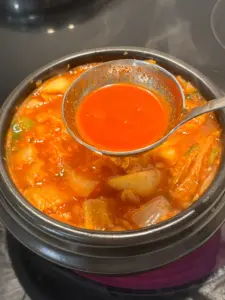
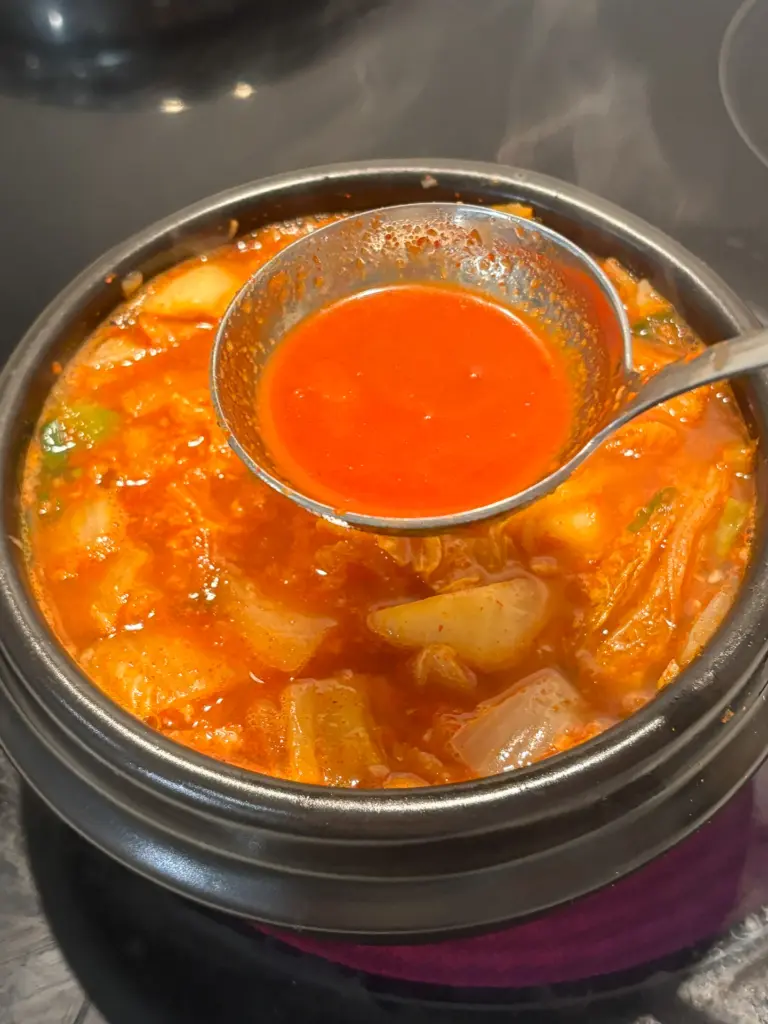
- 1/2 ladle Kimchi Juice (For deep flavor)
- 1 tbsp Minced Garlic
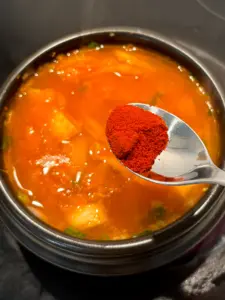
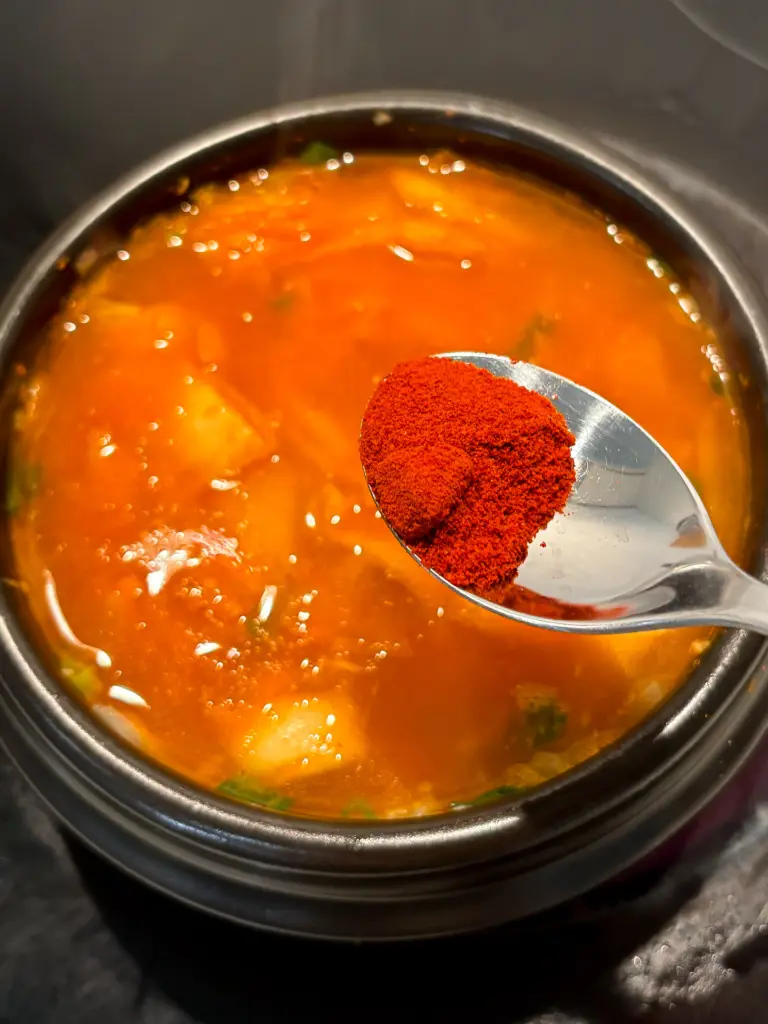
- 1/2 tbsp Korean Chili Powder (Gochugaru)
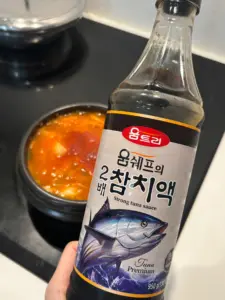
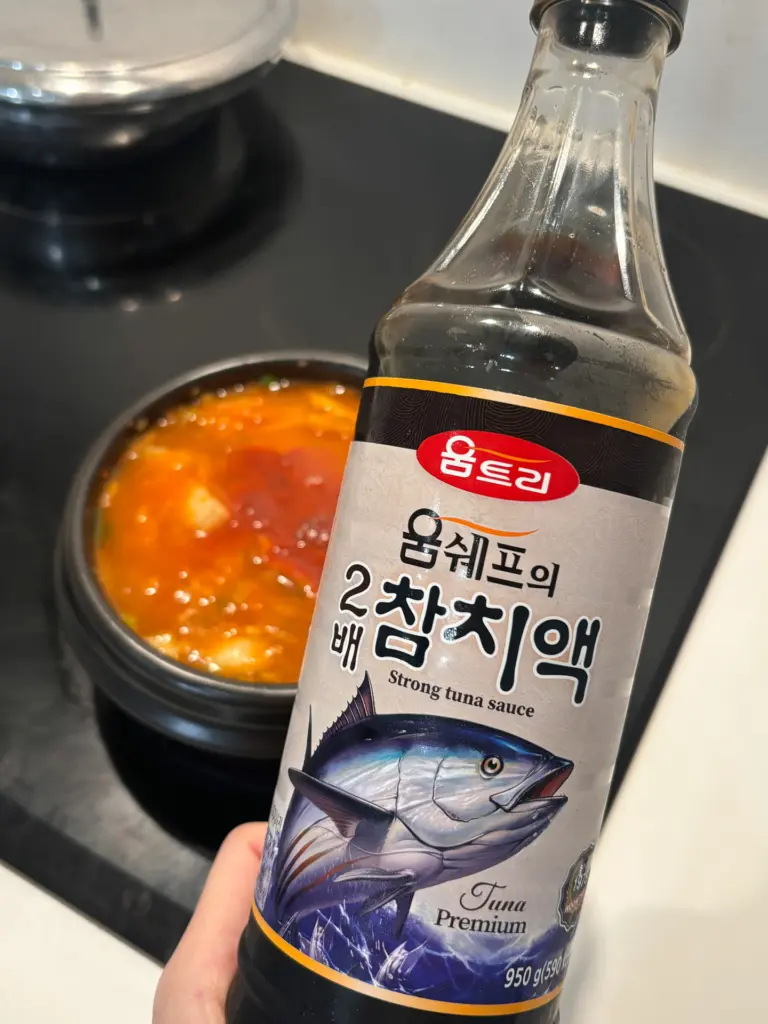
- 2 tbsp Tuna Fish Sauce (or 1 tbsp Anchovy Fish Sauce)
- 0.5 tbsp Sugar (To balance the kimchi acidity)
- Secret Kick: 1 tbsp Korean Brown Rice Vinegar (Added at the end)
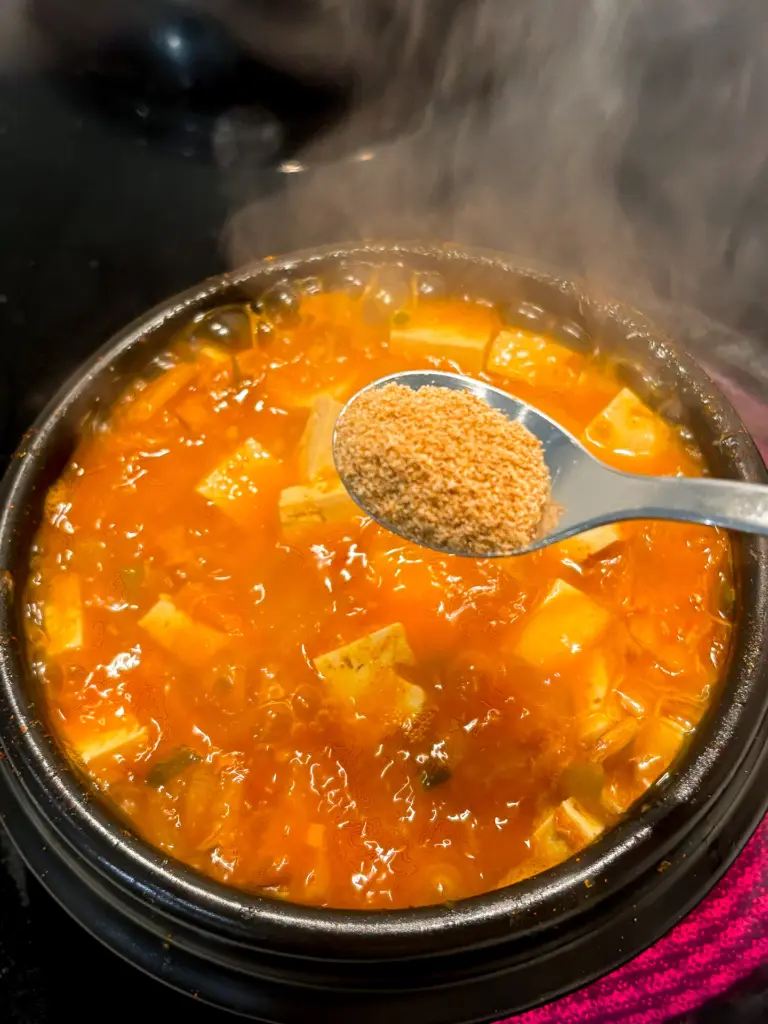
- Optional: 1 tsp Anchovy Dashi Powder for restaurant-style taste.
Step-by-Step Instructions (Authentic Way)
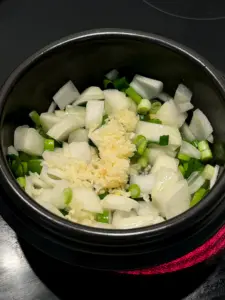
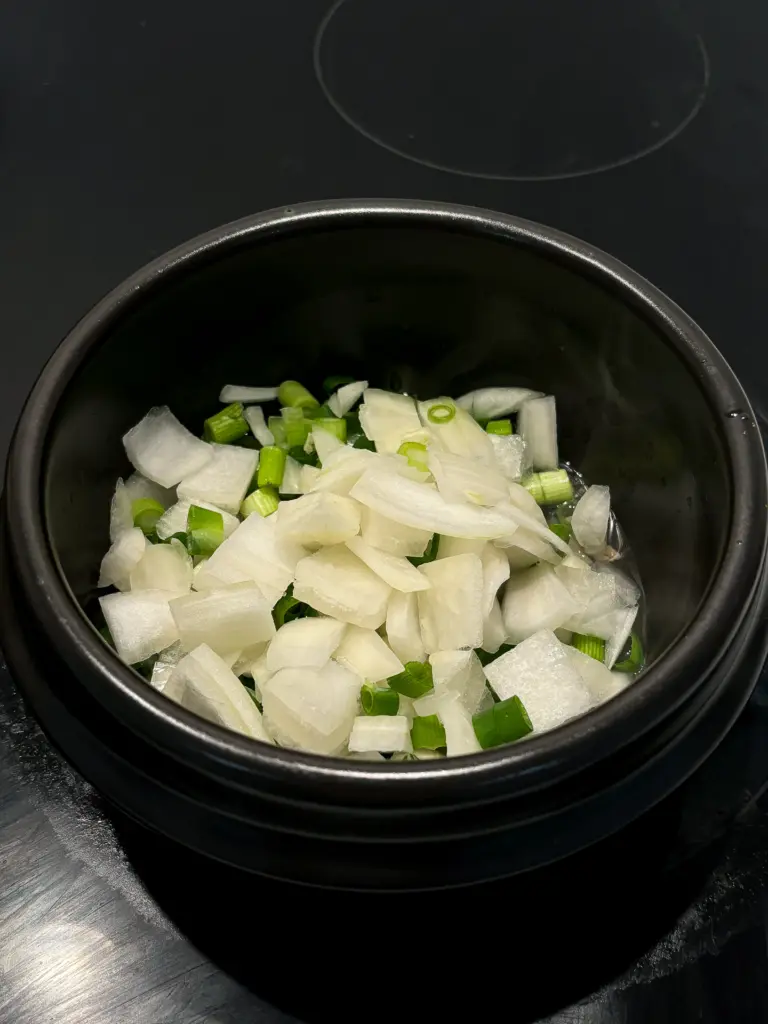
1. Sauté the Aromatics Heat 2 tbsp of cooking oil in a stone pot (Ddukbaegi) or small pot. Add the tuna oil from the can, diced onions, and green onions. Stir-fry until the onions become translucent.
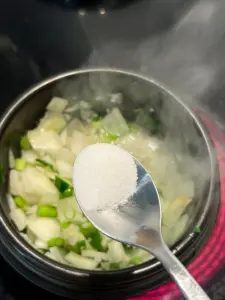
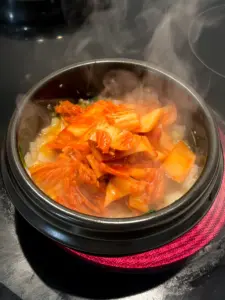
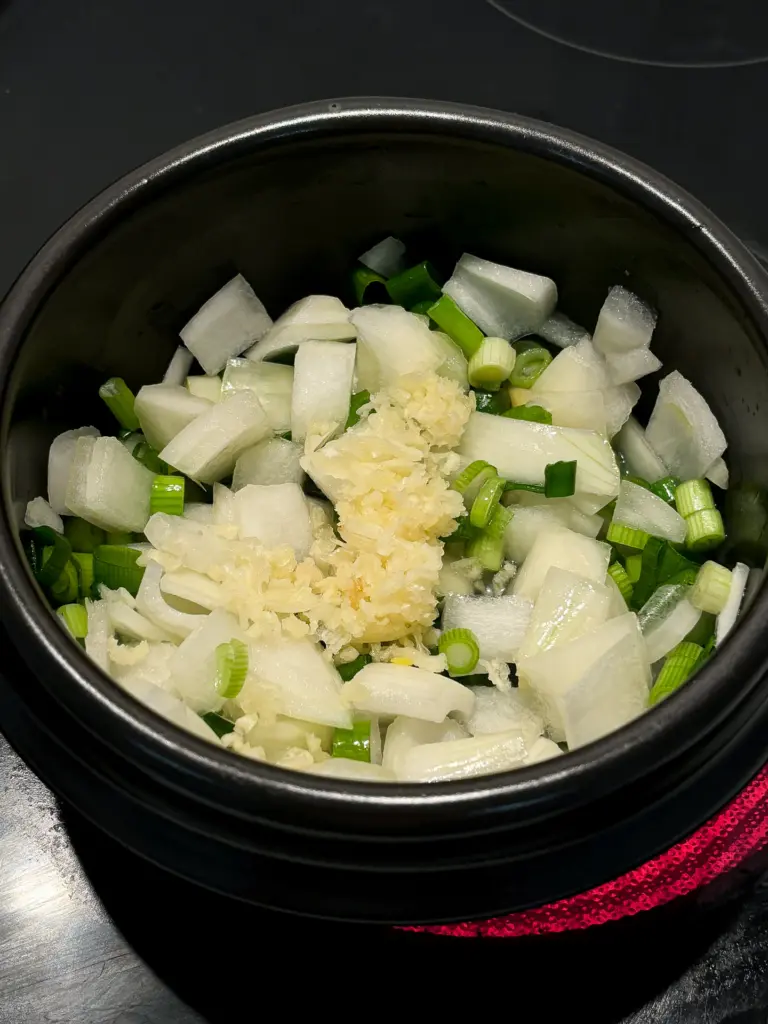
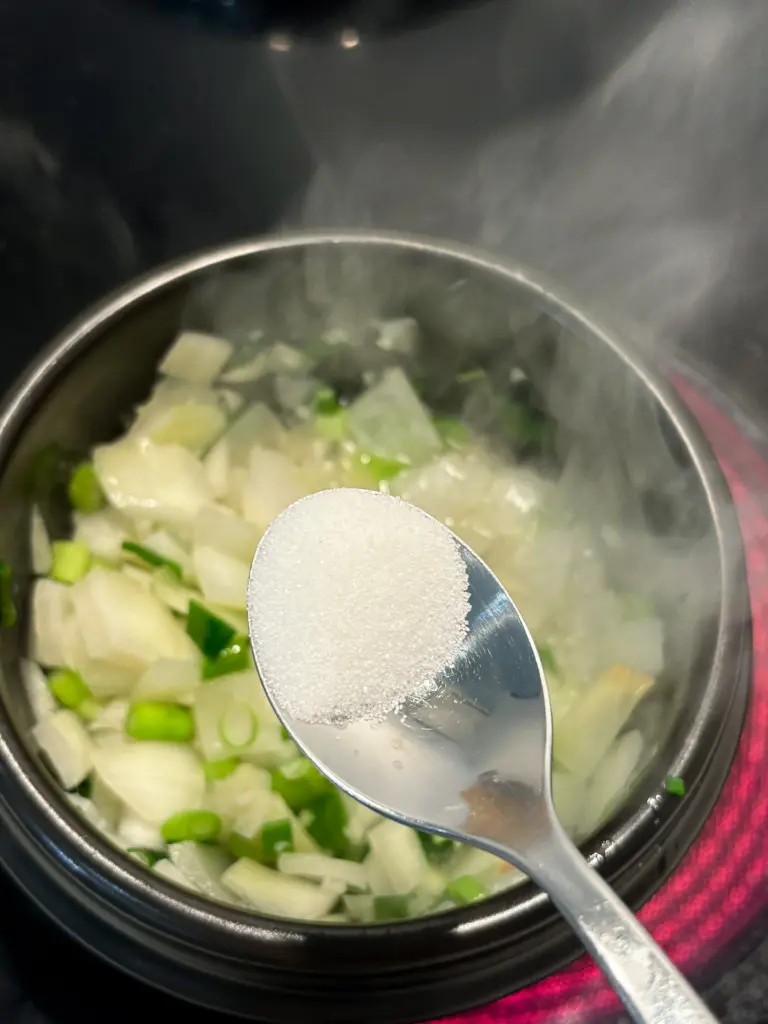
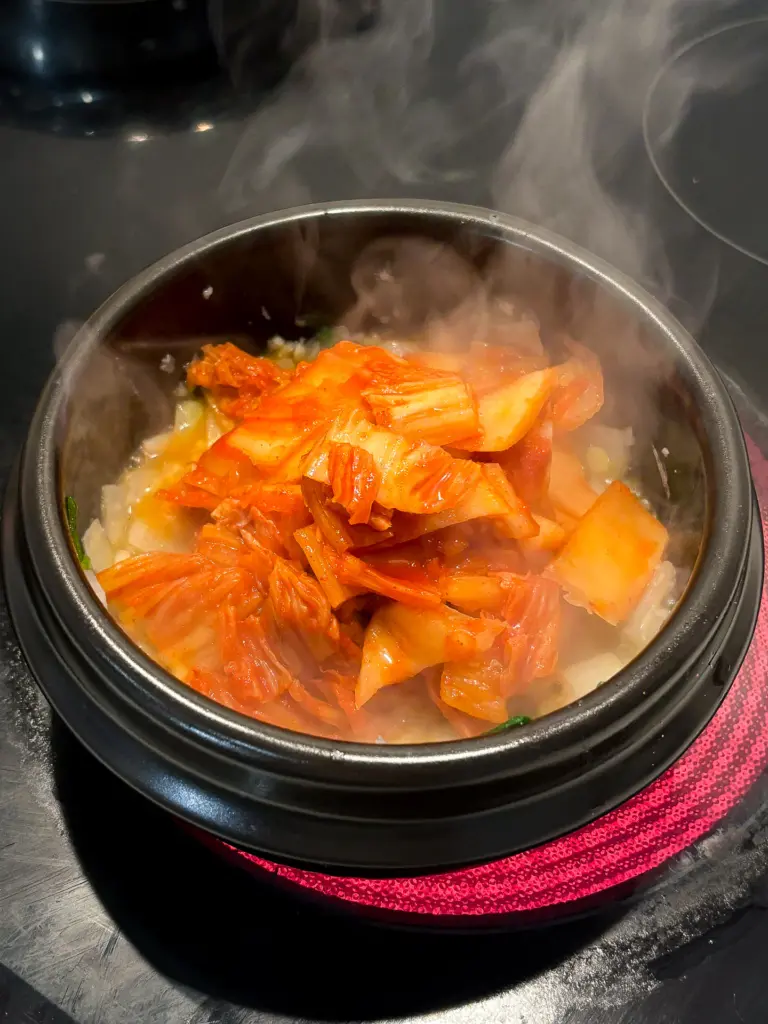
2. Caramelize the Kimchi Add the minced garlic and 0.5 tbsp of sugar. Add the chopped kimchi and stir-fry thoroughly until the kimchi softens. This step is crucial for an authentic, deep flavor.
3. Build the Broth Pour in 400ml of water and add the kimchi juice. Season with Gochugaru (chili powder), tuna fish sauce, and anchovy sauce. Bring the stew to a boil over medium-high heat.
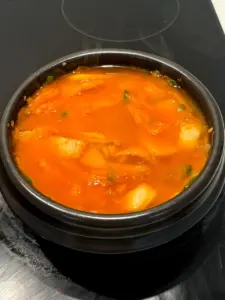
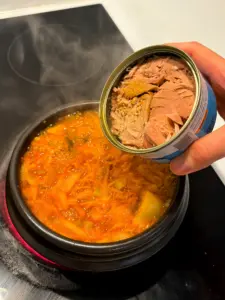
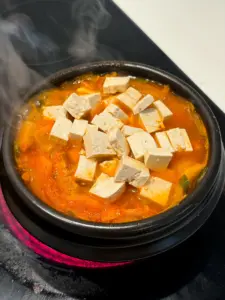
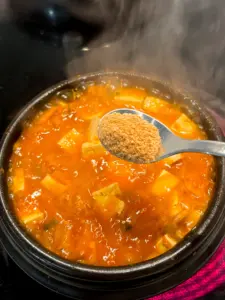
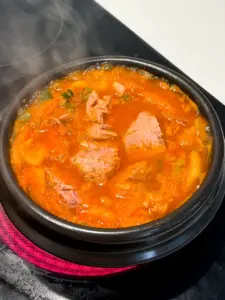
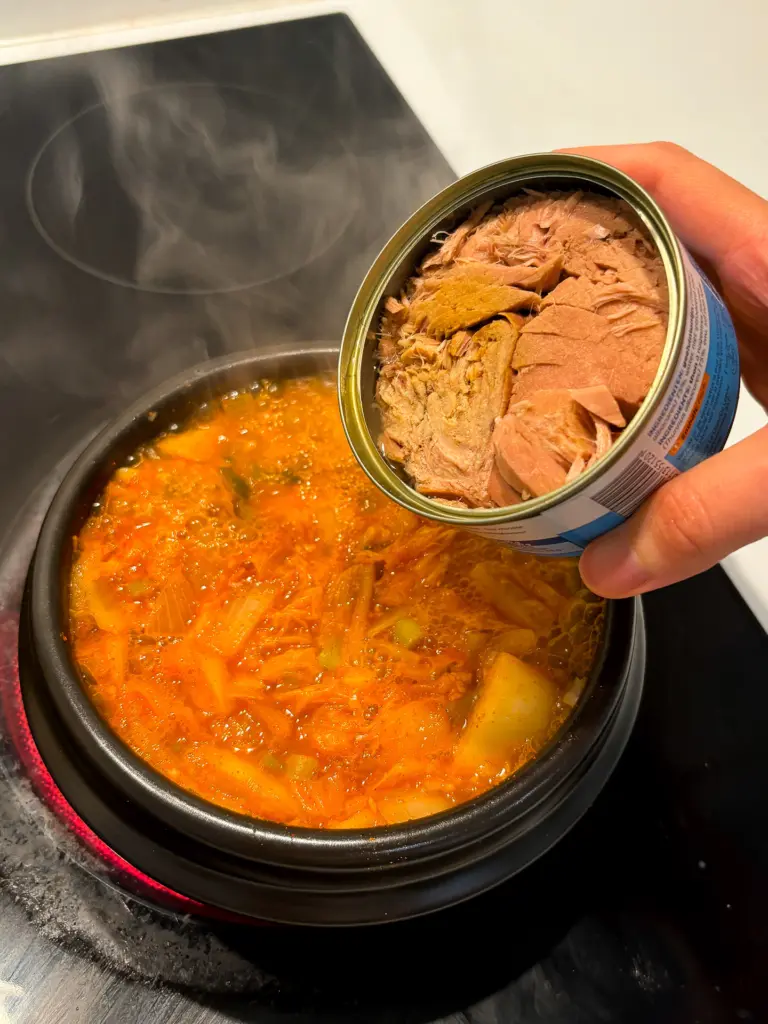
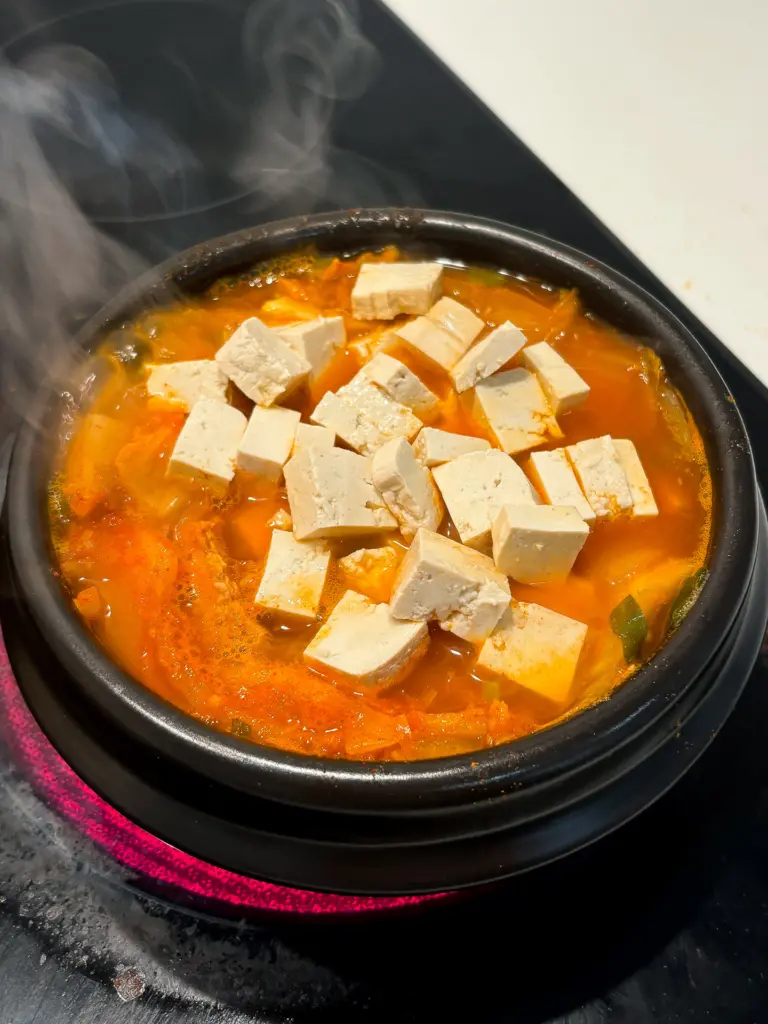
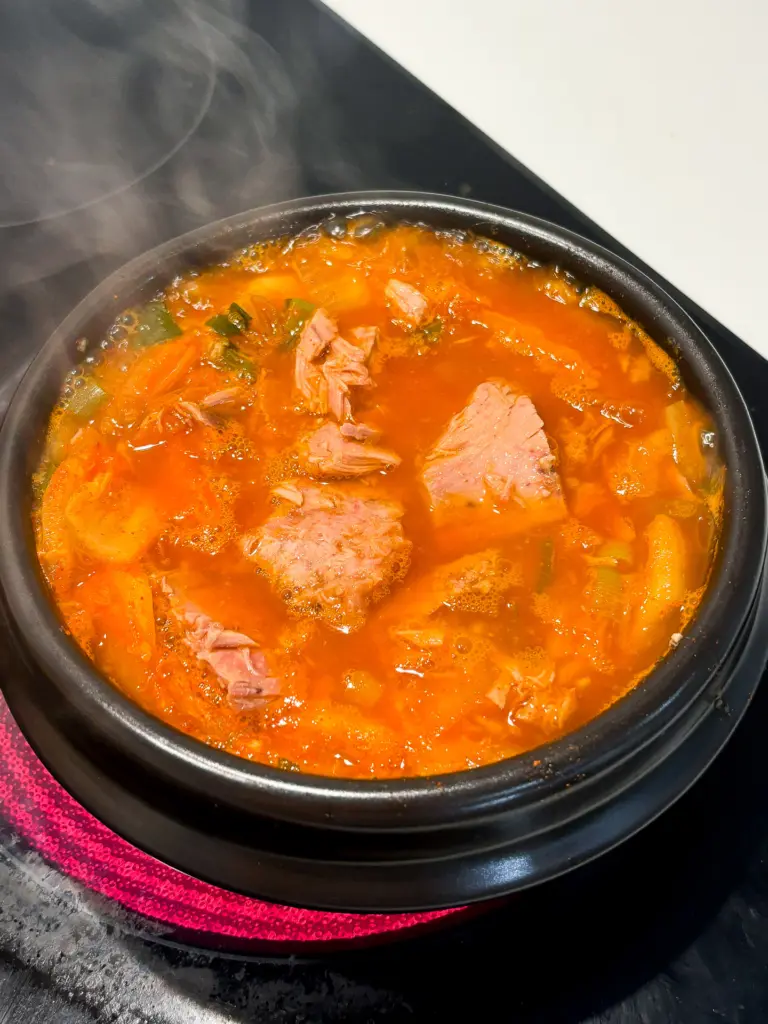
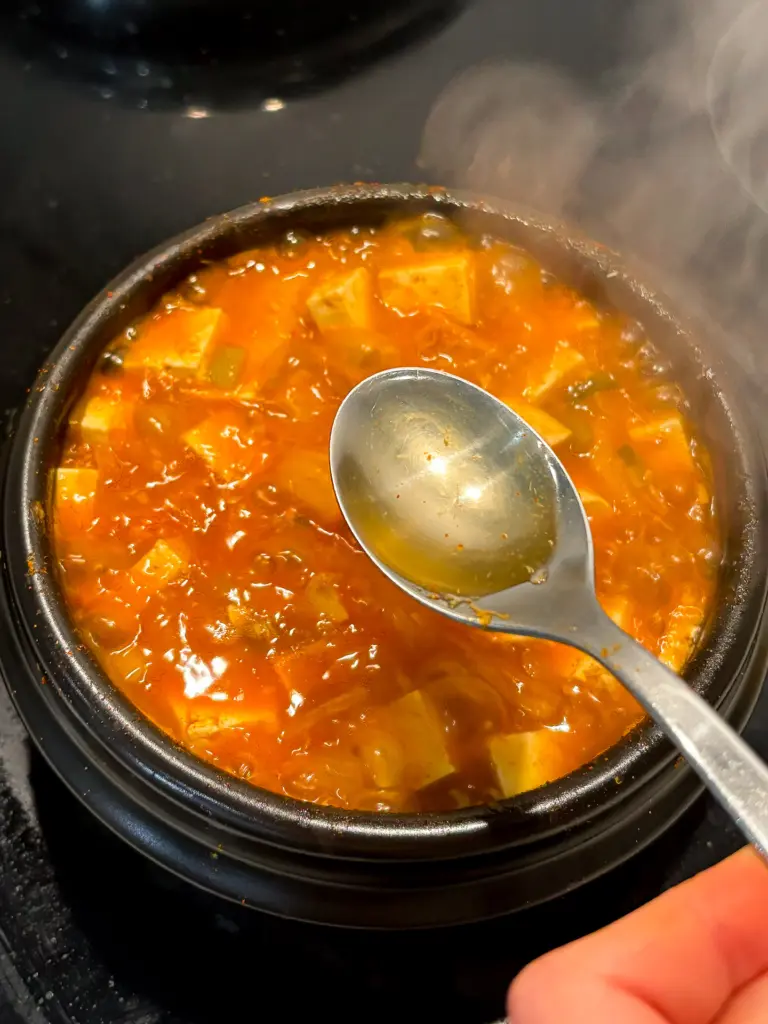
4. Add Protein and Simmer Once boiling, add the canned tuna and tofu slices. If you want that bold “Korean restaurant” flavor, add a teaspoon of dashi powder now. Lower the heat and let it simmer for 15 minutes to allow the flavors to meld.
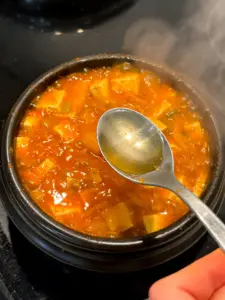
5. The Secret Finishing Touch Just before turning off the heat, add 1 tbsp of vinegar. This is the secret to enhancing the umami and creating a professional-tasting broth. Garnish with remaining green onions and serve hot with a bowl of rice.
Tuna Kimchi Jjigae Recipe Tips
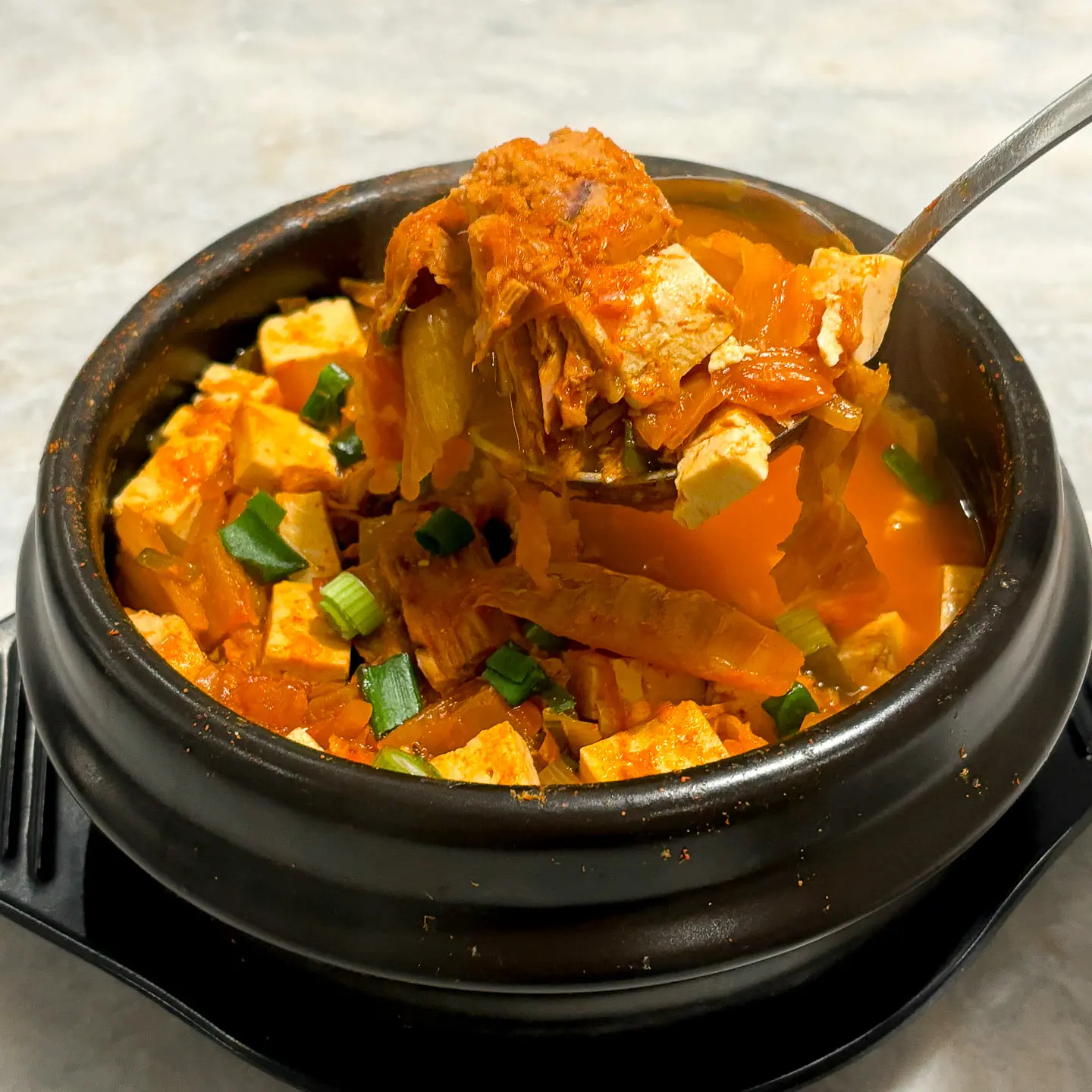
In Korea, most restaurants serve pork kimchi jjigae, but at home, tuna kimchi jjigae(chamchi kimchi jjigae) 참치 김치찌개 is just as popular. It’s easier to make and less expensive than the pork version, so many families make it often.
A common mistake? Throwing away the oil from the canned tuna! Never do that! The secret to next-level tuna kimchi jjigae is to use the tuna oil in the broth. Trust me-your kimchi jjigae will have a deeper, richer flavor that makes all the difference!
Tuna Kimchi Jjigae Calories (Low-Cal Korean Stew)
Tuna Kimchi Jjigae has about 154 calories per serving (300g). Compared to pork kimchi jjigae, which has about 200 calories per serving, tuna kimchi jjigae is lower in calories and significantly lower in fat.
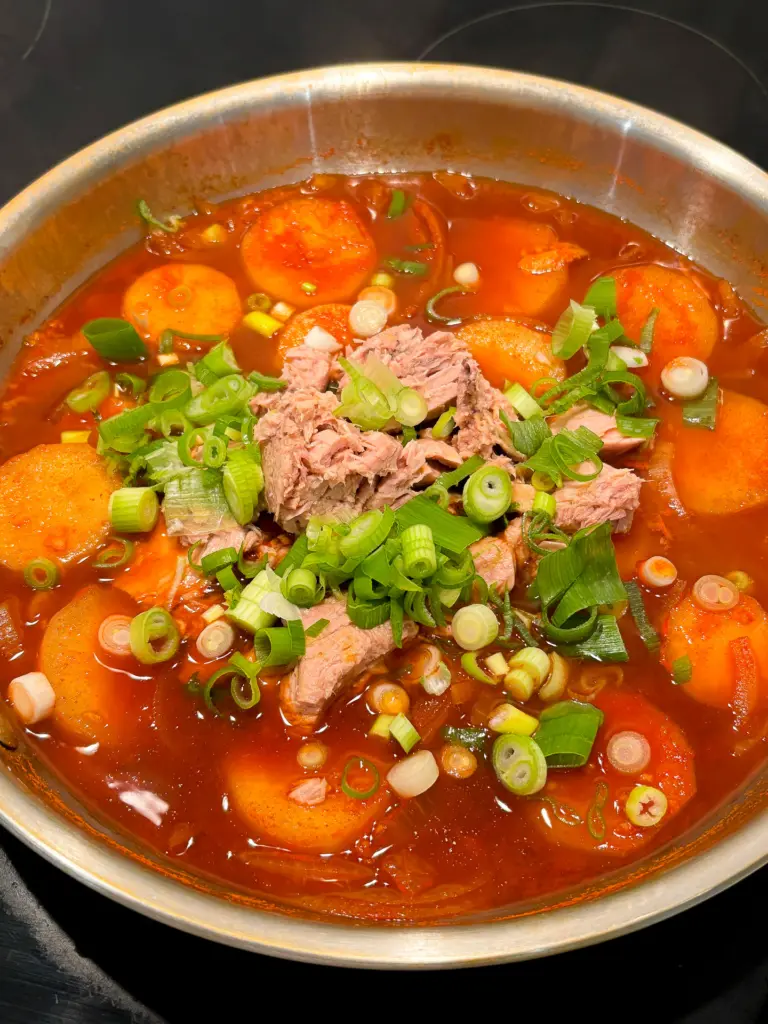
Korean Braised Radish with Tuna: Budget 30-Min Mu Jorim
Another healthy tuna stew I recommend is Tuna Mu Jorim (참치 무조림). This dish is also low in calories and very healthy. The natural sweetness of the radish (mu) really shines in this stew, making it a delightful and flavorful dish.
Kimchi Jjigae Calories Breakdown
One bowl of tuna kimchi jjigae (about 300g) contains around 180 calories, which is significantly lower than pork kimchi jjigae. These kimchi jjigae calories come mostly from protein-rich tuna and fermented kimchi, making this dish filling without being heavy. Compared to restaurant versions, this homemade tuna kimchi stew has fewer fats and more clean ingredients.
Is Tuna Kimchi Jjigae Healthy?
This is a good place to start: “Is kimchi healthy?” The answer is yes, absolutely! The main ingredient in kimchi, fermented cabbage, is rich in probiotics, which promote gut health. It’s also packed with vitamin C, beta-carotene, and other nutrients that boost the immune system, as well as fiber, which aids in digestion. Kimchi is also full of phytonutrients that help with antioxidant activity.
So when you add plenty of kimchi along with protein-rich meat or fish in a dish like kimchi jjigae, you end up with a healthy and nutritious meal!
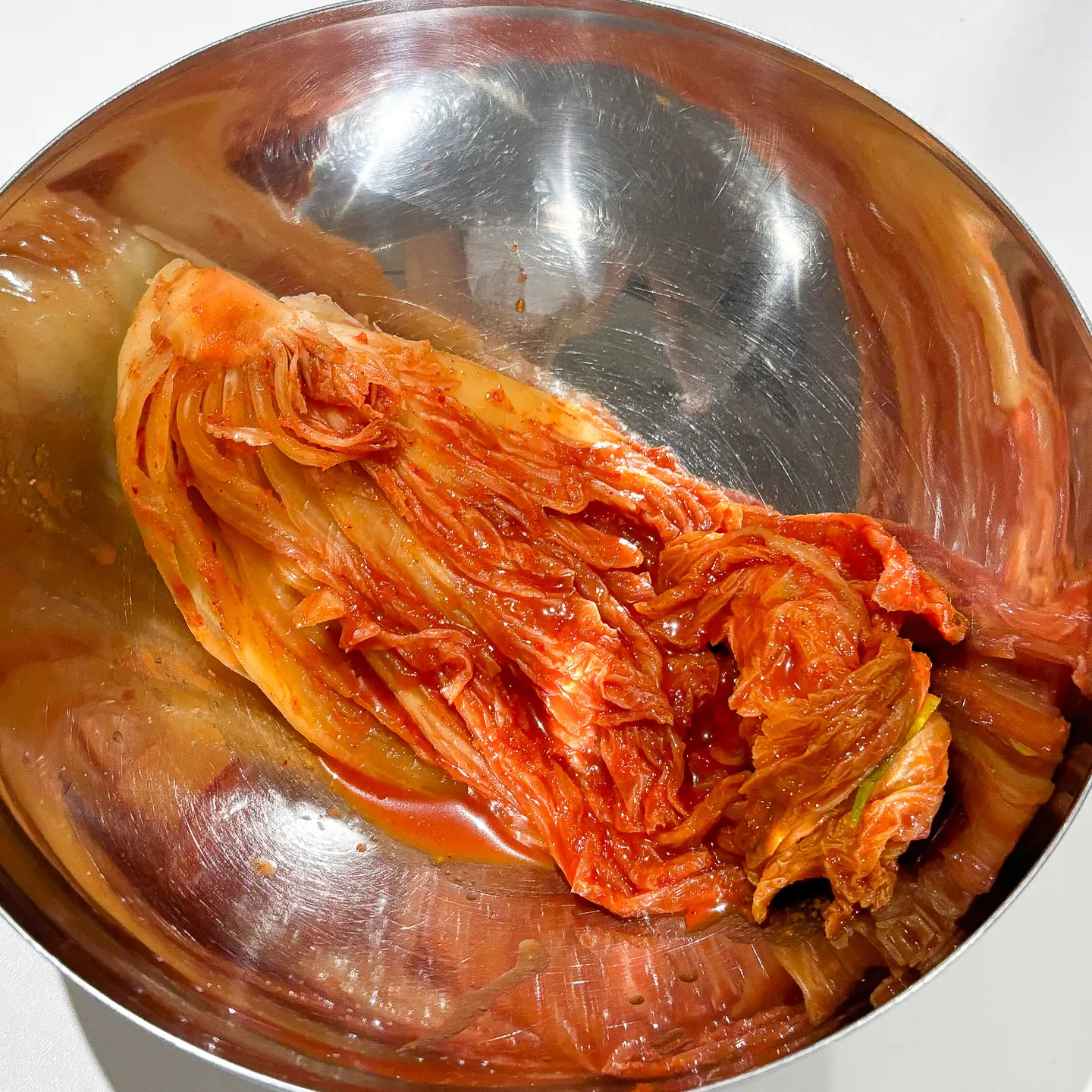
Kimchi guk vs Kimchi Jjigae
“What is the difference between kimchi jjigae and kimchi guk?”
Kimchi-guk contains more water than kimchi jjigae, making it lighter and less salty. Because of this, people often mix rice into kimchi-guk when eating it. Kimchi jjigae, on the other hand, has a richer, saltier broth, so it’s usually eaten by scooping the broth and ingredients together, then taking a spoonful of rice separately.
Another major difference is the ingredients. Kimchi guk(김칫국) is usually made without meat or fish, using only kimchi and tofu. Some variations, such as kongnamul kimchi-guk, include bean sprouts for added texture. Meanwhile, kimchi jjigae(김치찌개) almost always contains meat or fish, with pork kimchi jjigae and tuna kimchi jjigae being the most popular versions.
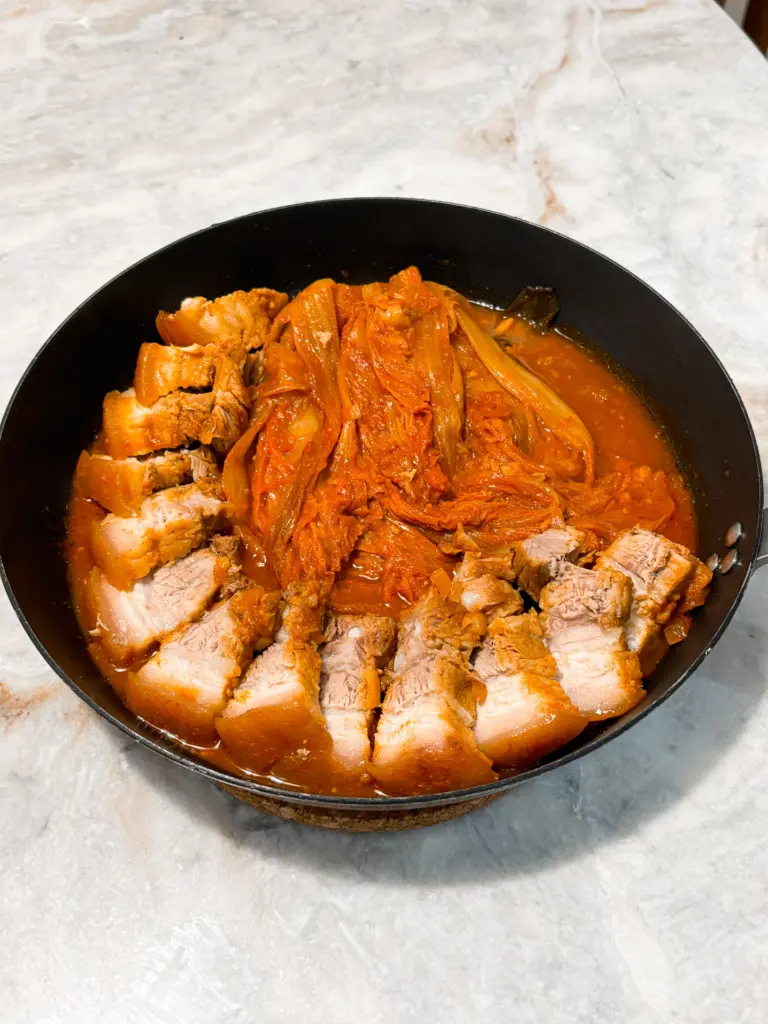
Pork Belly Kimchi Jjim (Braised Kimchi)
In addition to kimchi-guk and kimchi jjigae, there is also kimchi jjim(김치찜). Unlike kimchi jjigae, which has more broth, kimchi jjim is cooked with less liquid, allowing the flavors to deepen and intensify over time as it cooks with the meat. The broth becomes richer and more concentrated. This pork kimchi jjim recipe is my mother’s. It’s so delicious you might end up eating two bowls of rice!
The Taste Kimchi Stew You Had in Korea
Let’s make the kimchi jjigae you had in Korea right at home! Today, we’re going to make tuna kimchi jjigae without gochujang, using protein-rich tuna with less fat. For some, it may taste like what they had in a Korean restaurant, and for others, it’ll bring back memories of the flavor your grandmother used to make. I have so many recipe secrets to share with you. Let’s get started!
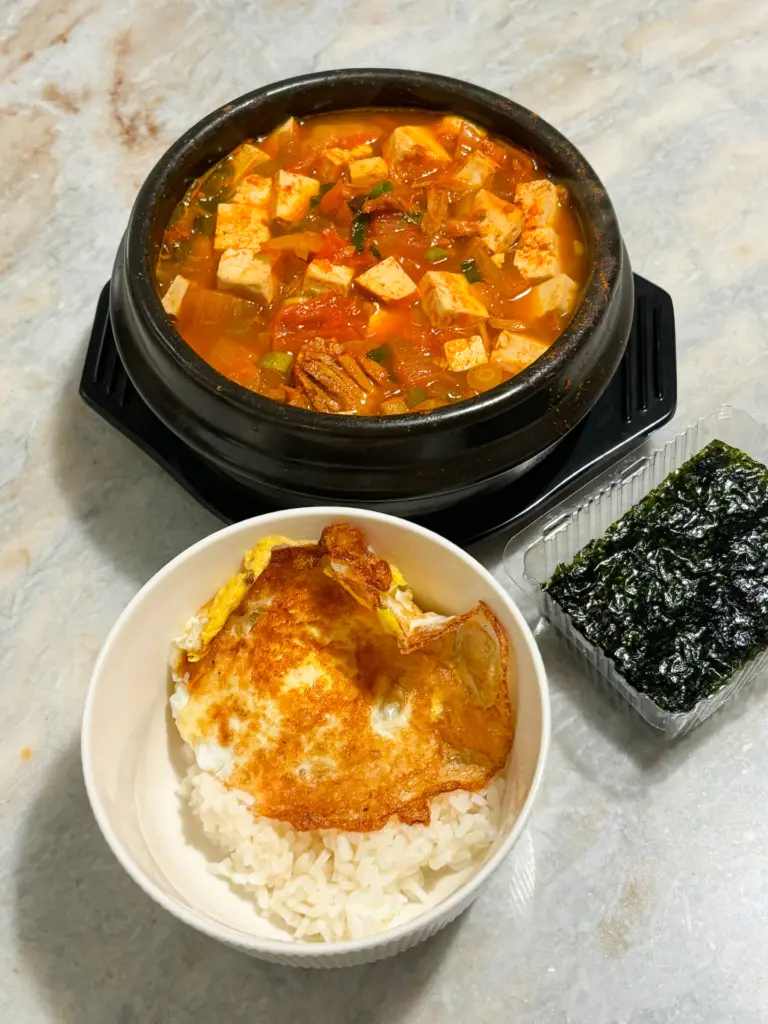
FAQ about Tuna Kimchi Jjigae
Healthy Tuna Kimchi Jjigae Without Gochujang (Low Calories)


Ingredients
- 1 can tuna (150g)
- 400 ml water
- 1 tbsp minced garlic
- 1/2 stalk green onion
- 1/2 onion
- 1/4 head kimchi
- 1/2 ladle kimchi juice
- 1/3 block tofu
- 1/2 tbsp chili powder
- 1 tbsp anchovy fish sauce
- 2 tbsp tuna fish sauce (you can substitute this with 1 tablespoon of anchovy fish sauce.)
- 0.5 tbsp sugar
- 1 tbsp Korean dashi powder (optional, for restaurant style taste)
- 1 tbsp vinegar (secret ingredient, to enhance the savory flavor)
Instructions
Prepare the Ingredients
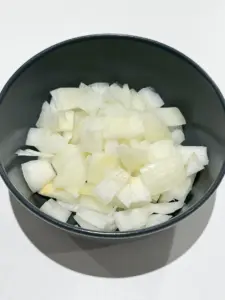
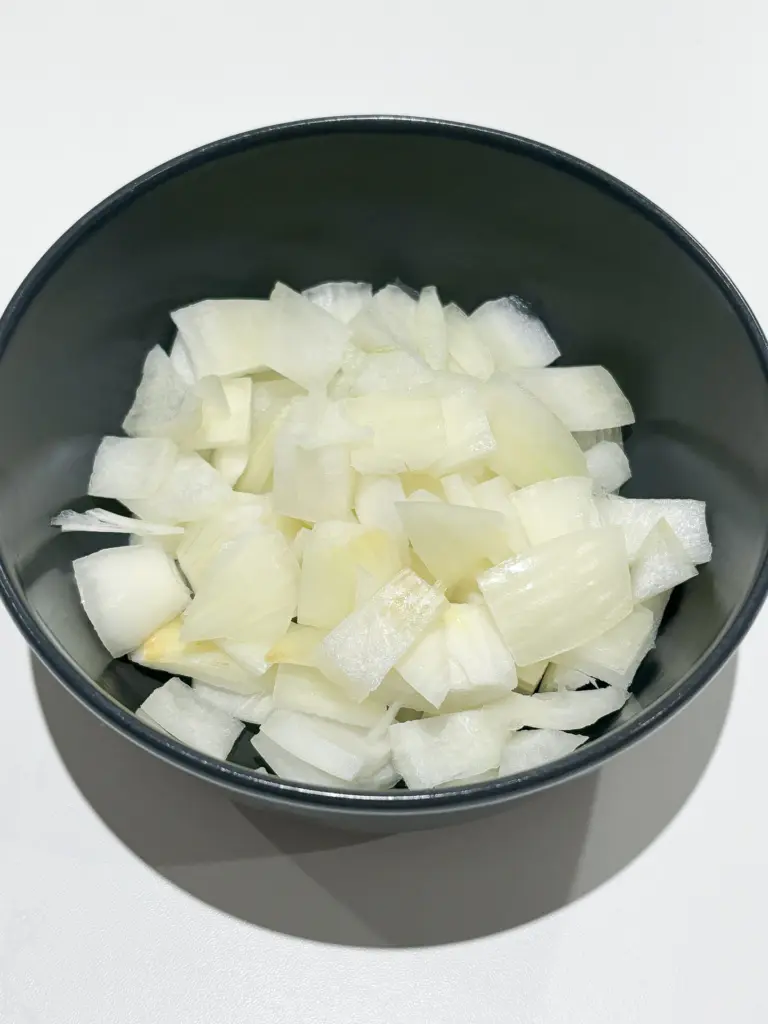
- Dice half an onion into small cubes.1/2 onion
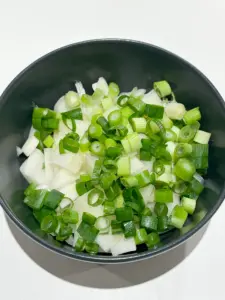
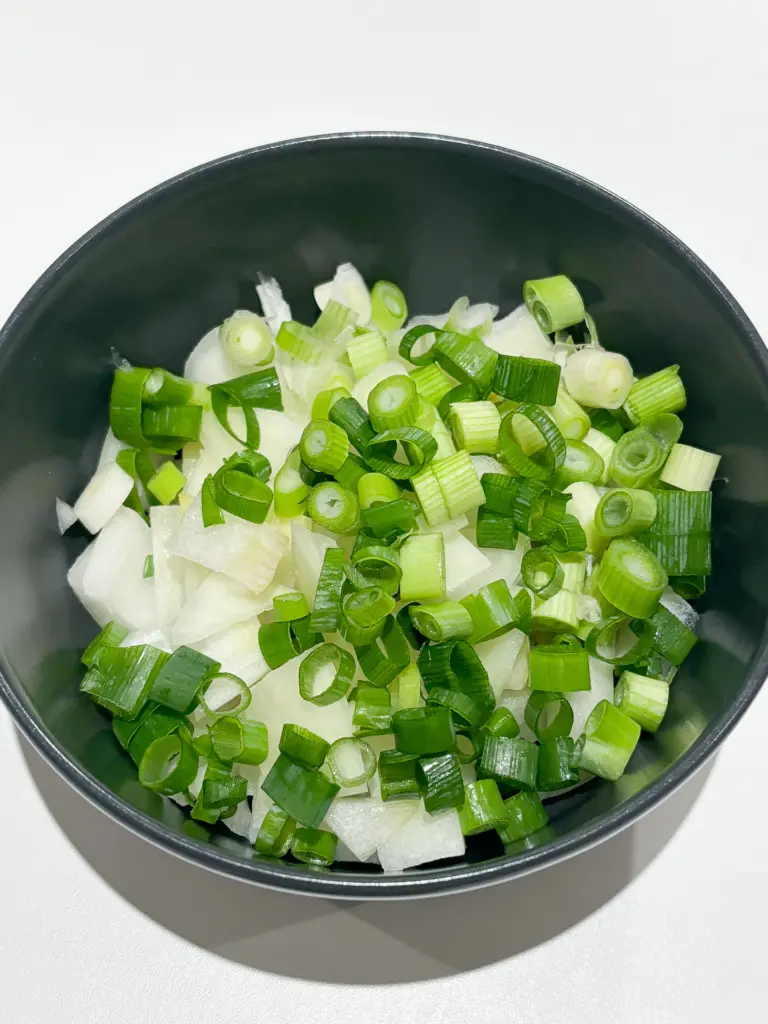
- Slice half a stalk of green onion into small pieces.1/2 stalk green onion
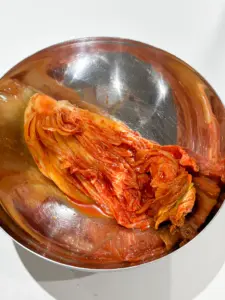
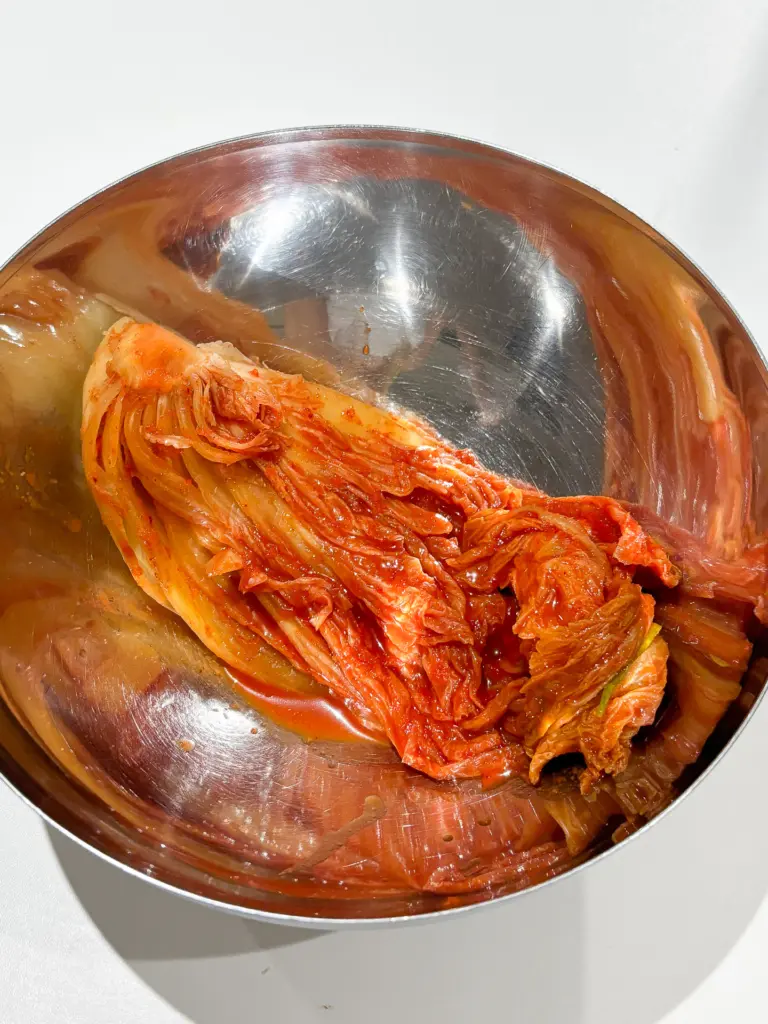
- Use scissors to chop 1/4 head of kimchi into small pieces.1/4 head kimchi
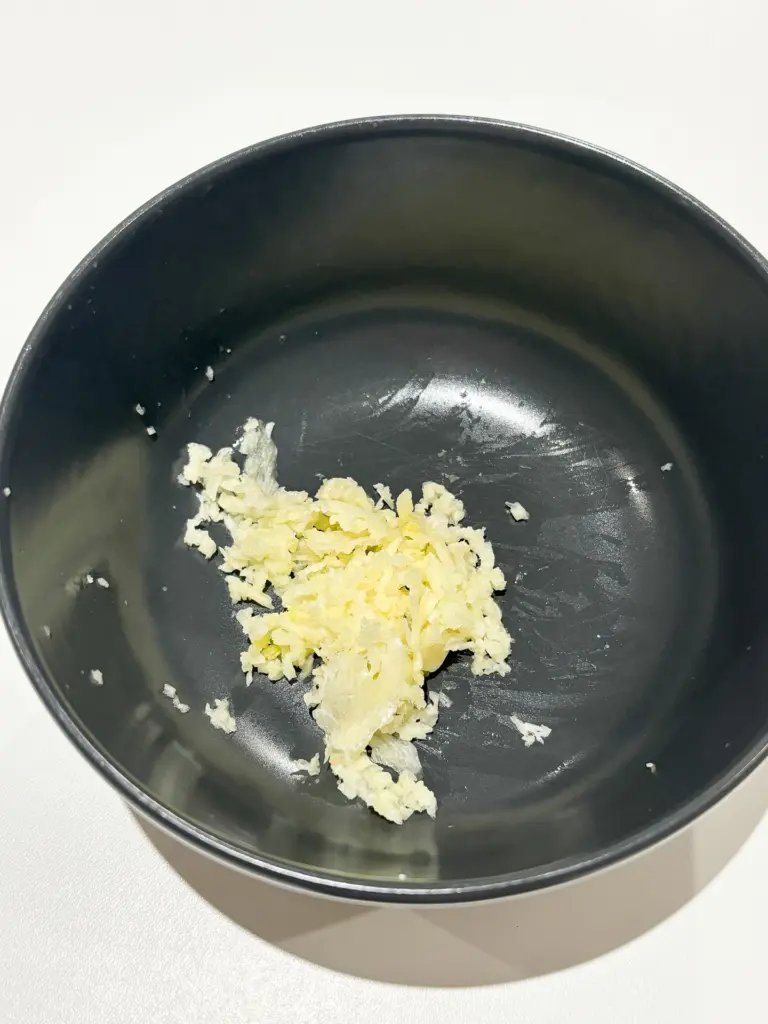
- Mince 1 tbsp of garlic.1 tbsp minced garlic
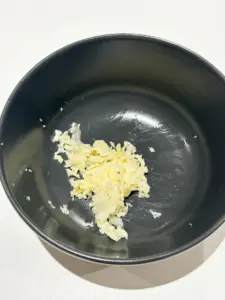
Stir-Fry the Base
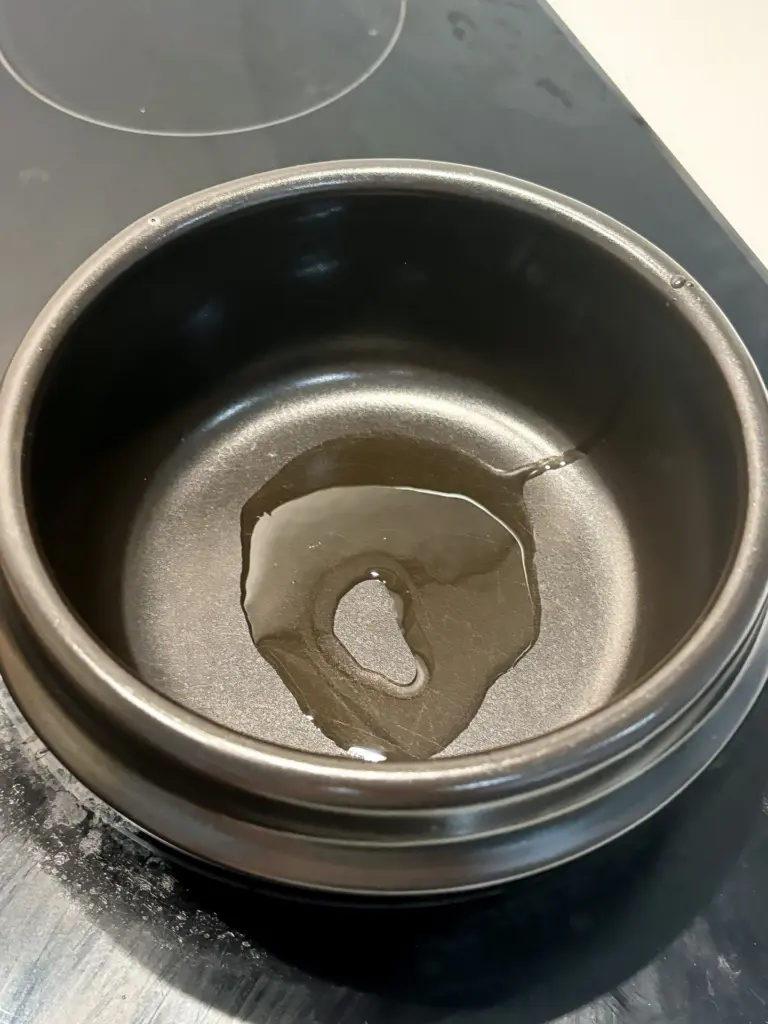
- Heat 2 tbsp cooking oil in a stone pot (ddukbaegi).
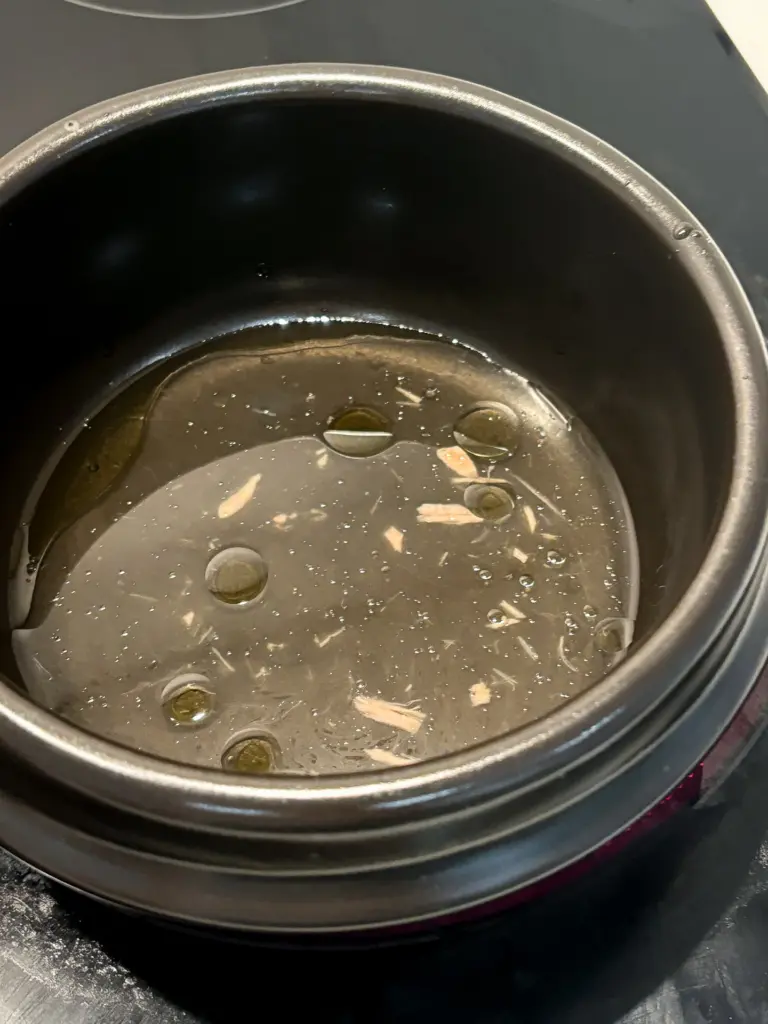
- Pour in the canned tuna oil (secret recipe).1 can tuna
- Stir-fry the onion and green onion.1/2 stalk green onion
- Add the garlic and continue to stir-fry.1 tbsp minced garlic
- Add 0.5 tbsp of sugar.0.5 tbsp sugar
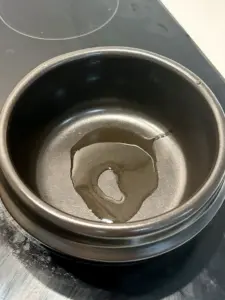
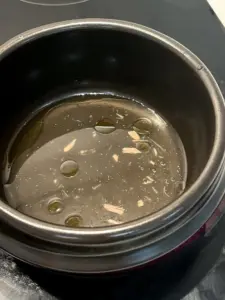
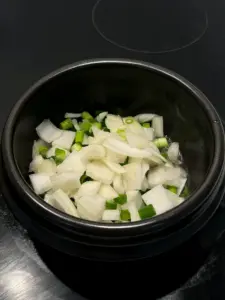
Add Kimchi and Make Broth
- When the onion is translucent, add the kimchi and stir-fry.1/4 head kimchi
- When the kimchi is soft, add 400 ml of water.400 ml water
- Add 0.5 tbsp kimchi juice.1/2 ladle kimchi juice
- Add 0.5 tbsp chili powder.1/2 tbsp chili powder
- Add 2 tbsp tuna fish sauce.(you can substitute this with 1 tablespoon of anchovy fish sauce.)2 tbsp tuna fish sauce
- Add 1 tbsp anchovy sauce.1 tbsp anchovy fish sauce
Simmer the Jjigae
- When it begins to boil, add the tuna.1 can tuna
- Add the tofu as well.1/3 block tofu
- If you want a restaurant-style flavor, add 1 tsp of dashi powder. (option)1 tbsp Korean dashi powder
- Let simmer for 15 minutes.
Finish with a Secret Kick
- To enhance the umami of the kimchi, add 1 tbsp of vinegar (secret recipe).1 tbsp vinegar
- Turn off the heat and garnish with green onion.
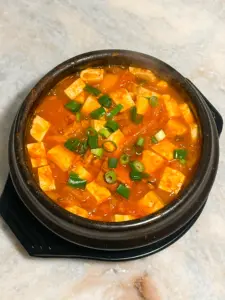
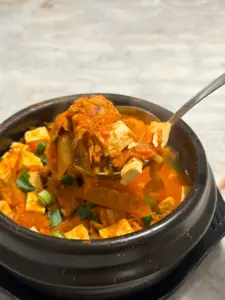
Tuna Kimchi Jjigae (참치 김치찌개)
- Jal meokgetseumnida! 잘 먹겠습니다!
Nutrition
Tried this recipe?
I read and reply to every comment. Even one line tells me you made it, and helps the next reader find this recipe.
Rate & reviewBlonde Kimchi
Wow, this feels so much lighter than pork kimchi stew. I like this even more!